Theseus and the Minotaur: Bravery and Intelligence – Hero of Athens
Epic journeys, legendary deeds, and the greatest heroes of myth.
- 1The 12 Labors of Hercules: Strength, Trials, and Redemption
- 2Gilgamesh: The First Epic Hero
- 3Cúchulainn: The Hound of Ulster
- 4Theseus and the Minotaur: Bravery and Intelligence – Hero of Athens (you are here)
- 5Aeneas and the Journey to Italy
- 6Karna: Hero of Tragedy – Loyalty, Valor, and Fate in the Mahabharata
- 7The Monkey King – Sun Wukong’s Rebellion Against Heaven
- 8Māui: The Trickster Demigod
In the annals of Greek mythology, Theseus emerges as a paragon of courage and intellect, destined to confront the Minotaur—a half-man, half-bull monster—dwelling in the labyrinthine depths of Crete. This legendary tale goes beyond mere physical strength, emphasizing the hero's wit and strategic acumen that triumphed over monstrous adversity.
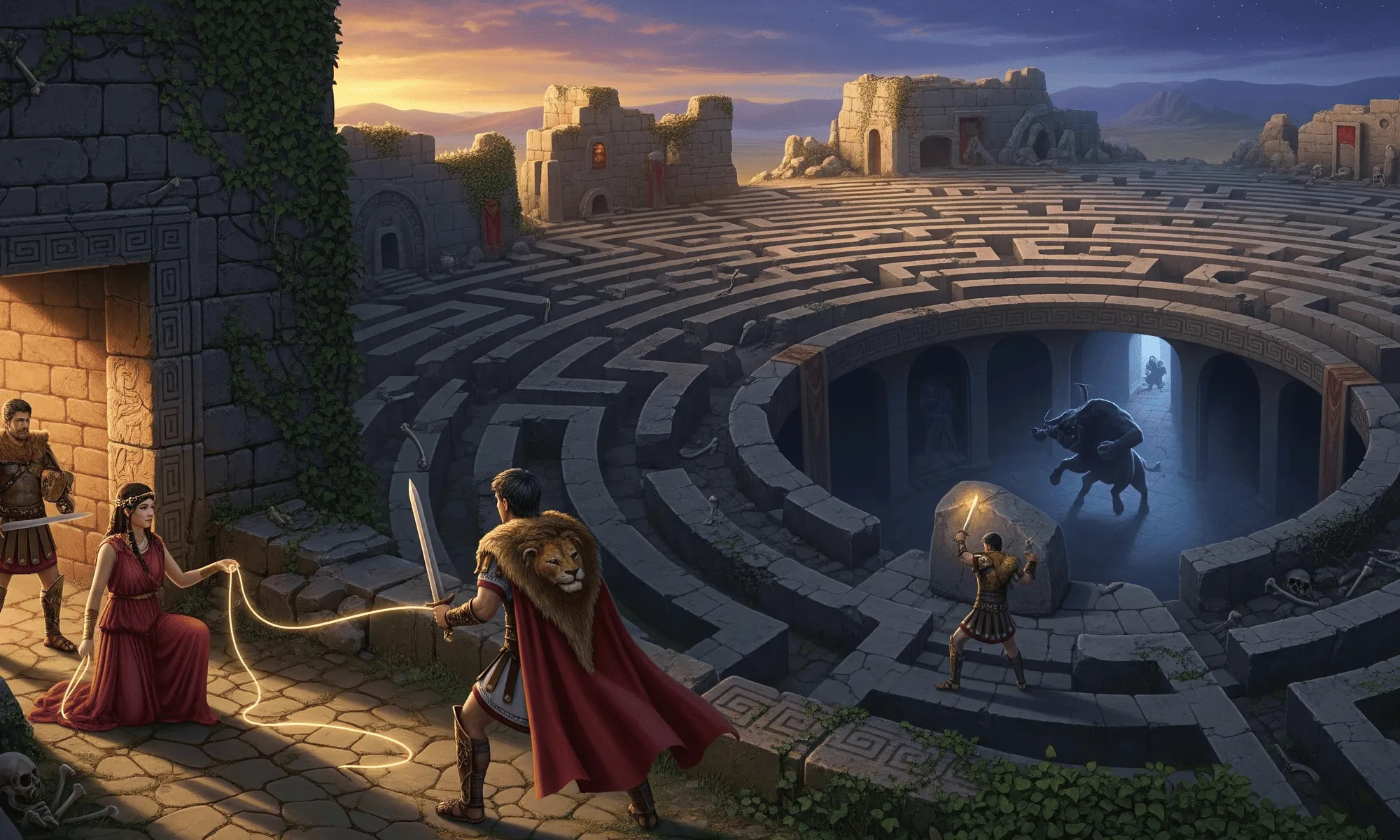
The narrative of Theseus showcases a profound lesson in human ingenuity: it was not just his brawn but his cleverness that secured victory. For instance, upon entering the labyrinth, he tied one end of a ball of string to the entrance, using this simple yet ingenious device to retrace his steps back out once he had slain the Minotaur. This example illustrates how strategic thinking and resourcefulness can overcome even the most daunting challenges.
The Plight of Athens
Athens was ensnared in a grim cycle, compelled to send a group of seven boys and seven girls every nine years as tribute to Crete's labyrinth. These children, destined for the Minotaur’s grasp, were mourned by their families and the city at large, casting a long shadow over Athenian society. The annual procession to the temple, where these youths bid farewell to their loved ones, was a harrowing ritual that highlighted the depth of the city's despair.
Into this dark narrative stepped Theseus, driven by a profound sense of justice and compassion. He resolved not only to end the terror but also to bring honor back to his homeland. His decision was rooted in both an understanding of the suffering and a bold willingness to face danger head-on. This mission required more than just physical bravery; it demanded strategic planning and mental fortitude, as Theseus would have to navigate treacherous waters and cunning challenges.
Theseus’s journey was not merely about defeating a beast but about challenging the system that perpetuated such horror year after year.
The Labyrinth: A Maze of Peril
The labyrinth crafted by Daedalus was a masterpiece of cunning architecture, designed to thwart the most resourceful souls. Its intricate network of twists and turns rendered escape nearly impossible for anyone lacking exceptional intelligence or preparation. In its heart resided the Minotaur, a fearsome creature driven by insatiable hunger and guarded its lair with a lethal instinct honed over countless years.
Theseus, however, was no ordinary mortal. Armed with determination and a sharp mind, he ventured into the labyrinth not as a victim but as a strategist. He did not rely solely on brute force; instead, Theseus leveraged his intelligence, planning meticulously to outmaneuver both the maze's layout and its monstrous guardian. For instance, Theseus famously used a ball of string provided by Ariadne to mark his path, ensuring he could retrace his steps once the Minotaur was vanquished.
Such strategic thinking proved crucial in navigating the labyrinth’s treacherous corridors. By understanding the maze's complexity and devising a plan that combined courage with ingenuity, Theseus demonstrated that intelligence is often more vital than physical prowess when facing formidable challenges.
Ariadne’s Gift: Cleverness and Survival
Ariadne, daughter of King Minos, recognized the nobility in Theseus’ quest to slay the Minotaur. She supplied him with a ball of thread, advising him to unwind it as he ventured into the labyrinth so that he could find his way back out again. This simple yet ingenious solution underscores the critical importance of foresight and preparation; bravery alone was insufficient for navigating the treacherous maze.
The fusion of courage and strategic thinking is evident in Ariadne’s gift, which combined Theseus’ valor with practical intelligence. Intelligence, trust, and foresight were as crucial to his survival as physical prowess. For instance, had Theseus ignored the thread or failed to keep track of its length, he would have been hopelessly lost within the labyrinth's convoluted paths. Thus, the thread represented more than just a navigational tool—it was a symbol of intellectual resilience and mental fortitude.
It is often said that true heroism lies not in physical strength but in the ability to think creatively under pressure. In Theseus’ case, Ariadne’s gift demonstrated how a seemingly minor object could hold profound implications for survival and success. The interplay between courage and intelligence highlighted by this myth remains relevant today, where strategic thinking often makes the difference between triumph and disaster.
Confronting the Minotaur
The labyrinth was a metaphor for the unknown, and at its heart lay the fearsome Minotaur. The moment of truth arrived when Theseus faced the creature, an encounter that was both ferocious and tense. Despite the beast's raw power and aggressive lunges, Theseus relied on his skill and quick thinking to outmaneuver it. He overpowered the monster using a combination of strength and strategy, ultimately delivering a precise strike that ended its reign.
This epic confrontation encapsulates the essence of heroism: a delicate balance between courage, intellect, and moral purpose. Theseus’s victory was not merely about physical prowess; it highlighted his strategic acumen and unwavering resolve. It is often in moments of intense challenge where true character shines through. For instance, when facing a daunting project deadline, one must channel similar qualities—determination, planning, and ethical decision-making—to triumph over obstacles.
While brute strength can sometimes prevail, it is the hero who combines force with wisdom that emerges as a genuine leader. This nuanced perspective underscores why Theseus’s victory remains an enduring symbol of true heroism in myth and literature. His success taught us that overcoming formidable adversaries requires not just physical courage but also mental fortitude and ethical integrity.
Return and Triumph
The tale of Theseus exiting the labyrinth with Ariadne's thread marks a pivotal moment in Greek mythology, signifying not just his personal triumph but a significant shift for Athens. By defeating the Minotaur, Theseus put an end to the horrific yearly sacrifice of young Athenian lives to Crete, restoring hope and stability to his city. This victory was more than mere bravery; it demonstrated Theseus' ability to combine valor with wisdom, traits that set him apart as a true hero.
However, the story's triumph is not solely attributed to Theseus’ actions but also to the collective efforts of those around him. Ariadne’s decision to give Theseus her thread was crucial, providing the means for his success. Additionally, the faith and prayers of the Athenian people played a role in creating an environment where courage could flourish. This interplay of individual acts and communal belief highlights how complex issues can be addressed through collaborative effort.
Interestingly, this narrative underscores that heroism often emerges from ordinary individuals stepping up during extraordinary circumstances. Take, for instance, the countless tales throughout history where a single act of bravery by an ordinary person has changed the course of events. In Theseus' case, his willingness to face the Minotaur was not just about personal glory but about fulfilling a larger duty to his city and its people.
Symbolism and Lessons
The myth of Theseus is replete with enduring lessons that resonate across generations. At its core, his journey to slay the Minotaur teaches us about the multifaceted nature of bravery—true courage isn't just about standing up in the face of danger but doing so for a greater purpose beyond oneself.
Intelligence plays an equally critical role in Theseus's story. His decision to leave a trail of string behind him, allowing him to find his way back out of the labyrinth, highlights the importance of foresight and planning alongside brute force. This example demonstrates that heroism is as much about mental acumen as it is physical prowess.
Moral Responsibility
Leadership also carries a moral duty to safeguard those who are vulnerable. Theseus's actions in slaying the Minotaur were not merely acts of self-protection or glory; they were motivated by a deeper sense of justice and protection for the innocent youths sacrificed to this beast. This perspective underscores that true leadership is rooted in compassion and ethical integrity.
“Even the darkest challenges can be overcome through strategic wisdom and unwavering heart.”
The triumph over the Minotaur, one of mythology's most formidable monsters, encapsulates the broader message that chaos and evil can indeed be vanquished. Yet, this victory is not just about physical confrontation but also strategic planning and moral conviction—elements often overlooked in tales of heroism.
Cultural Impact
The myth of Theseus and the Minotaur has left an indelible mark on literature and art, inspiring a vast array of works that delve into themes of heroism, bravery, and triumph. From ancient Greek pottery to modern novels, the tale's enduring appeal lies in its ability to captivate audiences across generations.
Moreover, the myth serves as a profound moral allegory for navigating life’s complexities. It underscores the importance of balancing courage with wisdom, illustrating how one must face daunting challenges head-on while also employing strategic thinking and adaptability. For instance, Theseus’ decision to leave a trail of string behind him demonstrates his ingenuity in overcoming obstacles.
In the realm of Greek rituals and civic life, Theseus' heroic deed had far-reaching implications for Athenian society. His victory over the Minotaur not only celebrated individual bravery but also reinforced communal values such as leadership and civic responsibility. This narrative became a cornerstone of Athenian identity, symbolizing the city-state’s commitment to nurturing capable leaders who could protect and serve their communities.
Conclusion: The Hero Who Navigated Darkness
The tale of Theseus is a timeless testament to the enduring power of courage and intellect in overcoming life's most daunting challenges. His journey through the labyrinth, symbolizing life’s trials, illustrates how even the most formidable obstacles can be surmounted with strategic thinking and moral fortitude. As he faced the Minotaur, Theseus did not rely solely on physical strength but also on his mental acumen and ethical resolve.
The myth of Theseus goes beyond mere adventure; it is a profound lesson in the interplay between wisdom and bravery. In Greek culture, heroes like Theseus embody more than just brute force—they are exemplars of strategic planning and moral integrity. For instance, when Theseus navigated the labyrinth with Ariadne's thread, he showed that success often hinges on both mental agility and ethical principles rather than sheer physical prowess alone. This nuanced perspective underscores the myth’s relevance across generations, reminding us that true heroism is multifaceted.
Frequently asked questions
Who was Theseus in Greek mythology?
What is the significance of the labyrinth in the myth?
Who helped Theseus defeat the Minotaur?
Lords of Xibalba: The Mayan Gods of Death and the Underworld
Explore the terrifying realm of Xibalba and the Mayan gods of death who ruled the underworld before being outwitted by t...
Veles: Lord of the Underworld and Rival of Perun
Discover Veles, the Slavic god of the underworld, magic, wealth, and cattle. Explore his legendary rivalry with Perun an...