Karna: Hero of Tragedy – Loyalty, Valor, and Fate in the Mahabharata

Epic journeys, legendary deeds, and the greatest heroes of myth.
- 1The 12 Labors of Hercules: Strength, Trials, and Redemption
- 2Gilgamesh: The First Epic Hero
- 3Cúchulainn: The Hound of Ulster
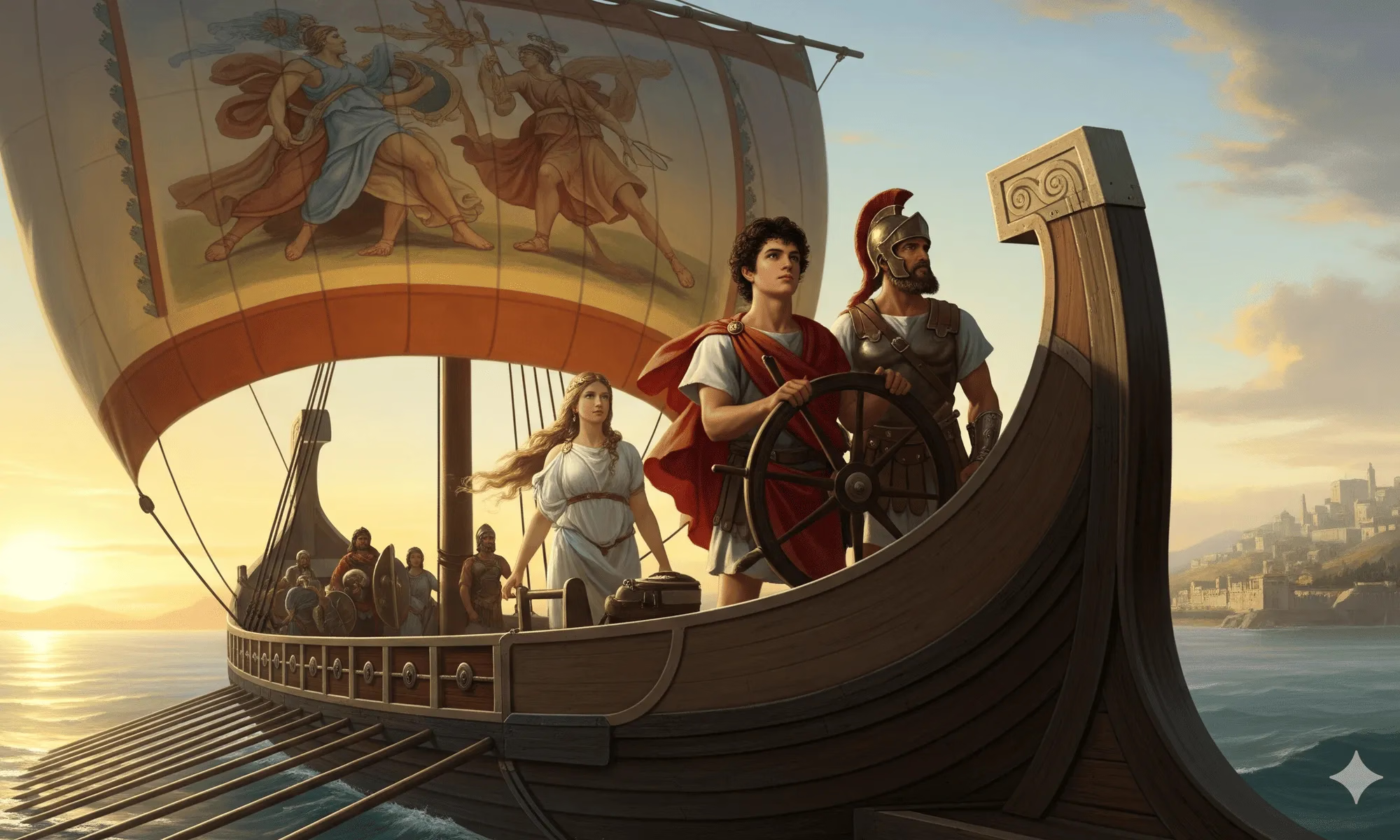
- 4Theseus and the Minotaur: Bravery and Intelligence – Hero of Athens
- 5Aeneas and the Journey to Italy
- 6Karna: Hero of Tragedy – Loyalty, Valor, and Fate in the Mahabharata (you are here)
- 7The Monkey King – Sun Wukong’s Rebellion Against Heaven
- 8Māui: The Trickster Demigod
The Unsung Hero of Kurukshetra
In the epic tale of the Mahabharata, Karna stands out as a figure marked by profound tragedy and unwavering loyalty. Born to Kunti before her marriage to Pandu, Karna was abandoned at birth and raised in humble circumstances, facing societal scorn despite his noble heritage. His life story is one where personal valor and destiny converge.
Karna's journey from an orphaned child to a formidable warrior showcases the depths of human resilience. His exceptional skill in archery, combined with a heart full of generosity and loyalty, set him apart as one of the greatest warriors of his time. This rise against overwhelming odds speaks volumes about the transformative power of character over mere birthright.
Despite being shunned by society for his lower status, Karna's choices were guided by a deep sense of honor and duty. His tragic end at Kurukshetra, where he fought loyally alongside Duryodhana against his true kin, the Pandavas, underscores the often cruel interplay between fate and free will. This duality—where loyalty to a friend leads one astray from destiny—makes Karna's story particularly poignant.
"The greatest glory of a warrior is not in victory but in being loyal to what he believes is right."
Early Life and Struggles
Karna's life began under a celestial blessing, as the Sun God, Surya, bestowed upon him divine armor and earrings that rendered him nearly invincible. Yet, this divine favor could not shield Karna from the harsh realities of his humble birth; abandoned by his royal mother Kunti, he was taken in by Adhiratha and Radha, a poor chariot driver and his wife. Despite being raised in poverty, Karna faced constant ridicule for his low social status, which only fueled his determination to prove himself.
Driven by an unyielding ambition, Karna sought mastery over archery and martial arts. To achieve this, he secretly trained under the renowned warrior-teacher Parashurama, concealing his true identity as a means to circumvent the teacher's rule against teaching anyone of royal blood. This act was not just about overcoming social barriers but also about gaining respect and recognition in a world that dismissed him based on birth alone.
In spite of the harsh conditions and societal disdain, Karna persevered with an unrelenting spirit. One notable instance occurred during his training sessions when Parashurama noticed Karna's exceptional resilience and skill, leading to a moment where the teacher almost broke his rule against royal students. This close call highlighted not only Karna’s unwavering dedication but also the complex nature of societal hierarchies in ancient India, where one's birth could dictate their entire life trajectory.
Loyalty to Duryodhana
Karna's unwavering loyalty was his defining trait, a bond formed when he met the Kaurava prince, Duryodhana. Recognizing Karna’s exceptional skill, Duryodhana befriended him and made him an integral part of their circle. Despite knowing that the Pandavas were noble and righteous, Karna chose to remain steadfastly loyal to Duryodhana, driven by a sense of gratitude and honor.
His loyalty wasn't just blind; it was complex and nuanced. When faced with moral dilemmas, Karna often had to choose between his friendship and personal justice. This constant internal struggle painted him as one of the most intricate characters in the epic, embodying both strength and vulnerability. For instance, when Duryodhana needed him during crucial battles, Karna would set aside his reservations about the morality of their cause, demonstrating a level of commitment that was both admirable and tragic.
The depth of Karna’s loyalty made him a pivotal figure in many decisive moments of the Mahabharata. His unwavering support for Duryodhana, despite knowing it might lead to personal sacrifice or conflict with his own moral compass, showcased a level of devotion that ultimately sealed his fate. This duality—his fierce allegiance and his readiness to face ethical challenges—makes Karna's character particularly compelling in the epic narrative.
The Tragedy of Fate and Identity
Karna's life story is a poignant narrative filled with irony and profound tragedy. Born the eldest among the Pandavas, Karna was destined for greatness but found himself in constant opposition to his own kin on the battlefield, driven by circumstances beyond his control.
- Cursed by Parashurama: Karna's destiny took a dark turn when he forgot the Brahmastra at a critical moment due to a curse from his divine teacher Parashurama. This oversight would cost him dearly during pivotal battles, denying him the chance to use his full arsenal.
- Cursed by a Brahmin: In a moment of inattention, Karna accidentally killed a sacred cow and was cursed that his chariot wheel would be stuck at an inconvenient time on the battlefield. This curse foiled many of his strategic advances and sealed his fate more than once.
- Born under secrecy: Learning late in life about his true parentage did little to change Karna's allegiance; he remained fiercely loyal to Duryodhana, even though this knowledge could have altered the course of his entire existence. The weight of these revelations added layers of complexity and sorrow to an already tumultuous narrative.
The intertwining threads of divine curses and personal choices ultimately led to Karna's tragic demise. Despite his unparalleled valor and unmatched skill, fate conspired against him in ways that underscored the futility of human resistance against destiny. This tale resonates not just as a myth but as a poignant reflection on the inevitability of our paths, no matter how valiantly we fight against them.
Karna’s Valor in the Kurukshetra War
On the battlefield of Kurukshetra, Karna shone as an invincible warrior, facing formidable opponents like Arjuna, Bhima, and Abhimanyu. His courage was unmatched, and his martial prowess made him a force to be reckoned with; he never turned away anyone seeking help, even when it meant putting himself at risk. This selflessness extended beyond the battlefield, where Karna's reputation for generosity ensured that he had allies wherever he went.
Despite his invincibility on the field, fate played an ironic role during Karna’s duel with Arjuna. Stripped of his divine armor and cursed by an ancient spell, Karna fought with a disadvantage that even his unparalleled skill could not overcome. Tragically, Karna's adherence to the rules of combat left him vulnerable; he was unable to retrieve his weapon from the ground when it was buried in the earth, leading to his downfall. This moment underscored Karna’s character as much as any battle did—he met his end with dignity and honor.
The Legend Continues
In many retellings of Mahabharata, Karna's story is remembered not just for its drama but also for its poignant lessons about the unpredictability of fate. One specific instance stands out: when Karna offered his chariot wheel to a thirsty Arjuna during their final encounter, showcasing an act that was both noble and futile. This singular moment encapsulates the essence of Karna’s legacy—his valor on the battlefield and his unwavering sense of righteousness in the face of adversity.
Legacy and Lessons
Karna's enduring legacy is more than just his martial prowess; it lies in the intricate tapestry of his humanity. His generosity knew no bounds—he freely distributed wealth, weapons, and even blessings without a second thought. This selflessness was not merely an act but a core part of who he was.
- Loyalty: Karna's unwavering friendship with Duryodhana highlights the depth of his commitment to those he holds dear. Even when faced with moral dilemmas, his loyalty remained steadfast.
- Moral complexity: One of Karna’s most compelling aspects is the internal struggle between dharma (duty) and personal ethics. This conflict reflects a profound reality: sometimes following one's duty can lead to personal suffering.
Karna's narrative is rife with tragic heroism, where life's circumstances and fate intertwine, shaping both his heroism and sorrow. The irony of his story lies in the fact that despite his noble intentions, he often found himself caught between a rock and a hard place, making choices that were neither easy nor clear-cut. Today, Karna’s tale continues to resonate as a symbol of valor, honor, and the timeless struggle against injustice, reminding us that heroism is not just about fighting battles but also about enduring personal trials with dignity.
Conclusion: The Hero Who Lives Beyond Time
Karna’s journey through life underscores the profound truth that heroism transcends mere triumphs on the battlefield. His unwavering courage, integrity, and loyalty in the face of overwhelming adversity serve as a beacon for those facing their own battles. Despite his tragic fate, Karna’s legacy endures, offering solace and inspiration to countless individuals who struggle with the weight of destiny. For instance, during the Kurukshetra war, Karna's decision to donate his kavacha (armor) and shakti (weapon), despite knowing it would weaken him against Arjuna, demonstrates a level of selflessness that goes beyond conventional heroism.
In the intricate narrative of the Mahabharata, Karna’s story is more than just a tale of struggle; it encapsulates the human condition's inherent complexity. The bittersweet interplay between honor and fate in his life serves as a poignant reminder that sometimes, even with noble intentions, we are still bound by forces beyond our control. This nuanced perspective reveals how heroes like Karna can teach us about resilience and acceptance, showing that true valor often lies not in the absence of pain but in enduring it.
Frequently asked questions
Who was Karna in the Mahabharata?
Why is Karna considered a tragic hero?
What are Karna’s key qualities?
Shani Dev: The Judge of Karma and Lord of Saturn
Discover the story of Shani Dev, the Lord of Saturn and divine judge of karma in Hindu mythology. Learn about his origin...
The Trojan Horse: Deception that Ended a War
Discover the story of the Trojan Horse — the deception that ended the Trojan War. Explore its symbolism, cultural meanin...