Chang'e: The Moon Goddess and the Elixir of Immortality
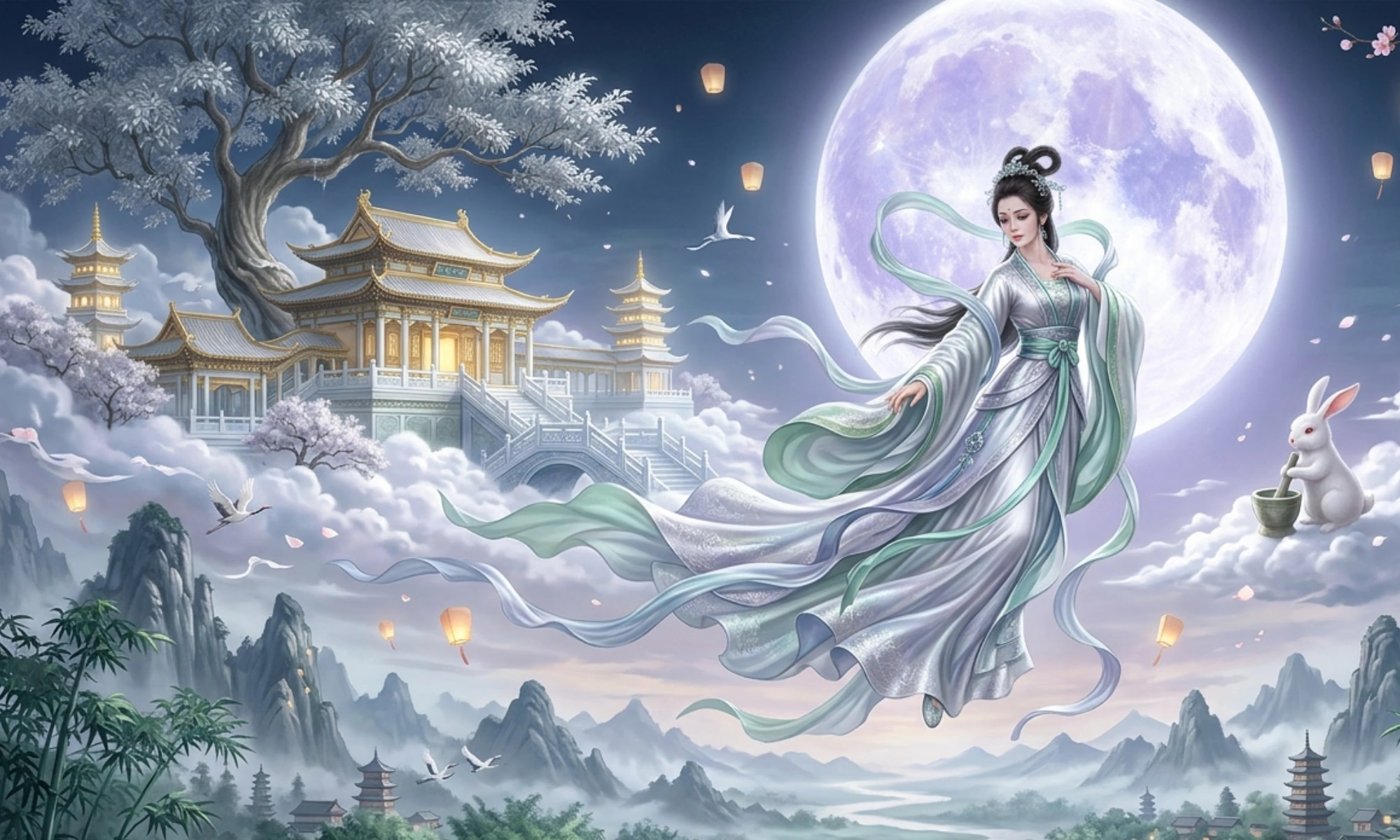
For thousands of years, whenever the full moon has risen over China, families have gathered beneath its gentle glow to share mooncakes, light lanterns, and tell a story that has never lost its magic. It is the tale of Chang'e, the Moon Goddess, whose lonely figure is believed to dwell forever within the Moon Palace. Her legend is not merely one of immortality—it is a timeless story of love, sacrifice, destiny, and the price of eternal life.
Unlike many myths where immortality is the ultimate reward, the legend of Chang'e asks a haunting question: what if living forever meant giving up everything that made life worth living? Through centuries of poetry, paintings, festivals, and folklore, her story has become one of China's most beloved legends, reminding generations that even divine blessings can carry unimaginable sorrow.
When Ten Suns Burned the Earth
Long before Chang'e became the Moon Goddess, the world faced a catastrophe unlike any other. According to ancient Chinese mythology, ten suns—sons of the sun goddess Xihe—once took turns crossing the sky. Each day only one illuminated the earth, keeping the world in perfect balance.
One fateful day, however, all ten suns rose together.
The heavens blazed with unbearable heat. Rivers dried into cracked beds of stone, forests erupted into flames, crops withered beneath the relentless fire, and countless people perished. Mountains glowed red beneath the scorching sky, while animals searched desperately for water that no longer existed. Humanity stood on the brink of extinction.
It was then that the Jade Emperor called upon the greatest archer the world had ever known—Hou Yi.
Hou Yi, the Divine Archer
Hou Yi was a warrior whose skill with the bow bordered on the supernatural. Armed with celestial arrows, he climbed the sacred Kunlun Mountains and faced the blazing suns themselves.
One after another, his arrows streaked across the heavens.
Each shot struck its target with perfect precision, and nine of the ten suns fell from the sky as fiery three-legged crows, restoring balance to the world. Only one sun remained, ensuring that life could continue upon the earth.
Humanity celebrated Hou Yi as its savior. The gods, too, acknowledged his extraordinary courage, and as a reward he was granted a priceless treasure—the Elixir of Immortality. A single sip would allow its drinker to ascend to the heavens and live forever among the immortals.
Yet Hou Yi hesitated.
He had no desire to leave behind the woman he loved more than life itself—his wife, Chang'e.
The Gift That Became a Burden
Chang'e was celebrated not only for her beauty but also for her kindness, wisdom, and compassion. Together, she and Hou Yi lived peacefully, admired by the people they had saved.
Hou Yi entrusted the precious elixir to Chang'e for safekeeping, believing they might one day decide together whether immortality was worth accepting. Until then, the potion remained hidden within their home, untouched.
But treasures of the heavens rarely remain secret for long.
News of the elixir spread, attracting the attention of Peng Meng, one of Hou Yi's students. Ambitious and greedy, he coveted eternal life for himself and waited patiently for the perfect opportunity.
Chang'e's Impossible Choice
One day, while Hou Yi was away hunting, Peng Meng forced his way into their home and demanded the elixir.
Chang'e understood immediately that if the potion fell into his hands, a cruel and power-hungry man would gain immortality. There would be no force capable of stopping him.
Faced with an impossible decision, she acted without hesitation.
Rather than surrender the elixir, Chang'e drank it herself.
Almost instantly, her body became weightless. Gentle winds surrounded her as she rose toward the heavens, drifting higher and higher above mountains, rivers, forests, and villages. Earth slipped farther away beneath her feet as she crossed the clouds into the celestial realm.
She could have continued all the way to the magnificent palaces of heaven.
Instead, she stopped at the Moon.
It was the closest place from which she could still watch over the husband she loved.
The Moon Palace
Upon the moon stood Guanghan Palace, the Palace of Vast Cold, a magnificent celestial sanctuary of white jade and silver crystal. Bathed forever in soft moonlight, it became Chang'e's eternal home.
Though surrounded by breathtaking beauty, the palace was marked by profound silence. Immortality had granted her endless life, yet it had separated her forever from the world below.
Ancient poets often imagined Chang'e gazing toward Earth each night, watching villages celebrate beneath the same moon that had become her prison.
Her story transformed the moon from a distant celestial body into a symbol of longing, remembrance, and enduring love.
The Jade Rabbit
Chang'e was not entirely alone in the Moon Palace.
According to Chinese folklore, she was accompanied by the Jade Rabbit, one of the most beloved creatures in Chinese mythology.
Unlike ordinary rabbits, the Jade Rabbit possessed divine wisdom and endless compassion. Day and night it worked tirelessly with a mortar and pestle, grinding herbs and magical ingredients to create the Elixir of Immortality.
Some legends say the rabbit came to the moon after sacrificing itself to feed a starving immortal disguised as a beggar. Moved by such selflessness, the Jade Emperor rewarded the rabbit with eternal life beside Chang'e.
Today, many people still claim they can see the rabbit's silhouette upon the face of the full moon.
Hou Yi's Endless Grief
When Hou Yi returned home and discovered what had happened, he was overcome with sorrow.
Unable to follow Chang'e into the heavens, he climbed nearby hills each night to look upon the moon where she now lived. He prepared offerings of fruit, cakes, and incense beneath its silver light, hoping somehow that his beloved could see them.
According to tradition, Chang'e looked down from the Moon Palace and accepted these offerings with gratitude, though the distance between them could never again be crossed.
Their love endured, but it remained forever separated by the heavens themselves.
The Mid-Autumn Festival
Chang'e's legend became inseparable from one of China's most important celebrations—the Mid-Autumn Festival.
Held during the brightest full moon of the lunar calendar, families gather to admire the moon, share mooncakes, light colorful lanterns, and celebrate reunion with loved ones.
Ironically, a story centered on separation became a festival devoted to togetherness.
The full moon represents completeness and family unity, while Chang'e reminds people never to take those precious moments for granted.
Even today, children hear her story while searching the moon for the outlines of the Jade Rabbit and the beautiful goddess who calls it home.
Symbolism of Chang'e
The legend of Chang'e carries profound themes that have resonated for over two thousand years.
Her ascent to the moon symbolizes the price of self-sacrifice. She accepted eternal loneliness to prevent great evil from gaining unimaginable power.
Her separation from Hou Yi reflects the bittersweet truth that love sometimes demands painful choices made for the sake of others.
The moon itself became a symbol of longing, reunion, beauty, and remembrance. Though distant, it remains visible to everyone beneath the same sky, connecting loved ones across impossible distances.
Most importantly, Chang'e teaches that immortality without companionship is incomplete. Endless life cannot replace the warmth of family, friendship, and love.
Chang'e's Legacy
Chang'e remains one of the most recognizable figures in Chinese mythology. Her image appears in classical poetry, paintings, operas, literature, television, and modern cinema. China's lunar exploration program, fittingly named the Chang'e Program, honors her legend as humanity reaches once again toward the moon she has inhabited for centuries in myth.
Her story has transcended mythology to become a symbol of elegance, resilience, and hope. Every Mid-Autumn Festival, millions still look skyward, remembering the goddess whose sacrifice transformed the moon into a place of wonder.
Conclusion
Chang'e's legend is more than the story of a goddess—it is a meditation on love, sacrifice, and the true meaning of immortality.
By drinking the Elixir of Immortality, she saved the world from a dangerous fate, but in doing so accepted an eternity of solitude beneath the silver glow of the moon. Her quiet figure, accompanied by the faithful Jade Rabbit, continues to inspire one of the world's oldest and most cherished traditions.
Whenever the harvest moon rises bright above the horizon, it carries with it the memory of Chang'e—a goddess who reminds us that even eternal life cannot surpass the beauty of shared moments with those we love.
Frequently asked questions
Who is Chang'e in Chinese mythology?
Why did Chang'e drink the Elixir of Immortality?
Who was Hou Yi?
What is the Jade Rabbit's role in the legend?
Why is Chang'e associated with the Mid-Autumn Festival?
The 12 Labors of Hercules: Strength, Trials, and Redemption
Hercules or Heracles was one of the famous Greek heroes. Hercules had to perform the infamous 12 labors for the king of ...
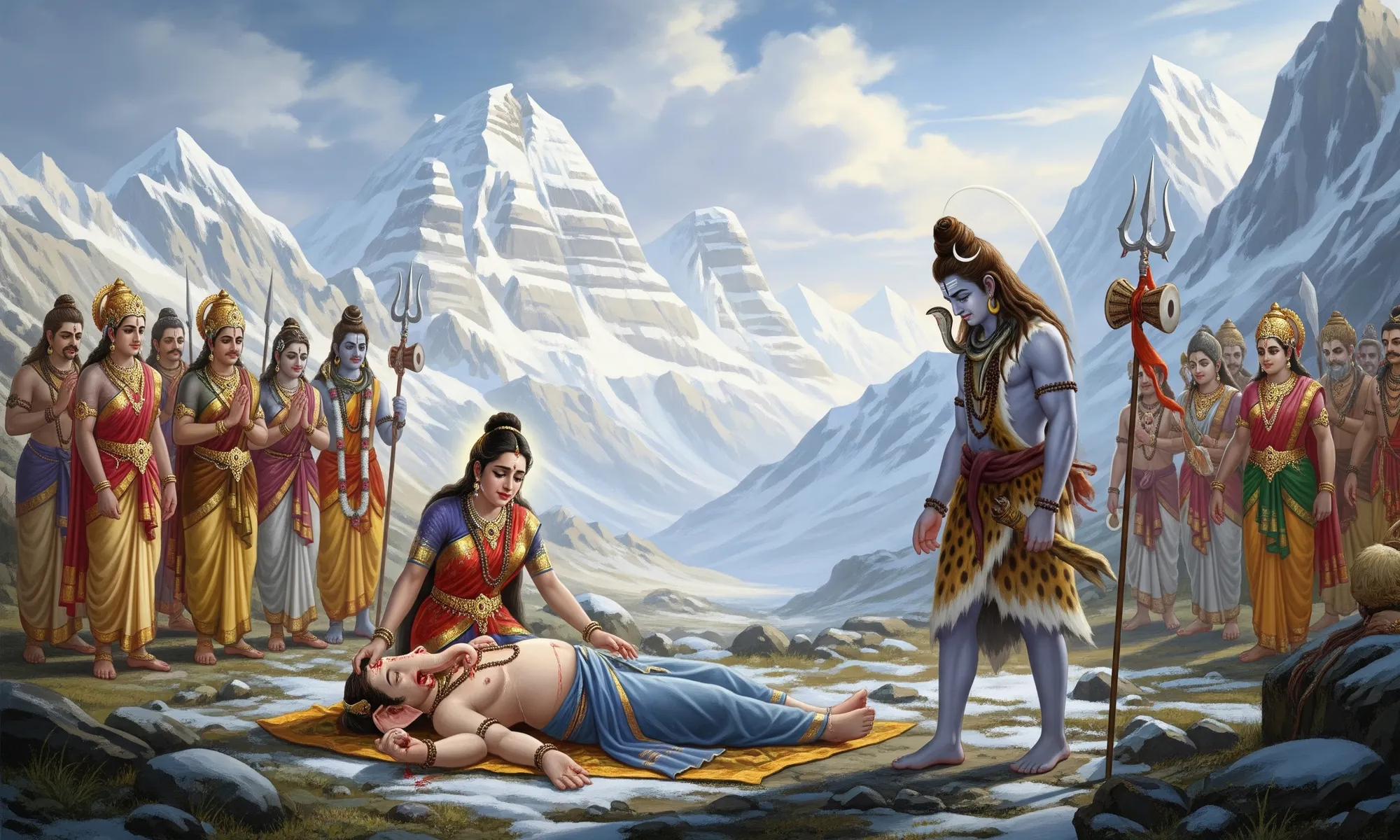
Ganesha’s Birth: The Elephant-Headed God and His Symbolism
Discover the fascinating birth story of Lord Ganesha, the elephant-headed remover of obstacles, and explore the deep sym...