Shango: The Thunder King of Yoruba Mythology
The King Whose Voice Was Thunder
Long before written history recorded the rise of kingdoms across West Africa, stories echoed through forests, villages, and royal courts of a ruler whose anger shook the heavens themselves. When thunder rolled across the sky and lightning split ancient trees, people believed they were witnessing the power of Shango, the mighty king who had become a god. Among the Yoruba people of present-day Nigeria, Benin, and Togo, no Orisha inspired more awe than this fearless ruler whose authority extended beyond the earth into the very skies above.
Unlike many mythological gods who were believed to have existed since the dawn of creation, Shango occupied a unique place in Yoruba tradition. He was remembered not only as a divine being but also as a legendary king who once walked among his people. His transformation from mortal ruler to one of the most revered Orishas reflects one of the defining themes of Yoruba mythology—that extraordinary individuals can transcend humanity through their deeds, leaving behind legacies powerful enough to become immortal.
To this day, whenever thunderstorms gather over the African landscape, many still remember Shango as the divine king whose voice echoes through every clap of thunder and whose justice flashes across the heavens in bolts of lightning.
From Mortal King to Divine Orisha
The legends describe Shango as the fourth Alaafin, or king, of the ancient Oyo Empire. Even during his lifetime, he possessed extraordinary charisma, unmatched courage, and a commanding presence that inspired both loyalty and fear. Warriors admired his fearlessness in battle, while neighboring kingdoms respected the strength of the empire he ruled.
Stories portray him as a brilliant military leader who expanded his kingdom through courage, discipline, and strategic brilliance. Yet he was also known for his fiery temper. His emotions were as powerful as the storms that later became his symbol, capable of inspiring greatness one moment and unleashing devastating consequences the next.
Different oral traditions recount different endings to his earthly reign. Some say his immense spiritual power accidentally unleashed catastrophic lightning that destroyed parts of his own palace, overwhelming him with grief. Others tell that political rivals forced him into exile, where he eventually disappeared from the mortal world. Rather than accepting his death, his followers believed their king had ascended into the heavens, becoming an Orisha whose authority extended far beyond any earthly throne.
From that moment onward, Shango was no longer merely remembered as a king—he became the divine master of thunder, lightning, justice, and royal power.
The Double-Headed Axe and the Power of Lightning
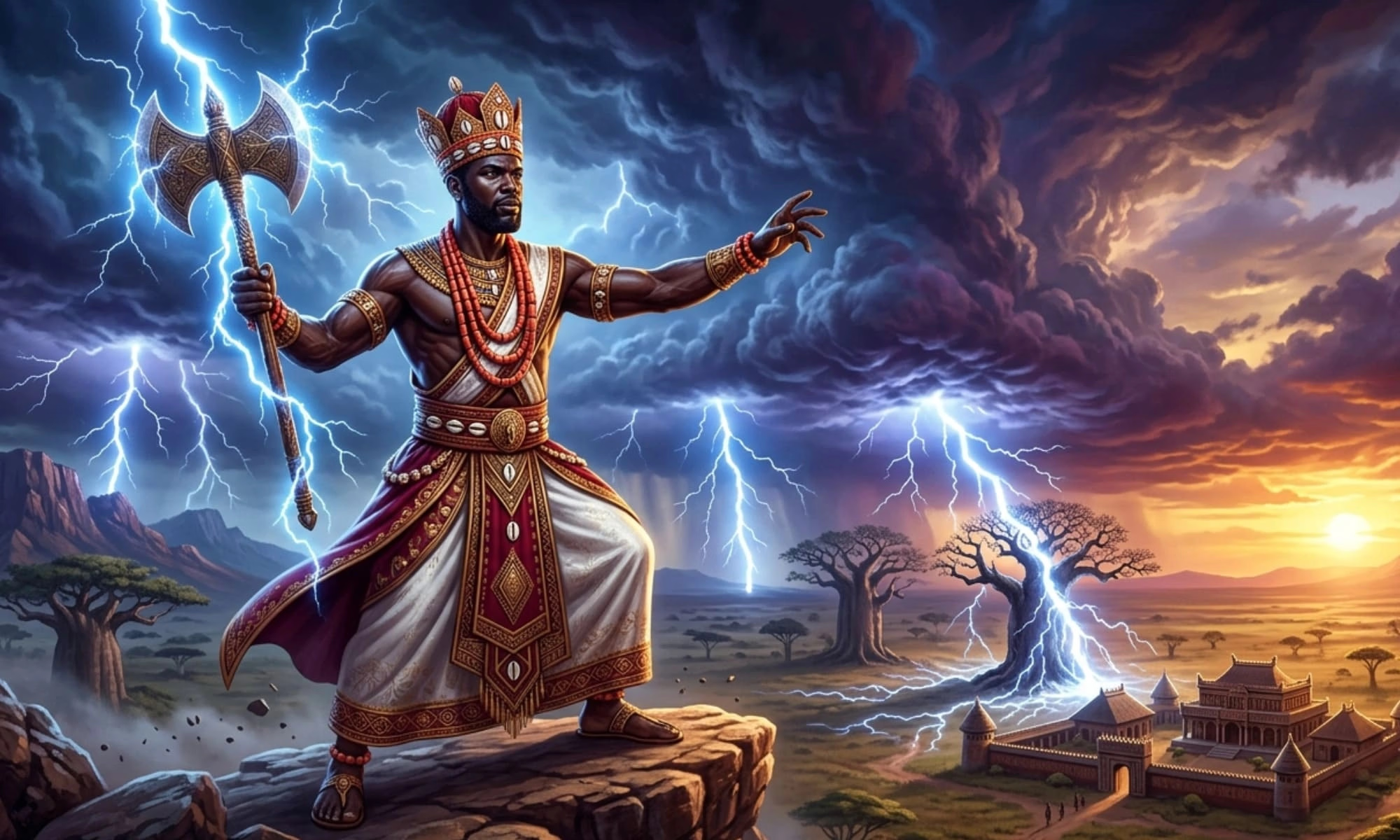
Every great deity possesses symbols that reveal their nature, and none are more recognizable than the sacred objects associated with Shango. His most famous emblem is the Oshe Shango, the distinctive double-headed axe that represents balance, authority, and divine justice.
Unlike ordinary weapons meant only for war, this axe symbolizes the two sides of righteous power. A king must be capable of protecting the innocent while punishing the guilty. Mercy without justice invites chaos, while punishment without wisdom becomes tyranny. The twin blades remind believers that true leadership requires both strength and restraint.
Lightning itself became another symbol of his presence. According to Yoruba belief, lightning was never random. Every strike reflected the will of Shango, demonstrating his ability to punish arrogance, lies, corruption, and broken oaths. When trees split apart or buildings were struck during violent storms, many believed the Thunder King had delivered divine judgment upon those who had violated moral order.
Because of this association, Shango became far more than a weather deity. He represented the belief that no injustice could remain hidden forever, for the heavens themselves watched over human actions.
The King Who Ruled Through Justice
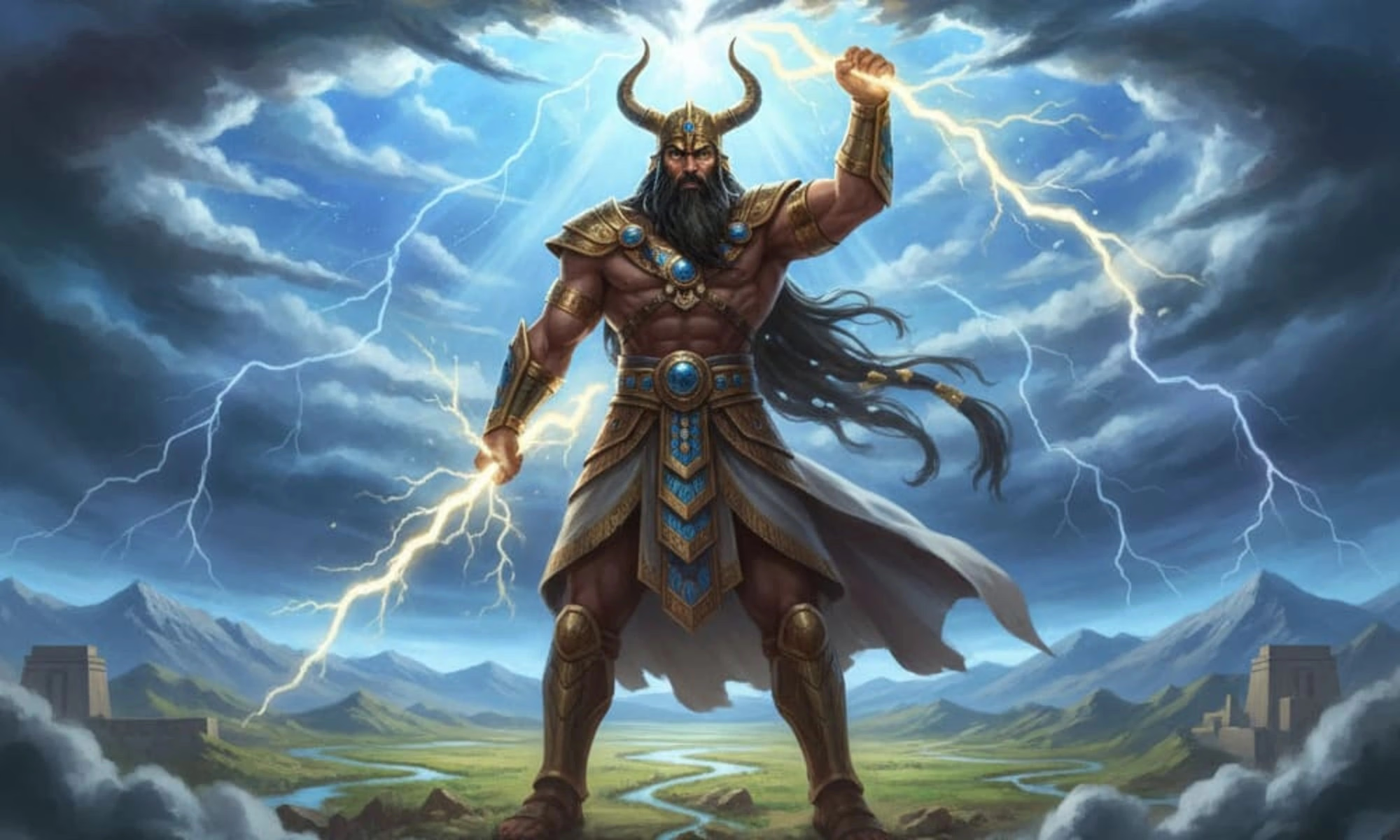
Although modern audiences often compare Shango to gods like Zeus or Thor because of his command over thunder, the Yoruba understanding of his role is remarkably different. His greatest responsibility was not simply controlling storms—it was maintaining justice throughout society.
Kings, judges, warriors, and community leaders frequently invoked Shango before making important decisions. Oaths sworn in his name carried enormous weight because lying under his divine witness invited terrible consequences. His reputation reminded rulers that authority existed to serve truth rather than personal ambition.
In Yoruba philosophy, justice was inseparable from balance. Communities prospered only when honesty, responsibility, and courage guided those in power. Whenever greed or corruption threatened that balance, Shango's thunder became a reminder that no earthly ruler stood above divine law.
This understanding transformed him into one of the most respected protectors of ethical leadership, making his mythology deeply relevant even in the modern world.
The Three Powerful Queens
Few mythological rulers possess companions as fascinating as the women who stood beside Shango. Yoruba tradition remembers his three wives—Oya, Oshun, and Oba—each representing different aspects of life and divine power.
Oya, the fearless goddess of storms, rivers, and transformation, shared the wild energy of thunder itself. She could summon violent winds and sweeping change, making her one of Shango's closest spiritual equals. Their partnership represented unstoppable natural power capable of reshaping both kingdoms and destinies.
Oshun embodied beauty, fertility, diplomacy, prosperity, and love. While Shango represented force, Oshun demonstrated that wisdom and compassion could achieve victories impossible through violence alone. Together they illustrated the balance between strength and grace.
Oba symbolized loyalty, devotion, and sacrifice. Her tragic stories reflect the complexities of love, jealousy, and trust, reminding listeners that even divine families experience the same emotional struggles found among humanity.
Together, these three goddesses enriched Shango's mythology, showing that leadership requires many complementary virtues rather than raw power alone.
Shango Across the Atlantic
The influence of Shango did not end with the ancient Yoruba kingdoms. During the transatlantic slave trade, millions of Africans carried their beliefs across the ocean despite unimaginable hardship. Among the traditions that survived was the worship of the Thunder King.
Over centuries, Shango became central to spiritual traditions throughout the Americas. In Cuba he is revered within Santería, while in Brazil he is honored in Candomblé under the name Xangô. Despite cultural adaptations, his essential identity remained unchanged—a divine ruler associated with justice, courage, leadership, and lightning.
This remarkable survival illustrates the resilience of mythology itself. Empires may rise and fall, languages may change, and borders may disappear, but powerful stories continue to unite generations separated by oceans and centuries.
Today, festivals honoring Shango attract thousands of worshippers who celebrate his legacy through drumming, dance, colorful ceremonial clothing, and joyful expressions of cultural identity.
Symbols That Continue to Inspire
Shango's mythology is rich with symbolism that extends far beyond religious tradition. His thunder represents decisive action against injustice. His lightning symbolizes sudden truth illuminating hidden darkness. His double-headed axe reflects balanced leadership that combines compassion with accountability.
Even the color palette associated with him—red and white—carries deep meaning. Red signifies vitality, courage, determination, and the unstoppable force of life, while white represents wisdom, purity, and spiritual clarity. Together they express the ideal ruler who governs through both strength and righteousness.
Unlike many mythological figures remembered only for spectacular battles, Shango's enduring lesson concerns responsible leadership. His stories encourage individuals to wield power carefully, speak truth boldly, and accept responsibility for the consequences of their actions.
The Eternal Thunder King
Thousands of years after the first Yoruba storytellers spoke his name beneath storm-filled skies, Shango remains one of Africa's most celebrated mythological figures. He stands not merely as a god of thunder, but as the embodiment of courage, justice, royal authority, and the responsibility that accompanies great power.
His legend reminds us that true greatness is measured not by fear inspired in others but by fairness, wisdom, and unwavering commitment to truth. Like the thunder that follows every flash of lightning, justice may sometimes seem delayed, but it ultimately arrives with unmistakable force.
Whenever dark clouds gather over the horizon and thunder rolls across the heavens, the ancient stories invite us to imagine the Thunder King once more riding through the skies with his sacred axe raised high. For the Yoruba people and millions who continue to honor their traditions, those storms are not merely weather—they are echoes of Shango's eternal presence, reminding humanity that power without justice is empty, but justice guided by wisdom can endure forever.
Frequently asked questions
Who is Shango in Yoruba mythology?
What does Shango's double-headed axe symbolize?
Why is Shango associated with thunder and lightning?
Who were Shango's wives?
Top 10 Most Powerful Warriors in the Ramayan Ranked
Discover the most powerful warriors of the Ramayan ranked by strength, devotion, divine weapons, and dharma in an epic r...
Top 10 Deadliest Yokai in Japanese Mythology Ranked
Discover the most terrifying yokai in Japanese mythology, ranked from eerie spirits to unstoppable demons that haunted a...