Enki and the Creation Myths: Wisdom, Water, and Life
How different cultures explained the origins of the world, gods, and humanity.
- 1Pangu and the Creation of the World: Chinese Myth of Beginnings
- 2Enki and the Creation Myths: Wisdom, Water, and Life (you are here)
- 3The Popol Vuh: Creation and the Hero Twins
- 4Nuwa: Creator of Humanity and Restorer of Balance
- 5The Creation of the World: Atum, Ra, and the Ennead
- 6The Great Spirit and the Creation of Man – Narratives of harmony and balance
- 7The Zulu Creation Story – Unkulunkulu and the birth of the first people
- 8Viracocha – The Great Creator
The Clever God of Water and Wisdom
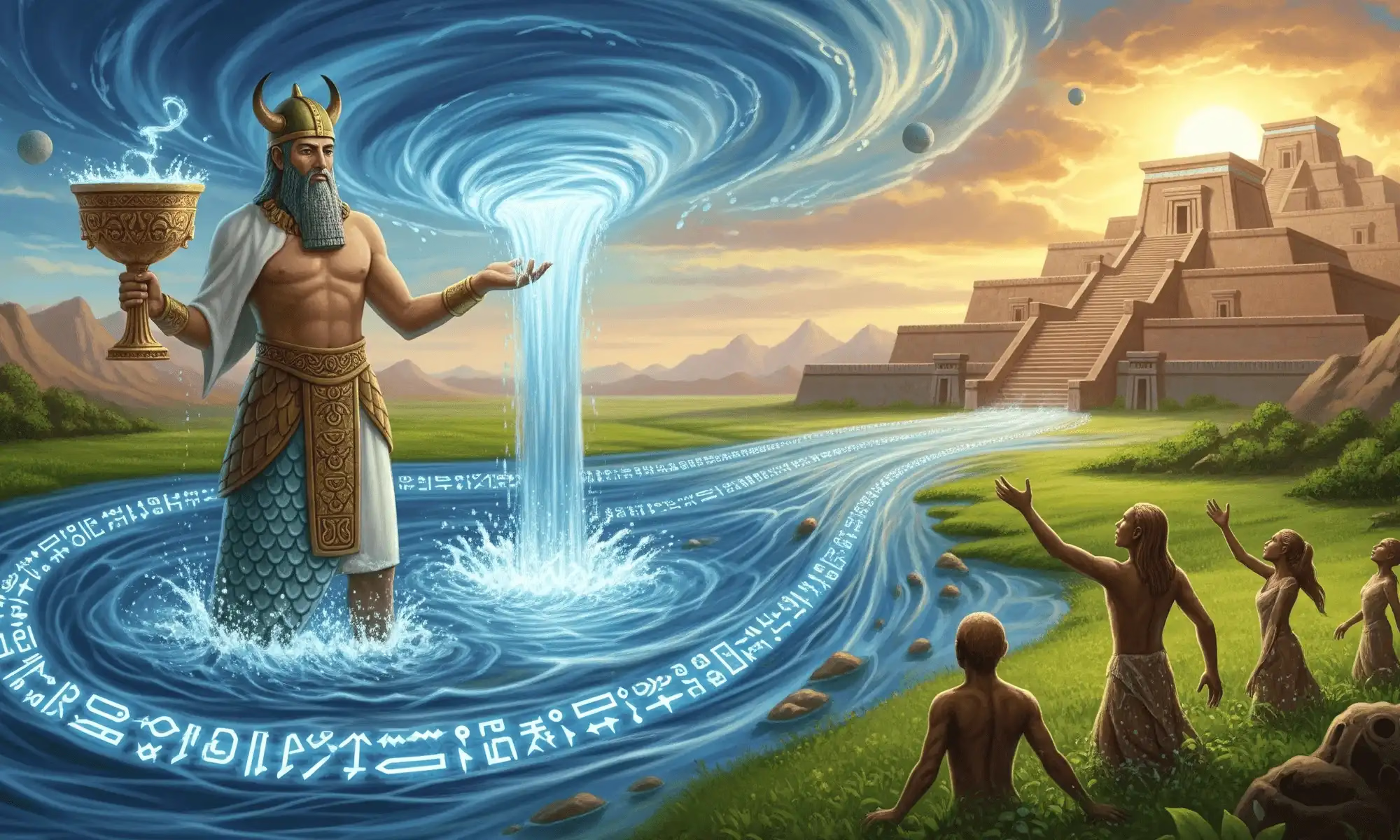
In the rich tapestry of Mesopotamian mythology, Enki emerges as a deity of unparalleled wisdom and creativity. Renowned by the Akkadians as Ea, he governs freshwater, wisdom, magic, and creation, embodying the essence of life-giving rivers and the deep ocean known as Abzu. His influence extends beyond mere natural elements; Enki is also the keeper of all knowledge contained within these realms.
Unlike many gods in the Mesopotamian pantheon who are often depicted in conflict or with destructive powers, Enki's nature is decidedly benevolent. He frequently intervenes on behalf of humans and resolves disputes among divine beings through clever strategies rather than violence. This approach underscores his unique role as both a creator and mediator, shaping the world in ways that benefit humanity while maintaining cosmic balance.
One notable example of Enki’s influence is his intervention to save humanity from the flood sent by the storm god Enlil. By warning Atrahasis, a mortal king, about the impending disaster and instructing him on how to build an ark for survival, Enki demonstrates both his wisdom and compassion. This act highlights not only his creative prowess but also his ability to foresee calamities and devise solutions that preserve life and order in the universe.
Enki and the Creation of Humanity
In Sumerian mythology, Enki is celebrated for his pivotal role in the creation of humanity. According to ancient lore, human beings were crafted from clay by Enki and the mother goddess Ninhursag as a means to alleviate divine labor. This act was not merely functional but also deeply infused with wisdom and compassion, ensuring that humans could not only survive but also flourish and contribute meaningfully to society.
Enki’s creation of humans was a profound moment in Sumerian religious history, reflecting the complex relationship between gods and mortals. By breathing life into human clay forms, Enki established an intricate social contract where humans served as caretakers of divine temples and rituals. This arrangement set the stage for a symbiotic relationship, with humans working to maintain order and honor the gods in exchange for guidance and protection.
Interestingly, one specific myth recounts how Enki used his wisdom to mold humans into beings capable of complex thought and emotion. For instance, he imbued them with the ability to understand and perform intricate rituals necessary for maintaining harmony between the earthly realm and the divine. This not only highlights Enki’s creative genius but also underscores the importance of cultural practices in Sumerian society.
The Flood Myth — Enki’s Cleverness
Enki, a pivotal deity in Mesopotamian lore, figures prominently in the flood myth, an ancient narrative that foreshadows tales such as Noah's Ark. The gods, dissatisfied with humanity's cacophony and disorder, planned to cleanse the earth through a devastating flood. However, Enki felt compassion for Atrahasis, a mortal who embodied resilience and wisdom.
Utilizing his cunning, Enki devised a covert method to warn Atrahasis of the impending doom without directly disobeying the gods' command. He whispered instructions in dreams, guiding Atrahasis to construct a large vessel capable of weathering the cataclysmic waters. This act of subterfuge and benevolence not only saved one man but also safeguarded humanity's future.
The story highlights Enki’s strategic genius and his ability to navigate between divine mandate and humanitarian compassion. For instance, by choosing Atrahasis as his vessel for salvation, Enki ensured that a leader with proven integrity would survive, setting the stage for a reformed society post-flood. This example underscores how sometimes bending rules can lead to greater good.
Enki as God of Wisdom and Magic
In ancient Sumerian mythology, Enki is revered not just for his role in creation but also as the guardian of all wisdom. He held a repository of divine decrees known as "me," which governed various aspects of human civilization including law, craftsmanship, music, and writing. This vast knowledge allowed him to guide humanity towards cultural and technological advancement.
Enki's influence extended beyond mere intellectual prowess; he was also adept at conflict resolution among the gods. His approach often involved clever negotiations rather than straightforward battles, showcasing his strategic mind. For instance, during a dispute over water rights between Enki and his sister Ereshkigal, Enki used diplomatic skills to resolve the issue amicably, highlighting his ability to maintain cosmic balance through dialogue.
Interestingly, despite being a deity of immense power, Enki occasionally took sides with mortals against other gods when he believed it was necessary for justice or progress. This nuanced approach reflects a deep understanding that wisdom is not just about knowledge but also about applying it ethically and pragmatically. For example, in one myth, Enki aids the hero Gilgamesh by providing him with crucial advice to navigate his trials.
Enki and Fertility
In ancient Mesopotamia, where water was scarce yet vital for survival, Enki's dominion over rivers and canals made him a crucial deity of fertility. His protection ensured that the land remained fertile and capable of sustaining abundant harvests, a lifeline in the arid environment where every drop counted.
Enki’s influence didn't stop at the crops; he played a pivotal role in human fertility as well. In mythological tales, Enki often acted to preserve life by ensuring both agricultural productivity and human procreation thrived. For instance, during periods of drought or famine, Enki would intervene to restore the water supply, thereby safeguarding not just plant growth but also the health and vitality of communities.
Interestingly, one myth describes how Enki saved humanity from a devastating flood by instructing Atrahasis to build an ark, demonstrating his direct involvement in sustaining life beyond just agriculture. This intervention underscored the complex interplay between water management and human survival in ancient Mesopotamia.
Moral and Symbolic Lessons
The myths surrounding Enki offer timeless lessons that resonate across cultures and time periods. One key message is his embodiment of wisdom over brute strength. Rather than relying on physical might, Enki solves complex issues through shrewdness and strategic thinking, making him a symbol for intellectual prowess in the face of adversity.
Another profound aspect of Enki’s character is his compassion and foresight. Unlike other gods who may turn a blind eye to human suffering, Enki actively aids humanity with thoughtful interventions. For instance, during times of drought or famine, he provides knowledge that enables people to survive and thrive, highlighting the importance of proactive care for others.
Moreover, Enki exemplifies the balance between order and creativity, encapsulated in his creation of the me, which are fundamental laws governing civilization. Yet, his inherent cleverness ensures that these rules are adaptable and evolve with societal needs. This nuanced approach to governance is crucial in maintaining harmony without stifling innovation.
Through these attributes—intelligence, compassion, and adaptability—Enki stands out as an archetypal divine figure who embodies the ideal blend of power and justice. His legacy continues to inspire leaders and thinkers today, emphasizing that true strength lies not merely in control but in understanding and benevolence.
Legacy of Enki
Enki, the Sumerian god associated with water, wisdom, and creation, left an indelible mark on Mesopotamian cultures that followed, including the Akkadians, Babylonians, and Assyrians. His attributes were so influential that subsequent mythologies often depicted deities who combined intelligence with benevolence, mirroring Enki’s multifaceted nature.
In scholarly circles today, Enki is revered as a symbol of humanity's potential for wisdom and ingenuity. For instance, researchers studying ancient texts frequently refer to Enki’s counsel in times of crisis or creation, highlighting his role in bridging the divine world with mortal concerns through guidance and foresight. This enduring legacy underscores how Enki continues to inspire contemporary understanding of leadership and innovation.
Interestingly, despite being a deity of old, Enki's teachings often emphasize pragmatic solutions rather than purely spiritual enlightenment. One specific example is his advice on managing water resources during severe droughts, showcasing a practical approach that aligns with modern environmental conservation efforts. This blend of ancient wisdom and real-world application illustrates the nuanced perspective that sets Enki apart from other mythological figures.
Conclusion — The God Who Shaped Civilization
In Mesopotamian mythology, Enki embodies the interplay of wisdom, creation, and life-giving power. His influence is felt in the very rivers that nourish the land and the clay that forms the bricks of ancient cities. Through his cunning and insight, he guides humanity to create stable societies built on moral and cultural foundations.
Enki's role as a bringer of order from chaos is crucial. In times of natural disasters or societal upheaval, he steps in with solutions, ensuring life continues without interruption. This enduring symbol of knowledge and benevolence has roots that stretch back to the earliest civilizations, making him a timeless figure whose impact resonates through history.
Consider the construction of early irrigation systems. Enki’s wisdom was crucial for turning barren desert into fertile land, illustrating how his influence extends beyond myth into practical applications that shaped Mesopotamian society. This shows not just his divine importance but also his practical relevance to everyday life.
Frequently asked questions
Who is Enki in Mesopotamian mythology?
What role did Enki play in the flood myth?
How is Enki associated with wisdom?
Why is Enki important in Mesopotamian creation myths?

Amaterasu: Sun Goddess and the Cave of Darkness
Explore the epic story of Amaterasu, the Sun Goddess of Japan, whose retreat into a cave plunged the world into darkness...

Odin’s Quest for Wisdom: Sacrifice at Mimir’s Well
Discover the story of Odin’s sacrifice at Mimir’s Well, where he gave up an eye to gain unmatched wisdom, symbolizing th...