Odin’s Quest for Wisdom: Sacrifice at Mimir’s Well
Among the gods of Norse mythology, none was more feared, respected, or mysterious than Odin. He ruled Asgard from his high seat, commanded warriors in battle, and welcomed fallen heroes into Valhalla. Yet despite all his power, Odin was haunted by a truth that none of the other gods could ignore: fate was coming.
The seers had spoken of Ragnarök, the twilight of the gods, a future where monsters would break their chains, the heavens would burn, and even Odin himself would fall. Most rulers might have sought greater armies or stronger weapons. Odin sought something else entirely.
He sought wisdom.
Again and again, the Allfather sacrificed comfort, safety, and even pieces of himself in pursuit of knowledge. He wandered the Nine Realms disguised as a traveler, listening to the stories of mortals and giants alike. He questioned witches, consulted seers, and searched ancient places forgotten by time. More than a king, Odin was a seeker—a god driven by an endless hunger to understand the hidden workings of the cosmos.
That hunger would eventually lead him to one of the most sacred places in all existence: the Well of Mimir.
The Well Beneath the World Tree
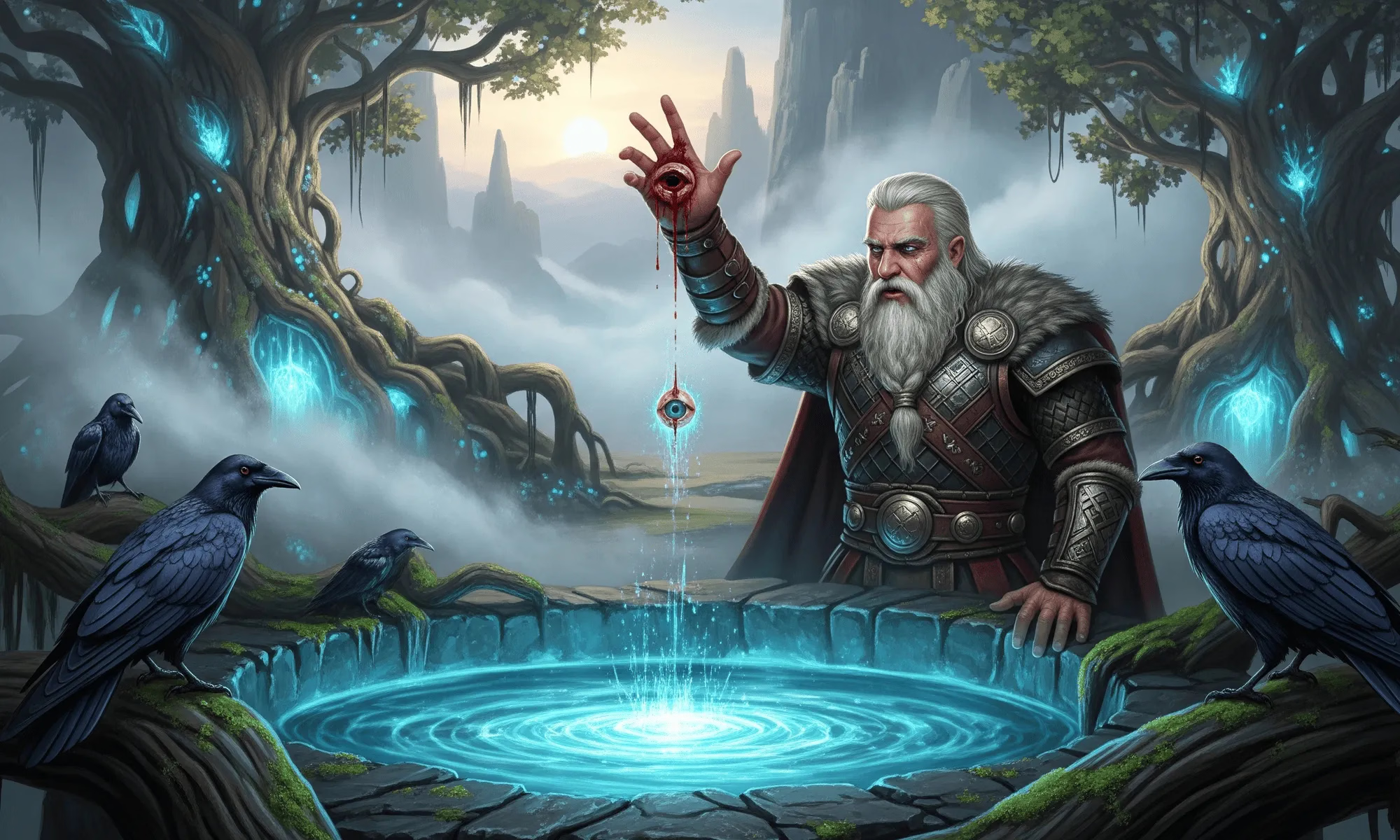
Deep beneath the vast branches of Yggdrasil, where the roots of the World Tree stretched into ancient realms, lay a spring unlike any other. This was Mímisbrunnr, the Well of Mimir, a source of wisdom so profound that it contained the memories of creation itself.
Its waters reflected more than faces. They reflected truths.
Those who gazed into the well might glimpse the distant past, understand the present, or catch fleeting visions of futures yet to unfold. The secrets of gods, giants, and destiny rested within its depths.
Guarding this sacred spring was Mimir, a being renowned throughout the Nine Realms for his unmatched wisdom. Some called him a giant, others a divine sage, but all agreed on one thing: no knowledge came from his well without a price.
And so, when Odin arrived seeking a drink from the waters of wisdom, Mimir did not greet him with reverence. He greeted him with a challenge.
The Price of Wisdom
Odin approached the well knowing that wisdom could not be taken—it had to be earned.
When he asked for a drink, Mimir listened silently. Then he named the price.
One eye.
The demand would have shocked most beings. An eye was not merely flesh; it was sight, perception, identity itself. Yet Odin did not hesitate. He understood something few others did: knowledge without sacrifice carries little value.
Without protest, the Allfather reached up and tore out one of his own eyes.
The stories say he dropped it into the waters of the well, where it remains to this day, gazing upward from the depths. In return, Mimir allowed Odin to drink.
As the sacred waters touched his lips, visions flooded his mind.
He saw truths hidden from gods and mortals alike. He learned the language of fate written into the roots of Yggdrasil. He glimpsed mysteries that no ordinary being could comprehend. Most importantly, he gained a deeper understanding of the destiny awaiting the gods at Ragnarök.
When Odin rose from the well, he was forever changed.
He had lost an eye.
But he had gained a vision far greater than ordinary sight.
Seeing Beyond Sight
The sacrifice at Mimir's Well is one of the most powerful symbols in Norse mythology because it reveals a truth that goes far beyond the story itself.
Odin's missing eye represents the idea that true wisdom requires sacrifice. Knowledge is not something handed freely to those who seek it. Every lesson learned, every truth uncovered, demands a cost.
By surrendering part of his physical vision, Odin gained something greater—inner vision. He learned to see beyond appearances, beyond the present moment, beyond even the boundaries of life and death.
This theme appears throughout Norse mythology. Strength may win battles, but wisdom determines survival. The greatest leaders are not those who see the most with their eyes, but those who understand the deepest truths hidden beneath the surface.
For the Vikings, Odin's sacrifice was not a tale of loss. It was a lesson about what truly matters.
A God Who Never Stopped Seeking
Most gods might have been satisfied after gaining the wisdom of Mimir's Well.
Odin was not.
His thirst for knowledge only grew stronger.
In another legendary act of sacrifice, Odin hung himself from Yggdrasil for nine days and nine nights. Pierced by his own spear and denied food and drink, he endured unbearable suffering until the secrets of the runes revealed themselves to him.
The runes were far more than letters. They contained magic, power, and hidden knowledge capable of shaping reality itself. By mastering them, Odin gained yet another weapon against the uncertainties of fate.
His quest also led him to the dead. He journeyed into dark realms seeking forgotten prophecies from ancient seeresses. He spoke with spirits and consulted beings older than the gods themselves.
Even the famous Mead of Poetry became another target of his relentless pursuit. Through cunning and deception, Odin stole the magical mead from the giant Suttungr, bringing divine inspiration to poets and storytellers.
Each story reveals the same truth.
Odin never stopped searching.
No amount of wisdom was ever enough.
The Talking Head of Mimir
One of the strangest chapters in Norse mythology came after the war between the Aesir and Vanir gods.
During the conflict, Mimir was killed and beheaded. His severed head was sent to Odin as part of a cruel exchange between the warring factions. For most beings, death would have marked the end.
Not for Mimir.
Odin used powerful magic and sacred herbs to preserve the head. Through spells and runes, he restored its ability to speak. From that day forward, the severed head of Mimir continued to offer counsel, sharing wisdom gathered over countless ages.
The image is unsettling—a one-eyed god carrying a talking head wherever he goes—but it perfectly captures the Norse attitude toward knowledge.
Wisdom does not die.
Even when bodies fade and kingdoms fall, knowledge endures.
Wisdom and Fate
Perhaps the most fascinating aspect of Odin's story is that all his sacrifices ultimately failed to change the future.
Despite drinking from Mimir's Well, mastering the runes, consulting the dead, and gathering every scrap of knowledge he could find, Odin could not prevent Ragnarök.
He knew Fenrir would one day kill him.
He knew the gods were marching toward their doom.
And yet he continued seeking wisdom.
To modern audiences, this may seem strange. Why pursue knowledge if it cannot change the outcome?
The Norse answer was simple.
Because wisdom is not about escaping fate.
It is about understanding it.
Odin's greatness lies not in defeating destiny but in facing it with open eyes. He prepares for the end not because he expects victory, but because courage demands resistance even when defeat is certain.
This idea sits at the very heart of Norse mythology: honor is found not in avoiding death, but in meeting it bravely.
The Legacy of the One-Eyed God
Today, Odin's missing eye remains one of the most recognizable images in mythology. Artists, writers, and storytellers continue to draw inspiration from the Allfather's sacrifice. Whether appearing in ancient sagas, modern fantasy novels, or popular films, the one-eyed wanderer endures as a symbol of wisdom earned through hardship.
Yet the power of the story lies in more than its imagery. Odin reminds us that knowledge always comes with a cost. Every skill mastered, every truth discovered, every moment of growth demands sacrifice of some kind. Comfort must be exchanged for learning. Certainty must be exchanged for understanding.
The Allfather gave an eye to see more clearly than any other being in existence.
And in doing so, he left behind one of mythology's most enduring lessons: true wisdom is not found in what we keep, but in what we are willing to give up in order to learn.
Frequently asked questions
Why did Odin sacrifice his eye?
What is Mimir’s Well in Norse mythology?
What does Odin’s missing eye symbolize?
Oni, Tengu, and Dark Spirits: Monsters of Japanese Folklore Explained
Explore Oni, Tengu, and dark spirits from Japanese mythology in an epic storytelling journey through fear, justice, and ...

The Descent of Ganga: A River from the Heavens
Explore the epic story of Ganga’s descent to Earth, guided by Bhagiratha’s devotion and Lord Shiva’s protection. Learn t...