Gilgamesh: The First Epic Hero
Epic journeys, legendary deeds, and the greatest heroes of myth.
- 1The 12 Labors of Hercules: Strength, Trials, and Redemption
- 2Gilgamesh: The First Epic Hero (you are here)
- 3Cúchulainn: The Hound of Ulster
- 4Theseus and the Minotaur: Bravery and Intelligence – Hero of Athens
- 5Aeneas and the Journey to Italy
- 6Karna: Hero of Tragedy – Loyalty, Valor, and Fate in the Mahabharata
- 7The Monkey King – Sun Wukong’s Rebellion Against Heaven
- 8Māui: The Trickster Demigod
The Dawn of the Hero
Long before Homer sang of Achilles or the Mahabharata told of Arjuna, there was Gilgamesh. His story, inscribed on clay tablets in cuneiform script nearly 4,000 years ago, is the oldest surviving epic in human history. The Epic of Gilgamesh weaves tales not just of battles and glory but also explores profound themes like friendship, mortality, and the eternal quest for meaning.
Gilgamesh, the king of Uruk, was an extraordinary figure, two-thirds divine and one-third human. His unmatched strength and ambition were legendary, yet his true journey lay in self-discovery rather than conquest. This epic reveals that even the mightiest heroes face inner struggles and seek profound truths about their existence.
For instance, Gilgamesh's quest to defeat the monster Humbaba was not merely a display of brute force but a symbolic confrontation with his own mortality. Upon learning of his best friend Enkidu’s death, Gilgamesh embarked on an arduous journey to find immortality, only to return humbled and wise. This narrative underscores that heroism often lies in the personal growth and acceptance of one's humanity rather than in external achievements alone.
Gilgamesh the Tyrant King
In the early stages of the Epic of Gilgamesh, the king of Uruk is portrayed as an oppressive and arrogant ruler. His reign was marked by forced labor and abuse of power, leading to widespread suffering among his subjects. The gods, disturbed by the cries of the oppressed people, decided to intervene and create a rival who could challenge Gilgamesh's dominance.
The birth of Enkidu marks a pivotal moment in this narrative. Raised among animals on the steppe, Enkidu is initially a wild man without any knowledge of civilization or human society. His creation by the gods was not just to combat Gilgamesh but also to serve as a catalyst for change within the tyrant king himself. When Enkidu first enters Uruk and encounters Gilgamesh, their initial conflict sets in motion a series of events that will transform both men.
The Encounter with Enkidu
Upon meeting Enkidu, Gilgamesh is intrigued by his strength and wild nature. This encounter challenges the king’s arrogance and forces him to recognize a worthy adversary for the first time. Their subsequent friendship leads Gilgamesh to question his previous ways of ruling and acting. The journey that follows with Enkidu involves many adventures, each pushing Gilgamesh towards becoming a more compassionate and heroic figure.
The Meeting of Gilgamesh and Enkidu
Enkidu, transformed by Shamhat's teachings in the temple, emerged as a formidable opponent to challenge Gilgamesh within the bustling city walls of Uruk. Their encounter was not merely a clash of weapons but a seismic event that reverberated through every corner of the city. Surprisingly, this intense confrontation did not spawn enmity but instead forged an unbreakable bond between them.
As brothers-in-arms, Gilgamesh and Enkidu embarked on ventures of unparalleled ambition. They sought not only personal glory but also to elevate Uruk's status, turning their partnership into a testament to the power of unity. For instance, their joint expedition against Humbaba demonstrated how two individuals could achieve what neither could alone.
Remarkably, despite being from different walks of life—one a king, the other a wild man—their camaraderie transcended societal barriers. Their journey together highlighted not just physical prowess but also mutual respect and trust, which are often overlooked in tales of heroism. This bond would prove instrumental as they navigated both external threats and internal doubts.
The Quest for Glory — Humbaba and the Cedar Forest
Driven by an unyielding quest for glory, Gilgamesh and Enkidu embarked on a perilous journey to the sacred Cedar Forest. This ancient woodland was fiercely protected by Humbaba, a colossal giant whose presence had been ordained by the gods themselves as a guardian of divine law.
Despite warnings from the celestial realm, the duo bravely ventured into the heart of the forest and engaged in an epic battle with Humbaba. With the assistance of divine forces, they managed to defeat the monstrous guardian, thereby clearing the path to the sacred cedars. However, this triumph was not without consequence, as their act of cutting down the revered trees challenged the cosmic order that governed the world.
The destruction of the Cedar Forest and the slaying of Humbaba would haunt Gilgamesh throughout his epic journey, serving as a stark reminder of the delicate balance between human ambition and divine will. This event underscored the moral complexity inherent in their actions, setting the stage for deeper reflections on the nature of heroism and its costs.
The Bull of Heaven and Enkidu’s Death
When Ishtar, goddess of love and war, proposed marriage to Gilgamesh, he rebuffed her offer mockingly. This rejection was met with wrathful vengeance as she unleashed the terrifying Bull of Heaven upon Uruk. Together, Gilgamesh and his loyal companion Enkidu faced this formidable beast and triumphed over it, though their victory came at a severe cost.
The gods were displeased by their defiance and decreed that one of the heroes must be punished for their hubris. It was Enkidu who suffered the curse, falling ill and eventually succumbing to his fate. His death plunged Gilgamesh into a profound despair, turning him from an arrogant king into a man grappling with the harsh reality of mortality. This transformation marked a critical juncture in Gilgamesh's journey, as he grappled with existential questions and the inevitability of loss.
With Enkidu’s death, Gilgamesh faced a stark truth about human existence that few could comprehend so deeply: every act of defiance against the gods brings its own consequence. In this moment, Gilgamesh's resilience was tested as he sought to find meaning beyond his grief and isolation, ultimately leading him down a path toward enlightenment about the nature of life itself.
The Search for Immortality
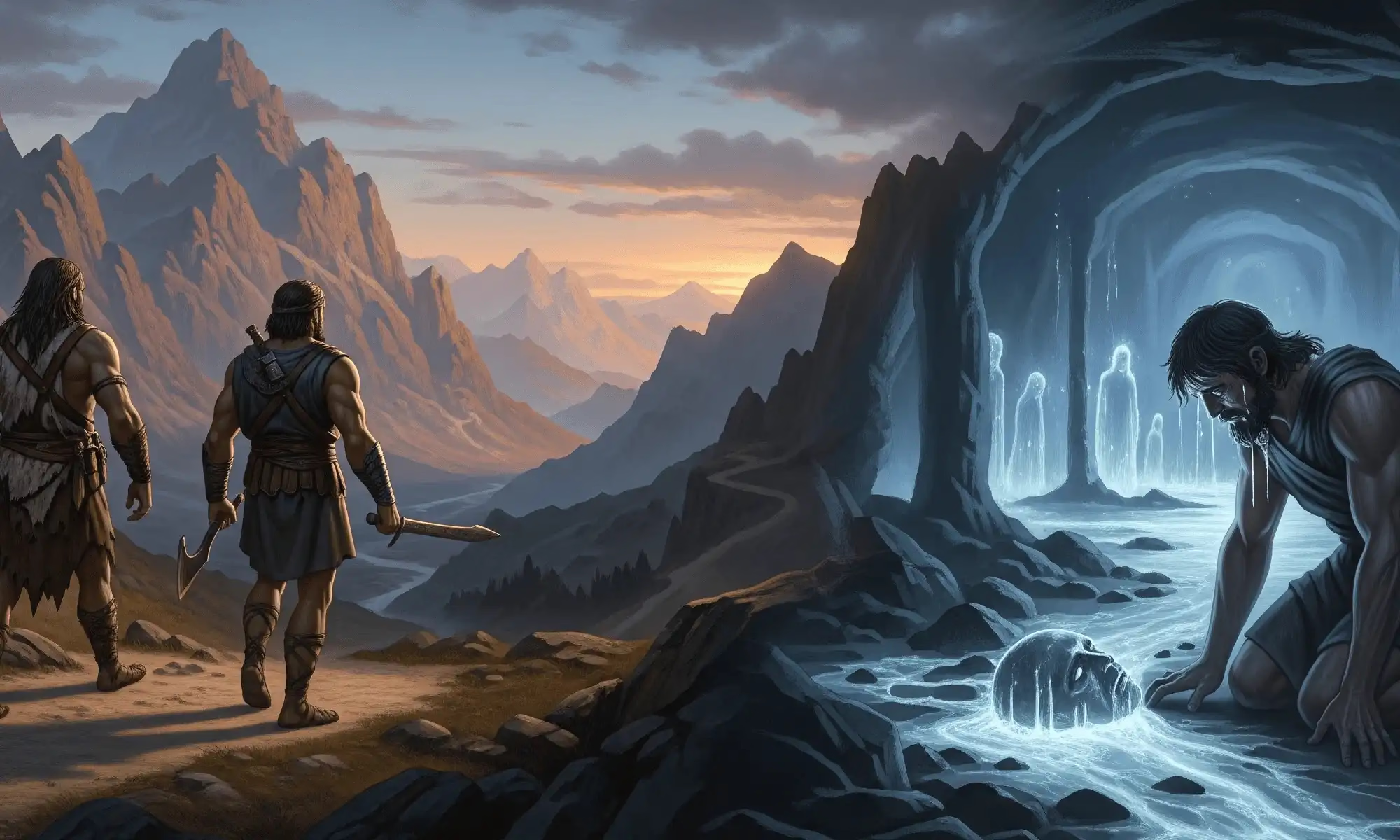
Stricken by the loss of his best friend Enkidu and grappling with existential despair, Gilgamesh could not reconcile himself to the finality of death. He renounced his throne in Uruk and embarked on a perilous journey across vast landscapes, driven by an unyielding desire for eternal life. His quest took him through treacherous terrains and into the unknown reaches of the world.
After enduring countless trials, Gilgamesh finally met Utnapishtim, the ancient survivor who had built a giant boat to escape the deluge sent by the gods. As the sole human granted immortality, Utnapishtim revealed that eternal life was reserved for deities and not mere mortals. Nevertheless, he offered Gilgamesh one last hope: a miraculous plant said to rejuvenate youth. Despite his exhaustive efforts, this plant proved elusive.
As fate would have it, the plant slipped through Gilgamesh’s fingers just when victory seemed within reach, taken by a serpent that slithered away with its prize. This twist left him without tangible proof of immortality but with a profound realization: the essence of life lies not in defying mortality but in embracing the transient nature of existence. In this moment, Gilgamesh found solace and acceptance, marking a significant shift in his perspective on the human condition.
Legacy of the Epic
Gilgamesh's return to Uruk marked a profound shift in his perspective, from a tyrannical ruler to one who understood the true value of life. He came to see that enduring legacy was not about defying mortality but about leaving behind a lasting impact on his city and people. The clay tablets upon which his story was recorded have proven this wisdom, as they continue to tell his tale across countless generations.
The Epic of Gilgamesh transcends its roots in Mesopotamian mythology by offering profound philosophical insights into the human condition. It explores themes such as the unbreakable bond between friends and the sorrow of losing a dear companion, like Enkidu's death. This narrative not only captures the essence of personal ambition but also delves into the universal quest to grapple with mortality.
For instance, Gilgamesh's journey is often seen as an archetypal search for meaning and immortality that resonates with readers today. Despite his divine heritage, he faces the same fears and uncertainties as ordinary people, making his story a timeless reflection of human struggle. The epic also presents a nuanced view on the nature of heroism; it shows that true greatness lies not in conquering death but in understanding its inevitability and living life to the fullest.
Conclusion — The First Hero’s Truth
Gilgamesh's journey is a testament to the idea that true heroism lies in the wisdom gleaned from hardship rather than brute strength alone. His story, one of humanity's earliest epics, delves deeply into existential questions about life, love, and mortality. For instance, Gilgamesh's quest for immortality highlights how even the most powerful beings face the inevitability of death, a realization that brings profound humility and introspection. This narrative not only entertains but offers a timeless reflection on personal growth and resilience in the face of adversity.
Interestingly, despite his superhuman feats, Gilgamesh's greatest achievements are often tied to his vulnerabilities and failures. These aspects reveal a more nuanced perspective on heroism, suggesting that true greatness emerges from grappling with one's flaws rather than merely overcoming them. Through his trials, Gilgamesh learns that leaving a legacy is less about conquering the world and more about understanding its complexities.
Frequently asked questions
Who was Gilgamesh?
What is the Epic of Gilgamesh about?
What lesson does the Epic of Gilgamesh teach?
Surpanakha’s Role: The Spark That Ignited the Great War
Explore Surpanakha’s crucial role in the Ramayana. From her rejection by Rama and Lakshmana to her humiliation and reven...
Anansi the Spider: Trickster and Teacher
Discover Anansi the Spider, the legendary trickster of African mythology. Explore his witty tales, moral lessons, and en...