The Eye of Horus: Power, Protection, and Healing
A Symbol of Divine Protection
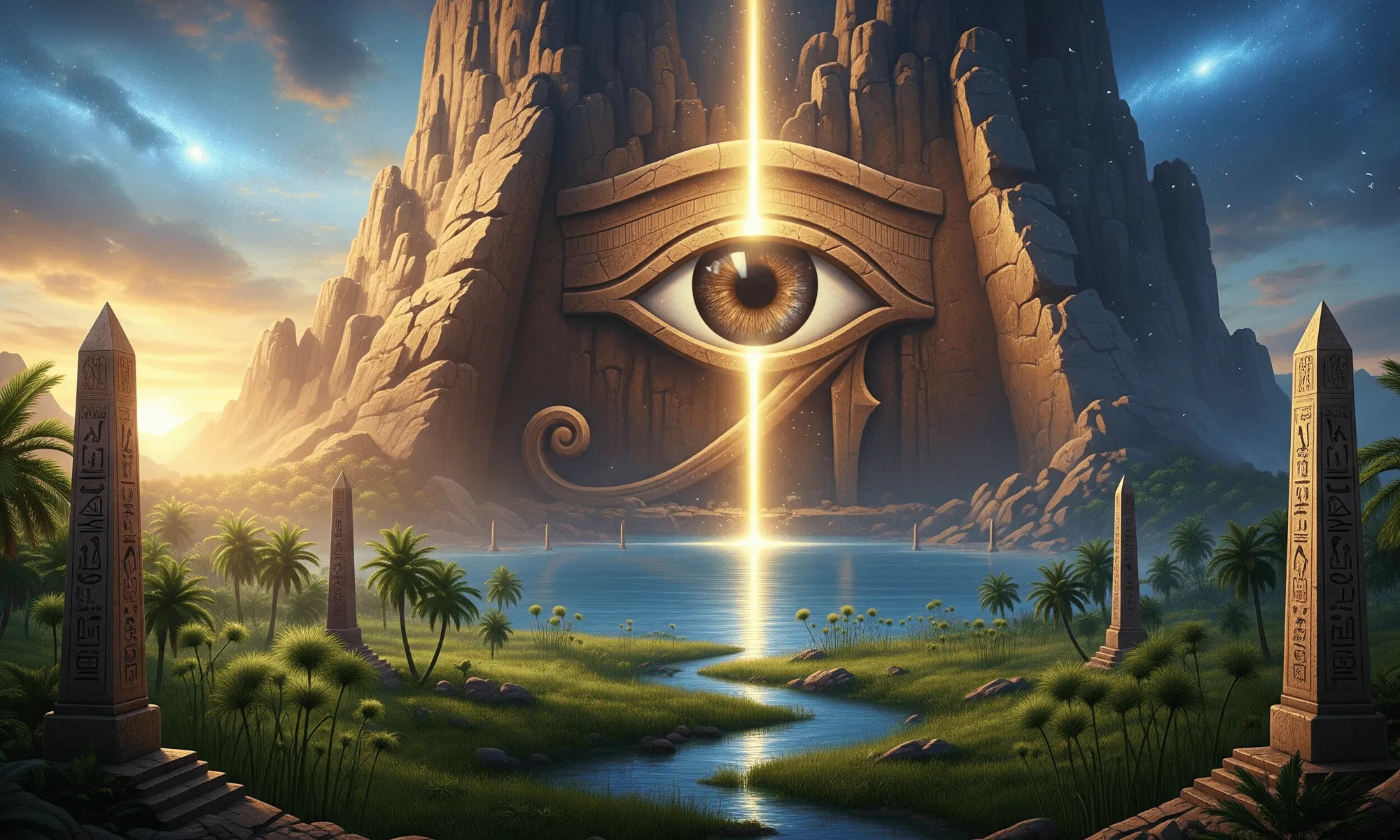
In the rich tapestry of Egyptian mythology, few symbols resonate as profoundly as the Eye of Horus, often referred to by its alternative name Wadjet. This ancient symbol embodies protection, healing, and divine authority, weaving through the narrative of cosmic battles and eternal struggles between order and chaos.
The Eye of Horus is not merely a decorative element but a powerful talisman deeply rooted in religious beliefs and practices. It is said to have originated from the fierce conflict between Horus and Seth over the throne of Egypt. During this epic battle, one of Horus's eyes was torn out by his rival but was later restored through divine intervention, symbolizing resilience and restoration.
Throughout history, pharaohs wore amulets featuring the Eye of Horus to invoke its protective powers and affirm their divine right to rule. This practice continued even in more modern times, with Egyptian artifacts adorned with the symbol still revered for their mystical properties today. For instance, excavations at Saqqara have uncovered numerous pieces of jewelry from the Old Kingdom era that bear the Eye of Horus, highlighting its enduring significance.
“The Eye of Horus is a testament to how ancient civilizations sought divine guidance and protection in times of strife.”
The symbol's influence extends beyond religious contexts into everyday life, with many Egyptians believing it could ward off evil spirits and bring good fortune. Interestingly, the Eye of Horus also played a crucial role in early medical practices. Ancient Egyptian physicians used fractions derived from the symbol to measure precise quantities for medicinal ingredients, demonstrating its practical applications beyond spiritual realms.
The Mythological Origin
The Eye of Horus is deeply rooted in ancient Egyptian mythology, specifically in the legendary battle between Horus and Set. This conflict emerged after Set's treacherous act of murdering Osiris, prompting Horus to embark on a quest for vengeance. During their fierce battles, Horus suffered significant injury, losing one of his eyes. The gods intervened, recognizing the profound implications of this struggle and used divine magic to restore Horus’s eye, transforming it into an emblem of wholeness and restoration.
Once restored, the Eye of Horus evolved into a powerful symbol in Egyptian culture, representing not just recovery but also strength and vigilance. It became crucial for maintaining Ma'at, the principle of cosmic order and truth, which Egyptians believed was essential for societal harmony. Interestingly, despite its association with healing and restoration, the eye is also linked to conflict, reflecting the paradoxical nature of both destruction and creation in Egyptian belief systems.
As a tangible example, the Eye of Horus appears prominently on ancient amulets, where it serves as a protective charm for the deceased. This artifact not only safeguards the soul's journey but also symbolizes the restoration of balance after turmoil—a concept deeply embedded in Egyptian funerary rituals.
Symbolism of the Eye
The Eye of Horus is a rich symbol in ancient Egyptian culture, carrying profound meanings that extend beyond its visual representation. It was commonly used as an amulet to protect individuals from evil forces and potential dangers, embodying the essence of safeguarding one's well-being. Additionally, it served as a powerful emblem for healing, reflecting the mythological narrative where Horus’s eye was magically restored after being damaged in combat. This restoration symbolizes not only physical recovery but also emotional and spiritual wholeness.
Furthermore, the Eye of Horus is deeply associated with power and authority. It represents divine vision, vigilance, and oversight, overseeing justice and order in both the mortal realm and the afterlife. Its design, often intricately incorporated into jewelry or inscribed within tombs, signifies the god’s continuous presence and watchful gaze over the living and the dead alike. Interestingly, despite its protective and healing connotations, the Eye of Horus also played a crucial role in legal proceedings, where it symbolized the just judgment delivered by divine authority.
The use of the Eye of Horus as an amulet was so widespread that during archaeological excavations, over 90% of mummies examined were found to have been adorned with this protective symbol.
Use in Rituals and Daily Life
The ancient Egyptians revered the Eye of Horus, integrating it into various aspects of their spiritual and daily lives. This symbol was not merely decorative; it served as a powerful talisman, embodying divine protection for both the living and the dead. In funerary rituals, amulets adorned with the Eye were placed on mummies to safeguard the deceased’s journey through the afterlife.
For the living, the Eye of Horus offered more than just symbolic reassurance; it was a tangible connection to the divine realm. Egyptians wore protective talismans featuring the Eye as an amulet against sickness and misfortune. Furthermore, this potent symbol was invoked in magical spells designed to heal, protect, and empower individuals facing life’s challenges.
One specific instance of its use involved a pharaoh named Tutankhamun, whose tomb was replete with artifacts depicting the Eye of Horus. These objects underscored his divine status and provided him with spiritual protection during both his reign and beyond death. Such extensive inclusion in royal tombs highlights the widespread belief in the Eye’s ability to bridge mortal concerns with divine assurance.
The Eye of Horus, therefore, became a ubiquitous symbol not just of protection but also of connection—ensuring that those who bore it felt the ever-present watchfulness and guardianship of the gods.
Mathematical and Cosmic Significance
The Eye of Horus transcends its mythological origins, delving into the realm of Egyptian mathematics where it serves as a symbol for fractions. This ancient civilization used various parts of the eye to denote specific fractional values, emphasizing balance and completeness within their numerical system. The concept of order arising from division and wholeness emerging from fragmentation underscores not only mathematical principles but also cosmic beliefs. For instance, just as 1/2 + 1/4 + 1/8 + 1/16 + 1/32 + 1/64 equals nearly one whole, so too does the universe find harmony in its diverse and fragmented elements.
By integrating fractions into a sacred symbol, Egyptians demonstrated their understanding that all aspects of life—whether divine or mortal—are interconnected. This holistic approach to mathematics reflects a profound belief in balance across nature and human endeavors. In this context, the Eye's symbolic representation extends beyond religious iconography to become a metaphor for societal structures and natural laws. For example, temple construction relied on precise measurements and ratios that mirrored these mathematical concepts, illustrating how divine order guides practical applications.
Order emerging from division is not merely a cosmic notion but an observable reality in mathematics, where fragmentation leads to unity.
Enduring Legacy
The Eye of Horus, a potent symbol from ancient Egypt, continues to captivate people across the globe. This iconic emblem weaves together the realms of art and spirituality, appearing prominently in Egyptian temples, tombs, and monuments as a testament to its cultural significance. Beyond these historical contexts, the Eye has found new life in modern culture; it adorns jewelry, inspires tattoos, and serves as a powerful spiritual symbol worldwide. The enduring appeal of the Eye lies not just in its aesthetic beauty but also in its profound spiritual meaning.
Today, the Eye remains a potent emblem of protection, insight, and restoration—qualities that resonate deeply with those seeking solace or guidance. For instance, many wear the Eye as jewelry to feel a connection to ancient wisdom while navigating contemporary challenges. This blend of myth and magic ensures its relevance continues to grow, making it a timeless symbol of divine guardianship. Interestingly, despite being rooted in an ancient culture, the Eye's symbolic power has expanded into diverse global communities, indicating a universal human yearning for protection and guidance.
The legacy of the Eye of Horus is further underscored by its continuous adaptation to new contexts without losing its original essence. Whether as a decorative element or a spiritual talisman, it bridges past and present, offering a tangible link between ancient wisdom and modern life. This enduring symbolism reflects not just Egypt's rich heritage but also the universal human quest for meaning and protection.
Conclusion: A Watchful Guardian
The Eye of Horus encapsulates the core beliefs of ancient Egyptian mythology—power, protection, healing, and order. This symbol has endured through millennia, from battles between gods to the burial chambers of pharaohs and everyday Egyptians. Its presence in both life and death underscores its significance as a guardian against chaos.
When an individual wears or invokes the Eye, they are tapping into a wellspring of divine protection. Each time this symbol is seen, it serves as a reminder that the gods are vigilant, healing wounds and maintaining cosmic balance. For instance, ancient Egyptians often placed amulets shaped like the Eye in tombs to protect the deceased on their journey through the underworld. This practice highlights how deeply ingrained the belief was in the power of this emblem.
In every context, from funerary rites to daily rituals, the Eye of Horus remains a potent symbol of divine oversight and protection. Its enduring influence speaks volumes about the Egyptians' need for security amidst life’s uncertainties.
Frequently asked questions
What is the Eye of Horus?
How was the Eye of Horus used in ancient Egypt?
What does the Eye of Horus symbolize?
Top 5 most powerful sons of Surya Deva (Sun God)
The Sun god or Surya Deva as per Indian mythology has ten sons. Some are demigods while some are gods. Some played a par...

Ganesha’s Birth: The Elephant-Headed God and His Symbolism
Discover the fascinating birth story of Lord Ganesha, the elephant-headed remover of obstacles, and explore the deep sym...