Tyr: The One-Handed God Who Sacrificed Himself
The Forgotten Hero Among the Gods
When people think of Norse mythology, names like Odin, Thor, and Loki often dominate the imagination. Yet among the gods of Asgard stood another deity whose courage surpassed even the might of the thunder god. His name was Tyr, and unlike many heroes who gained glory through conquest, Tyr became immortal through sacrifice.
He was not the strongest among the Aesir, nor the wisest. He possessed something rarer—an unwavering commitment to justice and duty. His story is not one of victory or kingship, but of willingly giving up a part of himself so that others might survive.
Though time has made him one of the lesser-known Norse gods, Tyr was once revered as one of the highest deities in the Germanic world. His name survives today in "Tuesday," derived from "Tiw's Day," a reminder that the memory of the one-handed god still echoes through the modern world.
The Ancient God of Law and Honor
Before Odin became the Allfather, many scholars believe Tyr occupied a far more prominent place among the Norse and Germanic peoples. He was associated with justice, law, oaths, and honorable warfare. Warriors invoked him before battle, not merely for victory but for courage and fairness.
Unlike Odin, whose wisdom often involved deception and hidden knowledge, Tyr represented straightforward honor. His word was sacred, and promises made in his name carried immense weight.
The Vikings admired bravery, but they admired integrity even more. Tyr embodied both qualities. He was the kind of leader who stood by his commitments, even when doing so demanded the ultimate sacrifice.
His greatest test would come not from giants or enemies, but from a creature destined to destroy the gods themselves.
The Growing Threat of Fenrir
Among the children of Loki and the giantess Angrboda was Fenrir, a wolf unlike any creature the world had ever seen. As the years passed, Fenrir grew larger and more powerful. The gods soon realized that terrible prophecies surrounded the beast.
It had been foretold that during Ragnarök, Fenrir would break free and devour Odin himself.
Fearing this future, the gods sought ways to restrain the monstrous wolf. But Fenrir's strength was extraordinary. Every chain they forged shattered beneath his power.
Only Tyr dared approach him.
Unlike the other gods, who secretly feared the beast, Tyr fed Fenrir and earned his trust. Over time, a strange bond developed between the god of justice and the creature destined to bring destruction.
But fate could not be avoided.
Gleipnir: The Impossible Binding
The gods turned to the dwarves, whose craftsmanship surpassed all others. The dwarves forged a magical ribbon called Gleipnir, made from impossible ingredients: the sound of a cat's footsteps, the roots of mountains, the breath of fish, the beard of women, the sinews of bears, and the saliva of birds.
Though thin and soft, Gleipnir possessed unmatched strength.
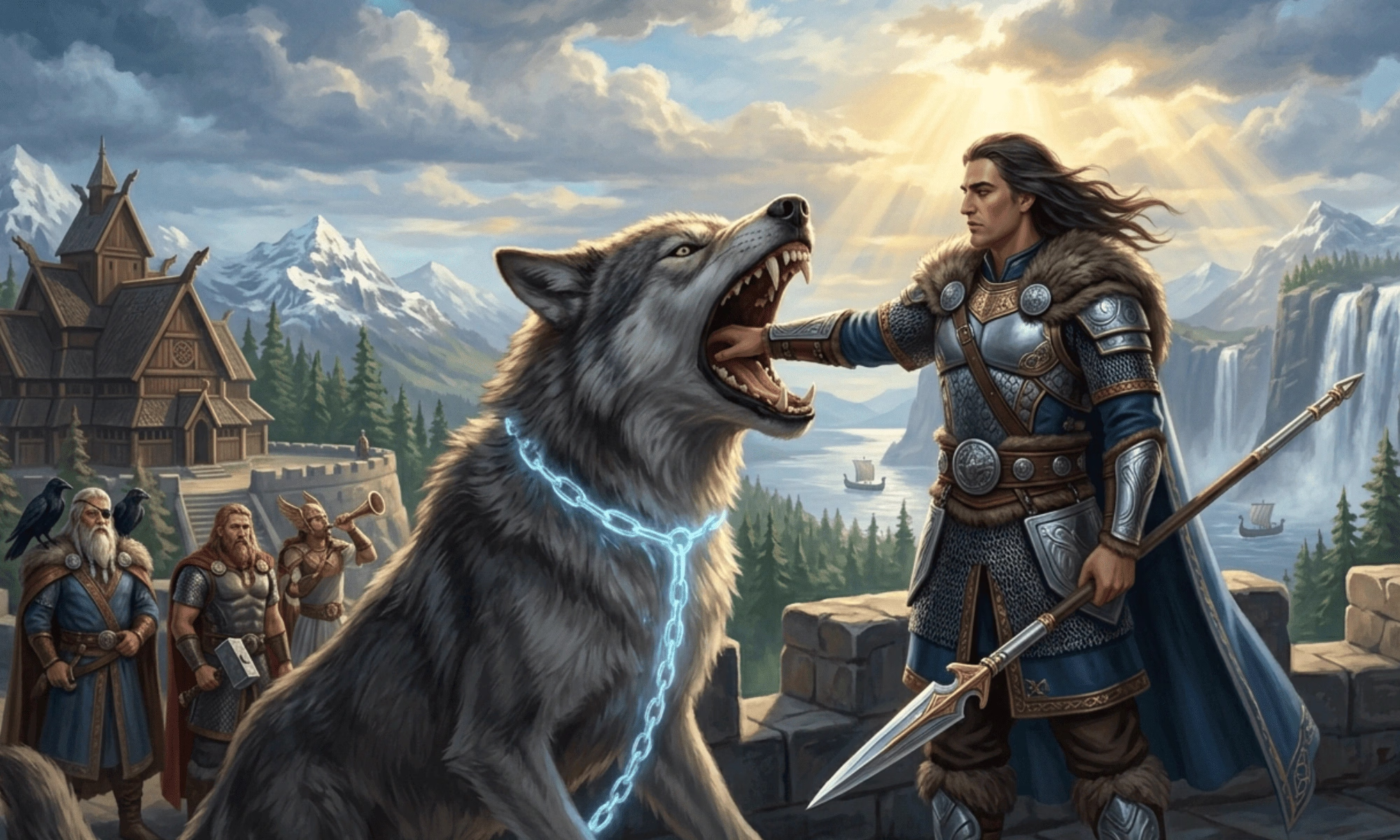
When the gods presented the ribbon to Fenrir, the wolf grew suspicious. He sensed deception. Refusing to be bound unless one of the gods pledged their trust, Fenrir demanded that someone place a hand inside his mouth.
Silence filled Asgard.
No god moved.
No god except Tyr.
The Price of Duty
In that moment, silence spread across the halls of Asgard. The gods who had faced giants and monsters without hesitation suddenly found themselves unwilling to answer Fenrir's demand. The wolf had grown suspicious. He sensed that the ribbon they offered was unlike the chains he had shattered before, and he refused to submit unless one of the gods placed a hand inside his jaws as a pledge of trust.
No one moved.
Odin, who had sacrificed an eye for wisdom, remained silent. Thor, whose hammer had crushed countless enemies, said nothing. Even the bravest among the Aesir hesitated before the terrible certainty that awaited them.
Only Tyr stepped forward.
Unlike the others, Tyr had spent years earning Fenrir's trust. He had fed the great wolf when others feared to approach him. He understood better than anyone that the beast would not forgive betrayal. And yet he also understood that if Fenrir remained unbound, the fate of gods and men would be sealed long before Ragnarök arrived.
Without anger or hesitation, Tyr placed his hand between the wolf's terrible teeth. There was no grand speech, no boast, and no hope that things might end differently. He knew the price before he paid it.
As the magical ribbon Gleipnir tightened around Fenrir, panic gave way to rage. The wolf struggled with all his strength, but the impossible chain held firm. Realizing at last that he had been deceived, Fenrir snapped his massive jaws shut.
Tyr lost his hand in an instant.
The other gods celebrated their victory, but only one among them had truly sacrificed something. From that day onward, Tyr carried the mark of that sacrifice, not as a wound of defeat, but as a symbol of honor that even the Allfather himself respected.
Tyr and Ragnarök
The loss of his hand did not lessen Tyr's courage. If anything, it revealed the essence of his character. He never sought glory or songs in his praise. Unlike Odin, who pursued wisdom, or Thor, who sought battle, Tyr's greatness lay in something quieter and rarer—the willingness to do what was necessary, even when no reward awaited him.
Yet the Norns had already woven his destiny.
When the final days arrived and Ragnarök descended upon the Nine Realms, Tyr marched alongside the gods knowing that victory was impossible. Mountains crumbled, seas overflowed, and ancient enemies long imprisoned broke free. The sky itself seemed to tremble as chaos spread across creation.
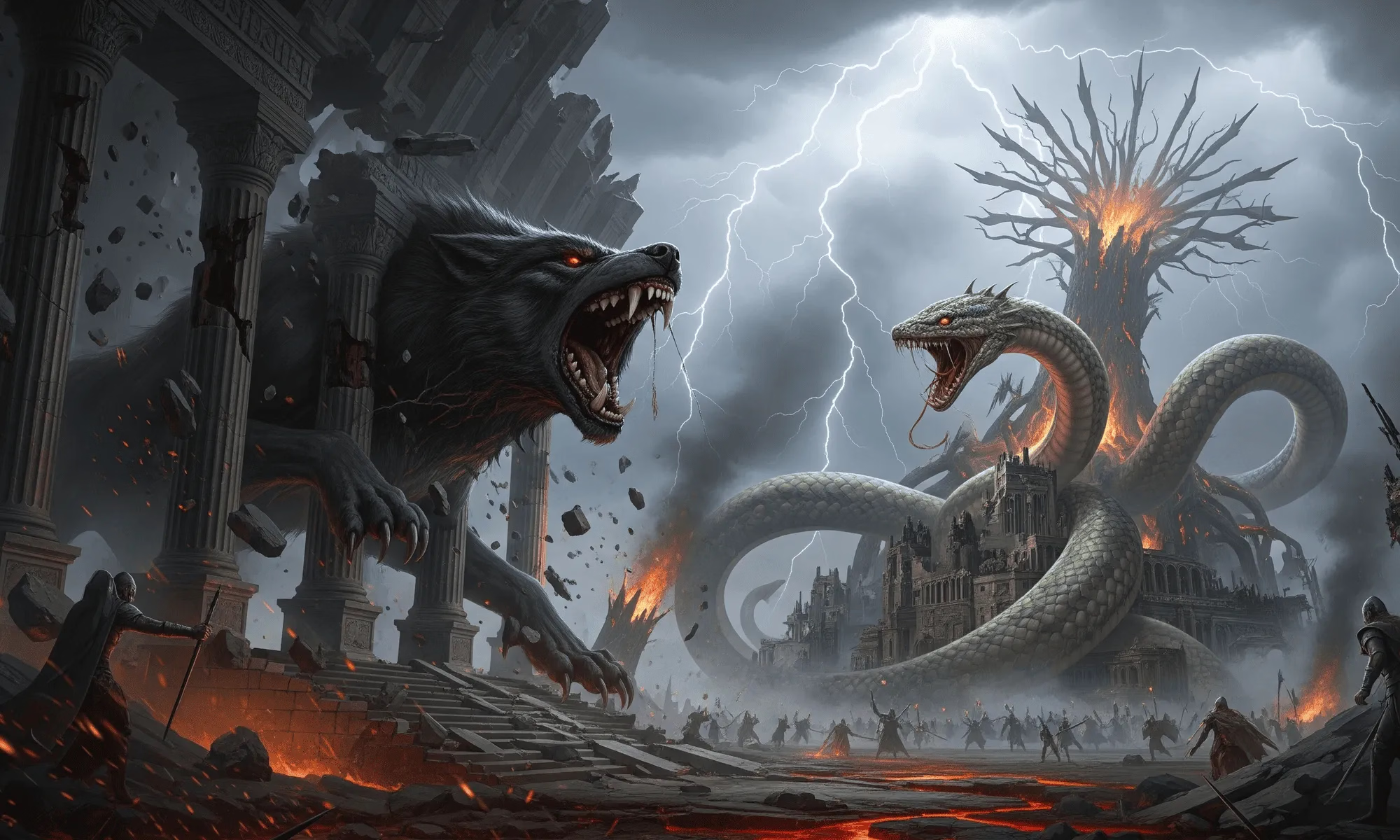
Among the horrors unleashed was Garm, the monstrous hound that guarded the gates of Hel. Ancient prophecies declared that Tyr and Garm would find one another upon the battlefield, and neither would survive.
The two met amid the ruins of the dying world. One was a beast born from darkness, the other a god already marked by sacrifice. Their battle was fierce and merciless, echoing through the broken realms. In the end, neither warrior stood victorious.
Tyr slew the hound, but his own wounds proved fatal.
And so the god who had given his hand to save the world gave his life defending it.
Even in death, he remained true to himself.
Legacy of the One-Handed God
Perhaps that is why Tyr's story feels different from those of other gods. He never wielded thunder like Thor or commanded ravens like Odin. He possessed no magical treasures and ruled no glorious hall. Yet among all the gods of Asgard, few embodied honor as completely as he did.
His greatness came not from power but from character.
Long after the old faith faded and the Viking ships disappeared from the seas, his memory survived. Every Tuesday, unknowingly, people still speak his name. Ancient runes bearing his symbol continue to represent justice, sacrifice, and victory earned through courage rather than strength.
In an age that celebrates conquest and fame, Tyr reminds us of another kind of heroism. True greatness does not always roar like thunder. Sometimes it stands quietly, places its hand into the jaws of danger, and accepts the cost without complaint.
And somewhere beneath the endless branches of Yggdrasil, where the old stories still whisper through the winds of the North, the one-handed god remains what he always was—a guardian who sacrificed himself not because he hoped to escape fate, but because honor demanded nothing less.
Frequently asked questions
Who was Tyr in Norse mythology?
Why did Tyr lose his hand?
Was Tyr stronger than Thor?
How did Tyr die during Ragnarök?
Is Tuesday named after Tyr?
Draupadi’s Humiliation: The Moment That Changed Everything
Explore Draupadi’s humiliation in the Mahabharata during the dice game, its symbolism, her powerful questions on dharma,...
Spider Grandmother: Creator and Teacher of Humanity
Discover the legend of Spider Grandmother, the Native American creator and teacher who wove the world together through w...