The Journey Through the Duat: Egyptian Afterlife Explained
Journeys through the realms of the dead across world mythologies
- 1Hel: Queen of the Underworld – Ruler of the Realm of the Dead
- 2The Osiris Myth: Death, Resurrection, and Eternal Kingship
- 3The Journey Through the Duat: Egyptian Afterlife Explained (you are here)
- 4Supay: The Lord of the Underworld
- 5Mictlantecuhtli – The God of the Underworld: Keeper of the Silent Realms
- 6Lords of Xibalba: The Mayan Gods of Death and the Underworld
- 7Inanna/Ishtar: Queen of Heaven and the Underworld
Crossing Into the Eternal
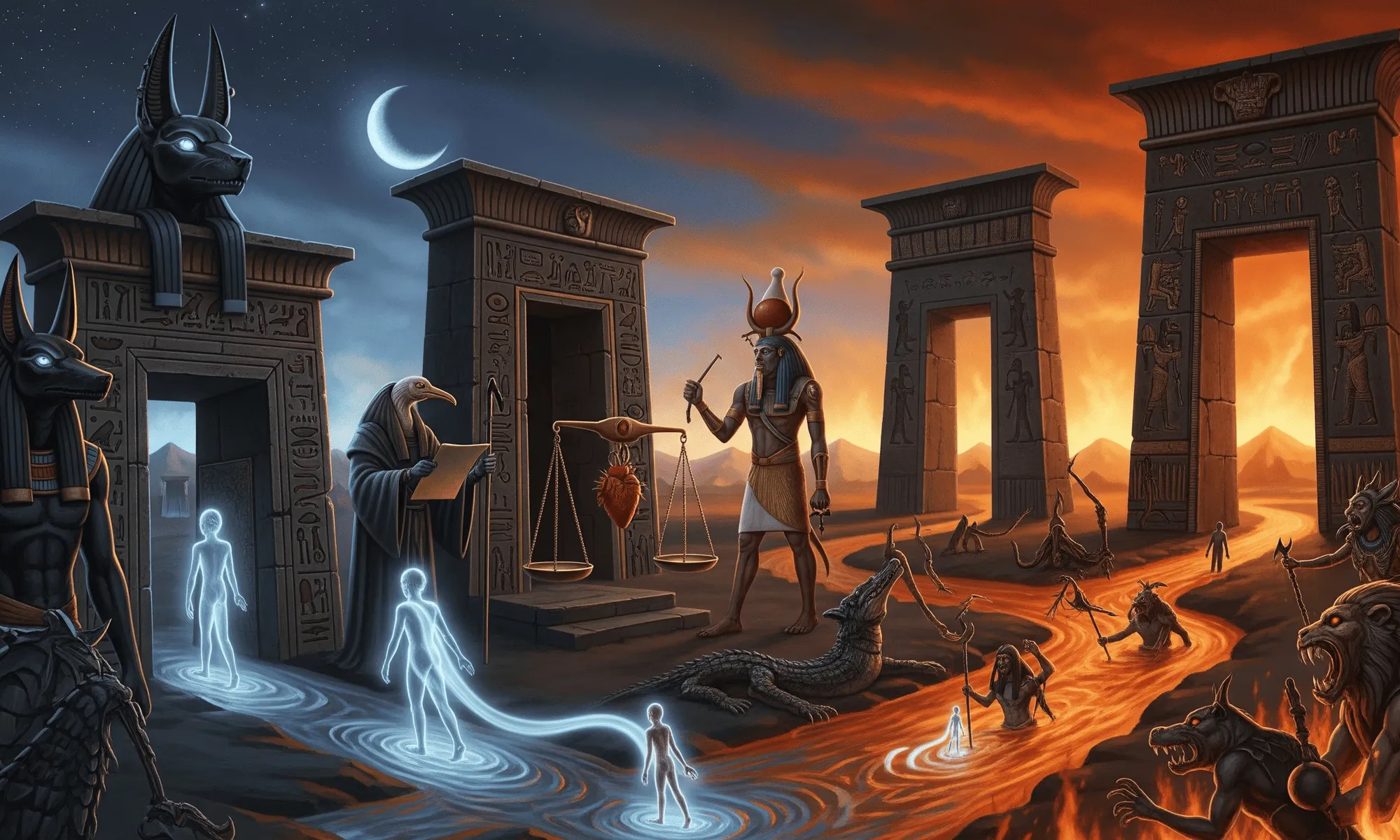
In Egyptian belief, death was not an end but a perilous journey. Beyond the mortal world lies the Duat, a realm of mystery, danger, and divine judgment. Here, the souls of the dead faced numerous challenges such as navigating treacherous rivers, overcoming gatekeepers, and enduring trials overseen by deities like Osiris and Anubis to secure eternal life.
The journey through the Duat was fraught with peril and required great courage and wisdom. Each obstacle represented a test of one’s moral character, and success or failure hinged on how well an individual had lived their earthly life. For instance, the heart was weighed against Ma'at's feather to determine if justice had been upheld throughout one’s lifetime.
By navigating the Duat successfully, individuals earned not just eternal rest but also the chance for a meaningful afterlife, where their deeds and character would be continually evaluated and celebrated.
The Role of the Book of the Dead
The Book of the Dead was not merely a compilation of spells but served as an indispensable manual for navigating the afterlife in ancient Egypt. It contained a myriad of prayers, incantations, and instructions designed to guide the deceased through the perilous realms of the Duat. This text was essential for those seeking to survive and thrive beyond the veil of death.
Among its contents were specific spells aimed at protecting the soul from monstrous entities that roamed the afterlife's dark corridors. Additionally, it included detailed guidelines on how to navigate the treacherous gates and rivers that marked significant transitions in the underworld. These instructions were critical for ensuring a safe passage through each stage of the journey.
The Book of the Dead also offered advice on invoking divine protection from powerful Egyptian deities. For instance, the spell “The Opening of the Mouth” was crucial for allowing the deceased to speak and eat in the afterlife, thus maintaining their identity and vitality. This underscores the belief that knowledge could conquer death's chaos, making the book a vital tool for spiritual survival.
Anubis: Guardian of the Dead
In ancient Egypt, Anubis was revered as a god with the head of a jackal, symbolizing his role as the escort and guide for souls journeying to the afterlife. With his keen sense and dark fur resembling the desert sands where grave robbers often lurked, he stood vigilant against tomb desecration. His duties extended beyond mere protection; Anubis also presided over embalming rituals, a critical step in preparing the body for eternal rest.
The Egyptians believed that Anubis would accompany and protect their loved ones during the perilous journey through Duat, the underworld. This faith underscored their meticulous preparation for death, from mummification to the placement of funerary goods. For instance, elaborate tombs adorned with hieroglyphics narrated stories and provided magical protections intended to aid the deceased in navigating the afterlife’s challenges.
One of Anubis’ most crucial tasks was overseeing the Weighing of the Heart ceremony, a sacred ritual where the heart of the deceased was weighed against Maat's feather of truth. This divine judgment determined whether the soul could enter the Field of Reeds or face eternal oblivion in the fiery realm of Ammit.
The Weighing of the Heart
The climax of ancient Egyptian funerary beliefs is the Weighing of the Heart, a ritual overseen by Osiris and carried out meticulously by Anubis. This ceremony holds deep significance as it assesses the moral integrity of an individual's life through the heart, seen as the repository of one’s conscience and memory. The heart is weighed against the feather of Ma’at, symbolizing truth and cosmic order.
- Balanced heart: If the scales remain balanced, indicating that a person has lived in harmony with divine law, they are granted eternal life in the Field of Reeds, an idyllic afterlife realm. This paradise is not just a reward for virtuous living but also reflects a profound Egyptian belief in the cyclical nature of justice and moral rectitude.
- Heavy heart: Conversely, if the heart tips the scales due to sins or ethical transgressions, it is devoured by Ammit, a creature combining attributes of a crocodile, lion, and hippopotamus. This act signifies the end of the soul's existence, reflecting a stark warning against moral indifference.
This ritual underscores a pivotal Egyptian concept: one’s eternal fate is not predetermined but earned through ethical living. For instance, the ancient Egyptians believed that a mere accusation in court could haunt an individual even after death if they were found to have lied or committed perjury during their lifetime. This belief system reinforced societal norms and legal practices, illustrating how deeply ingrained was the idea of moral accountability across all aspects of life.
Obstacles and Guardians of the Duat
The ancient Egyptians saw the Duat, or underworld, not merely as a place of judgment but as a labyrinthine realm filled with myriad challenges. Serpents and demons lurked at every turn, each encounter testing one's courage and knowledge in profound ways. For instance, pharaohs were often depicted battling these serpents, symbolic of their struggle against chaos and adversity.
Beyond the ever-present threat of serpents, travelers through the Duat faced a series of gates guarded by vigilant spirits who demanded precise knowledge and wisdom to proceed. Each gate required the correct spells from the Book of the Dead, showcasing the intricate preparation and spiritual acumen necessary for safe passage. Without this profound understanding, one could easily find themselves trapped or misled.
Illusions and treacheries abounded in the Duat, designed to test not just bravery but also moral integrity and purity of heart. These traps were cleverly constructed to separate the unworthy from those genuinely prepared for divine judgment. Interestingly, this complex array of challenges suggests that death was less a finality than an initiation into a higher form of existence.
The journey through the Duat demanded wisdom, faith, and resilience, turning death itself into a crucible for character rather than merely a passage to another realm. This perspective underscores the depth of Egyptian spirituality and its enduring influence on our understanding of afterlife concepts today.
Osiris and Eternal Life
In the heart of the ancient Egyptian underworld, known as Duat, stands Osiris, a deity whose presence transforms fear into hope. As the ruler of the afterlife and symbol of resurrection, Osiris offers divine justice to souls who reach his hall, thereby ensuring their eternal immortality. This transformation from dread to assurance is profound; it reassures individuals that death marks not an end but a transition towards a new form of existence.
Osiris' role in the cycle of life and death goes beyond mere judgment and reward. He embodies the concept that every soul, upon passing through Duat, undergoes a process of renewal and rebirth. This cyclical nature of existence was central to Egyptian belief, emphasizing that life is continuous, with each phase seamlessly flowing into the next. For instance, the ancient Egyptians would often place amulets depicting Osiris on mummies to ensure safe passage and transformation in the afterlife.
The idea that death is part of an eternal cycle challenges our modern perspective of finality. In Duat, under Osiris' guidance, souls are reborn into a realm governed by divine justice, marking a significant shift from traditional views of mortality as definitive endings. This nuanced view suggests that even in the face of loss and transition, there lies potential for renewal and continuity.
Cultural and Religious Significance
The journey through the Duat profoundly influenced various facets of ancient Egyptian life, shaping their practices and beliefs. Mummification was a critical component, meticulously preserving bodies to ensure the soul could navigate the afterlife's trials with ease and grace. This process was not merely about physical preservation but also about preparing the deceased for the challenges that awaited in the Duat.
Temple rituals were another integral aspect, reenacting key moments from the journey through the underworld, thereby sanctifying daily life with sacred meaning. These ceremonies reinforced a connection between the living and the divine, bridging the gap between the earthly realm and the celestial afterlife. For instance, priests would often perform rituals to guide the sun god Ra as he traversed the Duat each night, symbolizing the cycle of death and rebirth.
Moreover, ethical conduct was central to navigating both life and the afterlife successfully. Emphasizing Ma’at—truth, balance, order, harmony, law, morality, and justice—individuals were encouraged to lead virtuous lives to secure a favorable judgment in the Hall of Truth. This belief system did not just dictate moral behavior; it also underscored the interconnectedness of all life, suggesting that every action had cosmic repercussions.
Every tomb, amulet, and inscription served as a tangible link between the living world and the realm of the dead, reinforcing the importance of adhering to these religious doctrines. This mythology was not just theoretical but deeply embedded in practical daily life, making it impossible for ancient Egyptians to separate spiritual beliefs from mundane activities.
Conclusion: The Eternal Voyage
The Duat, far from being a mere ancient myth, encapsulates a profound vision of life’s moral journey and the ultimate fate of one's soul. This sacred realm serves as a moral compass, guiding the soul through trials that shape its eternal destiny.
In Egyptian lore, every soul navigates the perilous waters of Duat under the watchful eyes of Anubis and the judgmental scales of Ma'at overseen by Osiris. This ritual underscores the belief in moral accountability and the enduring legacy of one’s deeds during life. King Unas's tomb inscriptions, for instance, reveal that his successful passage through Duat was due not just to royal privilege but also to his lifetime of righteous actions.
Such a journey is more than a mere reflection on past deeds; it offers hope and affirmation for the future. Each soul’s quest for its place in the afterlife imbues life with deeper meaning, reinforcing the idea that one's actions have far-reaching consequences beyond the mortal coil.
Frequently asked questions
What is the Duat in Egyptian mythology?
Who guides the souls in the Duat?
What is the Weighing of the Heart?
Helen and Sita: Women at the Heart of Wars
Explore the parallels between Helen of Troy and Sita of Ayodhya — women whose abductions sparked epic wars in Greek and ...
Top 5 most powerful sons of Surya Deva (Sun God)
The Sun god or Surya Deva as per Indian mythology has ten sons. Some are demigods while some are gods. Some played a par...