Divs and Demons of Persian Lore – Evil beings, magical wars, and symbolic meanings
Exploring legendary beasts, monsters, spirits, and supernatural creatures.
- 1Fenrir and Jörmungandr: Monsters of Prophecy
- 2The Gorgons: Sisters of Terror in Greek Mythology – Origins, Curse, Power & Legacy
- 3Top 10 Deadliest Roman Monsters That Terrified the Ancient Empire
- 4Mayan Monsters & Jungle Spirits: Creatures That Haunted the Ancient Rainforests
- 5Oni, Tengu, and Dark Spirits: Monsters of Japanese Folklore Explained
- 6Terrors of the Ancient Seas: Sea Monsters & Ocean Creatures in Greek Mythology
- 7The Rise and Fall of Roman Giants: Monsters Before the Olympians
- 8The Tale of Yamata-no-Orochi: Eight-Headed Serpent
- 9Divs and Demons of Persian Lore – Evil beings, magical wars, and symbolic meanings (you are here)
- 10Medusa: The Tragic Gorgon of Greek Mythology – Origins, Powers & Legacy
- 11Top 10 Deadliest Yokai in Japanese Mythology Ranked
- 12Huldra: The Enchanting Forest Spirit of Scandinavian Folklore
In the shadowed corners of Persian mythology, the world is not just a realm of gods and heroes but also one where malevolent beings like Divs and demons roam. These entities challenge the forces of light and virtue, adding layers of tension and drama to ancient tales. The inclusion of such characters serves to enrich the narrative with moral lessons and ethical dilemmas, reflecting the complexities of human experience.
For instance, a tale might recount how a hero must confront a demon to protect his village, forcing him to grapple not just with physical danger but also with questions about courage and righteousness. This interplay between good and evil is central to Persian storytelling, illustrating that even in the darkest moments, there's room for redemption and growth. Surprisingly, these stories often highlight how facing one’s fears can lead to unexpected alliances, showing a nuanced perspective on moral complexity.
🌑 The Nature of Divs and Demons
In the realm of mythology, divs are often depicted as colossal, monstrous beings cloaked in darkness and endowed with arcane magical powers. These creatures embody chaos and disorder, acting not just as adversaries but as forces that challenge the very order of existence. Their presence is felt through their disruptive influence on both human society and cosmic equilibrium.
- Divs serve as symbols of chaos-bringers, constantly seeking to destabilize the natural harmony of the world. This role transcends mere fear; they represent a deeper threat to stability and order.
- Their actions also carry moral weight, personifying vices such as greed and malice in tangible forms that test human virtue and societal norms. Demons are thus more than just supernatural entities; they embody ethical dilemmas faced by individuals and societies alike.
- Encounters with divs often serve as pivotal trials for heroes, forcing them to confront their deepest fears and moral limitations. These confrontations are not merely tests of physical prowess but also challenges to one’s wisdom and integrity.
Strategically astute and intellectually formidable, divs possess the ability to weave complex spells and lay intricate traps that challenge even divine entities. This intelligence sets them apart from ordinary monsters, making their role in mythological narratives both terrifying and thought-provoking. For instance, a particular tale recounts a div’s cunning use of illusion magic to lure heroes into traps, thereby highlighting the nuanced threat posed by these beings beyond brute force.
⚔️ Battles Between Good and Evil
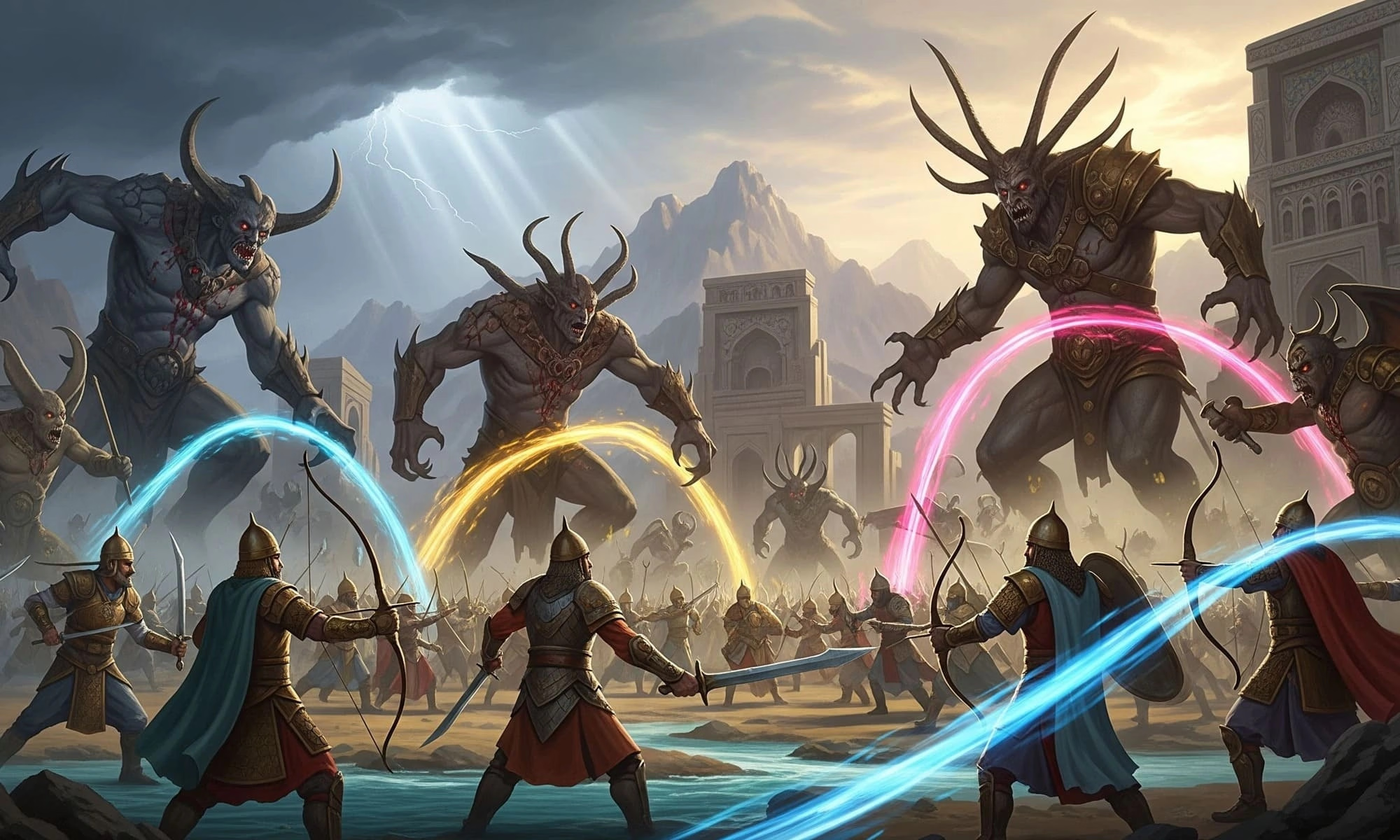
In Persian mythology, the concept of magical wars is pervasive, featuring heroes who confront demonic beings known as Divs in order to restore balance and harmony. These epic battles are not merely physical conflicts but also symbolic representations of the eternal struggle between good and evil, reflecting a broader narrative about maintaining order in the face of chaos.
A prime example of this heroic defiance is Rostam and the Divs. Rostam, a legendary hero celebrated for his valor and cunning, faces off against demonic forces to protect Persia. His battles highlight the importance of strategic thinking and unwavering bravery in overcoming seemingly insurmountable odds. In another tale, Zahhak and his demonic followers demonstrate how tyrants often ally themselves with dark entities to exacerbate chaos, presenting a formidable challenge for those striving to uphold righteousness.
The cosmic struggle between order and chaos, as depicted in these myths, goes beyond mere symbolism. It is deeply rooted in the cultural and religious context of Zoroastrian-influenced narratives, where the balance between light and dark is seen as a constant battle that defines human existence. For instance, the mythological figure Zahhak's reliance on demonic forces underscores how evil can be magnified when it aligns with powerful tyrants, making it even more challenging for virtuous warriors like Rostam to prevail.
🔮 Symbolism of Evil Beings
In Persian storytelling, divs and demons serve as profound metaphors for the human condition. They embody fears and vices such as greed, envy, and cruelty, acting as a mirror to our darkest selves. These evil beings are not merely antagonists but also catalysts for moral growth, forcing heroes to confront both inner and outer darkness in their quest for victory.
The portrayal of divs and demons underscores the ancient Persian belief that evil is an inherent part of existence, serving as a perpetual test of wisdom, courage, and perseverance. This struggle against corruption is not just a battle between good and evil but a constant vigilance to maintain virtue. For instance, in the tale of Rustam and Sohrab, the hero must navigate his inner turmoil while facing external threats, illustrating how moral challenges can arise from both internal conflicts and external enemies.
Interestingly, the narrative often reveals that heroes are not always victorious through brute force alone but by embracing humility and ethical clarity. This nuanced perspective shows that the true test of a character is their ability to resist temptation and uphold integrity even in the darkest moments. Through these stories, ancient Persians conveyed a message that virtue must constantly defend against corruption, highlighting the eternal nature of this human struggle.
🌌 Cultural Legacy
The presence of divs and demons in Persian culture has left an indelible mark, weaving intricate tales that have shaped the literary and artistic landscape. Most notably, these mythical creatures feature prominently in the Shahnameh, a monumental epic that narrates complex battles and moral lessons, serving as a cornerstone for understanding Iranian heritage and mythology.
Artistically, divs and demons inspire Persian miniatures where heroes are often depicted grappling with these formidable adversaries. These visual narratives not only capture the essence of ancient myths but also underscore the deep-seated cultural importance of these stories in depicting moral struggles and heroism. For instance, a famous miniature from the 16th century shows Rustam, one of Persia's legendary warriors, battling a div, symbolizing the eternal fight between good and evil.
Moreover, contemporary Persian fiction and media continue to draw upon this rich tradition, using divs as potent symbols of challenge and adversity. A notable example is the modern novel "The City of No Sun," which reimagines the conflict with divs in a futuristic setting, exploring themes of environmental degradation and social injustice through an ancient mythological lens. This adaptation illustrates how these mythical beings serve as a timeless metaphor for contemporary issues, ensuring that their legacy remains relevant to new generations.
📖 Lessons from Persian Lore
In the vast tapestry of Persian mythology, encounters with Divs and demons serve as profound lessons for navigating life's challenges. One such lesson is the importance of courage in the face of evil—true heroism is not just about standing tall but also about confronting darkness head-on. This principle is exemplified by legendary figures who have faced formidable foes without flinching.
However, bravery alone is insufficient to overcome adversity. Wisdom and strategic thinking are equally vital components in the struggle against evil forces. Consider the tale of Rostam, a hero renowned for his strength but also celebrated for his tactical acumen. By combining physical prowess with clever strategies, he often turned the tide in battles where brute force would have been futile.
Moral vigilance stands out as another critical lesson from these ancient narratives. The battle against evil is not just external; it's an internal struggle as well. Maintaining ethical integrity and fortitude against corruption or temptation can be as challenging as confronting external threats. This nuanced perspective reminds us that personal ethics are the cornerstone of societal good.
Frequently asked questions
Who are the Divs in Persian mythology?
What role do demons play in Persian legends?
What are some famous battles involving Divs?
What is the symbolic meaning of Divs and demons?
Kurma Avatar: Vishnu as the Cosmic Tortoise
Discover the story of Kurma, the tortoise incarnation of Vishnu, who stabilized the cosmic mountain during the Samudra M...
Svarog - the God of Fire and the Forge
Explore the legend of Svarog, the Slavic god of fire and the forge. Discover his role in creation myths, craftsmanship, ...