Mayan Monsters & Jungle Spirits: Creatures That Haunted the Ancient Rainforests
Exploring legendary beasts, monsters, spirits, and supernatural creatures.
- 1Fenrir and Jörmungandr: Monsters of Prophecy
- 2The Gorgons: Sisters of Terror in Greek Mythology – Origins, Curse, Power & Legacy
- 3Top 10 Deadliest Roman Monsters That Terrified the Ancient Empire
- 4Mayan Monsters & Jungle Spirits: Creatures That Haunted the Ancient Rainforests (you are here)
- 5Oni, Tengu, and Dark Spirits: Monsters of Japanese Folklore Explained
- 6Terrors of the Ancient Seas: Sea Monsters & Ocean Creatures in Greek Mythology
- 7The Rise and Fall of Roman Giants: Monsters Before the Olympians
- 8The Tale of Yamata-no-Orochi: Eight-Headed Serpent
- 9Divs and Demons of Persian Lore – Evil beings, magical wars, and symbolic meanings
- 10Medusa: The Tragic Gorgon of Greek Mythology – Origins, Powers & Legacy
- 11Top 10 Deadliest Yokai in Japanese Mythology Ranked
- 12Huldra: The Enchanting Forest Spirit of Scandinavian Folklore
🌳 When the Jungle Watched Back
To the ancient Maya, the jungle was not silent but alive, breathing and whispering. It teemed with life—creatures older than time, spirits and monsters born of darkness and fear—yet also fraught with danger beneath towering ceiba trees and thick vines. These were tangible presences felt in every rustle of leaves and echo of howler monkeys.
The Maya believed the jungle was conscious, a place where spirits watched over humans or perhaps intended harm. This belief influenced their interactions with nature, shaping architecture and daily rituals to appease these unseen forces. For instance, before constructing new buildings, they performed ceremonies seeking permission from the jungle's spirits to ensure harmony between human development and natural surroundings.
For those who ventured in, every rustle could carry both promise and peril, illustrating a worldview where nature was not just an environment but a complex ecosystem of beings capable of profound influence. This perspective highlights their intricate relationship with the world around them, reflecting a deep respect for nature that remains relevant today.
🌑 The Jungle as a Living Realm
The ancient Maya viewed dense forests not merely as natural environments but as living realms bridging this world and others. Venturing deeper blurred life's boundaries, creating a sacred space where worlds seemed almost transparently connected. In shadowy places barely touched by sunlight, spirits roamed freely according to Maya beliefs. These entities were seen as guardians of balance
🦇 Camazotz: Death on Leathery Wings
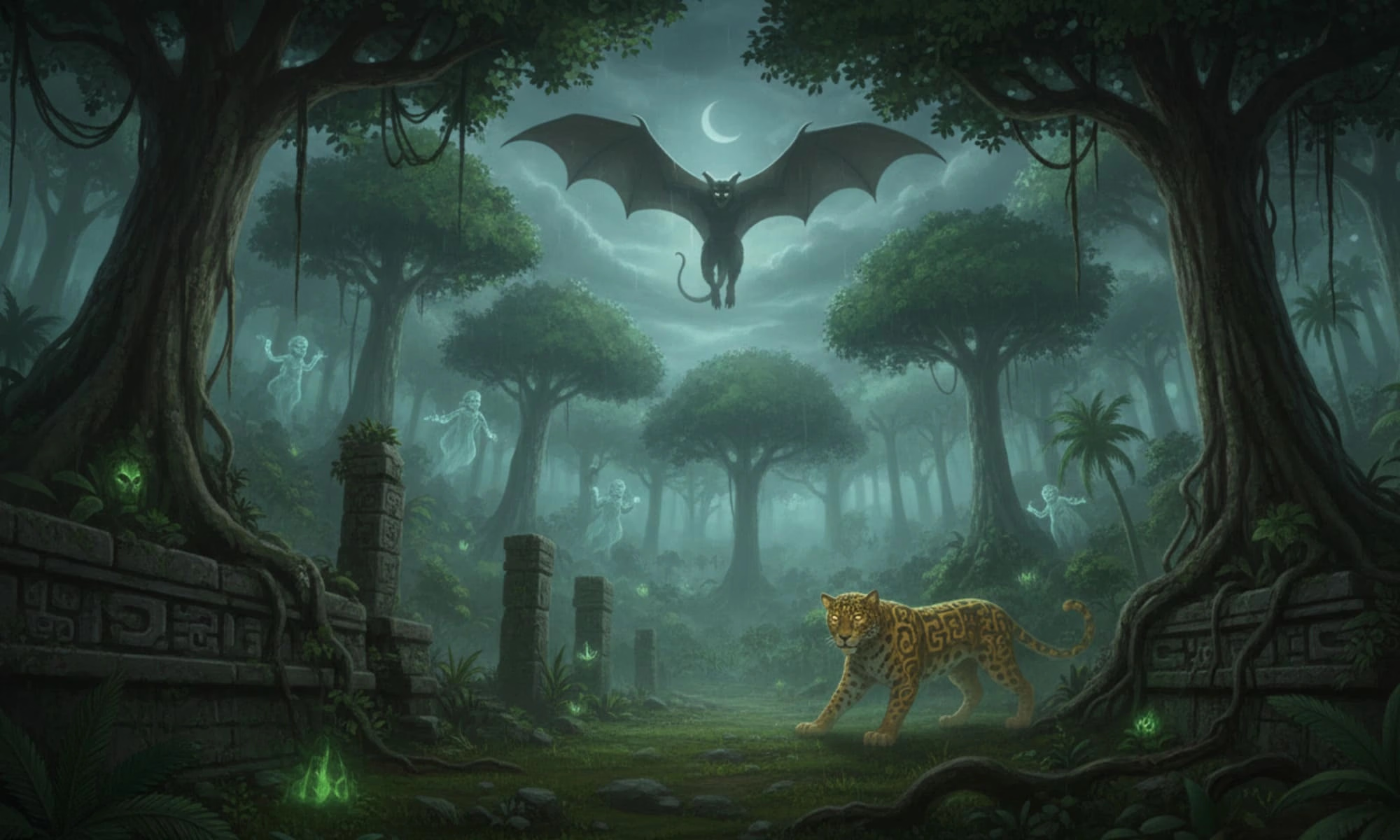
In the heart of ancient folklore, no creature struck fear into the hearts of men more than Camazotz, the bat demon who roamed the night. With wings that seemed to slice through darkness like obsidian blades, Camazotz was a harbinger of sudden and unexplained demise.
Those who ventured deep into the jungle or explored dark caves often spoke of hearing eerie whispers in the wind—warnings from those who had already met their fate at the hands of this supernatural predator. Travelers who disappeared without a trace were thought to have crossed paths with Camazotz, leaving behind only fragmented stories and unmarked graves.
While many viewed Camazotz as an embodiment of pure evil, there was another perspective that suggested he was simply nature's way of enforcing balance in the dark corners of the world. Night hunters who preyed on unsuspecting villagers could find themselves hunted back, their lives cut short by unseen forces bearing the demon’s signature. This duality made Camazotz both a feared and respected figure in local legends.
🩸 Wayob: The Shape-Shifting Spirit Companions
The concept of the Wayob, a spiritual animal companion of powerful shamans in pre-Columbian Mesoamerican cultures, is deeply rooted in myth and folklore. These supernatural beings were believed to take on various forms, such as jaguars, owls, or snakes, venturing into the night to protect their human counterparts from unseen dangers.
Remarkably, a shaman’s Wayob could also manifest as monstrous hybrids, blending elements of different animals in terrifying combinations. This duality was not merely symbolic; it had tangible consequences for the shaman's health and well-being. If a Wayob sustained an injury during its nocturnal escapades, the human shaman would experience physical ailments or even face mortal peril.
Interestingly, these shape-shifting entities were also seen as men wearing spirit skin, blurring the line between human and animal. This perspective suggests that the boundaries of reality in ancient cultures were far more fluid than our modern understanding allows for. One noted instance describes a shaman who suffered from mysterious illnesses whenever his Wayob—a jaguar with eagle wings—returned home wounded.
🐍 The Vision Serpent: Gateway Between Worlds
The Vision Serpent, a colossal spectral entity, coiled between the realms of reality and divinity. Appearing during ancient rituals and bloodletting ceremonies, this enigmatic creature was more than just an apparition—it served as a conduit for profound spiritual encounters. Its presence was both revered and feared; from its gaping maw emerged gods, ancestors, and prophetic visions that could change the course of one’s life.
Those who dared to witness the Vision Serpent firsthand reported transformative experiences. However, unprepared souls faced severe consequences, risking their sanity in the face of such overwhelming spiritual phenomena. In one documented case, a young shaman from the Mayan civilization experienced vivid visions that foretold an impending drought, guiding his community to prepare for survival.
The Vision Serpent was neither beast nor deity but rather a bridge—a vital link between this world and others beyond human comprehension. This understanding underscored its significance in religious practices, where it facilitated communication with the divine.
👁️ Aluxes: Tricksters of the Forest
In the dense jungles and shadowy caves, small spirits called Aluxes roamed freely. These childlike beings were rarely seen by human eyes but their presence was felt through mischievous pranks such as spoiled crops or stolen tools. The laughter that echoed at dusk was a clear sign of their invisible antics.
Aluxes could be both protectors and tormentors depending on how they were treated. Villagers who showed respect towards these spirits often found themselves in good fortune, while those who disregarded the Aluxes faced retribution in the form of relentless mischief. The ancient Maya knew well that one rule should never be broken: always treat what you cannot see with reverence and caution.
For instance, a farmer named Juan learned this lesson firsthand after he mocked the unseen presence playing tricks on him. His crops dwindled and his tools went missing until he finally built an offering hut near his field to appease the spirits. Once he started leaving offerings regularly, the Aluxes became allies rather than adversaries.
🐆 Jaguar Spirits: Lords of Night
Jaguars held a revered and formidable place in ancient cultures, seen as creatures that straddled the realms of the living and Xibalba, the underworld. These fearsome cats were more than just animals; some were believed to be ancient spirits, dispatched to punish those who trespassed against nature’s laws. For instance, a jaguar spirit might confront someone who had been careless with resources or disrespectful towards wildlife.
Kings and leaders adorned themselves with jaguar skins in ceremonies not merely as symbols of power but to harness the jaguar's spiritual strength and invoke its protective essence over their rule. This practice underscored the deep-seated belief that the jaguar’s spirit was a guardian against evil forces and a conduit for divine intervention. Meeting a jaguar’s gaze at night was an encounter fraught with significance, believed by many to be a judgment or warning from these revered but feared spirits.
It is fascinating how such beliefs persisted despite the risks they entailed. In one notable case, a king who donned a jaguar skin in a sacred ceremony was said to have been protected during a violent storm, illustrating the profound trust placed in these mythical creatures by their human counterparts.
🌫️ Disease Spirits and Forest Plagues
In the dense jungles of ancient times, illness was no mere coincidence but rather a consequence of supernatural displeasure. Fevers and wasting sickness were believed to be inflicted by wandering jungle spirits, angered by human transgressions against sacred taboos. Shamans played a crucial role in this belief system, conducting nighttime rituals aimed at identifying the offended spirit and negotiating a peaceful resolution.
Healing practices were far from the medical interventions we know today; instead, they relied heavily on the shaman's ability to communicate with spirits and mend broken taboos. This approach to health care was deeply rooted in the belief that diseases were expressions of spiritual unrest. For example, if a community experienced an outbreak after disregarding a sacred ritual, the local shaman would lead a ceremony to appease the offended spirit, believing this act could stop the spread of disease.
Remarkably, such practices persisted for centuries among indigenous populations, demonstrating a profound cultural belief in the interconnectedness of spiritual and physical well-being. A notable instance involves the Kekchi Mayans of Belize, who adhere strictly to their traditional healing methods even today, showcasing the lasting impact of these ancient beliefs.
🩶 Spirits of Abandoned Cities
The demise of ancient Mayan cities was not marked by silence or vacancy. Even as the grandeur of Tikal and Palenque faded into oblivion, local lore whispered of spirits that never left these hallowed grounds. These spectral guardians were believed to protect the profound wisdom hidden within the rubble and overgrowth.
Travelers who dared to spend a night amidst the crumbling stone reported eerie experiences: disembodied whispers guiding them through dark corridors, fleeting visions of past grandeur, and an unsettling sense of being watched. One particular account from 1927 describes a British explorer who claimed to have heard the voice of a long-dead Mayan priest in his sleep.
Despite the encroaching jungle, swallowing up stone structures with its unyielding tendrils, the collective memory of these cities persisted. The lush greenery may have reclaimed physical space, but it could not erase the cultural and historical significance that lingered in the air like a thick fog, wrapping around each visitor’s mind.
🔥 Monsters as Moral Guardians
The Mayan conception of monsters is a fascinating departure from the typical portrayal in Western culture. Unlike the purely malevolent figures found in many modern narratives, these entities were viewed as enforcers of balance and harmony within their world. They acted as guardians against human vices such as greed and arrogance, ensuring that individuals remained humble and respectful towards nature.
For example, a particularly revered Mayan deity, often depicted as monstrous, would punish those who dared to disrupt the natural order by building over sacred sites or disrespecting the land's inhabitants. This enforcement of balance taught humans to live in harmony with their environment rather than exploit it for personal gain. By fearing these entities, people learned to navigate the complexities and responsibilities of living in a world that was deeply interconnected.
Interestingly, Mayan lore suggests that up to 30 percent of their deities were perceived as having monstrous forms, underscoring the cultural significance placed on these figures as moral guides. This perspective challenges our modern tendency to categorize supernatural beings strictly into good or evil, instead offering a nuanced view where fear can be a teacher.
🌌 Why the Jungle Never Lost Its Power
Even in our modern age, vast jungles continue to evoke a mix of fascination and dread. Ancient civilizations like the Maya fully grasped this timeless allure. They understood that these dense forests were not just places teeming with life but also environments where darkness conceals movement and silence amplifies sound.
Nature in its rawest form is both an observer and a participant, always alert and watchful. The Maya recognized their jungles as living entities, capable of revealing or hiding secrets at will. Their mythical creatures weren’t mere fairy tales but rather practical explanations for the unpredictable behaviors and hidden dangers lurking within these green expanses.
For instance, the jaguar, revered in Mayan culture, symbolized both power and stealth—a fitting metaphor for the jungle’s ability to strike fear as well as inspire awe. This duality is a stark reminder of how nature remains a constant force, shaping human beliefs and survival strategies from ancient times through today.
🌿 Conclusion: A World That Never Slept
The ancient Maya saw Central America's jungles as living entities filled with spiritual energy. Shadows held secrets and sounds warned of danger, each element significant. Encountering mythical creatures was both fearful and educational, instilling respect for nature and humility in its mysteries. For example, jaguar tales as half-man, half-beast beings taught hunters to tread carefully and listen closely before acting. Even centuries after Maya civilization's decline, these beliefs persisted among those living in the jungle, ensuring spiritual awareness remained long after cities crumbled.
Frequently asked questions
Did the Maya believe monsters lived in the jungle?
Who is Camazotz in Mayan mythology?
What are Wayob spirits?
Are Aluxes dangerous?
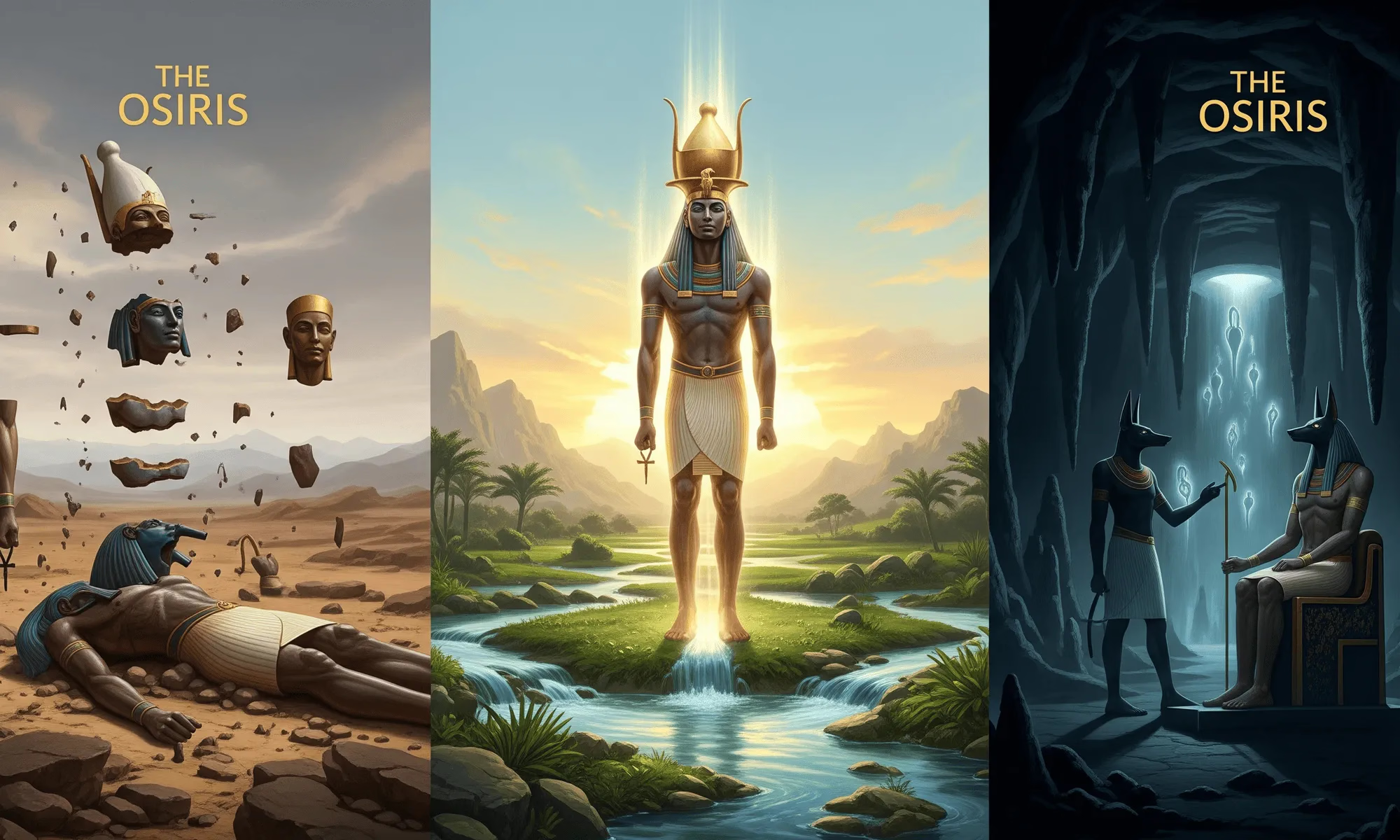
The Osiris Myth: Death, Resurrection, and Eternal Kingship
Explore the Osiris myth — how Set killed Osiris, Isis resurrected him, and Horus avenged his father. Discover the story ...
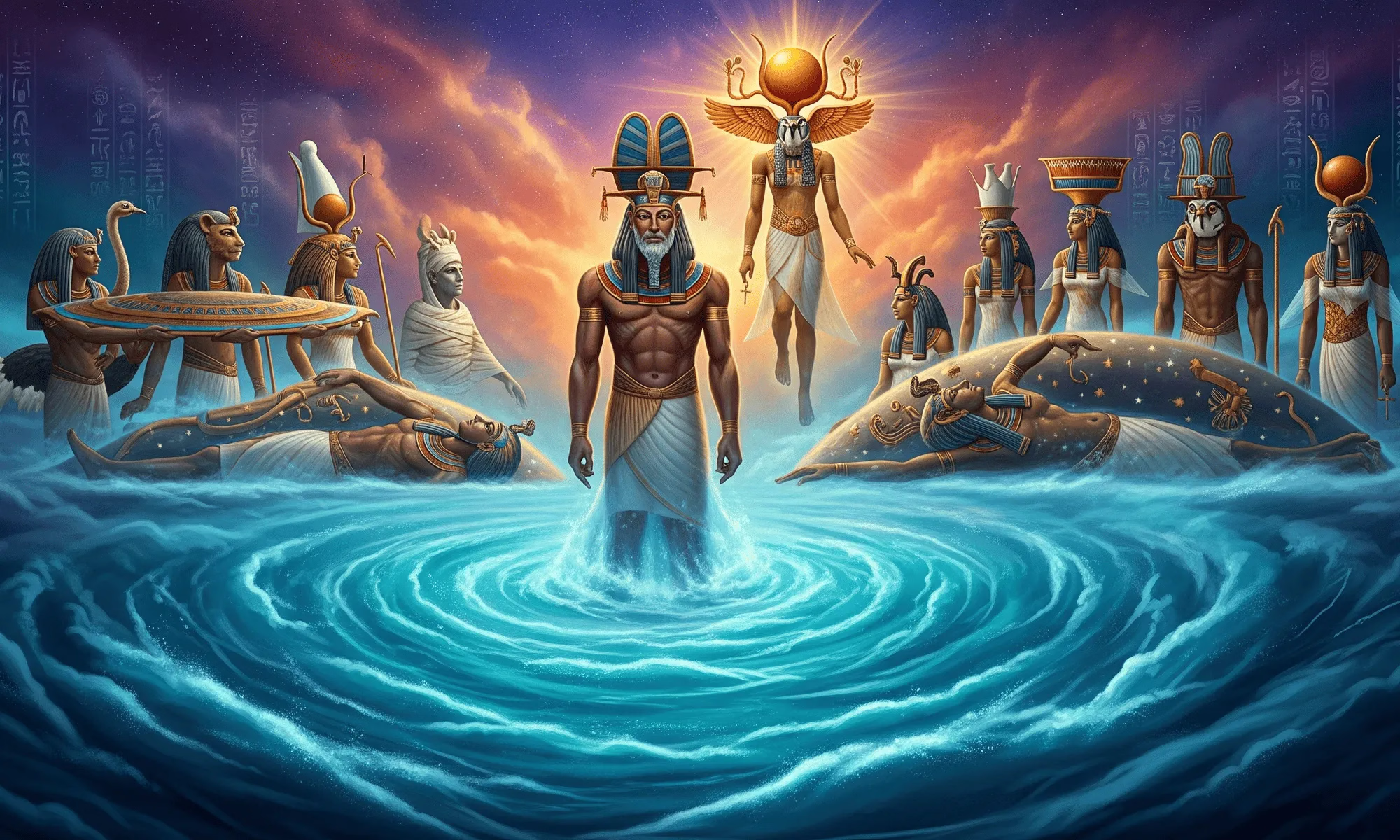
The Creation of the World: Atum, Ra, and the Ennead
Explore the Egyptian creation myth, from the primordial waters of Nun to the birth of Atum, Ra, and the Ennead of gods. ...