Nyame and Anansi: Stories of the Sky God
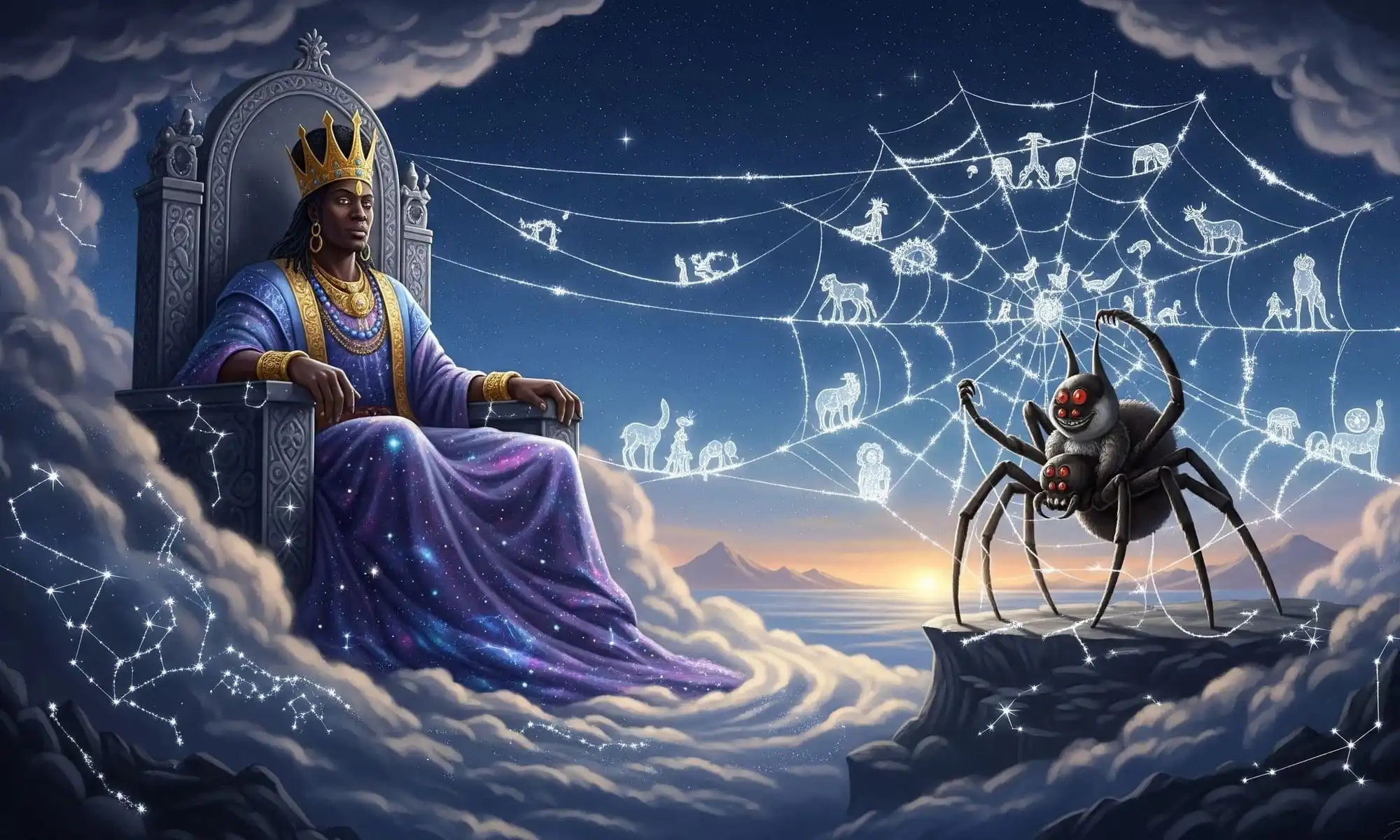
Every culture has stories about the origins of knowledge, wisdom, and storytelling itself. In West African mythology, particularly among the Akan people of present-day Ghana, one of the most beloved legends explains how stories came into human hands. At the center of this tale are two unforgettable figures: Nyame, the powerful Sky God who ruled over the heavens, and Anansi, the clever spider whose wit changed the world forever.
Their relationship is unlike that of most gods and mortals found in mythology. Nyame represents authority, cosmic order, and divine wisdom. Anansi, by contrast, is mischievous, unpredictable, and often underestimated. Yet despite their differences, the two are inseparably linked through a story that has shaped African folklore for centuries.
The legend of Nyame and Anansi is more than an entertaining tale. It is a reflection of how wisdom is earned, why stories matter, and how intelligence can sometimes accomplish what strength cannot. Through their adventures, generations have learned lessons about creativity, perseverance, humility, and the power of knowledge.
Nyame: The Great Sky God
In Akan mythology, Nyame stands above all other beings as the supreme deity and ruler of the heavens. His name is often associated with the sky itself, and he is regarded as the creator and sustainer of the universe.
Unlike many mythological gods who frequently walk among humans, Nyame is often portrayed as distant yet ever-present. He watches over the world from above, governing the forces that maintain order in the cosmos. The sun, the moon, the rain, and the changing seasons all fall under his authority.
To the Akan people, Nyame was not simply a sky deity but the source of life and wisdom. He represented divine order and possessed knowledge beyond the reach of ordinary mortals. His power was unquestioned by both humans and spirits, and his decisions shaped the destiny of the world below.
Yet despite his immense authority, Nyame was not entirely detached from humanity. Many myths describe interactions between the Sky God and various creatures who sought his favor, guidance, or treasures. Among these visitors, none became more famous than the crafty spider Anansi.
The Rise of Anansi
If Nyame embodied divine power, Anansi embodied intelligence.
Anansi is one of the most recognizable figures in African folklore and has become famous far beyond the continent through stories carried across the Atlantic by enslaved Africans. In countless tales, he appears as either a spider or a man with spider-like qualities. Though physically small and often lacking strength, he consistently outsmarts creatures much larger and more powerful than himself.
What makes Anansi so enduring is his complexity. He is not a traditional hero. He can be selfish, mischievous, greedy, and even foolish at times. Yet he is also resourceful, imaginative, and remarkably clever. Anansi survives not through force but through his ability to think creatively. When faced with impossible situations, he finds unexpected solutions. When confronted by stronger opponents, he relies on strategy rather than confrontation.
This made him a relatable figure. Ordinary people could see themselves in Anansi because he represented the triumph of wit over power and ingenuity over brute strength. His most famous adventure, however, involved obtaining something far more valuable than treasure: the stories of the world.
When Stories Belonged to the Sky
Long ago, according to Akan tradition, all stories belonged exclusively to Nyame. The tales, wisdom, proverbs, and lessons that humans cherish today were kept in the heavens under the Sky God's control. They were considered divine possessions, inaccessible to ordinary people.
Without stories, humanity lacked an important source of knowledge. There were no tales to teach lessons, preserve history, explain the world, or inspire imagination. Wisdom remained locked away in the realm of the gods. Anansi believed these stories should belong to everyone.
Determined to bring them to humanity, he traveled to Nyame's heavenly court and asked if he could purchase the stories. The request amused the Sky God. How could a small spider hope to obtain something so valuable? Rather than refusing outright, Nyame decided to test Anansi.
The Impossible Challenge
Nyame named a price so difficult that he believed no one could ever meet it. According to the most popular version of the legend, Anansi would have to capture several dangerous and powerful creatures alive and deliver them to the Sky God. Among these creatures were Mmoboro the hornets, Osebo the leopard, and Mmoatia, a mysterious fairy-like spirit. Some versions include a giant python known as Onini.
Each challenge seemed impossible.
The leopard was stronger than Anansi.
The hornets could swarm and sting him.
The python was enormous.
The fairy possessed supernatural abilities.
Yet Anansi accepted the challenge.
Many expected him to fail.
Instead, he relied on the one thing he possessed in abundance—his intelligence.
How Anansi Outsmarted the Creatures
Rather than confronting the creatures directly, Anansi used clever tricks and psychological insight.
To capture the python, he pretended to be engaged in an argument with his wife. Together they debated whether the python was longer than a branch. Curious and eager to prove his size, the python stretched himself along the branch. Anansi quickly tied him up before he realized the deception.
To capture the hornets, Anansi filled a gourd with water and sprinkled some over them. He then warned the hornets that a terrible rainstorm was approaching. Grateful for his concern, the hornets willingly entered the gourd for shelter. Anansi immediately sealed the opening.
The leopard was trapped through a carefully constructed pit, while other creatures fell victim to similarly ingenious schemes.
What makes these stories memorable is not violence but creativity. Anansi wins because he understands how others think. He studies their weaknesses and uses patience, observation, and strategy rather than physical strength.
The tales celebrate intelligence as a powerful force capable of overcoming seemingly impossible obstacles.
The Gift of Stories
When Anansi finally returned to Nyame with all the creatures, even the Sky God was impressed. The challenges had been designed to be impossible. Yet Anansi had completed every task. True to his word, Nyame granted him ownership of the stories.
From that day forward, storytelling became a gift shared with humanity. In honor of the spider who earned them, many traditional Akan folktales became known as "Anansesem," meaning "Anansi stories."
This origin story explains why Anansi occupies such an important place in African oral traditions. He is not merely a character within stories; he is the reason stories exist at all. Every tale told around a fire, every proverb passed between generations, and every lesson preserved through oral tradition can trace its roots back to Anansi's determination and ingenuity.
Why Stories Matter
The myth carries a deeper message about the importance of storytelling in society. For the Akan people and many other African cultures, stories were never simply entertainment. They served as tools for education, moral instruction, and cultural preservation.
Before written records became widespread, stories carried history, traditions, and social values from one generation to the next. Through tales of heroes, tricksters, gods, and spirits, communities taught children how to behave, how to solve problems, and how to understand their place in the world.
The myth suggests that stories themselves are sacred treasures. They possess the power to shape individuals and strengthen communities. By bringing stories from the heavens, Anansi effectively brought wisdom to humanity.
The Balance Between Power and Intelligence
One reason the legend remains so popular is its exploration of two very different forms of power. Nyame possesses divine authority. He commands the cosmos and governs the natural order. Anansi possesses intellectual power. He cannot control storms or create worlds, but he can think creatively and adapt to challenges.
The story does not portray one form of power as superior to the other. Instead, it suggests that both are valuable. Nyame's wisdom and authority establish order, while Anansi's ingenuity drives innovation and discovery. Together they represent a balance between structure and creativity, between tradition and adaptation.
This balance continues to resonate with modern audiences because it reflects challenges people face in everyday life. Success often requires not only strength or authority but also imagination and resourcefulness.
The Legacy of Nyame and Anansi
Today, the stories of Nyame and Anansi remain among the most influential myths in Africa.
Anansi tales spread throughout the Caribbean, South America, and parts of North America during the transatlantic slave trade. Enslaved Africans carried these stories with them, preserving cultural traditions despite immense hardship.
Over time, Anansi became a symbol of resilience and survival. His ability to outwit powerful opponents resonated deeply with communities facing oppression and adversity.
Meanwhile, Nyame continues to be remembered as the great Sky God whose wisdom and authority shaped the universe. Together, they represent two complementary forces: divine order and human ingenuity.
Conclusion
The story of Nyame and Anansi is one of the most enduring legends in African mythology. It explains not only the origin of storytelling but also the value of intelligence, perseverance, and creativity.
Nyame, the powerful Sky God, guarded the world's wisdom in the heavens. Anansi, the clever spider, dared to seek it. Through determination and wit, he accomplished the impossible and brought stories to humanity.
The legend reminds us that knowledge is a treasure worth pursuing and that cleverness can overcome obstacles that seem insurmountable. Most importantly, it celebrates the power of stories themselves—those timeless gifts that preserve culture, teach wisdom, and connect generations across time.
Every story told today, whether around a fire, in a classroom, or on a digital screen, echoes the ancient belief that narratives are among humanity's greatest treasures. According to Akan mythology, we have Anansi to thank for that remarkable gift.
Frequently asked questions
Who is Nyame in African mythology?
Who is Anansi and why is he important?
How did Anansi bring storytelling to humans?
What lessons do Nyame and Anansi myths teach?

Fate vs Free Will: Oedipus and Karna
Discover the tragic parallels between Oedipus in Greek mythology and Karna in Indian mythology — two heroes bound by fat...

The Descent of Ganga: A River from the Heavens
Explore the epic story of Ganga’s descent to Earth, guided by Bhagiratha’s devotion and Lord Shiva’s protection. Learn t...