Kumbhakarna: The Giant Who Chose Loyalty Over Dharma
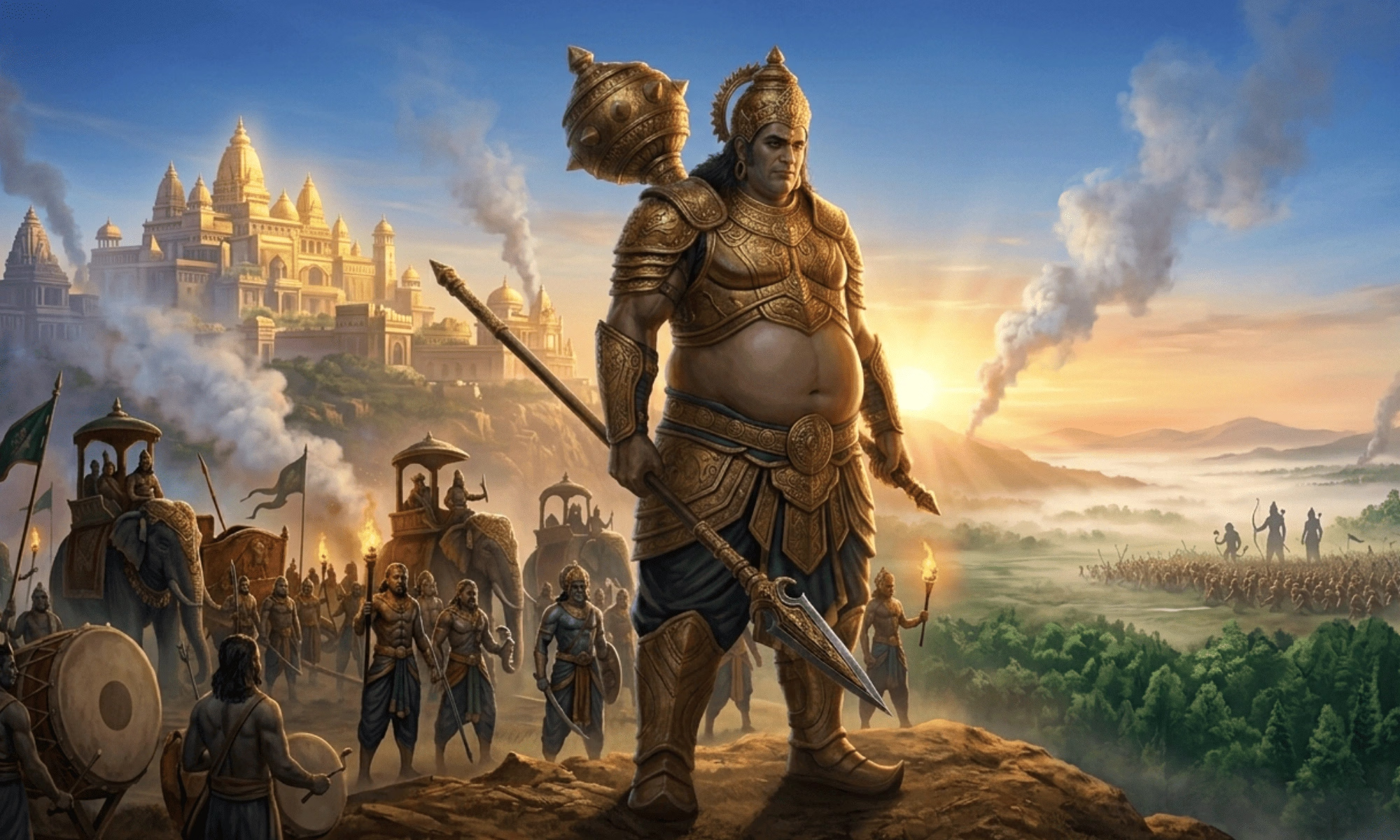
Long before his name became synonymous with sleep and enormous appetite, Kumbhakarna was known for something far greater. He was one of the mightiest beings ever born, a warrior whose strength rivaled the gods, a scholar blessed with wisdom, and perhaps the most tragic figure in the Ramayana. Though remembered for his gigantic size and six-month slumber, Kumbhakarna's true story is not one of gluttony or foolishness. It is the story of a man torn between righteousness and loyalty, a warrior who knew his brother was wrong yet chose to stand beside him in his final hour.
Among the many heroes and villains of the Ramayana, few evoke as much sympathy as Kumbhakarna. Unlike Ravana, whose pride blinded him, or Vibhishana, who chose dharma above blood, Kumbhakarna walked a path filled with sorrow. He understood truth, recognized injustice, and yet embraced death for the sake of family.
The Birth of the Giant
Kumbhakarna was born to the sage Vishrava and the Rakshasi Kaikesi. He was the younger brother of Ravana and elder brother of Vibhishana. From birth, he possessed enormous size and unimaginable strength. Legends describe him as so vast that mountains trembled beneath his steps and his hunger terrified both men and gods.
Yet despite his fearsome appearance, Kumbhakarna was no mindless brute. Like Ravana, he was highly learned and possessed deep knowledge of the Vedas and sacred scriptures. He performed severe austerities alongside his brothers, seeking blessings from Lord Brahma.
The gods, however, feared his immense power. If granted unlimited freedom, Kumbhakarna could upset the balance of the universe itself.
The Curse of Eternal Sleep
Pleased with the penance of the three brothers, Brahma appeared before them and offered boons. But Indra and the gods grew anxious. They feared Kumbhakarna would ask for Indra's throne or even immortality.
According to tradition, Goddess Saraswati intervened and clouded his speech. Instead of asking for "Indrasana" (the throne of Indra), Kumbhakarna accidentally asked for "Nidrasana"—the couch of sleep.
Brahma granted the strange boon. Realizing the mistake, the giant was devastated. Ravana pleaded with Brahma to soften the curse, and the creator modified it. Kumbhakarna would sleep for six months at a time and awaken only briefly before returning to slumber.
Though often remembered humorously, this curse transformed the life of a warrior who might otherwise have changed the fate of kingdoms.
The Voice of Wisdom in Ravana's Court
When Ravana abducted Sita and brought her to Lanka, many in his court praised the king and supported his decision. But when Kumbhakarna awoke and learned what had happened, he did something few dared to do.
He criticized Ravana openly.
He reminded his brother that abducting another man's wife violated dharma and would bring disaster upon Lanka. Kumbhakarna warned that Lord Rama was no ordinary prince and that arrogance would lead to destruction.
His words echoed the counsel of Vibhishana, who had also urged Ravana to return Sita. But pride had already consumed the king of Lanka.
Unlike flatterers who spoke only what Ravana wished to hear, Kumbhakarna spoke the truth.
Yet when Ravana rejected his advice, the giant faced a painful dilemma.
Loyalty Above Life
Kumbhakarna knew that Ravana had chosen the wrong path. He knew Rama stood for righteousness. He knew the war could not be won.
But he also knew something else.
Ravana was his brother.
In one of the most emotional moments in the Ramayana, Kumbhakarna chose loyalty over righteousness. Not because he believed Ravana was right, but because he refused to abandon his family in its darkest hour.
He famously declared that although Ravana had acted foolishly, it was now his duty to stand beside his brother.
This decision transformed Kumbhakarna from a simple warrior into one of the most tragic characters in Indian mythology. Unlike Vibhishana, who chose dharma over blood, Kumbhakarna chose blood over dharma.
Neither choice was easy.
The Giant Awakens
As the war turned against Lanka, Ravana ordered his sleeping brother to be awakened.
Thousands of Rakshasas struggled to rouse the giant. Drums thundered, elephants trampled over him, and mountains of food were prepared to satisfy his legendary hunger. At last, Kumbhakarna awoke like a living mountain rising from the earth.
After learning of Lanka's plight, he armed himself and prepared for battle.
The sight of Kumbhakarna marching toward the battlefield terrified even the bravest Vanaras. Trees were uprooted, mountains shattered, and entire armies scattered before him.
For a brief moment, it seemed as though Lanka's fortunes had changed.
The Battle Against Rama
Kumbhakarna unleashed devastation upon Rama's army. Countless Vanaras fell before his strength, and even mighty warriors struggled to halt his advance.
Sugriva attacked him fiercely. Hanuman confronted the giant with unmatched courage. Yet Kumbhakarna fought like a force of nature, unstoppable and fearless.
But destiny had already chosen its course.
When Lord Rama finally faced him, the battle became one of the most dramatic moments in the epic. Rama recognized that Kumbhakarna was not evil. He saw before him a noble warrior trapped by loyalty and circumstance.
One by one, Rama's divine arrows severed the giant's arms and weakened his massive body. Yet even as he bled and staggered, Kumbhakarna continued to advance.
At last, Rama released a celestial arrow that struck his head and brought the mighty warrior down.
The earth shook as the giant fell.
And with his death, Lanka lost not merely its strongest warrior, but perhaps its most honorable son.
Symbolism of Kumbhakarna
Modern retellings often reduce Kumbhakarna to jokes about sleep and appetite. But ancient traditions remember him differently.
He symbolizes the conflict between loyalty and righteousness.
He represents the tragedy of wise men bound by family ties.
His immense strength reminds us that power without moral clarity leads to suffering.
And his death teaches that noble intentions cannot always redeem wrong choices.
Kumbhakarna knew Ravana's actions were unjust, yet he could not bring himself to abandon his brother. In that painful choice lies the heart of his tragedy.
Legacy of the Sleeping Giant
For centuries, Kumbhakarna has remained one of the most misunderstood figures of the Ramayana. Unlike Ravana, whose pride led to ruin, or Vibhishana, who embraced dharma, Kumbhakarna existed somewhere in between.
He was neither villain nor hero.
He was a brother.
His story reminds us that life is rarely divided into simple categories of right and wrong. Sometimes even good men are forced to make impossible choices.
Perhaps that is why his legend endures.
Because beneath the image of the sleeping giant lies the story of a warrior who knew he was marching toward death and yet went forward—not for glory, not for power, but out of love and loyalty.
And in that final march, Kumbhakarna became something greater than a giant.
He became one of the most tragic souls in all of mythology.
Frequently asked questions
Who was Kumbhakarna in the Ramayana?
Why did Kumbhakarna sleep for six months?
Did Kumbhakarna support Ravana's kidnapping of Sita?
Who killed Kumbhakarna?
Was Kumbhakarna evil?
Pandora’s Box: Curiosity and the Birth of Hope
Discover the myth of Pandora’s Box from Greek mythology. Learn its story, symbolism, and interpretations in philosophy, ...
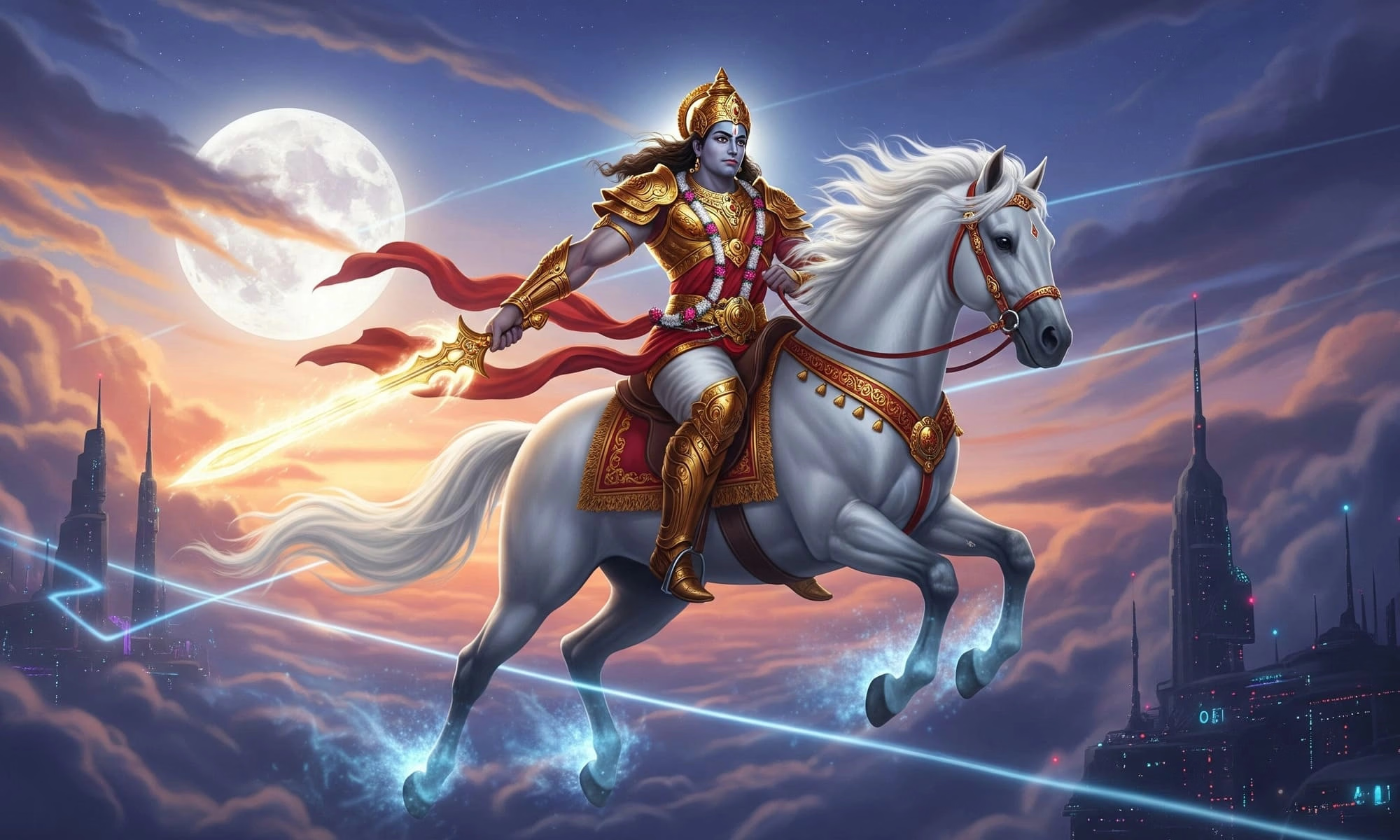
Kalki: The Final Avatar of Vishnu – The Warrior of the Future
Learn about Kalki, the tenth and final avatar of Vishnu. Discover the prophecy of his birth in Kali Yuga, his mission to...