Zahhak: The Serpent King and Tyranny
A King Cursed by Evil
In the annals of Persian mythology, few tales are as vividly cautionary as that of Zahhak, the serpent king. Ferdowsi’s Shahnameh immortalizes Zahhak’s tragic descent from a noble prince to an embodiment of tyranny and corruption. His story begins with a moment of weakness when he falls victim to the schemes of Ahriman, the devil-like figure in Zoroastrianism, who tempts him with power and luxury.
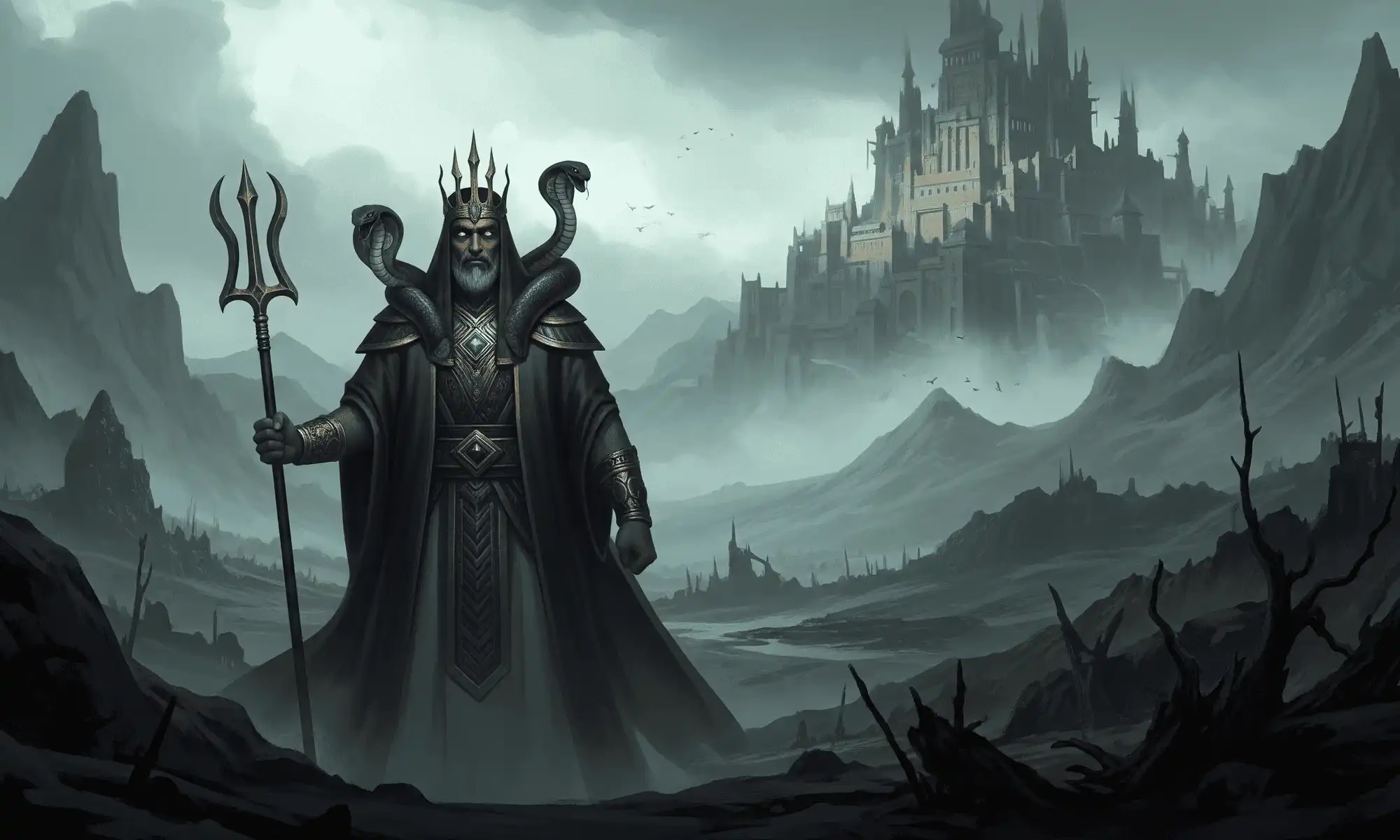
Unchecked by moral restraint or counsel, Zahhak’s rule becomes synonymous with evil. Two serpents emerge from his shoulders, demanding human brains for sustenance daily, a grotesque symbol of his reign's brutality and the terror it imposed on Persia. This narrative serves not only as historical lore but also as a stark warning about the dangers of unchecked ambition and the consequences of yielding to darker impulses.
One striking detail in Zahhak’s tale is that each day, he required two human brains to satisfy the serpents, reflecting the relentless cruelty of his regime. Despite initial promises of reform, Zahhak’s transformation into a tyrant reveals how quickly even well-intentioned leaders can be corrupted by absolute power and unchecked authority. His story resonates deeply in Iranian cultural memory as a timeless reminder that vigilance against tyranny is an enduring necessity.
The Rise of Zahhak
Zahhak, originally a prince from an Arabian lineage, found himself entangled in a web of deceit when Ahriman, personified as a sagacious advisor in Persian lore, sought to corrupt him. This encounter marked the turning point in Zahhak’s life, leading him down a path of betrayal and treachery.
Utilizing cunning rhetoric and subtle manipulation, Ahriman convinced Zahhak that seizing power from his own father was justified. Driven by ambition and misled by deceitful promises, Zahhak committed the heinous act of patricide to usurp the throne. This brutal betrayal not only cemented Zahhak's cursed rule but also set a precedent for the widespread corruption that would follow.
In a particularly telling moment, Zahhak’s rise to power mirrored the societal decay seen in many historical accounts where ambition trumps morality. For instance, the case of Emperor Elagabalus of Rome, who similarly ascended through deceit and betrayal, highlights how such acts often lead to instability and chaos.
The Serpent’s Curse
Zahhak, the king of ancient Persia, was a man easily swayed by flattery and luxury. One day, Ahriman, in disguise as a cook, presented Zahhak with dishes so exquisite that they enchanted him completely. Pleased beyond measure, Zahhak offered the cook any reward he desired. The cook merely requested permission to kiss Zahhak’s shoulders.
Unbeknownst to Zahhak, this seemingly innocent act had dire consequences. Upon kissing his shoulders, two black serpents sprouted forth, their writhing bodies and insatiable hunger marking the beginning of an era of dread. No matter how hard Zahhak tried, he could not rid himself of these grotesque creatures.
The serpents' demands were horrifying: they required human brains to sustain themselves. In a cruel twist of fate, Zahhak found himself forced into a reign of terror where innocent lives were sacrificed daily to satiate the monstrous serpents. This practice became emblematic of tyranny and oppression throughout his kingdom, with every sacrifice representing another step towards an irreversible descent into darkness.
Zahhak’s Tyranny
Under Zahhak's rule, Persia transformed into a place of unrelenting fear and sorrow. Each dawn brought the same grim fate for two unfortunate souls selected to feed the serpents on Zahhak's shoulders. Despite the efforts of his advisors to substitute animal brains in an attempt to save human lives, the brutality of Zahhak’s governance remained unmistakable.
The tale of Zahhak encapsulates the corrosive essence of tyranny, wherein rulers mercilessly exploit their subjects for their own twisted longevity. The serpents on Zahhak's shoulders were more than mere creatures; they symbolized an insatiable appetite for power, moral decay, and relentless cruelty. For instance, when Zahhak demanded that a father sacrifice his only son to feed the serpents, it became evident how deeply rooted was this regime of fear.
In reflective analysis, one might argue that Zahhak's tyranny is not an isolated incident but rather a timeless narrative of political horror. The specific detail of two daily sacrifices underscores the relentless pace and systematic nature of his cruelty, reminiscent of historical instances where leaders have used similar tactics to maintain control. This story serves as a somber reminder of humanity’s capacity for both atrocity and resilience in the face of oppressive regimes.
Resistance and the Prophecy of Freedom
In ancient Persia, despite the oppressive rule of Zahhak, hope never fully vanished. Prophetic tales promised a savior who would free the people from tyranny. Among these prophecies was one that spoke of Fereydun, a young hero destined to liberate his homeland.
With the backing of those weary and suppressed by Zahhak's reign, Fereydun rose up against the serpent king. In a pivotal confrontation, he managed not only to defeat Zahhak but also to imprison him in an isolated mountain cave. There, Zahhak was bound for all eternity, a punishment that mirrored his endless hunger for dominance and control.
This imprisonment marked more than just the end of one tyrant; it symbolized the restoration of freedom and justice for generations to come. Fereydun's victory set a precedent: even the most powerful oppressors could be brought down by the collective will of the people.
Symbolism of Zahhak
The legend of Zahhak is rich in symbolism, offering profound insights into human nature and societal dynamics. The serpents coiling around his shoulders are powerful symbols of greed, sin, and the destructive impulses that can consume a person or even an entire nation. These manifestations serve as warnings about the dangers of unchecked desires and the corruption they bring.
The reign of Zahhak is more than just a historical tale; it's a timeless metaphor for tyranny and oppression in any age. His rule exemplifies how fear, control, and abuse of power can silence dissent and crush hope. Yet, even as he imposes his will on the people, Zahhak's grip tightens, revealing the inherent instability of such regimes.
Resistance and justice find their voice with Fereydun, whose rise symbolizes the enduring human spirit of resilience and defiance against oppression. The story highlights how hope can emerge from despair and that there is always potential for change, even in the darkest times. For instance, during Iran's long history of political upheaval, the narrative of Zahhak has often been invoked to rally support for those fighting against authoritarian rule.
Zahhak in Persian Culture
The tale of Zahhak resonates deeply within Persian culture, spanning literature, politics, and the arts for generations. As a symbol of resistance against tyranny, Zahhak's story continues to be invoked during periods of political turmoil, reminding contemporary Iranians that despite oppressive regimes, justice will eventually prevail. This enduring narrative is not just myth; it reflects historical events such as the Islamic Revolution in 1979, where Zahhak’s legend was used to rally people against a perceived tyrannical ruler.
Moreover, Zahhak's influence extends beyond mere symbolism. In Persian art and literature, artists often depict Zahhak as a figure embodying the worst of human nature—greed, corruption, and cruelty—while his nemesis Kaveh stands for resilience and hope. For instance, in paintings by modern Iranian artist Shapur Tabrizi, Zahhak is shown with serpents entwined around his shoulders, emphasizing his dual role as both a cautionary tale and an embodiment of societal fears.
What makes Zahhak’s story particularly compelling is its cyclical nature. Unlike heroes who triumph once and for all, Zahhak reemerges in different forms throughout Persian history, symbolizing the continuous battle against tyranny. This cyclicality suggests a nuanced view that oppression may rise again after defeat but will eventually be met with resistance—a perspective that offers both hope and caution to those facing current challenges.
Conclusion — The Eternal Warning of Zahhak
The tale of Zahhak transcends its status as a mere folktale from the Shahnameh; it stands as a profound and timeless allegory of power, corruption, and resistance. Within Zahhak's body, the serpents embody inner demons that haunt every ruler: greed, ambition, and cruelty. These vices are not external threats but insidious temptations that lurk within each person.
Yet, despite the darkness cast by these serpents, Zahhak’s ultimate fate offers hope. His downfall serves as a beacon of justice, illustrating how even the most oppressive regimes eventually crumble under the weight of their own excesses and the unwavering resolve of the oppressed. This narrative has echoed through history, reminding us that every era has its tyrants, but also its champions who rise to challenge them.
Frequently asked questions
Who is Zahhak in Persian mythology?
Why did Zahhak have serpents on his shoulders?
How was Zahhak defeated?
What does Zahhak symbolize?
Hanuman’s Leap to Lanka: Courage Beyond Measure
Discover the epic story of Hanuman’s leap to Lanka in the Ramayana — a tale of devotion, courage, and the awakening of h...
The Journey Through the Duat: Egyptian Afterlife Explained
Discover the Egyptian afterlife in the Duat, the journey of souls, the Book of the Dead, and the Weighing of the Heart. ...