Ahura Mazda and Angra Mainyu: Cosmic Duality
The Eternal Struggle
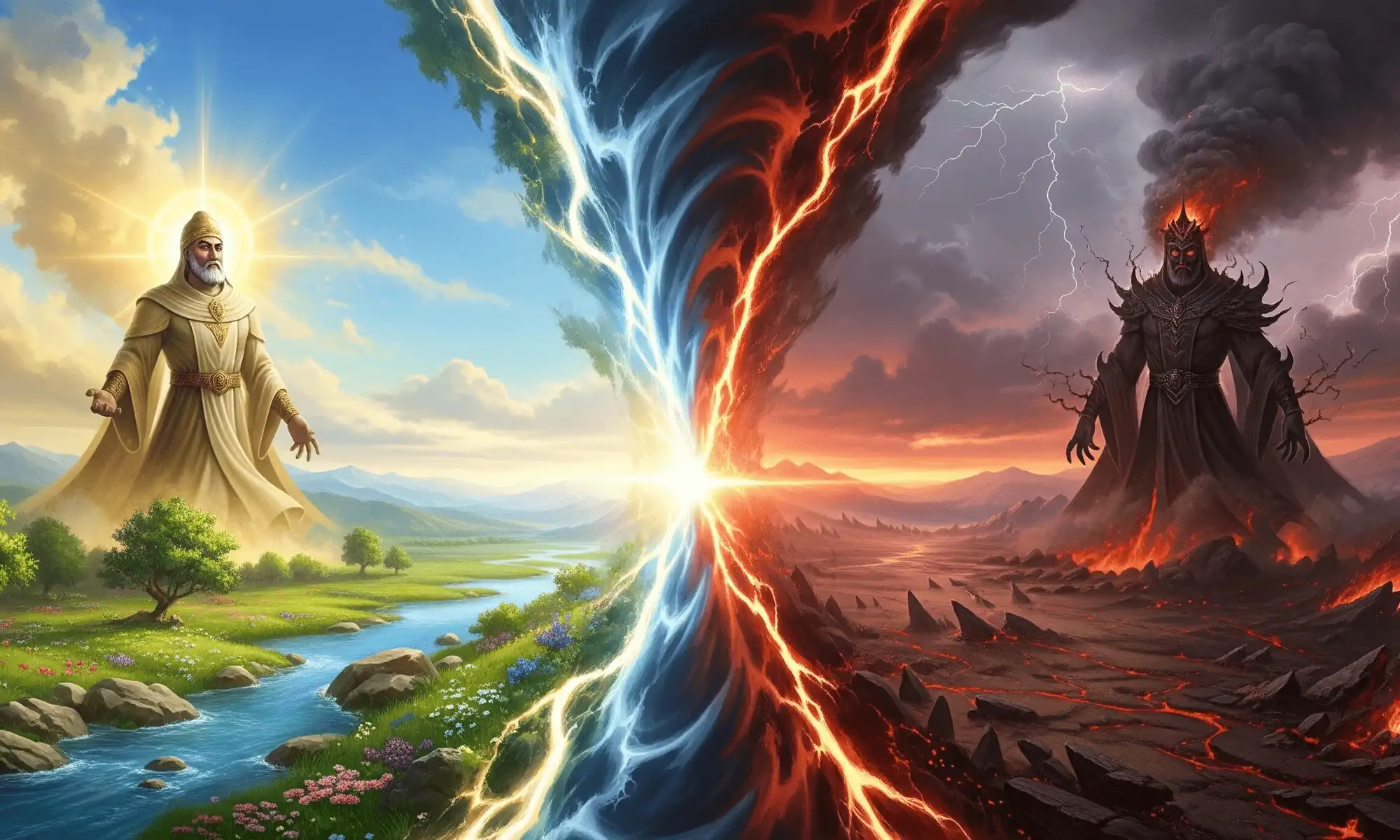
In the heart of Zoroastrian mythology, one of the world’s oldest monotheistic religions, lies a profound narrative about cosmic duality. This story centers around two opposing forces: Ahura Mazda, the Wise Lord, who embodies light, order, and truth; and Angra Mainyu (Ahriman), the spirit of destruction, darkness, and lies. The eternal battle between these entities not only shapes Zoroastrian faith but also significantly influenced Persian spirituality.
The concept of eternal struggle in Zoroastrianism has had a lasting impact on religious thought, extending beyond its original context into later Abrahamic traditions. This belief system posits that the fate of the universe is determined by the delicate balance between good and evil. Interestingly, while many might view this duality as a static concept, it actually encourages individuals to actively participate in maintaining harmony through righteous actions.
For instance, adherents are encouraged to recite prayers five times daily and engage in good deeds to tip the scales in favor of Ahura Mazda. This practical aspect underscores how religious teachings can shape daily life and behavior. By integrating such practices into their routines, believers contribute to an ongoing narrative that has endured for millennia.
Ahura Mazda — The Lord of Light
At the heart of Zoroastrianism stands Ahura Mazda, a deity revered not just for his creation but also for his enduring role as the guardian of asha, or truth and righteousness. In ancient Persian belief, Ahura Mazda’s influence permeates every aspect of life, from the luminous sun to the quiet wisdom found in human hearts. His divine essence births all that is good in the universe, reflecting a cosmic order where light triumphs over darkness.
More than just an omnipotent creator, Ahura Mazda acts as a protector and guide for humanity. He imparts wisdom through moral choices, leading us toward paths illuminated by truth. This guidance is not arbitrary but deeply connected to human autonomy. For example, in Zoroastrian teachings, the concept of mehr, or charity and good deeds, underscores this principle, encouraging followers to act with compassion and justice.
Crucially, Ahura Mazda’s authority does not rely on coercion but on the power of truth. This belief underpins the idea that free will is an eternal gift from the divine, allowing individuals to choose righteousness over deceit. A compelling example can be seen in modern Zoroastrian practices where ethical decision-making is central, demonstrating how ancient beliefs continue to shape contemporary moral landscapes.
Angra Mainyu — The Spirit of Destruction
In Zoroastrian cosmology, Angra Mainyu stands as the diametric opposite to Ahura Mazda. Embodied by the concept of druj—deceit, chaos, and corruption—Angra Mainyu personifies every force that seeks to undermine creation. He embodies disease, death, cruelty, and darkness, each element working in concert to oppose the divine order established by Ahura Mazda.
Angra Mainyu’s role is not merely to exist as a counterbalance but to actively work towards the destruction of all that Ahura Mazda has built. His ultimate objective is the obliteration of existence itself, leaving behind an eternal void shrouded in darkness. This relentless pursuit of annihilation underscores his significance as the harbinger of chaos within the cosmic framework.
The serpents and demons prevalent in Persian mythology are often seen as manifestations or agents of Angra Mainyu’s will, spreading terror and imbalance wherever they go. For instance, the mythological figure Ahriman is synonymous with evil and destruction, embodying the very essence of Angra Mainyu's destructive purpose. This illustrates how deeply entrenched these forces are in Persian culture and beliefs.
The Cosmic Battle
In the Yasna and other ancient Zoroastrian scriptures, the universe is depicted as a grand battlefield where two opposing forces clash. Unlike many mythologies that depict gods battling with swords and arrows, this cosmic struggle in Zoroastrianism centers on principles: light versus darkness, order against chaos, truth versus deceit. This enduring narrative underscores a profound philosophical divide that shapes the religious worldview of its followers.
The concept of this eternal conflict is not confined to lofty realms but plays out daily through human choices and actions. Each decision we make either supports Ahura Mazda’s ideal of asha (truth and righteousness) or fortifies Angra Mainyu’s druj (deceit and corruption). This transformation turns the mythological into the ethical, creating a moral framework that guides individuals in their everyday lives.
For instance, consider a Zoroastrian business owner who must decide whether to adhere strictly to fair trade practices or to cut costs by compromising on quality. By choosing fairness, they align themselves with Ahura Mazda’s asha, contributing positively to the cosmic battle against druj. This practical application of religious doctrine illustrates how Zoroastrianism integrates spiritual beliefs into tangible actions.
Free Will and Human Role
In Zoroastrianism, the concept of human beings as active participants in the cosmic struggle sets it apart from many other religious beliefs. This view emphasizes that humans are not merely passive observers but agents with a direct impact on the world around them. By choosing to engage in good deeds, thoughts, and words, individuals strengthen Ahura Mazda, the embodiment of wisdom and order. Conversely, opting for cruelty, lies, and selfishness bolsters Angra Mainyu, the force of chaos and evil.
The Zoroastrian myth thus transforms into a daily reminder of ethical responsibility, urging believers to make conscious choices that influence their cosmic role. This approach not only deepens one's spiritual connection but also fosters a sense of accountability in everyday life. For instance, a Zoroastrian might reflect on the consequences of their actions, considering how each decision contributes to either the triumph of light over darkness or vice versa.
Interestingly, this perspective suggests that even minor acts, such as telling the truth or showing kindness, can have profound implications beyond the immediate context. This nuanced view underscores the interconnectedness of individual choices and collective destiny in Zoroastrian cosmology.
Eschatology — The Final Triumph
Zoroastrianism offers hope in the face of eternal struggle by promising a decisive conclusion led by the savior figure known as Saoshyant. This messiah will guide humanity to victory over Angra Mainyu, the embodiment of evil, ensuring that justice prevails in a cosmic battle. Following this triumph, the righteous will experience resurrection and purification through a symbolic river of molten metal, which feels like warm milk to them but serves as torment for the wicked.
The ultimate outcome is the restoration of harmony under Ahura Mazda’s light, erasing darkness from existence forever. This vision of final judgment significantly impacted subsequent religious traditions such as Judaism, Christianity, and Islam, shaping their own apocalyptic narratives and end-time scenarios.
Symbolism and Influence
The duality between Ahura Mazda and Angra Mainyu in Zoroastrianism embodies a profound human struggle — the eternal battle within us all, where light and darkness coexist within every individual's soul. This contrast not only highlights the inherent conflict we face but also underscores the significance of moral choice and personal accountability. Interestingly, while many religious philosophies emphasize divine intervention or predestination, Zoroastrianism places a unique emphasis on human responsibility.
Zoroastrian concepts such as heaven, hell, judgment day, and resurrection have left an indelible mark on subsequent religions, including Christianity and Islam. For instance, the concept of a final judgment where souls are sent to their respective afterlives is directly traceable back to Zoroastrian teachings. This enduring legacy illustrates how ancient Persian mythology has shaped spiritual beliefs across millennia.
Zoroaster's vision of moral choice and eternal consequence laid the groundwork for ethical discussions that continue to resonate with modern believers, demonstrating the timeless nature of these ideas.
Conclusion — The Light That Endures
The tale of Ahura Mazda and Angra Mainyu transcends mere mythology; it encapsulates a profound cosmic philosophy that resonates deeply within the human spirit. This narrative underscores the perpetual struggle between good and evil, not as distant entities but as integral parts of our daily existence. By embracing truth, compassion, and moral courage, individuals can become steadfast warriors for light in this often shadowed world.
Despite the pervasive presence of darkness, Zoroastrian teachings offer a beacon of hope. They affirm that Ahura Mazda's wisdom and illumination will ultimately triumph over Angra Mainyu’s chaos, paving the way to a purified and enduring realm. This belief is not just an abstract concept but a guiding principle for countless individuals who find solace and strength in its promise.
Frequently asked questions
Who is Ahura Mazda in Zoroastrianism?
Who is Angra Mainyu?
What is the central theme of Ahura Mazda and Angra Mainyu?
How does Zoroastrianism describe the end of the cosmic battle?
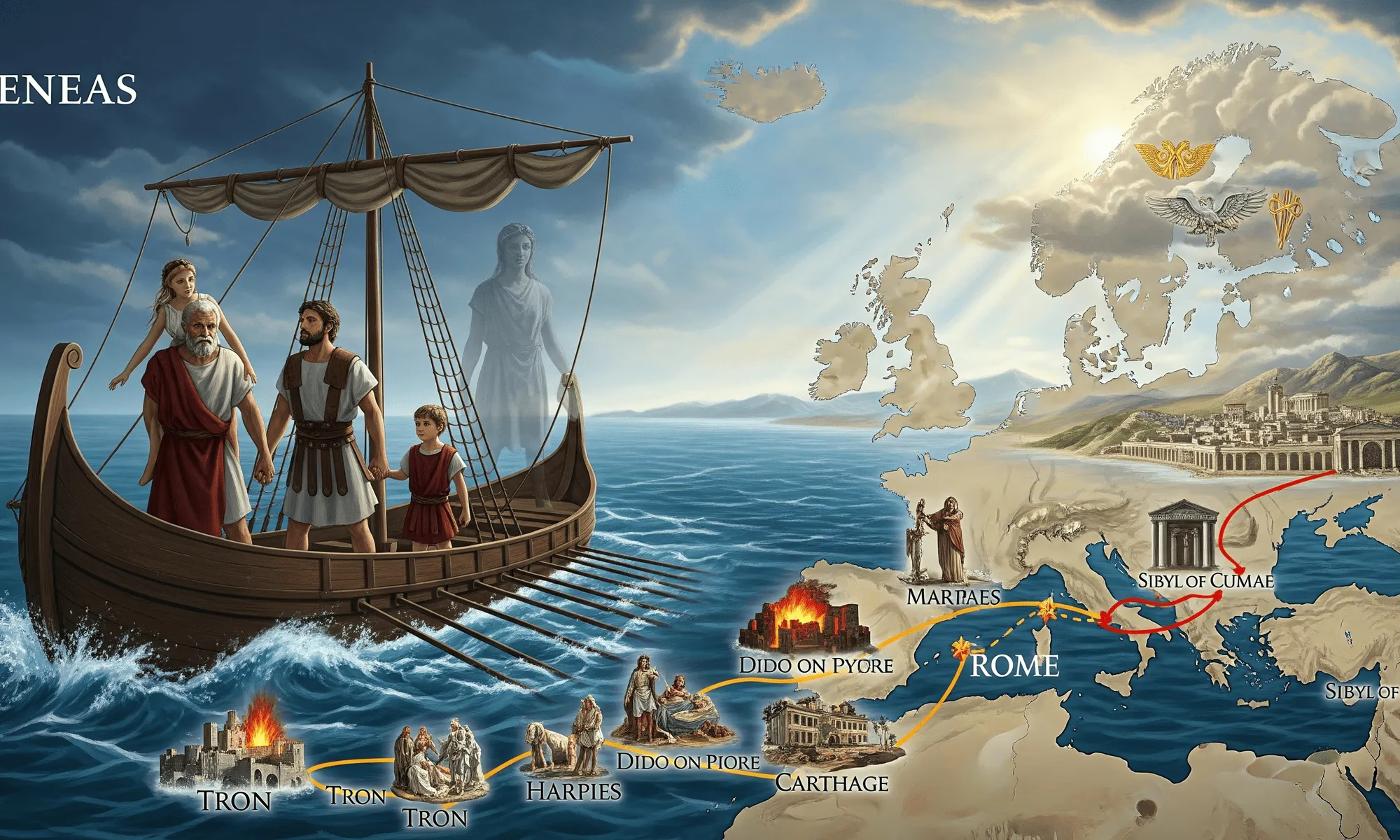
Aeneas and the Journey to Italy
Aeneas and the Journey to Italy...
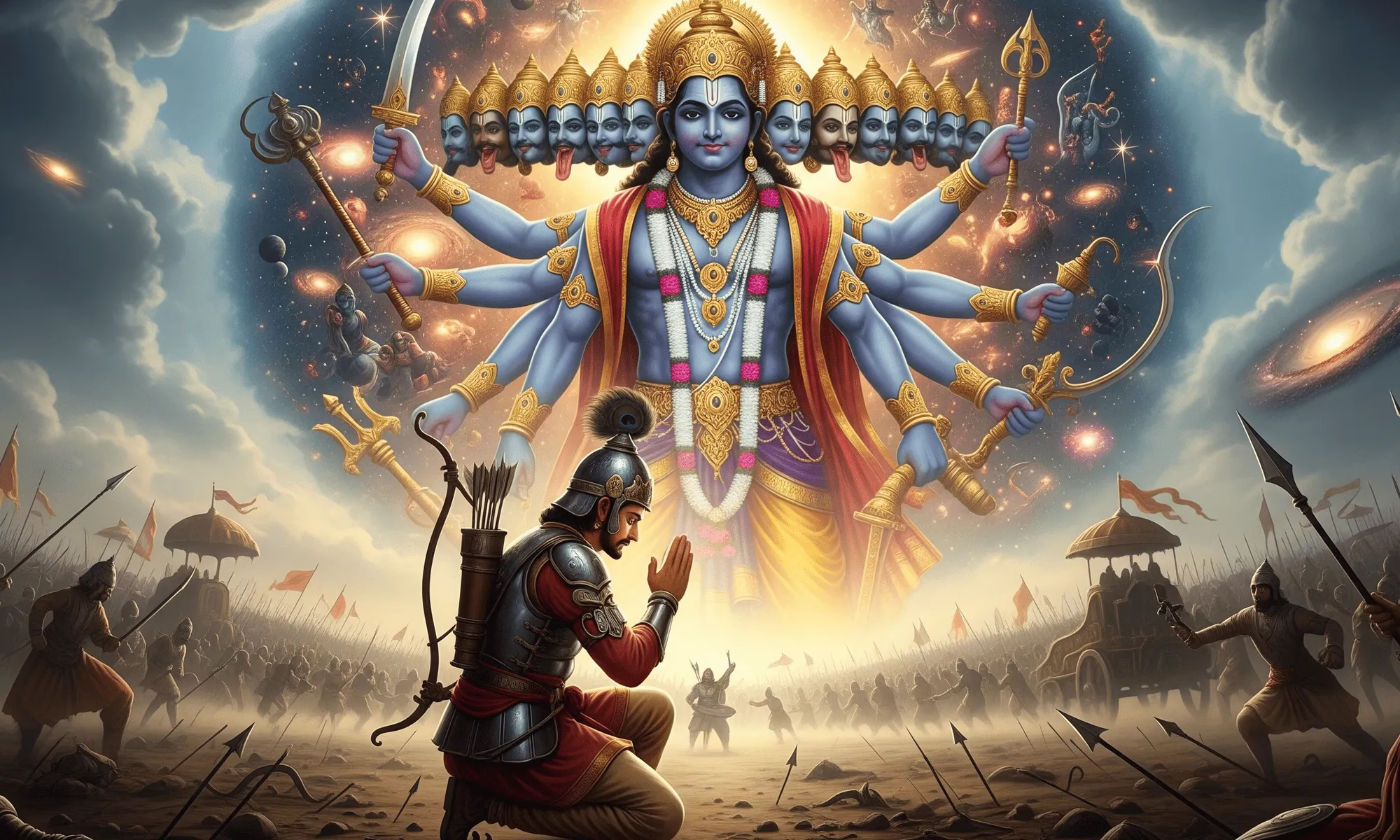
Arjuna and Krishna: The Dialogue of Duty (Bhagavad Gita)
Discover the epic dialogue between Arjuna and Krishna in the Bhagavad Gita — lessons on dharma, duty, devotion, and the ...