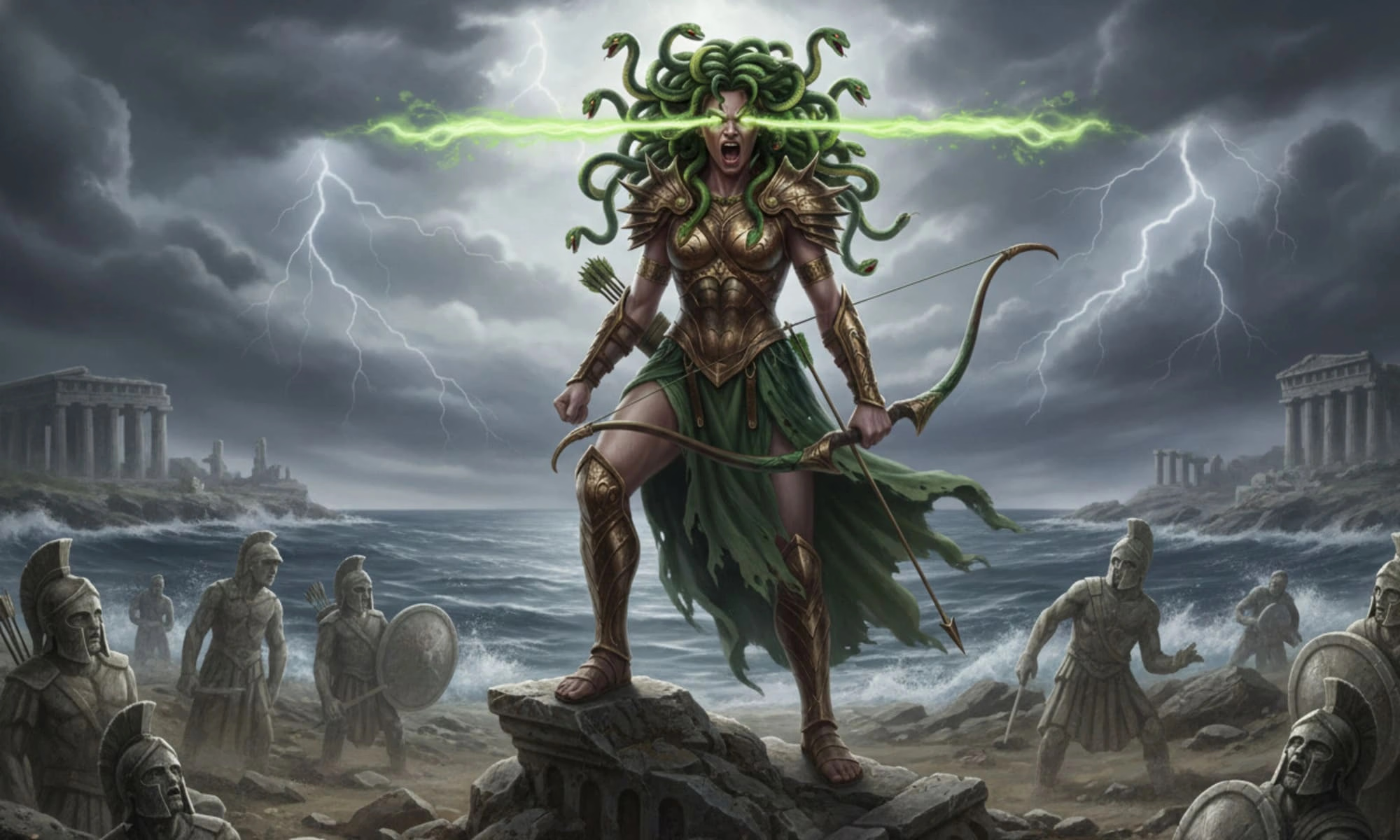
Medusa: The Tragic Gorgon of Greek Mythology – Origins, Powers & Legacy
Exploring legendary beasts, monsters, spirits, and supernatural creatures.
- 1Fenrir and Jörmungandr: Monsters of Prophecy
- 2The Gorgons: Sisters of Terror in Greek Mythology – Origins, Curse, Power & Legacy
- 3Top 10 Deadliest Roman Monsters That Terrified the Ancient Empire
- 4Mayan Monsters & Jungle Spirits: Creatures That Haunted the Ancient Rainforests
- 5Oni, Tengu, and Dark Spirits: Monsters of Japanese Folklore Explained
- 6Terrors of the Ancient Seas: Sea Monsters & Ocean Creatures in Greek Mythology
- 7The Rise and Fall of Roman Giants: Monsters Before the Olympians
- 8The Tale of Yamata-no-Orochi: Eight-Headed Serpent
- 9Divs and Demons of Persian Lore – Evil beings, magical wars, and symbolic meanings
- 10Medusa: The Tragic Gorgon of Greek Mythology – Origins, Powers & Legacy (you are here)
- 11Top 10 Deadliest Yokai in Japanese Mythology Ranked
- 12Huldra: The Enchanting Forest Spirit of Scandinavian Folklore
🐍 Who Was Medusa in Greek Mythology?
Medusa, one of Greek mythology's most iconic figures, stands out as a tragic figure whose story is often overshadowed by her cursed appearance. Once a stunning mortal woman with flowing golden hair and radiant beauty, Athena transformed Medusa into a Gorgon for unrequited affection towards Poseidon in Athena's temple. This transformation marked the beginning of Medusa’s journey from innocence to fierce resistance.
Medusa’s legend transcends mythological tales as an emblem of feminine rage and resilience. Her ability to turn those who gazed upon her into stone was a form of protection against exploitation or harm, empowering her with unique defense but also forcing isolation. This power became both blessing and curse.
Over time, Medusa’s story has evolved beyond mythological roots to become a symbol in modern culture, representing empowerment against oppression and injustice. The beheading by Perseus is seen as an emblematic moment highlighting complex dynamics between oppressor and oppressed, adding depth to her narrative and continuing resonance with audiences across generations.
Medusa’s Origins: A Mortal Woman, Not a Monster
Medusa was once a mortal woman, born to the sea deities Phorcys and Ceto. Unlike her sisters Stheno and Euryale, who were immortal Gorgons, Medusa lived an ordinary human life until her beauty caught the attention of the gods and mortals around her.
Medusa was renowned for her striking appearance, especially her lustrous hair that shone with a divine radiance. According to many myths, she served as a priestess in Athena's temple, bound by vows of purity and devotion. This role brought her into the spotlight, making her beauty even more celebrated.
Despite her virtuous life, Medusa’s allure did not go unnoticed by powerful entities who coveted her beauty. Her fate would eventually take a tragic turn when she became entangled in divine affairs beyond her control. For instance, one myth recounts how Poseidon, the god of the sea, pursued her within Athena's temple—an act that enraged the goddess and led to Medusa’s transformation into a Gorgon.
The Curse of Athena: From Victim to Gorgon
Medusa's transformation into a Gorgon stems from Poseidon’s unjust act within Athena’s temple. Instead of divine retribution for Poseidon, Medusa faced severe punishment—her hair turned to serpents, symbolizing her loss of humanity and transformation into mythic legend. Her skin became ashen and monstrous, emphasizing isolation and trauma. The most notorious aspect was her gaze turning living beings to stone—a protective yet cruel power.
This ability highlighted the twisted justice in ancient Greek society, where victims faced harsher penalties than perpetrators. These myths underscore a critical issue: societal structures often unfairly punish victims instead of addressing true injustices. For example, women frequently face dire consequences despite being wronged by gods or powerful entities.
The Powers of Medusa
Medusa's abilities in Greek mythology make her a formidable figure, capturing imagination with her terrifying gaze that turns enemies to stone. This power reflects themes of fate and transformation, testing will and marking moments of irreversible change. Beyond this paralyzing sight, Medusa possessed supernatural strength and speed, outmaneuvering skilled adversaries. Medusa's serpentine hair functions almost as an independent entity, lashing out at enemies unpredictably.
During the encounter with Perseus, these snakes guided him to the Graeae for information while remaining hidden behind their reflection in Athena's shield. This unique trait of Medusa’s hair moving on its own allowed her to maintain surprise and control even when unable to actively engage. It highlights a nuanced perspective: sometimes, the greatest threats are those we cannot directly confront or control.
Medusa and the Gorgons: Sisters of Terror
The story of Medusa is not one to be told in isolation; she was part of a trio known as the Gorgon sisters. Each sister had unique attributes that made them formidable figures in Greek mythology, with Medusa being particularly notable for her mortal status.
Meet the Sisters
Stheno, the first sibling, earned her title "The Mighty and Ferocious One" due to unmatched strength. Euryale, the second sister, was known as "The Far-Roaming Scream," her voice striking terror from afar.
Among these two powerful sisters, Medusa stood out as a mortal among immortals. This distinction made her both vulnerable and uniquely significant in heroic legends. Unlike her sisters who were invincible, Medusa's mortality meant she could be slain.
The narrative around Medusa revolves heavily around her ability to die—her singular vulnerability. Her mortal status not only made her a tragic figure but also a pivotal character in tales where heroes sought glory by defeating an opponent they might conquer. This unique trait highlights how myths often use mortality as a metaphor for the human condition, making her story resonate deeply with audiences.
Perseus and the Quest to Slay Medusa
The hero Perseus, son of Zeus, embarked on a perilous mission to slay Medusa, an undertaking that was designed to be insurmountably challenging. To achieve this seemingly impossible task, Perseus received indispensable assistance from various gods.
Divine Tools and Gear
Athena provided Perseus with her mirrored shield, a crucial item that allowed him to avoid the fatal gaze of Medusa by observing his reflection instead. Hermes equipped Perseus with winged sandals, enabling swift flight over vast distances and ensuring he could reach even the most remote locations. Additionally, Hades gifted Perseus the helm of invisibility, granting him the ability to move undetected through dangerous territories.
Equipped with these divine tools, Perseus devised a cunning strategy: using the mirrored shield for guidance, he located Medusa while she was in her deepest sleep. With precise timing and unparalleled stealth, Perseus decapitated Medusa without ever locking eyes with her lethal stare, thereby completing his daunting quest.
The Birth of Pegasus and Chrysaor
In Greek mythology, one of the most intriguing stories revolves around the death of Medusa. It is said that from her severed neck sprung forth two remarkable beings, a testament to the duality inherent in her character as both destroyer and creator. First among these was Pegasus, a magnificent winged horse capable of soaring through the skies with unparalleled grace.
The second being to emerge from Medusa's severed neck was Chrysaor, a formidable warrior armed with a golden sword, symbolizing power and divine lineage. Both Pegasus and Chrysaor were the children of Poseidon, born before Medusa’s transformation into a gorgon, highlighting their significance beyond the mere outcome of her tragic fate. This unique origin story underscores the cyclical nature of life in Greek mythology, where death often leads to rebirth.
Interestingly, this mythological event is not just a tale but has inspired countless artistic renditions and cultural references over millennia. For instance, Pegasus has become an enduring symbol of creativity and inspiration, appearing in everything from literature to modern-day branding. This widespread influence shows how ancient myths continue to shape our understanding of creation and destruction.
Medusa’s Head: A Weapon of Gods and Heroes
Following her demise, Medusa's head continued to possess its terrifying power. Perseus employed this fearsome relic as a formidable weapon, turning numerous adversaries into stone with just a glance. One such instance occurred when he faced the gargantuan sea monster Cetus; by cleverly deploying Medusa’s severed head, he transformed the beast into an immobile statue, preventing it from devouring its intended victim.
Another heroic deed attributed to Perseus involved rescuing Andromeda, a princess chained to a rock as a sacrifice to appease the monster Cetus. By using Medusa's head, Perseus not only saved her life but also secured his place among Greece’s legendary heroes. This weapon was so potent and sacred that it eventually found its way into the hands of Athena herself.
Athena, known for her wisdom and strategic prowess, ingeniously incorporated Medusa’s head onto her protective shield—the Aegis—transforming this symbol of dread into a talisman of ultimate defense. The inclusion of Medusa's visage on such an iconic piece of armor underscores its significance as a divine instrument capable of instilling fear in even the most formidable foes.
Symbolism of Medusa in Greek Mythology
In Greek mythology, Medusa's symbolism has transformed over centuries. Initially seen as a protector against evil, her image on buildings and shields warded off malevolent spirits and enemies. This paradox reflects both fear and protection.
Over time, Medusa's story evolved to highlight themes of female rage and injustice. As a victim of divine punishment for Poseidon’s violation in Athena’s temple, her narrative resonates with contemporary discussions about systemic oppression. This perspective elevates Medusa from a monster to a tragic figure embodying women's struggles in ancient society.
Medusa's transformation into a gorgon underscores power through metamorphosis. Her weakness became an indomitable force, turning adversity into strength. This dynamic illustrates the potential for individuals to reclaim their identity and transform suffering into empowerment.
"Life emerging from her death" encapsulates Medusa's final chapter in Greek lore, where she becomes a symbol of rebirth through sacrifice. Perseus’s use of her head as a weapon carries forward this cycle of life arising from tragedy.
Medusa in Art, Culture, and Modern Feminism
Medusa's enduring presence in Western art spans millennia, from the intricate designs on ancient Greek pottery to Botticelli’s iconic Renaissance masterpiece "The Birth of Venus," and contemporary pop culture references. This figure's transformation through various artistic epochs highlights her significance as a cultural touchstone.
The Modern Medusa
In contemporary discussions, Medusa is often reinterpreted with fresh perspectives that reflect current societal concerns. She symbolizes female empowerment, challenging traditional narratives of victimhood by embracing her transformative power. Simultaneously, she embodies the struggle against patriarchal injustice, serving as a poignant reminder of the historical oppression faced by women.
Artists and activists have reclaimed Medusa’s image from villainization, transforming her into an emblem of resilience and resistance. For example, in 2018, a feminist art collective created a series of posters featuring Medusa’s face to protest gender-based violence at a major international summit. This reclamation shows how the mythological figure has evolved into a powerful symbol of modern feminism.
Medusa's influence extends beyond traditional media; she appears in literature, films, tattoos, fashion, and even political symbolism. Her image continues to inspire and provoke conversation about gender roles, victimhood, and female strength in contemporary society.
Was Medusa Truly a Monster?
In the modern age, retelling Medusa's myth highlights ethical quandaries. Why is Medusa punished for being a victim of violence? This raises doubts about ancient Greece’s justice system. Her unique ability to turn others to stone should be seen as protection rather than a curse or monstrosity. Medusa’s transformation into a monster results from societal expectations and gender roles, not nature.
Once a beautiful priestess in Athena’s temple, she was raped by Poseidon and cursed with serpents for hair and eyes that could turn men to stone—a punishment for what happened to her, not her actions. This shows how victims of violence often face societal condemnation. Fear becomes the prevalent response rather than empathy towards Medusa's plight. Fear obscures understanding and compassion. Behind every myth lies a human story filled with pain and resilience. By focusing on fear instead of injustice, we miss the chance to empathize with her struggle.
Medusa’s Legacy in Greek Mythology
In Greek mythology, Medusa stands out not just as a monster but as a figure whose legacy transcends her terrifying portrayal. Unlike the immortal gods and goddesses who populate mythological tales, Medusa was mortal, adding an extraordinary layer to her story.
- Her mortality among immortals made her an anomaly, challenging the status quo of divine invincibility.
- Fear gripped both mortals and deities alike as Medusa's curse spread through mythological narratives. The idea that even gods could tremble before a mortal woman speaks volumes about her impact.
- Despite being killed by Perseus, Medusa’s influence did not wane; instead, it grew stronger over time, embodying the concept of death giving way to eternal power and legacy.
Medusa's enduring story lies in its multifaceted portrayal: a tragic figure who is both beautiful and terrifying, strong yet cursed. This intricate blend of qualities makes her relatable across generations, resonating with anyone who has felt the duality of human existence—capable of immense beauty and profound tragedy.
Frequently asked questions
Who was Medusa in Greek mythology?
Why did Athena curse Medusa?
Was Medusa always a monster?
Who killed Medusa?
What happened after Medusa died?
What does Medusa symbolize today?
Simurgh: The Benevolent Mythical Bird
Discover the Simurgh, the legendary bird of Persian mythology. A symbol of wisdom, healing, and divine guidance, the Sim...

Manco Cápac and Mama Ocllo – The Founders of Cusco
Discover the epic Inca origin myth of Manco Cápac and Mama Ocllo, the divine children of the Sun who founded Cusco and t...