Cassandra: The Prophet Nobody Believed
Cassandra: The Princess Blessed and Cursed by the Gods
Among all the tragic figures of Greek mythology, few inspire as much sympathy as Cassandra, the daughter of King Priam and Queen Hecuba of Troy. She was not a warrior like Achilles, nor a mighty king like Agamemnon. Her tragedy lay not in weakness or pride but in possessing a gift that became a prison. Cassandra could see the future with perfect clarity, yet she was doomed to watch helplessly as those around her dismissed every warning she uttered.
Her story is one of loneliness, truth, and the terrible burden of knowledge. While many heroes sought the power to know what lay ahead, Cassandra's life became proof that some gifts can become curses, especially when wisdom falls upon ears unwilling to listen.
The Love of Apollo and the Gift of Prophecy
According to Greek tradition, Cassandra was blessed with extraordinary beauty and intelligence. One day, Apollo, the radiant god of prophecy, music, and the sun, saw the young princess and became enchanted by her. Desiring her affection, he promised to grant her the power of prophecy.
Cassandra accepted the gift and soon discovered that the veil separating present and future had been lifted. She could perceive events yet to come, understand divine signs, and witness destinies unfolding before they happened. But after receiving Apollo's blessing, she rejected his advances.
The god was furious.
Unable to reclaim the gift he had bestowed, Apollo devised a punishment far more cruel than taking it away. He cursed Cassandra so that although every prophecy she uttered would be true, nobody would ever believe her.
Thus began one of the most heartbreaking fates in Greek mythology. She would know disaster before it arrived and yet remain powerless to prevent it.
Warnings Ignored in Troy
As Troy prospered beneath the rule of King Priam, Cassandra repeatedly foresaw dangers threatening her homeland. She warned against Paris's journey to Sparta and predicted that his actions would bring ruin upon Troy. She recognized the consequences long before Helen's arrival and the outbreak of the Trojan War.
But the people of Troy dismissed her warnings as madness.
When Greek armies surrounded the city and years of war consumed the land, Cassandra continued to speak of what she saw. Yet her family, her people, and even those closest to her viewed her words as the ravings of a troubled woman rather than the voice of truth.
Her greatest warning came near the war's end.
The Trojan Horse and the Coming Doom
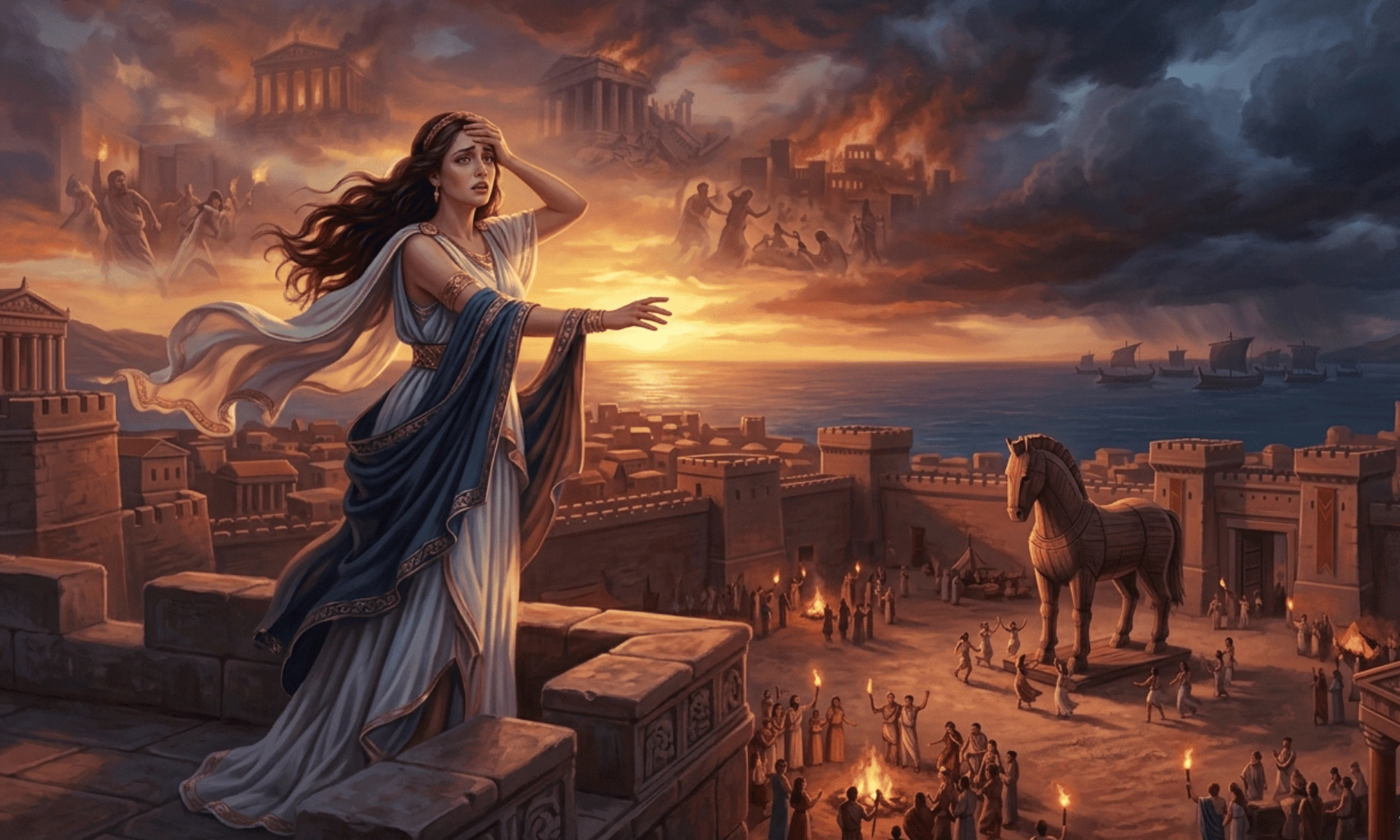
After ten years of conflict, the Greeks appeared to retreat, leaving behind an enormous wooden horse. The Trojans celebrated what they believed was victory. Songs filled the streets, and hopes of peace returned.
Only two voices opposed the celebrations—Laocoön and Cassandra.
Cassandra saw beyond appearances. Through her prophetic vision, she knew Greek warriors were hidden inside the horse. She begged her people not to bring it into the city. She pleaded with King Priam and warned the citizens that destruction waited within the wooden structure.
But once again, no one believed her.
Some laughed. Others pitied her. Many ignored her entirely.
As night fell, the horse stood inside Troy's walls. Hidden Greek soldiers emerged, opened the gates, and unleashed devastation upon the city.
Everything Cassandra had foreseen came to pass.
Yet truth arrived too late.
Witness to the Fall of Troy
Few figures in Greek mythology experienced such profound sorrow. Cassandra watched her city burn, temples collapse, and loved ones perish. She saw King Priam slain and the glory of Troy reduced to ashes.
Seeking refuge, she fled to the temple of Athena. But even sacred ground offered no protection. Ajax the Lesser violated the sanctity of the temple and dragged Cassandra away, an act so offensive that Athena herself would later punish the Greek fleet for the crime.
Amid the ruins of her homeland, Cassandra became a captive, destined for yet another tragedy.
The woman who had predicted the destruction of Troy was now forced to live among its conquerors.
Cassandra and Agamemnon
King Agamemnon, leader of the Greek forces, took Cassandra back to Mycenae as part of his spoils of war. Though defeated and enslaved, her gift remained unchanged.
Upon arriving in Greece, Cassandra foresaw another catastrophe.
She warned Agamemnon that death awaited him within his own palace. She saw Queen Clytemnestra's rage and understood that betrayal lurked behind the walls of home. Once again, she tried to reveal the truth.
And once again, nobody listened.
Inside the palace, Clytemnestra and her lover Aegisthus murdered Agamemnon.
Cassandra, fully aware of her own fate, walked toward death with remarkable calm. Greek tragedians often describe her final moments with haunting dignity. Knowing escape was impossible, she accepted the destiny she had foreseen long before.
She died not because her visions were false, but because truth alone was never enough.
The Symbolism of Cassandra
Over the centuries, Cassandra has come to symbolize much more than a tragic princess.
Her story represents the pain of possessing knowledge without influence. She embodies the frustration experienced by those who speak uncomfortable truths only to be ignored. Her curse reveals that wisdom has little power when people refuse to hear it.
In many ways, Cassandra's tragedy reflects a timeless human weakness. Societies often reject warnings that challenge pride, comfort, or deeply held beliefs. History itself is filled with voices dismissed until disaster proves them right.
The phrase "Cassandra syndrome" has even entered modern language to describe situations in which accurate warnings are ignored until it is too late.
Cassandra in Literature and Culture
Ancient playwrights such as Aeschylus and Euripides transformed Cassandra into one of the most compelling figures of Greek tragedy. Her scenes in Agamemnon remain among the most emotionally powerful passages in classical literature.
Modern writers, filmmakers, and psychologists continue to revisit her story. She appears as a symbol of misunderstood wisdom, female suffering, and the loneliness that often accompanies truth.
Unlike heroes who changed the world through strength or conquest, Cassandra changed culture through sorrow. Her voice echoes through centuries because her tragedy feels deeply human.
We all know what it means to feel unheard.
Legacy of the Prophet Nobody Believed
Perhaps that is why Cassandra remains one of mythology's most haunting figures. She never sought glory or power. She wished only to protect those she loved. Yet fate condemned her to witness disaster without possessing the ability to alter its course.
Her life raises questions that continue to resonate today. Is knowing the truth enough? Why do people reject warnings they do not wish to hear? And what burden does wisdom become when it cannot save those around us?
In the ruins of Troy and the halls of Mycenae, Cassandra stood alone—not because she lacked truth, but because truth itself was unwelcome.
Thousands of years later, her voice still whispers across history. It reminds us that wisdom ignored can become tragedy, and that sometimes the loneliest people are not those who know nothing, but those who see too much.
Frequently asked questions
Who was Cassandra in Greek mythology?
Why did Apollo curse Cassandra?
Did Cassandra predict the fall of Troy?
How did Cassandra die?
What does Cassandra symbolize?

Mayan Monsters & Jungle Spirits: Creatures That Haunted the Ancient Rainforests
Explore terrifying Mayan monsters and jungle spirits that ruled the rainforests, from Camazotz to jaguar spirits and sha...
The Tale of Yamata-no-Orochi: Eight-Headed Serpent
Explore the legendary tale of Yamata-no-Orochi, the eight-headed serpent of Japanese myth. Discover how Susanoo defeated...