Top 10 Deadliest Roman Monsters That Terrified the Ancient Empire
Exploring legendary beasts, monsters, spirits, and supernatural creatures.
- 1Fenrir and Jörmungandr: Monsters of Prophecy
- 2The Gorgons: Sisters of Terror in Greek Mythology – Origins, Curse, Power & Legacy
- 3Top 10 Deadliest Roman Monsters That Terrified the Ancient Empire (you are here)
- 4Mayan Monsters & Jungle Spirits: Creatures That Haunted the Ancient Rainforests
- 5Oni, Tengu, and Dark Spirits: Monsters of Japanese Folklore Explained
- 6Terrors of the Ancient Seas: Sea Monsters & Ocean Creatures in Greek Mythology
- 7The Rise and Fall of Roman Giants: Monsters Before the Olympians
- 8The Tale of Yamata-no-Orochi: Eight-Headed Serpent
- 9Divs and Demons of Persian Lore – Evil beings, magical wars, and symbolic meanings
- 10Medusa: The Tragic Gorgon of Greek Mythology – Origins, Powers & Legacy
- 11Top 10 Deadliest Yokai in Japanese Mythology Ranked
- 12Huldra: The Enchanting Forest Spirit of Scandinavian Folklore
🏺Fear Beneath the Glory of Rome
The Roman Empire is remembered for its roads, legions, and law—but beneath its marble statues and disciplined armies lurked ancient fears. Long before Rome conquered the Mediterranean, stories of monsters shaped how people understood chaos, divine punishment, and the unknown.
Roman mythology inherited many creatures from Greek lore, but Rome reshaped them—making them more brutal, more symbolic, and deeply tied to imperial values like order versus chaos. These monsters were not just beasts; they were warnings.
Here are the Top 10 Deadliest Roman Monsters, ranked by terror, destruction, and mythological impact.
🐍 10. Lamia – The Child-Devouring Queen
Once a beautiful Libyan queen, Lamia was cursed by Juno after Jupiter’s infidelity. Driven mad with grief, Lamia became a monster who preyed on children, lurking in shadows and nightmares.
Romans feared Lamia not for battlefield destruction, but for domestic terror. She symbolized jealousy, loss, and the dangers of unchecked grief—an intimate kind of horror that struck families, not armies.
🦅 9. Harpies – Storm Demons of Punishment
In Roman myth, the Harpies were agents of divine retribution. Winged, foul-smelling, and merciless, they tormented mortals who offended the gods.
Their deadliness lay in relentless punishment—stealing food, spreading disease, and driving victims into madness. The Romans saw them as living consequences rather than random evil.
🐺 8. The Luperci Beasts – Feral Spirits of the Wild
Linked to ancient Roman fertility rites, the Luperci were wolf-like spirits representing untamed nature. While not a single monster, they embodied Rome’s fear of losing civilization to savagery.
They were believed to attack travelers, especially those who strayed from sacred boundaries—reinforcing Rome’s obsession with order and control.
🐂 7. Minotaur – The Labyrinth’s Executioner
Adopted from Greek myth but popular in Roman art, the Minotaur became a symbol of barbarism contained by civilization.
Feeding on human sacrifices, the Minotaur represented what Rome believed it had conquered—chaos locked behind walls. Deadly not just in strength, but in psychological terror.
Read more on Theseus and the Minotaur: Bravery and Intelligence – Hero of Athens
🦁 6. Chimera – Fire-Breathing Doom
With the body of a lion, head of a goat, and tail of a serpent, the Chimera was chaos incarnate. Romans viewed it as an unnatural fusion—an offense to cosmic order.
Its fire breath and savagery made it a symbol of existential threat, one that heroes like Bellerophon barely survived.
🧙 5. Empusa – Shape-Shifting Nightmare
Empusa was a vampiric demon associated with Hecate, stalking soldiers and travelers at night. She lured victims with beauty before revealing her monstrous form.
Romans feared Empusa as a predator of isolation—striking when discipline failed and vigilance dropped.
🌊 4. Scylla – Terror of Roman Seas
Roman sailors dreaded Scylla as much as storms. Dwelling along treacherous coasts, she snatched men from ships and devoured them alive.
Rome’s naval dominance could not conquer Scylla—she represented the sea’s refusal to submit to empire.
🌀 3. Charybdis – The Devourer of Fleets
More force than creature, Charybdis swallowed entire ships in her monstrous whirlpool. Roman trade routes trembled at her name.
No weapon could defeat her. Survival depended on luck, sacrifice, and divine favor.
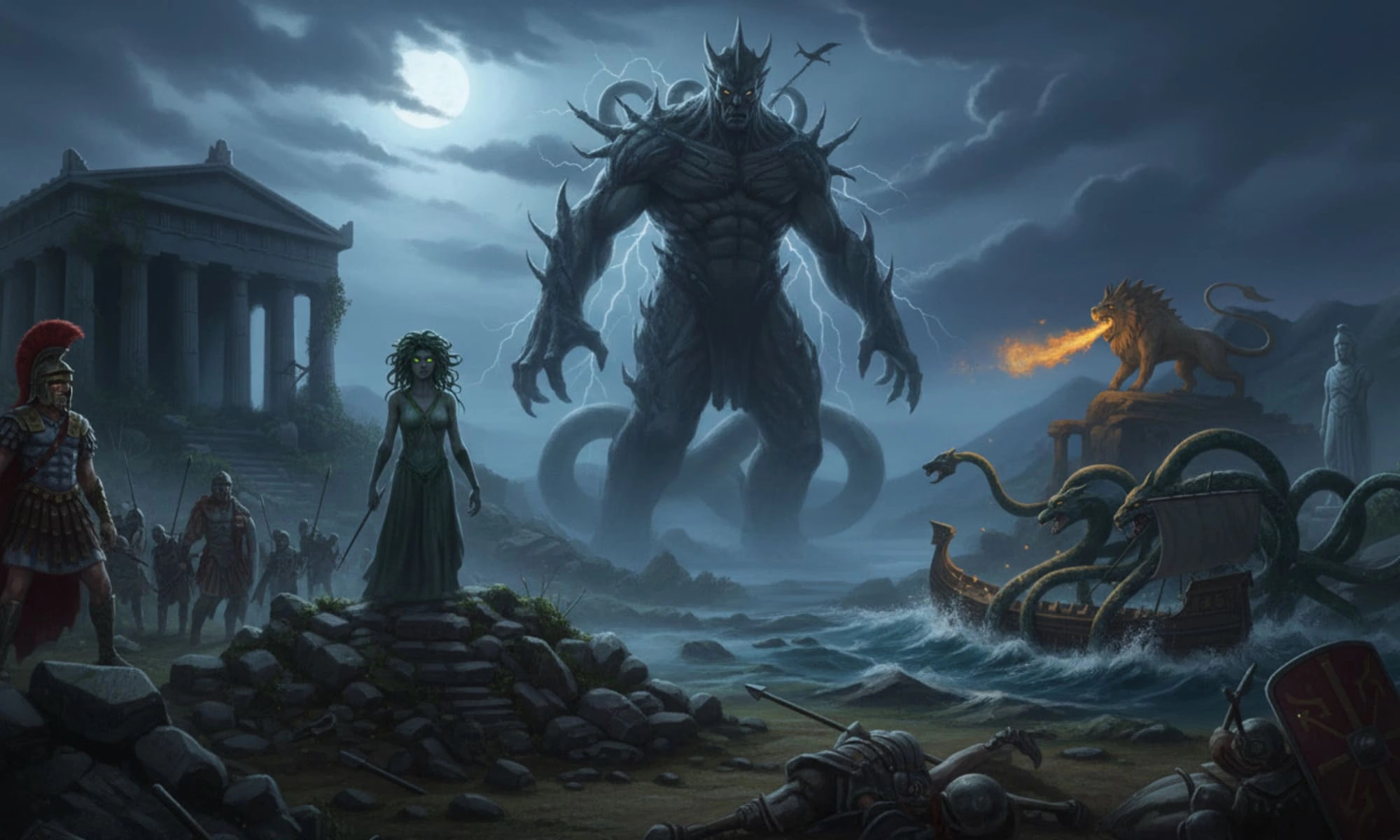
🐍 2. Medusa – Death Made Eternal
In Roman myth, Medusa became more than a victim—she was an apotropaic symbol. Her head adorned shields, temples, and armor.
Yet her power remained absolute. One glance, and life ended. Even after death, Medusa continued killing.
Read more on Medusa: The Tragic Gorgon of Greek Mythology – Origins, Powers & Legacy and her sisters of terror.
🌩️ 1. Typhon – Enemy of the Gods
At the peak of Roman terror stood Typhon—a primordial force so dangerous that even Jupiter struggled against him.
With serpents for limbs and storms in his wake, Typhon threatened cosmic collapse. His defeat reaffirmed divine order—but his existence reminded Romans that chaos was never fully gone.
🧠 Why Roman Monsters Were So Deadly
Roman monsters differed from Greek ones in purpose. They reinforced:
-
Obedience to the gods
-
Fear of chaos
-
Respect for boundaries
-
The cost of arrogance
They were moral weapons, not just beasts.
🏛️ Legacy of Roman Monsters Today
From medieval demonology to modern fantasy, Roman monsters continue to shape storytelling. They endure because they represent something timeless—the fear that civilization is fragile.
📌 Monsters as Mirrors
Roman monsters reflected Rome’s deepest anxieties. They reminded citizens that law, order, and empire existed only because chaos was held at bay.
And sometimes, chaos had a name.
Frequently asked questions
Did Roman mythology have different monsters from Greek mythology?
Who was the deadliest monster in Roman mythology?
Why did Romans use Medusa’s image for protection?
Were Roman monsters meant to teach lessons?
Are Roman monsters still relevant today?
The Dice Game in the Mahabharata: How It Changed the Fate of the Pandavas
Discover the dice game episode in the Mahabharata—its story, symbolism, and why it became the turning point that led to ...
The Jade Emperor: Ruler of Heaven
Explore the legend of the Jade Emperor, supreme ruler of heaven in Chinese mythology. Discover his rise to power, role i...