Tangaroa – God of the Sea
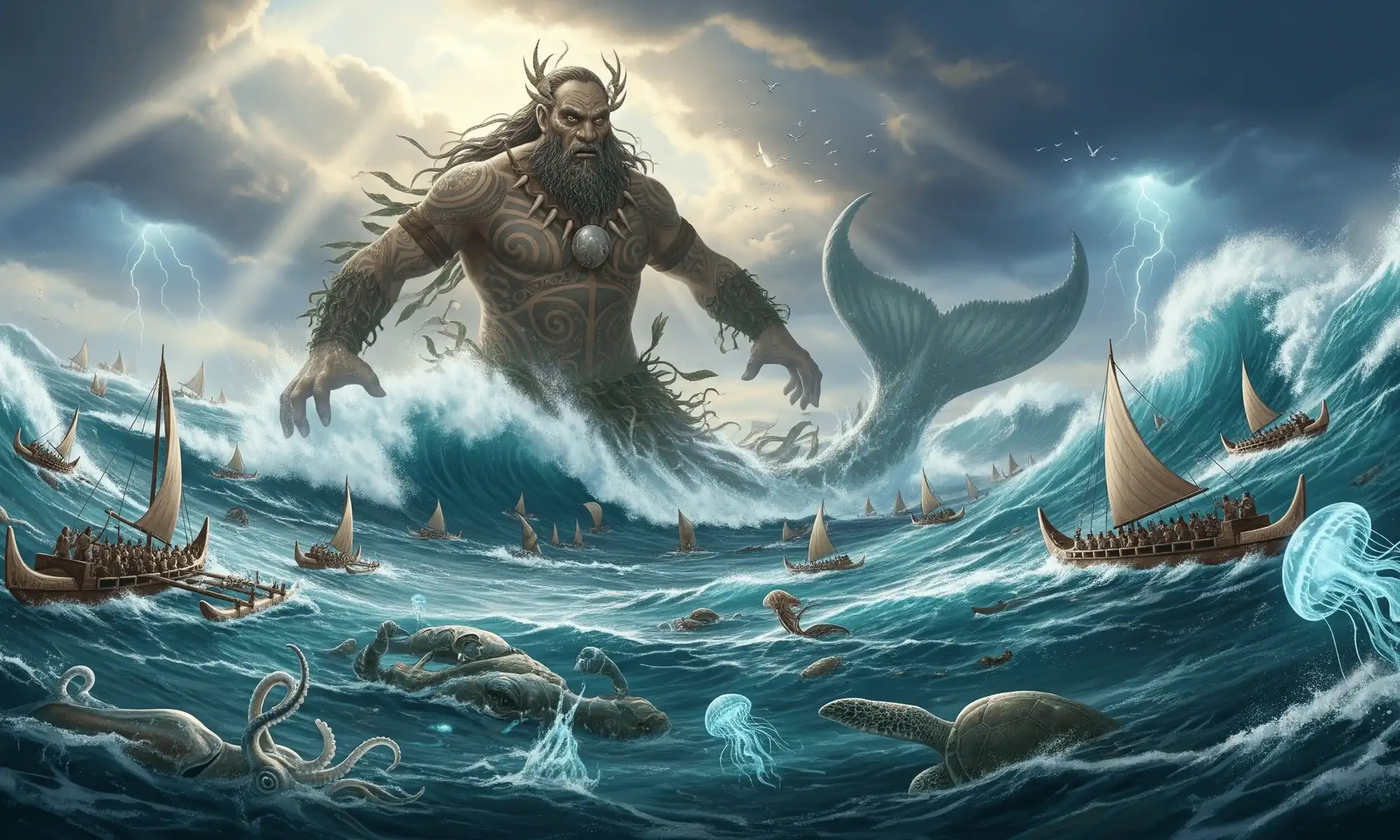
In the vast Pacific Ocean, where waves meet coral reefs and stars illuminate the night sky for voyagers, Tangaroa, the god of the sea, holds dominion. Across Polynesia, this deity embodies the ocean's dual personality—its capacity to nurture life and its power to unleash devastating storms. Revered by generations of seafarers, Tangaroa is both a source of comfort and a formidable force to be reckoned with.
Historical records indicate that during major typhoons, Polynesian communities would perform elaborate rituals dedicated to appeasing Tangaroa, illustrating the deep-seated respect for the sea's unpredictability. For instance, in ancient Hawaii, offerings were made at sacred coastal sites to ensure safe passage and bountiful catches. This practice underscores not just a spiritual belief but a practical acknowledgment of the ocean’s critical role in daily life.
Interestingly, while Tangaroa is often depicted as an all-powerful entity, modern environmentalists see him as a symbol of nature's resilience. Efforts to restore coral reefs and protect marine biodiversity can be viewed through this lens, with contemporary conservationists acting like spiritual stewards, preserving the ocean’s natural balance for future generations.
The Ocean as Origin
For Polynesian peoples, the sea is not just a backdrop but an integral part of daily existence. It provides sustenance through fishing, connects far-flung islands via seafaring traditions, and has been the pathway for centuries of migration and discovery. In the realm of mythology, Tangaroa stands as a pivotal figure, often revered as one of the great progenitors of life itself.
Tangaroa's influence extends beyond myth into the daily lives of those who depend on the ocean. According to Polynesian lore, he is the father of all sea creatures, from the tiniest fish swimming in coral reefs to the majestic humpback whales that migrate through vast Pacific waters each year. This connection underscores a profound relationship between humans and their marine environment, where every living thing in the ocean owes its existence to Tangaroa's creative power.
In Polynesian cultures, the concept of life and death is intimately tied with the sea’s eternal cycle. As both womb and grave, Tangaroa’s waters symbolize the continuous flow of creation and dissolution. The tides carry the seeds of new beginnings while also carrying away the remnants of what once was. This duality challenges the simplistic view that sees the ocean merely as a resource or a playground for adventure.
Tangaroa and the Family of Gods
In Polynesian cosmology, Tangaroa, god of the ocean, often finds himself at odds with his siblings. His brother Tāne, deity of forests and birds, and Rongo, god of cultivated food, engage in frequent disputes over territory and influence. These conflicts reflect the natural competition between different ecosystems: the lush growth of the forest versus the vast expanse of the sea.
As human societies evolved, their actions mirrored these divine tensions. When agriculture became a primary occupation for people, Tangaroa’s realm felt neglected. His children, the fish and other marine life, faced increasing pressure from fishing communities. This shift led to an ongoing conflict between those who rely on the sea and those who depend on the land.
A striking example of this divine discord in practice is observed during seasonal migrations when fishermen compete with farmers for resources. For instance, a specific village might struggle each year as its fish stocks diminish just as planting season begins, forcing them to make hard choices between securing food from the sea or the soil. This scenario underscores how human activities can exacerbate ancient celestial rivalries.
Tangaroa the Provider
In Polynesian culture, Tangaroa is revered not just for his might but also for his generosity. Fishermen invoke him daily to ensure smooth sailing and plentiful catches. Canoes are blessed in his name before venturing out into the vast ocean, a ritual that underscores the deep bond between seafarers and this deity.
The art of navigation across the Pacific is intrinsically linked with Tangaroa’s domain. Polynesian navigators study celestial patterns, currents, and wave movements to plot courses over thousands of miles. This skill, honed through generations, relies heavily on divine favor from Tangaroa, who grants sailors the wisdom needed for successful voyages.
For instance, a seasoned navigator might spend weeks observing star formations before embarking on an expedition. Such dedication reflects a profound belief in Tangaroa’s guidance and protection. This practice is not just about finding one's way; it’s about maintaining spiritual harmony with the seas that provide for so many communities.
The Wrath of Tangaroa
Yet Tangaroa is not always kind; he embodies both the nurturing embrace of the sea and its terrifying power. Storms, tsunamis, and treacherous currents are his wrath, a reminder that beneath the surface lies an unpredictable force capable of destruction on an unimaginable scale.
The ocean’s unpredictability mirrors Tangaroa's dual essence—a god who both sustains life through bounty and annihilates it with fury. Historians note that in 1890, nearly 25 ships were lost to Tangaroa’s whimsy off the coast of Samoa alone, a testament to his capricious nature.
While many cultures revere the sea for its generosity, few capture this duality as vividly as the Polynesians. To them, Tangaroa is not just a protector but also an enforcer, illustrating how natural phenomena can shape spiritual beliefs and societal practices. This nuanced perspective highlights the delicate balance between human existence and nature's raw power.
Tangaroa in Ritual and Art
In Polynesian cultures, Tangaroa is celebrated through a rich tapestry of artistic expressions and spiritual practices. Maori traditions highlight his significance with elaborate wood carvings that showcase the fluidity of ocean waves and the vitality of marine life, such as fish, symbolizing his deep connection to the sea. Meanwhile, in the Cook Islands, Tangaroa takes on a more imposing form—a tall wooden sculpture with intense, unyielding eyes, capturing both fear and admiration.
Rituals dedicated to Tangaroa are integral before any venture into the ocean, such as fishing or voyaging across vast waters. Fishermen often release their first catch back into the sea, a gesture that underscores their respect for his authority over marine resources. This act of releasing fish, rather than keeping them, is not merely symbolic; it reflects a profound understanding of ecological balance and spiritual interconnectedness.
For instance, during annual festivals in various Polynesian islands, communities gather to honor Tangaroa with elaborate ceremonies that include dance performances depicting oceanic themes. These rituals are crucial for maintaining cultural continuity and reinforcing communal bonds, showcasing the enduring importance of Tangaroa in contemporary island life. Interestingly, while many modern practices have evolved, these ancient traditions persist as a testament to their significance.
A God of Balance
Tangaroa, a revered deity in Polynesian mythology, embodies the profound understanding that survival hinges on harmonious coexistence with nature. In this context, the ocean is not seen as an adversary to be vanquished but rather as a vital element demanding respect and negotiation. This perspective underscores the delicate balance required for human societies to thrive alongside natural forces.
According to legend, Tangaroa instructs humans on how to coexist with the sea in a manner that ensures both prosperity and preservation. He advocates for an approach where individuals neither exploit nor neglect the ocean’s immense power. For instance, Polynesian communities have long practiced sustainable fishing techniques, ensuring that marine resources are used responsibly without causing harm or depletion.
One striking example is the implementation of seasonal fishing bans in certain Polynesian islands. These bans, based on traditional knowledge and ecological observation, prevent overfishing during critical breeding periods, thus maintaining fish populations and biodiversity. Such practices not only honor Tangaroa’s teachings but also demonstrate a sophisticated understanding of marine ecosystems that has stood the test of time.
Tangaroa’s Legacy
Today, Tangaroa remains a symbol of Polynesian identity, woven into the fabric of daily life through traditional chants sung by navigators and intricate tattoos etched onto skin. His presence is felt in the stories that generations have shared, reinforcing his status as the eternal lord of the sea. For modern Polynesians, Tangaroa transcends being merely a myth; he embodies the spirit of their ancestors who were skilled voyagers, sailors, and protectors of the ocean.
In coastal communities across the Pacific, Tangaroa’s influence is palpable, reminding residents of their deep connection to marine ecosystems and the cultural significance tied to these waters. A notable example can be seen in the annual celebration of Maori New Year (Matariki) where traditional ceremonies honor Tangaroa alongside other gods, illustrating a harmonious integration of ancient beliefs with contemporary life. This blend not only preserves cultural heritage but also fosters environmental stewardship among younger generations.
“Every time we step into the ocean, we are reminded of Tangaroa’s enduring legacy,” says Te Huki, a respected elder from Rarotonga, emphasizing how the deity inspires both awe and responsibility towards marine conservation. This nuanced perspective underscores that reverence for Tangaroa is not just about paying homage to past traditions but also about safeguarding the future health of our oceans.
Frequently asked questions
Who is Tangaroa in Polynesian mythology?
What does Tangaroa represent?
How was Tangaroa honored?
What is Tangaroa’s conflict with other gods?
Anubis and the Weighing of the Heart: Judge of Souls
Explore Anubis, the jackal-headed god of death, and the Weighing of the Heart ritual in Egyptian mythology. Discover how...
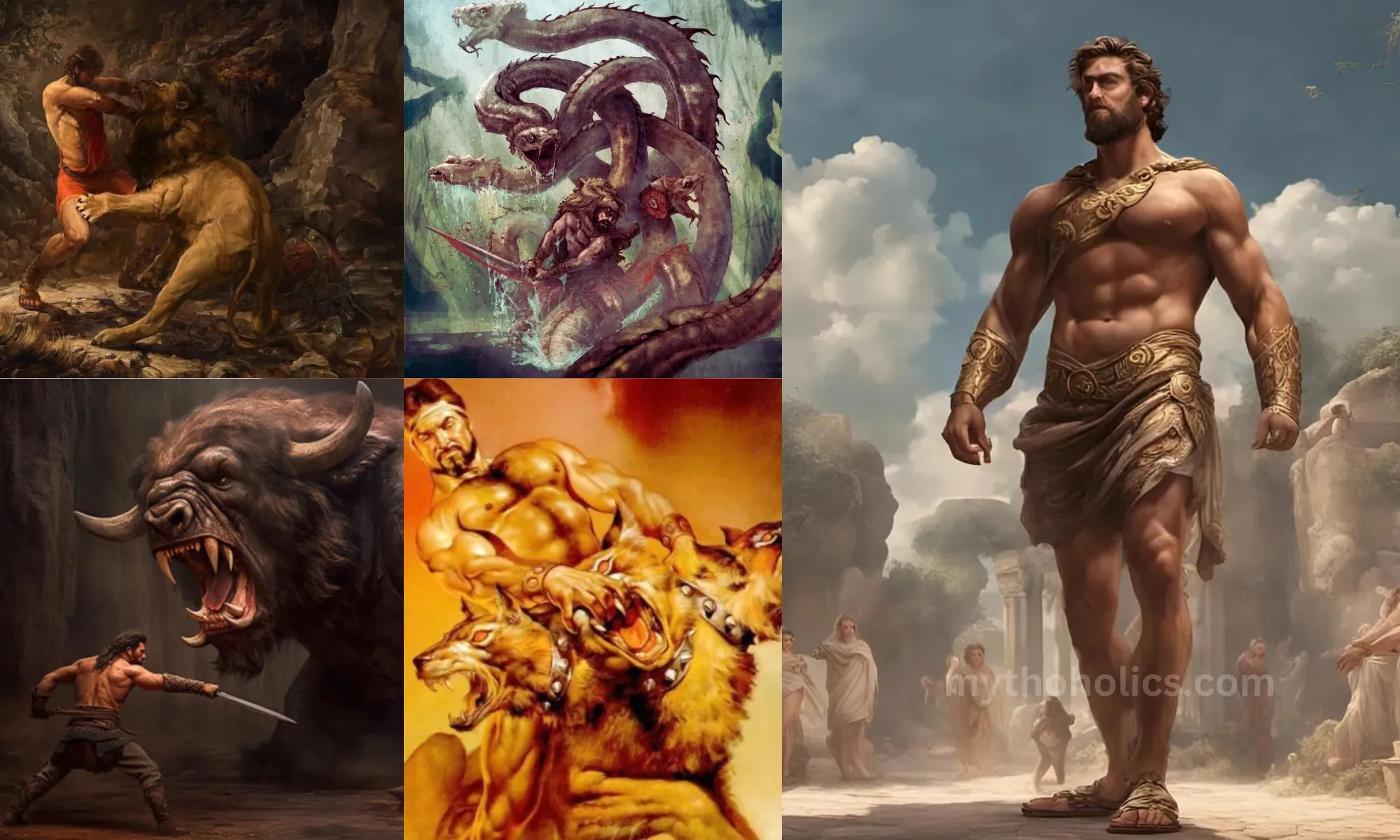
The 12 Labors of Hercules: Strength, Trials, and Redemption
Hercules or Heracles was one of the famous Greek heroes. Hercules had to perform the infamous 12 labors for the king of ...