Anubis and the Weighing of the Heart: Judge of Souls
Guardian of the Dead
In the ancient Egyptian underworld, Anubis is a pivotal figure. He stands as a vigilant guardian over souls traversing treacherous waters and facing formidable challenges on their journey to eternal rest. With his jackal head symbolizing both guidance and protection, Anubis embodies justice and responsibility.
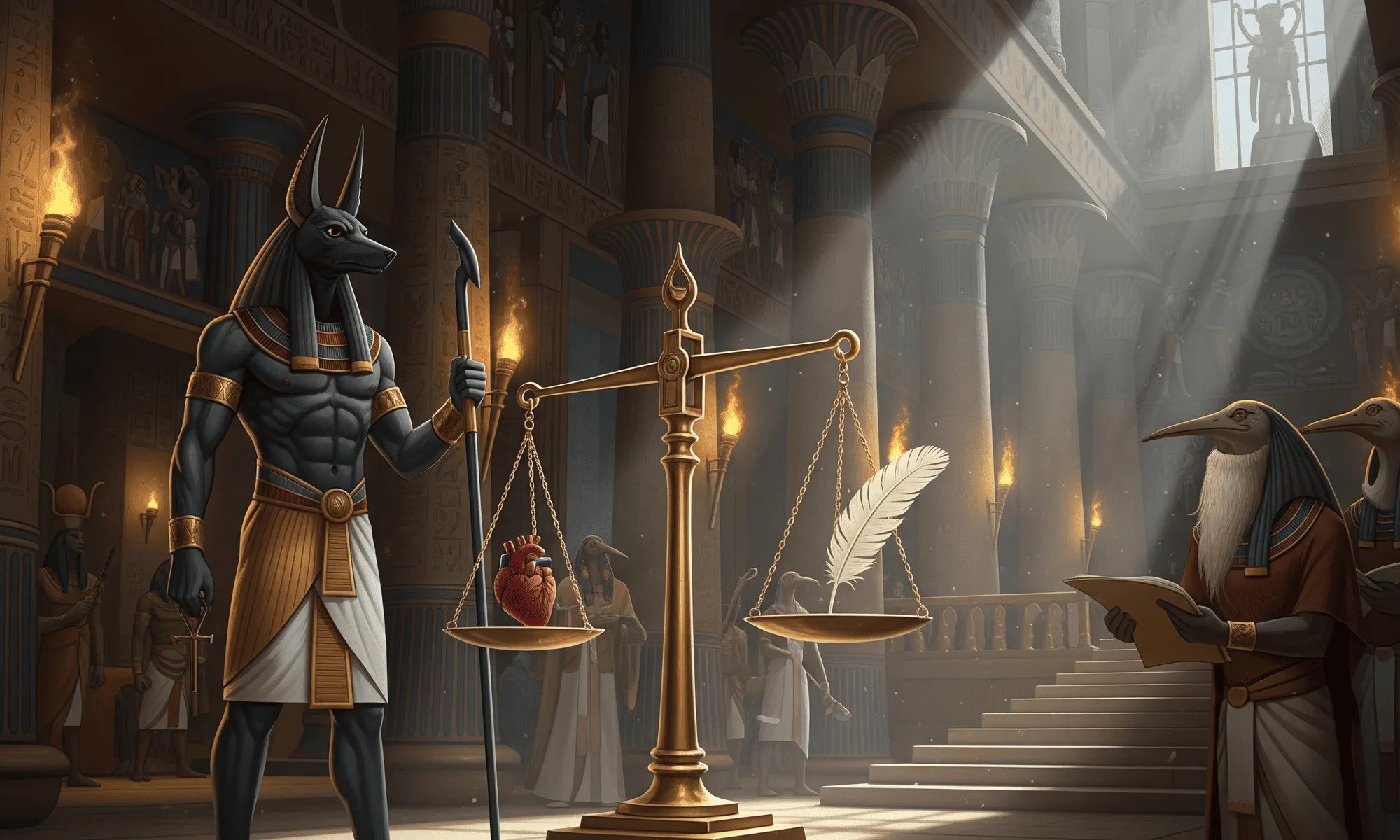
The Weighing of the Heart ceremony, an integral part of Egyptian funerary practices, highlights Anubis's role as a divine judge. During this ritual, which every soul must undergo, Anubis weighs the heart against Ma'at’s feather to determine moral worthiness. This process is crucial for achieving immortality; failure means the soul is devoured by Ammit, an amalgamation of crocodile, lion, and hippopotamus.
One well-known example is King Unas's pyramid text, which describes Anubis presiding over the heart weighing ceremony in vivid detail. This reflects not just religious belief but also societal values, emphasizing the importance of moral integrity throughout life.
This mythological event showcases a nuanced perspective on justice and morality. Unlike many other cultures where judgment is swift, the Egyptians believed in a complex process involving divine figures like Anubis to ensure fairness and order in the afterlife. This elaborate system underscores the civilization's sophisticated understanding of ethics and the profound impact of one’s actions.
The Role of Anubis in the Afterlife
Anubis played a critical role in ancient Egyptian funeral rites, serving as the god responsible for guiding souls through the afterlife. He oversaw mummification processes, ensuring that bodies were preserved with meticulous care to prepare them for their journey into the Duat, the realm of the dead. This ritual was not merely symbolic; it was believed that without proper preparation, a soul might face dire consequences in the netherworld.
As protector and judge, Anubis upheld Ma’at, which encompassed truth, balance, justice, and cosmic order. During the Weighing of the Heart ceremony, he meticulously balanced the deceased’s heart against the feather of Ma’at to determine if their soul had lived a just life. This divine judgment was crucial for ensuring that souls could move on to their afterlife destinations rather than being consigned to the chaos or suffering eternally in the underworld.
Imagine an ancient Egyptian pharaoh’s funeral, where Anubis is present not just as a deity but as a guardian who ensures that all rituals are performed correctly and that every soul receives its due justice. This ceremony was so integral to the culture that it was believed the fate of eternity hung in the balance of this one moment.
The Weighing of the Heart
In ancient Egyptian mythology, the heart was believed to be the repository of a person’s memories, emotions, and moral decisions. It played a crucial role in one's journey after death during the ritual known as the Weighing of the Heart. This ceremony took place in the Hall of Judgment, where the heart was weighed against Ma’at’s feather of truth, symbolizing cosmic order and justice.
The outcome of this weighing determined the soul's fate. If a person’s heart balanced perfectly with Ma’at’s feather, it signified that they had lived an ethical life filled with honesty and integrity. Anubis, the god associated with embalming and the afterlife, would then guide their soul to eternal peace in the Field of Reeds, a paradise-like realm where souls could enjoy life as they did during their earthly existence.
Conversely, if the heart was found to be heavy—perhaps due to deceit or wrongful deeds—it faced dire consequences. The entity known as Ammit, a terrifying amalgamation of crocodile, lion, and hippopotamus, awaited those whose hearts were weighed down by sin. Consumption by Ammit meant that the soul would not achieve the afterlife but instead face permanent dissolution.
Anubis's role in this ritual was to ensure that justice was upheld with absolute fairness. This ceremony served as a profound reminder of the importance of ethical living, reinforcing the idea that personal responsibility and moral integrity are essential for achieving harmony with the cosmos and attaining eternal life.
Obstacles in the Duat
The journey through the Duat is far from straightforward. It is a treacherous path filled with countless challenges that test every aspect of an individual's character and knowledge. Rivers and gates stand as formidable barriers, demanding not only spells but also profound insight into the complexities of life and death.
Guardians and Monsters
In addition to these mystical obstacles, travelers face relentless guardians and monstrous beings who challenge their courage and resilience. These encounters are designed to push the boundaries of what one is willing to endure for survival and transcendence. For instance, a common guardian known as the Devourer of Souls tests the unwavering resolve of those attempting passage.
Yet, it's not just physical strength that matters; illusions play a critical role in this journey. These deceptive challenges are carefully crafted to peel back layers of one’s psyche and reveal their true moral fiber. An example is an illusion where a traveler must choose between two paths: one leading to safety and ease, the other fraught with danger but laden with truth. Such tests underscore that genuine wisdom and ethical integrity are indispensable for navigating these trials.
Anubis acts as a vigilant guide through this labyrinthine realm, ensuring only those who prove their moral worthiness proceed unscathed. This underscores the Egyptian belief in the paramount importance of morality and sagacity not just during life but also in securing eternal peace afterward.
Symbolism of Anubis
Anubis, often depicted as a jackal or a man with a jackal head, is deeply enmeshed in the ancient Egyptian belief system. He is revered for his role in protecting tombs and ensuring the safe passage of souls to the afterlife. This guardianship extends beyond mere physical protection; Anubis also oversees the Weighing of the Heart ceremony, an essential ritual that determines the fate of the deceased based on their moral purity during life.
The jackal-headed deity's involvement in guiding souls through this critical transition period underscores his importance as a facilitator of change. In Egyptian mythology, the jackal was associated with cemeteries and thus became a symbol of both death and rebirth. This dual nature reflects the complex relationship Egyptians had with mortality—while fearing the end of life, they also embraced the concept of an afterlife where souls could achieve eternal peace or face judgment for their deeds.
Interestingly, Anubis's role in guiding souls is not just about facilitating passage but also ensuring that each soul encounters justice and truth before entering the realm of eternity. This nuanced perspective reveals a sophisticated understanding of moral balance within ancient Egyptian culture. For instance, when King Unas was buried during the Fifth Dynasty, Anubis played a crucial part in conducting his Weighing of the Heart ceremony, illustrating how this deity's influence extended to royal and divine figures alike.
Cultural Significance
Anubis played a pivotal role in ancient Egyptian society, deeply embedded within the cultural and religious practices of the time. His influence was not confined to myth but extended into everyday life, shaping how Egyptians approached death and afterlife. Anubis' presence was felt most acutely during funerary rites, where his symbols and prayers were integral to the process of mummification, ensuring a safe journey for the deceased.
Moreover, Anubis was revered not only in religious ceremonies but also in everyday life through amulets and magical rituals. These items were believed to offer protection against malevolent spirits and to guide individuals safely into the afterlife. For instance, many Egyptians would wear an amulet depicting Anubis around their necks as a constant reminder of his protective presence. This widespread belief in Anubis' ability to safeguard souls during life's final moments underscores the profound impact he had on individual and communal practices.
Religious art frequently depicted Anubis, with images of him vigilantly watching over tombs and temples, embodying both protection and guidance for those who revered him. This artistic representation reinforced his status as a deity of paramount importance, inspiring awe and reverence in all who encountered his image. Despite his significant presence in religious contexts, the ethical message conveyed through Anubis was equally compelling: by adhering to moral principles guided by divine wisdom, individuals could ensure their legacy endured beyond physical death. This nuanced perspective reveals how ancient Egyptians viewed Anubis as more than just a god of the dead—he was a symbol of eternal continuity and moral integrity.
Conclusion: Judge and Protector of Souls
Anubis embodies the bridge between life and eternity, his solemn presence reminding us that moral integrity is paramount. The Weighing of the Heart ritual underscores this principle, illustrating how adherence to Ma’at determines a soul’s fate in the afterlife. This divine justice system, with Anubis at its helm, ensures that every action has consequences beyond death.
Throughout Egyptian history, Anubis's role extended far beyond judgment—he was also a protector of tombs and the guardian of mummies. His influence is seen in countless funerary texts and artifacts, where he guides souls through the underworld with unwavering vigilance. This sacred protection highlights the reverence Egyptians had for the continuity of life after death.
Today, Anubis remains a timeless symbol, not just of judgment but also of guidance and eternal journeying. His image still resonates in modern culture as a reminder that our actions have enduring consequences, influencing both this life and what comes after.
Frequently asked questions
Who is Anubis in Egyptian mythology?
What is the Weighing of the Heart?
What does Anubis symbolize?
The Osiris Myth: Death, Resurrection, and Eternal Kingship
Explore the Osiris myth — how Set killed Osiris, Isis resurrected him, and Horus avenged his father. Discover the story ...

Tawhiri – The God of Storms and Revenge
Discover the epic tale of Tāwhiri, the Māori god of storms and revenge, whose fury shaped the world and whose love for h...