Mayan Gods of Creation, Rain, and Maize: Powers That Sustained Civilization
🌍 When the World Was Still Unfinished
In the era before calendars etched time into stone and cities sprang up from dense jungles, our world was a work in progress. According to ancient Maya beliefs, creation wasn't an instant but a series of divine experiments, each one refining life's design.
These gods convened in the silence of night, crafting the rules that governed human existence. Their debates led to the establishment of three fundamental elements: creation, rain, and maize. These powers were not just abstract concepts but tangible forces that shaped civilization as we know it. Without these divine gifts, humanity would remain a mere dream within an unforgiving wilderness.
Among these essential components was maize, which didn’t just provide sustenance; it became the cornerstone of Maya agriculture and economy. Archaeological findings suggest that maize cultivation began around 3500 BCE, transforming societies across Mesoamerica. This crop wasn't merely a food source but a cultural icon, symbolizing prosperity and the gods' benevolence.
🌌 The Creators Who Shaped the Cosmos
The cosmos, according to ancient Maya mythology, began not with a bang but with whispered thoughts from the Heart of Sky and Heart of Earth. These divine beings were architects of thought, conjuring the natural world through speech alone. Mountains surged forth as if awakening from slumber; rivers carved their winding paths, splitting earth's embrace from the heavens above.
Yet, when it came to crafting humans, the gods faced unexpected challenges. Their first attempts at creation yielded beings that fell short of expectations: mud figures crumbled with a single touch, while wooden people walked and spoke but lacked soulful depth. These hollow creatures soon forgot their divine creators, leading to their destruction. This failure underscored the Maya belief that balance—rather than perfection—is key in creation.
In this mythological narrative, the gods' struggle reflects a profound understanding of the complexities inherent in shaping life. The idea that flawed creations still hold value and contribute to the intricate tapestry of existence offers a nuanced perspective on both divine and human endeavors. For instance, the Maya calendar's sophisticated system for tracking celestial movements demonstrates an advanced balance between astronomical observation and cultural significance.
🌽 The Birth of Humanity from Maize
The ancient belief that maize was the key to human creation is deeply rooted in Mayan mythology. According to these legends, only when the gods turned their attention to this versatile grain did the act of creation truly succeed. From white and yellow corn kernels came the flesh of humanity, with blood coursing through veins as vital as sap within trees. Every breath humans took was a reminder that they were made from the same substance that nourished the land.
Maize was more than just sustenance; it embodied identity for the Mayan people. As maize people, humans felt an eternal connection to their crops, shaping their lives around farming cycles and agricultural practices. This profound relationship influenced every aspect of Mayan culture, from daily rituals to sacred stories passed down through generations. For instance, each planting season held a special significance, marked by elaborate ceremonies that honored the gods responsible for maize's creation.
The belief in maize as humanity’s originator was so deeply ingrained that it dictated social structures and spiritual practices. Over centuries, this intertwined relationship between humans and their staple food became a cornerstone of Mayan civilization, demonstrating how deeply agriculture can shape societal norms and traditions.
🌾 Yum Kaax: Lord of Maize and Life
In ancient Mesoamerican cultures, Yum Kaax was revered as the maize god, a deity embodying growth, renewal, and survival. He was often depicted in serene youth, with corn sprouting from his head, symbolizing the interconnectedness between life and agriculture. Each planting season brought a cycle of death and rebirth for Yum Kaax, reflecting the cyclical nature of farming practices.
During times of drought, Yum Kaax's strength waned, causing widespread famine and hardship among communities. Conversely, when crops flourished, he returned to walk among the people, bringing hope and sustenance. This divine figure was central to the agricultural calendar, with rituals dedicated to him during critical planting and harvest periods ensuring bountiful yields.
For instance, in one village, a particularly harsh drought led to severe food shortages, pushing local farmers to invoke Yum Kaax through elaborate ceremonies that included offerings of precious maize seeds. This act not only sought divine intervention but also fostered a sense of unity and resilience within the community. To honor Yum Kaax was indeed to honor life itself, intertwining spiritual practices with survival strategies.
🌧️ Chaac: Bringer of Rain and Storm
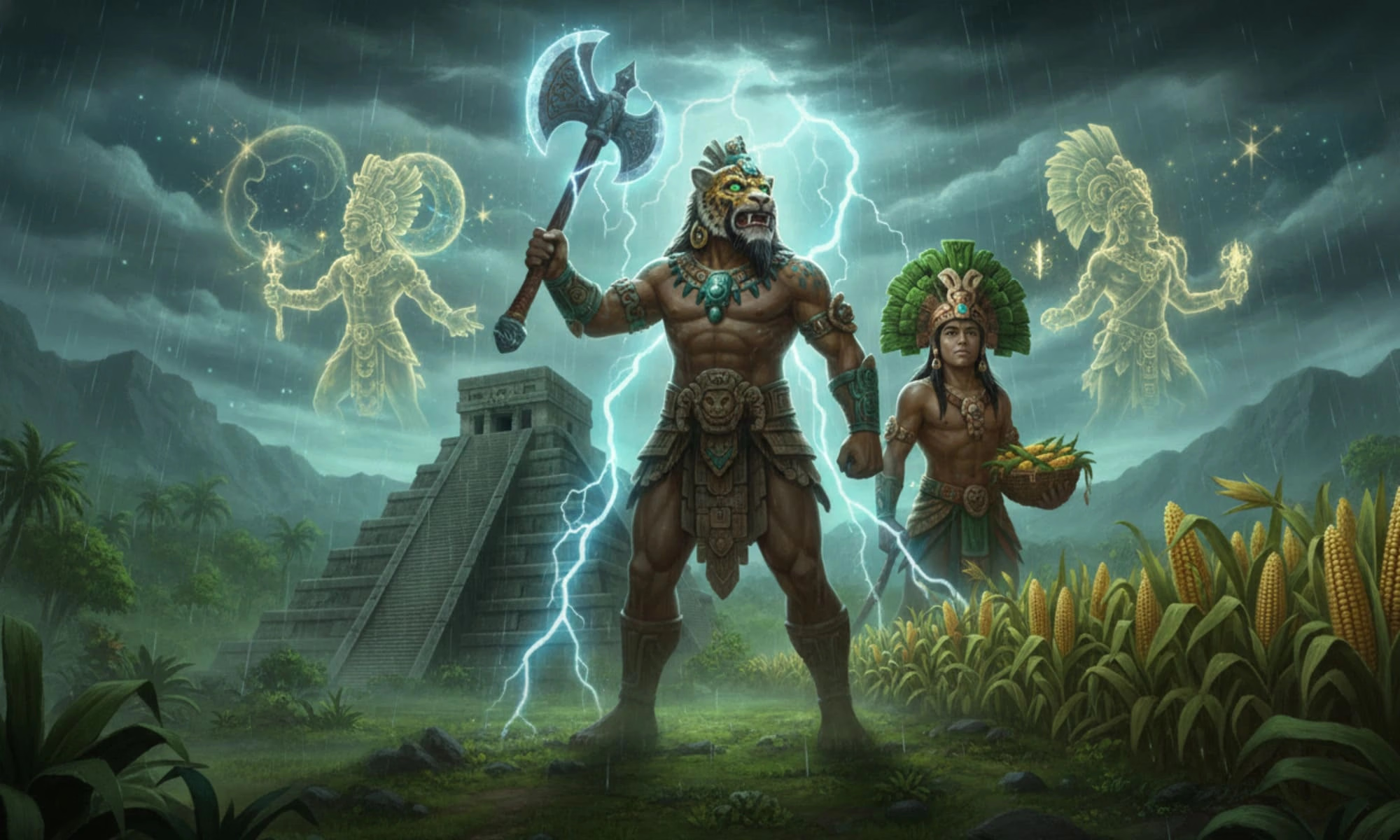
In the heart of Mayan civilization, maize was more than just a crop; it was the lifeblood that sustained entire communities. This reliance on maize made Chaac, the god of rain, lightning, and storms, an indispensable deity. Chaac's thunder axe split the heavens, bringing both relief and destruction in equal measure.
The Maya understood Chaac as a capricious force of nature. Without his timely rains, maize fields would wither and die, leading to famine and suffering. Conversely, excessive rainfall could cause devastating floods that submerged villages and ruined crops. This dual nature meant that the people had to walk a fine line in their relationship with Chaac.
Seasonal rituals and offerings played a crucial role in maintaining harmony with Chaac. Priests would perform elaborate ceremonies during dry spells or heavy rains, praying for balanced weather conditions. For example, during prolonged droughts, villagers might gather sacred water from nearby springs to offer to Chaac, believing that such gestures could appease him.
⚡ Storms as Divine Language
The Maya civilization viewed thunderstorms not just as natural phenomena but as the deliberate actions of Chaac, their god of rain and lightning. Thunder was seen as Chaac’s voice, while lightning was his weapon to clear the skies for rain. Rain itself was a form of divine mercy, essential for sustaining life in the challenging environment of the Yucatán Peninsula.
In Maya belief, cenotes were not just sources of water but also sacred sites connecting the earthly realm with the spiritual world. Offerings and sometimes even human sacrifices were made to Chaac at these natural sinkholes to plead for rain during times of drought. One such site, known as the Sacred Cenote in Chichén Itzá, was particularly revered due to its deep waters believed to hold special power.
To the Maya, weather patterns held significant meaning beyond mere meteorology; every storm was a deliberate act by Chaac reflecting divine intentions. This belief underscored the importance of understanding and appeasing natural forces through ritualistic practices, which were crucial for survival in their agricultural society. A nuanced view reveals that such rituals also served as communal events fostering social cohesion and shared purpose.
🌿 The Cycle of Death and Renewal
The concept of creation did not cease with the emergence of humans; it persisted in endless cycles, embracing both life and death. Each autumn, maize plants would wither and die, only to be reborn through spring rains that brought new growth. This cycle mirrored human existence, where individuals experienced birth, lived their lives, and eventually passed into the underworld of Xibalba, destined for renewal.
For ancient cultures, this eternal rhythm was not merely a natural phenomenon but a sacred process imbued with profound meaning. It wasn't about seeking immortality in a physical sense; instead, the gods promised continuation, ensuring that life would go on despite inevitable endings. This promise of continuity allowed people to find comfort and purpose amidst the unpredictability of life and death.
Ancient Maya farmers understood this cycle intimately. They planted their crops knowing full well that they would die back in the dry season but were confident that with proper ritual and reverence, new life would emerge when the rains returned. This belief system was far from passive; it demanded active engagement through ceremony and daily practices to ensure the continuation of the cycle.
🔥 When the Balance Was Broken
In ancient Maya civilization, droughts and famine were perceived as dire signs that cosmic harmony had been disrupted. The gods seemed to have withdrawn their favor from humankind, leading to a sense of impending doom.
To regain divine favor, temples grew taller and more complex, reaching toward the heavens in an attempt to bridge the gap between humanity and the celestial realm. Rituals became increasingly intricate and sacrifices intensified, reflecting a deep-seated desperation rather than callousness. For instance, elaborate ceremonies involving precious artifacts were believed to have greater power to appease the gods.
The Maya firmly held that survival was contingent upon maintaining cosmic balance, not on conquering or controlling nature as many cultures did. This unique worldview influenced every aspect of their society and spirituality. A nuanced perspective reveals how this belief in equilibrium paradoxically fueled some of the most extravagant practices seen during this era.
🏛️ Creation as Responsibility
In Mayan mythology, deities did not abandon their creations to fend for themselves. Instead, they remained deeply engaged and continuously observed the world, intervening when necessary and expecting reverence from humans. This divine oversight meant that people were never seen as absolute rulers of the earth but rather as active participants in a larger cosmic drama.
The Mayan perspective required constant awareness and acknowledgment of the gods' influence and expectations. Forgetting these spiritual connections was not merely disrespectful; it was dangerously negligent, often leading to calamities or misfortunes that underscored the critical role of divine remembrance in daily life. This intricate relationship between humans and deities shaped a society where every action held potential consequences beyond immediate human perception.
For instance, during significant celestial events like solar eclipses, Mayans would engage in elaborate rituals to show respect and interaction with their gods. Such occasions were not just ceremonial but practical measures believed to prevent divine displeasure. This blend of spiritual observance and pragmatic action reveals a nuanced view where religious practices were seen as essential for communal safety and prosperity.
🌌 Legacy of the Sustainer Gods
The legacy of the sustainer gods continues to permeate Mesoamerican culture, even in the wake of fallen empires and shifting political landscapes. Corn, the staple grain revered by ancient civilizations, remains a sacred symbol across the region, embodying both fertility and divine providence. Rain deities still play a central role in folklore, their stories passed down through generations as guardians of water cycles and agricultural rhythms. Creation myths are not just tales from long ago; they resonate deeply within contemporary religious practices and calendrical observances.
The Maya civilization grasped an essential truth: the endurance of society is intricately linked to its ability to coexist harmoniously with the natural world that sustains it. This profound understanding guides agricultural cycles, ensuring that planting seasons align perfectly with celestial movements as observed in ancient texts. For instance, the timing of corn cultivation often corresponds closely with specific lunar phases and solar positions documented by Maya astronomers centuries ago.
Remarkably, this nuanced perspective challenges the notion that technological advancement always equates to progress. The Maya's reliance on natural cycles demonstrates a sophisticated approach to sustainability, one that values ancient wisdom alongside modern innovation. By maintaining a delicate balance between tradition and adaptation, Mesoamerican cultures have preserved both ecological stability and cultural identity over millennia.
🌿 Conclusion: A Civilization Grown from Corn and Rain
The Mayan gods of creation, rain, and maize were not distant rulers—they were partners in survival, guiding the people through cycles of planting and harvest. From divine experimentation to fields of corn swaying beneath storm clouds, life was seen as a sacred collaboration between humans and their deities. This symbiotic relationship ensured that creation was never complete; it was an ongoing process renewed with each season's bounty.
As long as maize grew and rain fell, the Maya civilization endured, adapting to environmental challenges through spiritual and agricultural innovation. A particularly harsh drought around 800 AD tested this resilience, yet the people’s faith in their gods and reliance on maize sustained them through adversity. This enduring connection between nature and spirituality is a testament to the depth of Mayan culture.
Frequently asked questions
Who created humans in Mayan mythology?
Why was maize sacred to the Maya?
Who is the Mayan god of rain?
What happens when balance is broken in Mayan belief?
The Journey Through the Duat: Egyptian Afterlife Explained
Discover the Egyptian afterlife in the Duat, the journey of souls, the Book of the Dead, and the Weighing of the Heart. ...
Hanuman’s Leap to Lanka: Courage Beyond Measure
Discover the epic story of Hanuman’s leap to Lanka in the Ramayana — a tale of devotion, courage, and the awakening of h...