Pele – Goddess of Fire and Volcanoes
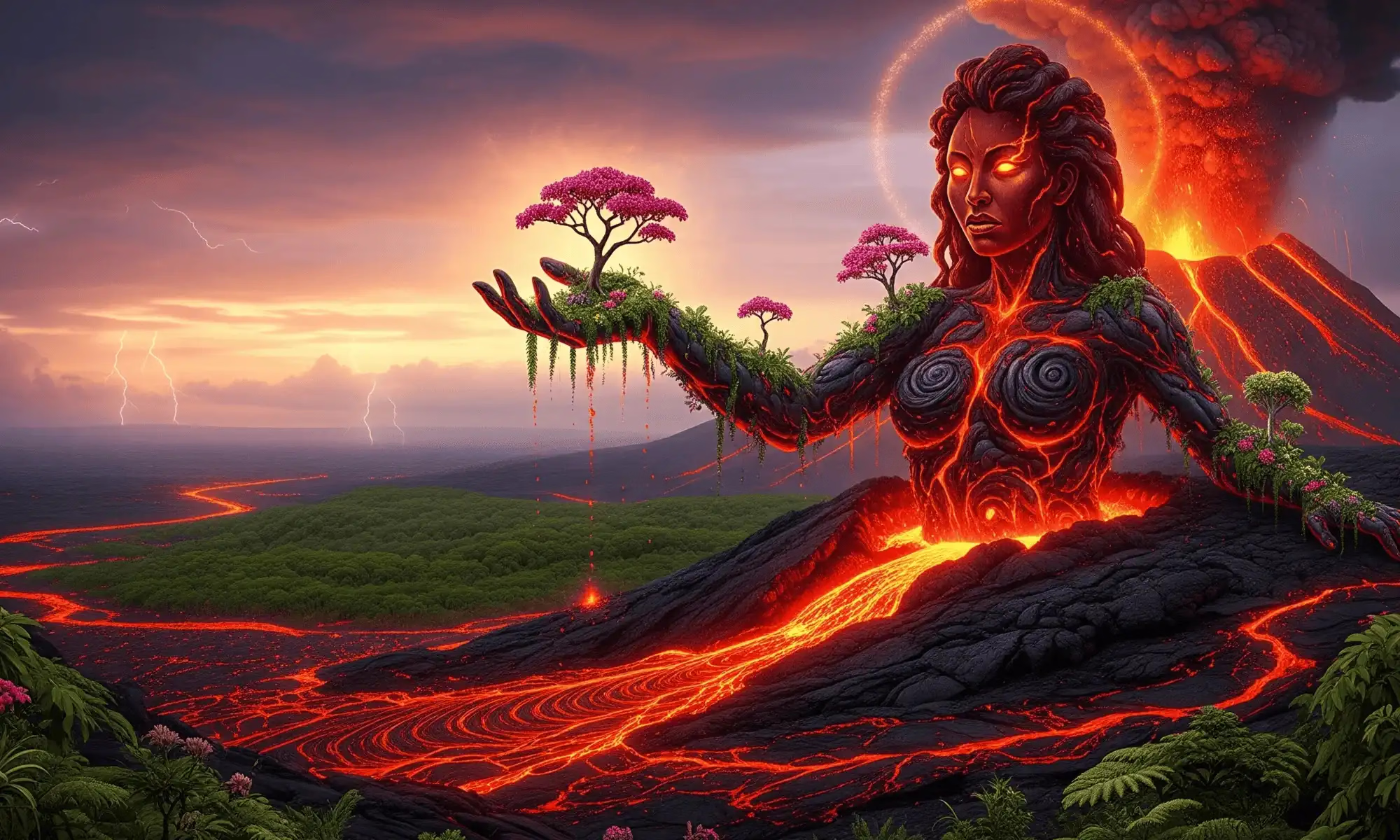
In the heart of Hawaiʻi's volcanic landscapes lies a tale of fiery passion and unyielding will. Pele, the goddess of fire, lightning, and volcanoes, is both creator and destroyer, her presence felt in every crackling ember and rumbling earth. Her legend stretches across generations, painting vivid pictures of a deity who commands respect through sheer force of nature.
Among the countless stories told about Pele, one recounts how she single-handedly crafted the island of Maui, shaping its dramatic cliffs and lush valleys from nothing but molten rock and lava flows. This act not only showcases her immense power but also highlights her unpredictable nature; just as swiftly as she creates, she can devastate entire regions with her fury.
Despite—or perhaps because of—her destructive capabilities, Pele remains a central figure in Hawaiian culture, celebrated for the new beginnings and fertile soils that emerge from her eruptions. Her dual role as both benefactor and threat reflects the complex relationship humans have with nature's raw power.
The Birth of Pele
Pele, the legendary deity born from the union of Haumea, the earth goddess, and a supreme sky father, was destined to be an embodiment of fire and ambition. Her fiery nature made her restless from the moment she entered this world, driven by an unquenchable desire for freedom and expression.
However, Pele's intensity created significant tension within her divine family. Conflicts with her sister Namaka, the goddess of the sea, escalated to a point where peace became impossible. This discord forced Pele to embark on a perilous journey across the vast Pacific Ocean in search of a new home that could accommodate her relentless spirit.
Her quest led her to Hawaii, where she found a volcanic landscape perfectly suited to her fiery essence. Here, Pele's flames burned freely, shaping the islands and leaving an indelible mark on Hawaiian culture and geography. Despite being venerated as a deity of both creation and destruction, Pele's presence in Hawaii brought about a unique balance between the forces of nature and human life.
Pele’s Journey Across the Pacific
In Polynesian mythology, Pele's voyage across the Pacific Ocean is a tale of both legend and survival. Accompanied by her siblings, Pele carried the sacred fire that represented life and continuity within her. With each island she approached, Pele used her pāhoa—a digging stick—to attempt to establish a home for herself. However, Namaka, Pele’s sister from the ocean, relentlessly pursued her across vast expanses of water, extinguishing every flame with powerful waves.
Island after island rejected Pele due to Namaka's interference, until she finally reached Hawaiʻi. This archipelago offered something different—a volcanic landscape that welcomed her flames and allowed them to flourish. The mighty volcanoes of Kīlauea and Mauna Loa provided a sanctuary where Pele could settle permanently. In 1823, the eruption of Kīlauea was recorded as one of the first significant events observed by Western explorers in Hawaiʻi, underscoring Pele's enduring presence.
Contrary to popular belief, Pele’s journey is not just a story of conflict between earth and sea but also a narrative of perseverance. Despite the challenges posed by Namaka, Pele found that her fiery spirit could thrive in the harsh conditions of Hawaiʻi, transforming barren landscapes into fertile land through volcanic activity.
Pele the Creator
In Hawaii, Pele is revered not just for her destructive power but as a relentless force of renewal. When Kīlauea erupts on the Big Island, molten lava covers everything in its path, consuming forests and reshaping the land. Yet, this destruction is part of a greater cycle; over time, that same lava hardens into new soil, fostering growth where once there was ruin.
Each eruption at Kīlauea adds approximately 42 acres to the island’s coastline each year, testament to Pele's enduring presence and power. For Hawaiians, these eruptions are more than geological events; they symbolize the resilience of life in the face of constant change. Pele embodies both the fury of nature and its capacity for renewal, reminding us that even from destruction comes new beginnings.
Consider a recent eruption at Kīlauea, which not only reshaped the landscape but also offered scientists unprecedented insights into volcanic processes. This event highlighted how Pele’s fiery creation is essential for understanding geological evolution and underscores her role as both destroyer and creator in Hawaiian culture.
Pele’s Rivalries and Passions
Pele's fiery spirit is legendary, characterized by intense rivalries and passionate love affairs. Known for her tempestuous nature, she often had mortal lovers but was equally known for her swift and consuming jealousy.
A notable rivalry in Pele's story involves the snow goddess Poliʻahu, who ruled over Mauna Kea's summit. This clash between fire and ice symbolized a timeless struggle that transformed the mountains themselves into battlegrounds of elemental forces.
These narratives highlight Pele’s human-like qualities: she experiences passion, anger, jealousy, and love, making her more relatable than many might think. Unlike distant deities, Pele is alive, fierce, and deeply connected to the people who walk on her land. For instance, it's said that during times of conflict between Poliʻahu and herself, locals would witness sudden weather changes, reflecting Pele’s unpredictable nature.
Pele’s Presence Today
In modern Hawaiʻi, Pele's influence remains palpable, woven into the fabric of everyday life. Islanders often recount stories of encountering her in various guises—an elderly woman accompanied by a white dog, a striking young female dressed entirely in red, or a stranger seeking assistance. These encounters are believed to be powerful omens: those who treat such figures with respect and compassion receive blessings from Pele herself.
At the active volcanoes of Kilauea and Mauna Loa, offerings continue to be left by devotees. Piles of fresh fruit, colorful flowers, and intricate chants dedicated to Pele can often be found near her craters. However, desecrating these sacred grounds with graffiti or removing lava rocks is strictly forbidden; it is said that such acts invite curses and misfortune upon the perpetrator.
One local tale recounts a tourist who disregarded warnings not to take home volcanic stones as souvenirs. Within weeks, the visitor experienced a series of unfortunate events—job loss, relationship troubles, and even health issues—which they attributed to Pele's curse. This anecdote underscores the deep reverence islanders have for Pele’s sanctity.
Pele as Symbol
Pele is more than just a figure in Hawaiian mythology; she embodies the very essence of Hawaiʻi’s dynamic landscape. Fierce and beautiful, Pele represents both the raw power of nature and the delicate balance that sustains life on these volcanic islands. Her myths illustrate how creation often emerges from chaos, with new land rising from the sea as lava flows destroy old landscapes.
Her legends also highlight the cyclical nature of change in Hawaiian society, where cultural traditions are continually reinterpreted through struggles and challenges. For instance, during times of environmental crisis, communities turn to Pele’s stories for inspiration, seeking ways to coexist with the forces that shape their world. This approach not only fosters resilience but also encourages innovative solutions to contemporary issues like climate change.
“Pele teaches us that destruction can be a precursor to rebirth.”
This nuanced perspective reveals how destruction, often seen as negative, can actually catalyze renewal and growth in both natural and human realms. By embracing this duality, Hawaiians find ways to honor their traditions while adapting to modern challenges.
The Eternal Flame
For centuries, Pele has been revered as the fiery goddess of volcanoes in Hawaiian culture. Through eruptions and lava flows, she shapes the very terrain and identity of Hawaiʻi. Her presence is not just a geological phenomenon but a spiritual one, deeply embedded in the folklore and traditions of the islands.
Every time Pele's wrath manifests through Kilauea or Mauna Loa, the people of Hawaiʻi witness both destruction and creation. Lava fields that were once barren become fertile grounds for new life as plants and animals reclaim these territories over decades. This cycle of renewal is a testament to Pele’s enduring influence on the environment.
“When Kilauea erupted in 2018, it wasn’t just about losing homes; it was about losing a piece of our cultural heritage.” — Local resident, reflecting on the impact of natural disasters on community identity.
This perspective challenges the notion that volcanic activity is purely destructive. Instead, it highlights how such events can strengthen communal bonds and reinforce connections to ancestral stories. For instance, the 2018 eruption not only displaced residents but also galvanized support networks within affected communities, showing resilience in the face of change.
Frequently asked questions
Who is Pele in Hawaiian mythology?
Where does Pele live?
Why is Pele important in Hawaiian culture?
What forms does Pele take?
The Legend of Panjurli and Guliga Devas - The Divine Protectors Behind Kantara
Discover the epic origin and divine story of Panjurli and Guliga Devas, the guardian spirits from Kantara. Learn their m...
Tuatha Dé Danann: The People of the Goddess Danu
Discover the Tuatha Dé Danann, the legendary people of the goddess Danu in Celtic mythology. Explore their origins, epic...