Huitzilopochtli and the Sun’s Eternal Battle
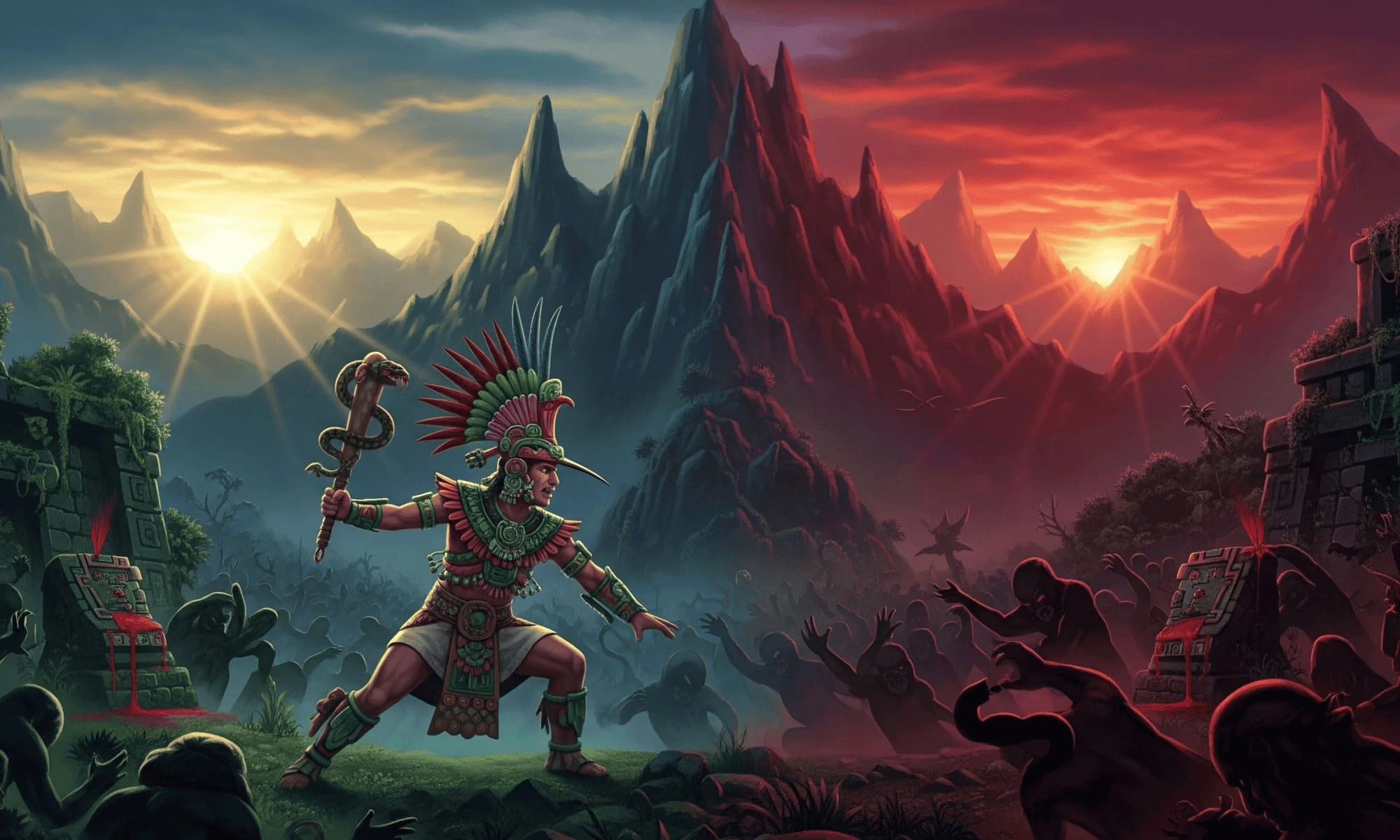
In the heart of Aztec mythology lies Huitzilopochtli, a deity whose fiery presence is both awe-inspiring and terrifying. As the god of the sun, war, and sacrifice, he was more than just a divine figure to the Mexica people; he was their lifeline, battling darkness daily to maintain order in the world.
The mythological narrative of Huitzilopochtli depicts an eternal cosmic warfare where light is perpetually at odds with night. This struggle symbolizes the Aztec belief that sacrifice was essential for survival and prosperity. For instance, during the Festival of Xipe Totec, a ritual reenactment of sun's victory over darkness included human sacrifices to ensure the cycle would continue.
Interestingly, despite Huitzilopochtli’s fierce reputation, his mythology also reveals a nuanced perspective on the delicate balance between life and death. The Aztecs believed that through sacrifice, they were nurturing the god who in turn sustained their existence.
🌞 The Birth of a Warrior God
The legend of Huitzilopochtli, the Aztec god of war and the sun, unfolds atop Coatepec, the Serpent Mountain. According to ancient lore, Coatlicue, the mother of gods, found herself unexpectedly pregnant after discovering a ball of feathers on her altar.
Infuriated by this divine intervention, Coyolxauhqui, Coatlicue’s daughter, and the Centzon Huitznahua, 400 warrior brothers, decided to kill their mother. However, as they approached Coatepec with malice in their hearts, a miraculous event occurred: Huitzilopochtli sprang fully armed from his mother's womb.
Equipped with the powerful Xiuhcoatl (Fire Serpent), Huitzilopochtli swiftly decimated Coyolxauhqui and scattered her brothers across the mountain. This decisive act was a testament to his status as an unstoppable force, embodying the relentless power of the sun from his very birth.
Interestingly, despite the violence depicted in this myth, it serves as a profound metaphor for the duality of life and light overcoming darkness—a theme deeply embedded within Aztec culture. This event is not only celebrated but also visually represented through intricate carvings on temples dedicated to Huitzilopochtli.
The ritualistic reenactments of this legendary battle underscore the significance of the sun god's triumph over chaos, reinforcing the cyclical nature of life and death revered in ancient Aztec society. For instance, during festivals, dancers mimic the swift movements that signify Huitzilopochtli’s victory, illustrating how history intertwines with cultural practices.
⚔️ The Eternal Struggle: Sun vs. Darkness
The Aztecs viewed the sun's journey across the sky as a daily battle for existence, a contest between order and chaos symbolized by their deity Huitzilopochtli and his adversaries. Each morning marked the rise of Huitzilopochtli to challenge night and chaos, embodied in the figures of his sister Coyolxauhqui and the celestial bodies she commanded. This struggle was not just a myth but a profound belief that underscored the precarious nature of existence for the Aztecs.
As the sun descended into the underworld every evening, it faced its greatest vulnerability—the moment when darkness seemed poised to triumph over light. To ensure Huitzilopochtli’s victory and the continuation of daylight, the Aztecs believed in the necessity of human sacrifice, a ritual that granted the deity the strength needed to rise again the next day. This practice was not merely religious but deeply embedded within the societal fabric, where warriors' valor on the battlefield and their subsequent sacrificial deaths were seen as sacred offerings vital for cosmic balance.
Through rituals steeped in blood and bravery, the Aztecs maintained a delicate equilibrium between the forces of light and dark, ensuring that each dawn would bring new hope and life.
🏛️ Worship at Templo Mayor
Huitzilopochtli, the central deity of Aztec religion, was deeply revered through various forms of worship and rituals. At the heart of this veneration stood the Templo Mayor in Tenochtitlan, a monumental twin-pyramided structure dedicated to both Huitzilopochtli and Tlaloc, the rain god. This grand temple served as the focal point for pilgrimages, festivals, and sacrificial rites, all aimed at honoring Huitzilopochtli's supremacy.
The Panquetzaliztli festival was a particularly significant event in the Aztec religious calendar. During this month-long celebration, dancers performed intricate rituals while musicians played ceremonial music that echoed through the temple grounds. Enactments of ritual battles symbolized Huitzilopochtli’s cosmic struggle against his twin sister Coyolxauhqui and their brothers, creating a vivid spectacle that underscored the deity's enduring power.
For the Aztecs, the worship of Huitzilopochtli was far from abstract; it was an intimate connection with the living sun itself. This belief demanded not just reverence but also costly sacrifices to sustain his divine energy. Interestingly, despite the intensity and frequency of these rituals, there is evidence that some communities found creative ways to interpret or adapt their obligations, suggesting a nuanced approach to religious observance.
🔥 Symbolism of Huitzilopochtli
Huitzilopochtli, the Aztec sun and war god, embodies a profound cosmic duality through his symbolism. The sun represents daily rebirth and the eternal struggle against darkness, symbolizing light's triumph over night—a constant battle that mirrors life’s challenges. This deity also personifies the warrior ethos, emphasizing duty, courage, and sacrifice as essential virtues for maintaining order in the world.
One of Huitzilopochtli's most iconic symbols is Xiuhcoatl, the Fire Serpent, a divine weapon that channels solar power. This fiery serpent not only serves as a powerful talisman but also illustrates how celestial forces manifest on earth to protect and guide human endeavors. For instance, during Aztec battles, warriors would invoke Huitzilopochtli's strength through Xiuhcoatl, seeking victory in the name of their god.
Interestingly, blood offerings to Huitzilopochtli were seen as a means to nourish cosmic balance rather than merely appeasing an angry deity. These sacrifices, often involving the hearts of war captives, were crucial for ensuring the sun's daily rise—a practice that underscores the Aztecs' complex understanding of divine-human interdependence. While this may seem extreme from a modern perspective, it highlights the depth and sophistication of pre-Columbian religious thought.
🌎 Legacy and Meaning
The fall of the Aztec Empire under Spanish conquest did not erase the enduring legacy of Huitzilopochtli, whose image continues to live on in stone carvings, ancient codices, and the collective memory of those who study or honor him. His narrative encapsulates a profound aspect of Aztec philosophy—the concept that creation is inextricably linked with destruction, and that light inherently requires darkness as its counterpart.
Huitzilopochtli’s role extends far beyond his title as the god of war; he embodies the relentless human endeavor to maintain order against the backdrop of chaos. This struggle is not merely symbolic but a deeply ingrained part of life's fabric, where every triumph over adversity carries with it an acceptance of the sacrifices necessary for survival. For instance, the Aztec practice of offering hearts to Huitzilopochtli was seen as a way to appease him and ensure the sun’s daily rebirth, highlighting how this ritual was not just religious but fundamentally tied to their understanding of cosmic balance.
Remarkably, even in contemporary times, echoes of this ancient philosophy can be found. Studies have shown that societies across different cultures often engage in similar rituals or practices aimed at maintaining harmony with nature and supernatural forces. For the Aztecs, these acts were not just religious duties but vital components of their societal structure and survival strategies.
Frequently asked questions
Who is Huitzilopochtli in Aztec mythology?
Why did the Aztecs sacrifice to Huitzilopochtli?
What weapon did Huitzilopochtli use?
Odin’s Quest for Wisdom: Sacrifice at Mimir’s Well
Discover the story of Odin’s sacrifice at Mimir’s Well, where he gave up an eye to gain unmatched wisdom, symbolizing th...
The Gorgons: Sisters of Terror in Greek Mythology – Origins, Curse, Power & Legacy
Discover the full story of the Gorgons—Stheno, Euryale, and Medusa. Explore their origins, curse, powers, symbolism, and...