Tlaloc: Lord of Rain, Thunder, and the Life-Giving Storms
The God Who Held the Rains of Heaven
Across the mountains and valleys of ancient Mexico, life depended upon a miracle that arrived each year from the skies. The Aztecs lived in a land where the rains could mean abundance or famine, prosperity or starvation. Their fields of maize, beans, squash, and amaranth flourished only when the heavens opened at the proper time. Every cloud that gathered over the mountains, every rumble of thunder, and every flash of lightning was seen not merely as a natural event, but as the work of a divine power. That power was Tlaloc, the mighty lord of rain, storms, rivers, fertility, and life itself.
Unlike many gods who ruled from distant heavens, Tlaloc was intimately connected to the daily survival of his people. Farmers looked toward the mountains with hope, priests climbed temple steps to offer prayers before the planting season, and rulers sought his blessings to ensure the prosperity of entire cities. To the Aztecs, rain was never ordinary—it was a sacred gift, delivered by one of the most powerful deities in their vast pantheon.
Yet Tlaloc was a god of striking contradictions. He nourished the earth with gentle rains, but he could also unleash devastating floods, hailstorms, droughts, and deadly lightning. His generosity and wrath were inseparable, reminding humanity that nature could sustain life just as easily as it could destroy it.
The Ancient Origins of Tlaloc
Long before the Aztec Empire rose to dominate central Mexico, Tlaloc was already one of Mesoamerica's oldest and most revered gods. Archaeological evidence suggests that civilizations such as the Teotihuacan, Zapotec, and Maya worshipped rain deities bearing remarkable similarities to him. By the time the Mexica—whom history knows as the Aztecs—established their capital at Tenochtitlan, Tlaloc had become one of the supreme gods of the empire.
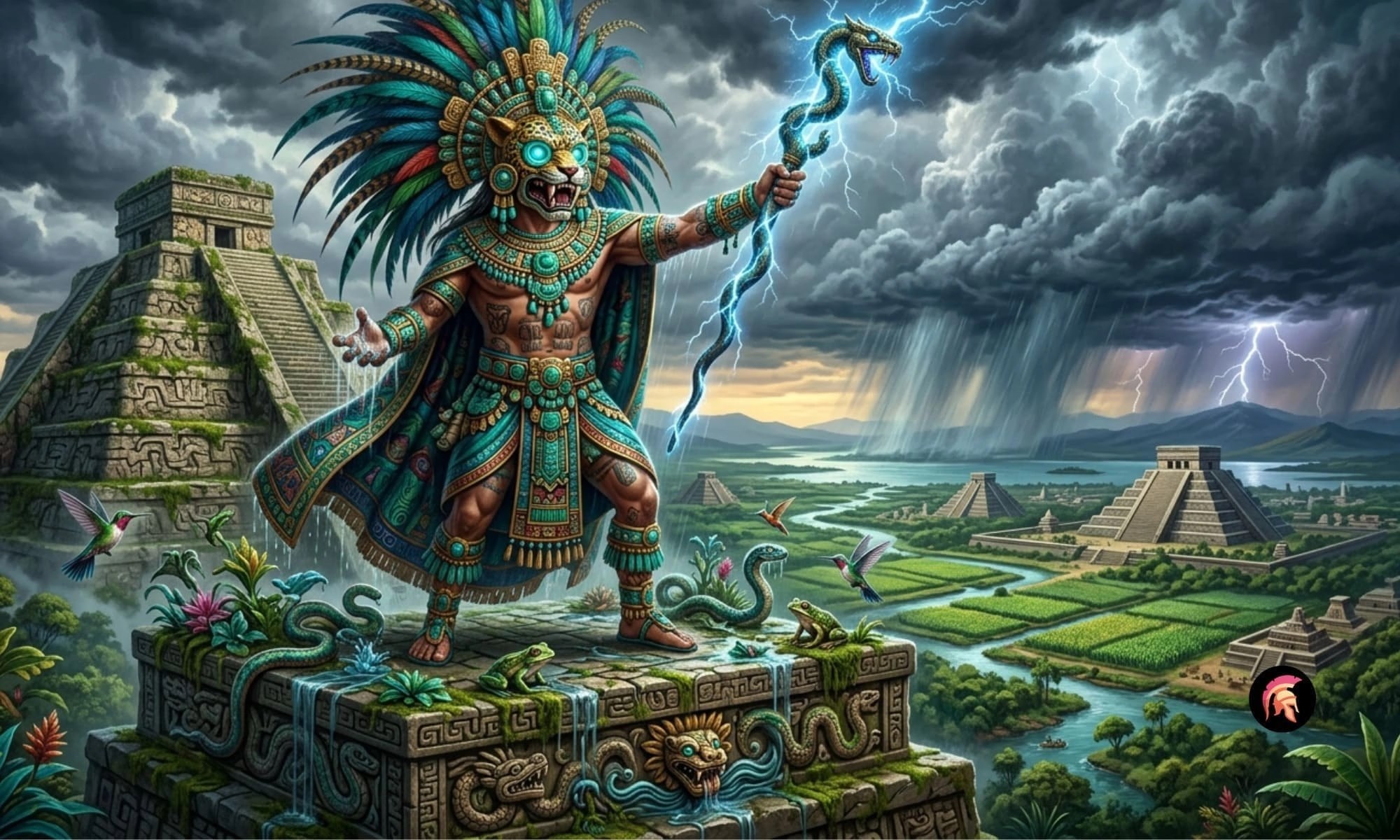
His image was unmistakable. He was portrayed with enormous circular eyes resembling protective goggles, fierce jaguar-like fangs, and a face adorned with turquoise mosaics symbolizing precious water. These features made him instantly recognizable among the countless deities of the Aztec world.
To outsiders his appearance might seem intimidating, but to the Aztecs it reflected the overwhelming power of storms. Just as thunderclouds inspired both fear and gratitude, Tlaloc's face reminded worshippers that nature's greatest blessings often arrived clothed in terrifying strength.
The Master of Rain, Thunder, and Fertility
The Aztecs believed that every form of fresh water belonged to Tlaloc. Rain, rivers, lakes, mountain springs, waterfalls, mist, and even morning dew were manifestations of his divine presence. Every growing crop depended upon his favor, making him one of the most frequently worshipped gods throughout the empire.
According to Aztec belief, Tlaloc lived within magnificent mountain palaces where enormous jars contained every kind of rain imaginable. Some jars held gentle showers that nurtured crops and filled reservoirs. Others stored violent storms capable of flattening forests, while still others contained destructive hail, lightning, or drought. His attendants, known as the Tlaloque, carried these jars across the heavens, releasing their contents whenever Tlaloc commanded.
This elegant explanation transformed unpredictable weather into a divine drama. A season of abundant harvests meant Tlaloc had opened the jars of blessing. Years of devastating storms or prolonged drought signaled that the god had chosen differently, reminding humanity that survival depended upon maintaining harmony with the divine world.
Tlalocan: The Paradise Beyond Death
Unlike many ancient religions that imagined the afterlife as a gloomy underworld, the Aztecs envisioned a magnificent paradise reserved for those specially chosen by Tlaloc. This heavenly realm was known as Tlalocan, a place of eternal spring hidden among sacred mountains.
Those who entered Tlalocan did not arrive because they were virtuous in life. Instead, they were selected according to the manner of their death. People struck by lightning, those who drowned, individuals who died from water-related illnesses, and children offered to Tlaloc were believed to journey directly into this lush paradise.
There they found endless rivers flowing with crystal-clear water, flowering gardens stretching beyond the horizon, towering forests alive with birdsong, and fertile fields that never withered. Hunger, thirst, pain, and suffering simply did not exist. It was a realm where nature remained forever abundant, reflecting the life-giving generosity of its divine ruler.
This belief demonstrates how closely the Aztecs associated water with both life and eternity. The same rain that sustained crops upon Earth also became the pathway to everlasting peace in the next world.
Sacred Mountains and the Dwelling of the Rain God
To the Aztecs, mountains were far more than towering landscapes. They were living reservoirs where clouds gathered, rivers were born, and the blessings of Tlaloc were stored until the proper season. Many peaks throughout central Mexico were regarded as sacred places where the rain god himself resided.
Pilgrimages carried priests and worshippers high into the mountains to perform elaborate ceremonies. Offerings of jade, turquoise, flowers, food, incense, and precious feathers were presented at springs and mountaintop shrines. These locations served as bridges between humanity and the divine, where prayers for rain seemed closest to the heavens.
One of the most sacred sites dedicated to Tlaloc overlooked the Valley of Mexico, where ceremonies sought to ensure timely rainfall for the agricultural year. The mountains became symbols of hope, for every cloud gathering around their peaks promised another season of life.
Worship, Festivals, and Sacred Rituals
Because agriculture formed the foundation of Aztec civilization, Tlaloc's festivals ranked among the empire's most important religious celebrations. Entire communities participated in seasonal ceremonies designed to secure abundant rainfall.
Priests performed elaborate rituals filled with music, dancing, incense, flowers, and offerings of maize. Sacred processions climbed mountain paths carrying gifts intended to please the rain god. Children were sometimes chosen for ritual sacrifice—a practice that remains one of the most tragic aspects of Aztec religion. Their tears were believed to symbolize falling rain, making these sacrifices especially meaningful within the Aztec worldview.
Although such rituals are difficult to understand today, they reflected a society whose survival depended entirely upon unpredictable weather. In the minds of the Aztecs, maintaining harmony with Tlaloc was not simply a religious obligation—it was essential for the continued existence of the entire civilization.
Tlaloc's Place Among the Aztec Gods
Tlaloc stood alongside some of the greatest deities in the Aztec pantheon, each governing different aspects of existence. While Quetzalcoatl represented wisdom, civilization, and creation, and Tezcatlipoca embodied destiny, power, and transformation, Tlaloc governed the natural forces upon which all life depended.
His divine consort was often identified as Chalchiuhtlicue, the radiant goddess of lakes, rivers, streams, and flowing water. Together they formed a sacred partnership that sustained both agriculture and human civilization.
This balance reflected an important principle in Aztec mythology: no single god ruled alone. Creation depended upon cooperation among divine forces, just as rain required clouds, rivers, mountains, earth, and sunlight working together.
Symbolism of Tlaloc
Behind Tlaloc's fearsome appearance lies a rich tapestry of symbolism that extends far beyond weather alone. He represents humanity's eternal relationship with nature—a reminder that civilization ultimately depends upon forces beyond human control.
Rain symbolizes renewal, cleansing, abundance, and hope. Thunder reflects divine authority that commands respect rather than fear. Lightning demonstrates the immense power hidden within the natural world, while mountains represent permanence and the sacred connection between earth and sky.
Perhaps most importantly, Tlaloc teaches that blessings and hardship often emerge from the same source. The storms that flood rivers also nourish fields. The lightning that destroys forests enriches the soil for future growth. Through Tlaloc, the Aztecs understood that nature's apparent contradictions were simply different expressions of the same cosmic balance.
Tlaloc's Legacy in the Modern World
Centuries after the fall of the Aztec Empire, Tlaloc continues to inspire historians, artists, archaeologists, and storytellers. Monumental stone sculptures bearing his distinctive goggle eyes still stand in museums and archaeological sites across Mexico. His image appears in murals, literature, films, and modern interpretations of Mesoamerican mythology.
Researchers continue discovering temples, offerings, and ceremonial artifacts dedicated to him, revealing how central his worship was to everyday Aztec life. Even today, visitors climbing the ancient pyramids of Teotihuacan or exploring the ruins of Tenochtitlan encounter the enduring presence of the rain god whose blessings once sustained an empire.
His legend reminds us that every civilization develops profound spiritual connections with the natural forces that ensure survival. Though modern science explains storms differently, humanity's awe before thunderclouds and life-giving rain remains remarkably unchanged.
Conclusion
Tlaloc was far more than the Aztec god of rain. He was the keeper of life itself, the master of storms, the guardian of fertile fields, and the ruler of a paradise where eternal spring awaited the chosen dead. His mythology reflects a civilization that understood the fragile balance between abundance and disaster, gratitude and fear, creation and destruction.
Through sacred mountains, nourishing rains, and the eternal promise of Tlalocan, the Aztecs celebrated the power of nature as something both beautiful and formidable. His story continues to remind us that the forces sustaining our world deserve not only admiration but also respect.
Frequently asked questions
Who was Tlaloc?
What was Tlalocan?
Why was Tlaloc important to the Aztecs?
What are Tlaloc's symbols?
Theseus and the Minotaur: Bravery and Intelligence – Hero of Athens
Discover the epic tale of Theseus and the Minotaur, exploring courage, cleverness, and heroism in Greek mythology as he ...