Rostam: Hero of the Shahnameh – Adventures of Persia’s Legendary Warrior
The cultural tapestry of every civilization includes threads of heroism and grandeur. Greek mythology has Hercules, a symbol of physical prowess; India's lore celebrates Bhima from the Mahabharata for his immense strength; Persia reveres Rostam in Ferdowsi’s Shahnameh
Rostam’s Origins
Rostam, one of the most revered heroes in Persian mythology, was born into a noble family that combined wisdom and strength. His father, Zal, a wise leader known for his prematurely white hair, married Rudabeh, a princess from Kabul, thereby uniting two powerful lineages. The circumstances of Rostam's birth were extraordinary: due to his large size, traditional birthing methods could not accommodate him, leading to the first recorded instance in Persian literature resembling a cesarean section, assisted by a mythical figure.
From an early age, it was clear that Rostam was destined for greatness. His growth paralleled the development of his legendary strength and courage. As he matured, no one could match his might on the battlefield. Rostam's bond with his horse, Rakhsh, a creature as brave and fierce as its rider, further solidified his status as an unparalleled warrior. Together, they were almost invincible, their partnership a cornerstone of Persian heroic tales.
The Early Days of Rostam
During the formative years of Rostam’s life, he faced numerous challenges that tested not only his physical prowess but also his mental acumen. One such incident involved a fierce dragon threatening a nearby village. Despite the odds against him, Rostam bravely accepted the challenge and managed to slay the beast with his trusted sword, Zaal, thereby earning the respect of his people and ensuring their safety. This act was just one example among many that showcased Rostam's unwavering dedication to justice and protection.
The Seven Trials (Haft Khan)
Rostam’s most celebrated feats are the Seven Trials (Haft Khan), an epic quest to save King Kay Kavus from demonic captivity. The first trial saw Rostam face a ferocious lion alone in the wilderness, defeating it barehanded to protect his beloved horse Rakhsh. This act of bravery set the tone for the trials ahead, showcasing both his strength and strategic thinking. Following this initial test was a perilous journey through an unforgiving desert, where divine assistance sustained him against overwhelming odds.
The third trial brought forth a formidable dragon, which Rostam and Rakhsh vanquished with tactical acumen and unyielding resolve. Each challenge honed his abilities further, preparing him for the sorceress who sought to divert his path through seduction; however, her illusions failed to sway him, demonstrating not only his physical prowess but also his unwavering faith. The trials continued with a series of increasingly formidable adversaries: from defeating a warrior champion in single combat to engaging in relentless battles against the demon king’s army.
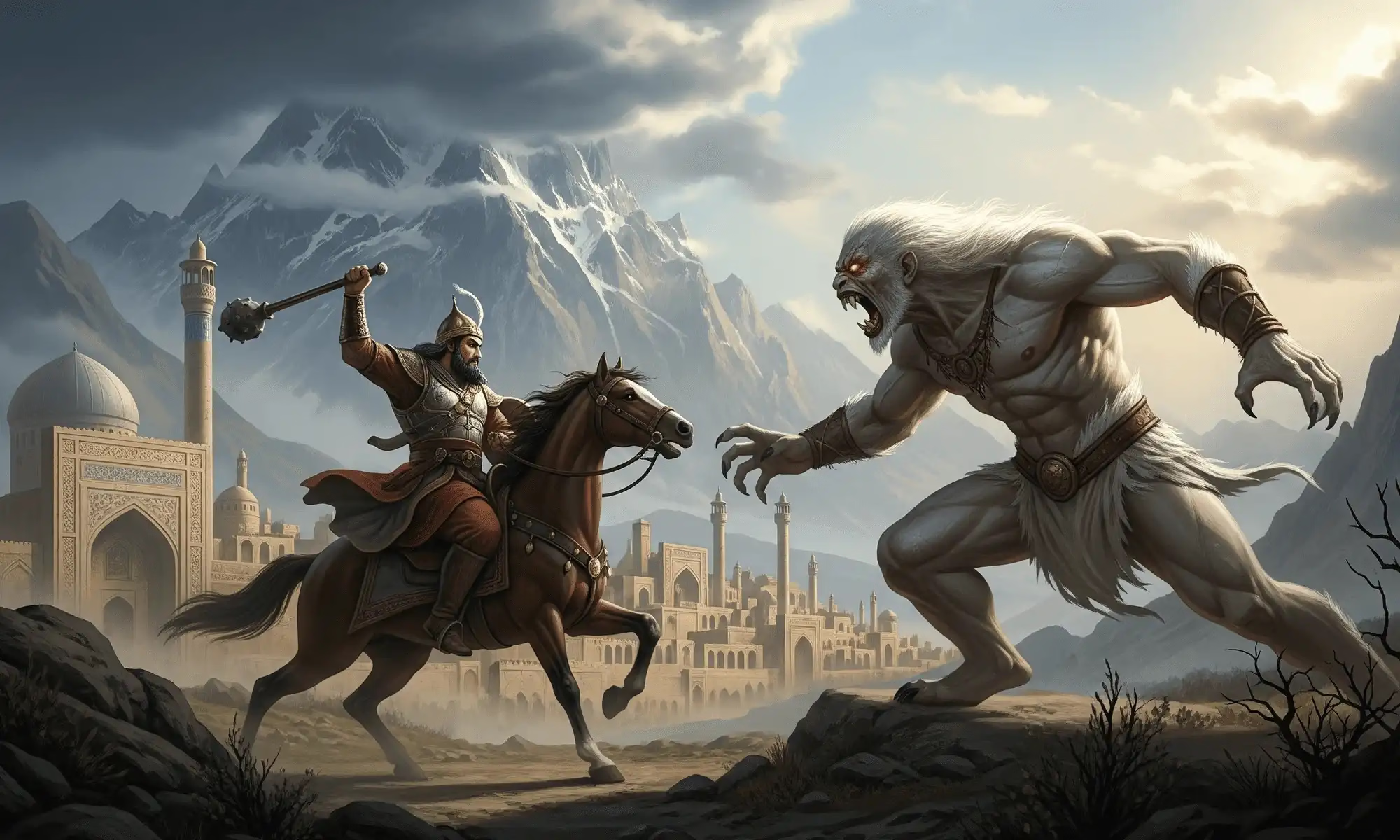
Each confrontation demanded Rostam’s utmost concentration and endurance, culminating in the climactic battle against the White Demon (Div-e-Sepid). By slaying this ultimate foe, Rostam rescued King Kay Kavus and restored his sight, signifying a profound victory over both physical and spiritual adversaries. Unlike Hercules’ labors which often focus on sheer strength, Rostam’s trials emphasize wisdom, faith, and perseverance as essential virtues in overcoming life's greatest challenges.
Each trial tested his strength, courage, and faith:
-
Lion Fight – Rostam kills a lion barehanded when it attacks Rakhsh.
-
Desert Thirst – He survives a barren wasteland with divine aid.
-
Dragon Battle – A dragon attacks by night, but Rostam and Rakhsh defeat it.
-
Enchantress – A sorceress tries to seduce him, but he sees through her illusions.
-
Warrior Champion – Rostam defeats a mighty warrior in single combat.
-
The Demon King’s Army – He battles and destroys countless foes.
-
White Demon (Div-e-Sepid) – In the climactic trial, Rostam slays the White Demon, restoring the king’s sight and freeing him.
The Haft Khan parallels Hercules’ labors, but Rostam’s trials emphasize wisdom, faith, and perseverance as much as brute force.
Rostam and Sohrab: A Tragic Tale
The tale of Rostam and Sohrab is one of the most renowned and heartrending narratives in Persian literature. It begins with a clandestine union between Rostam, the legendary hero, and Princess Tahmineh, resulting in the birth of their son, Sohrab.
As years passed, Sohrab grew into an exceptional warrior, his prowess unmatched on the battlefield. However, fate had a cruel twist in store for him; he found himself locked in combat with Rostam, utterly unaware that the man he faced was his father. The tragic irony of their unknown kinship added a layer of sorrow to this already dire situation.
Neither warrior suspected any familial ties as they clashed in battle. In the heat of the fight, Rostam, driven by duty and honor, dealt Sohrab a fatal blow. Only later did the truth emerge, revealing that the fallen warrior was not just an enemy but also his long-lost son. This revelation only amplified the tragedy: "If only we knew then what we know now," many lament.
Today, Rostam and Sohrab's story is a poignant reminder of the fragility of human life and the unforeseen consequences that stem from ignorance or fate. It stands as one of the most heart-wrenching moments in Persian literature, serving as a cautionary tale about the unpredictability of destiny.
Rostam’s Loyalty and Duty
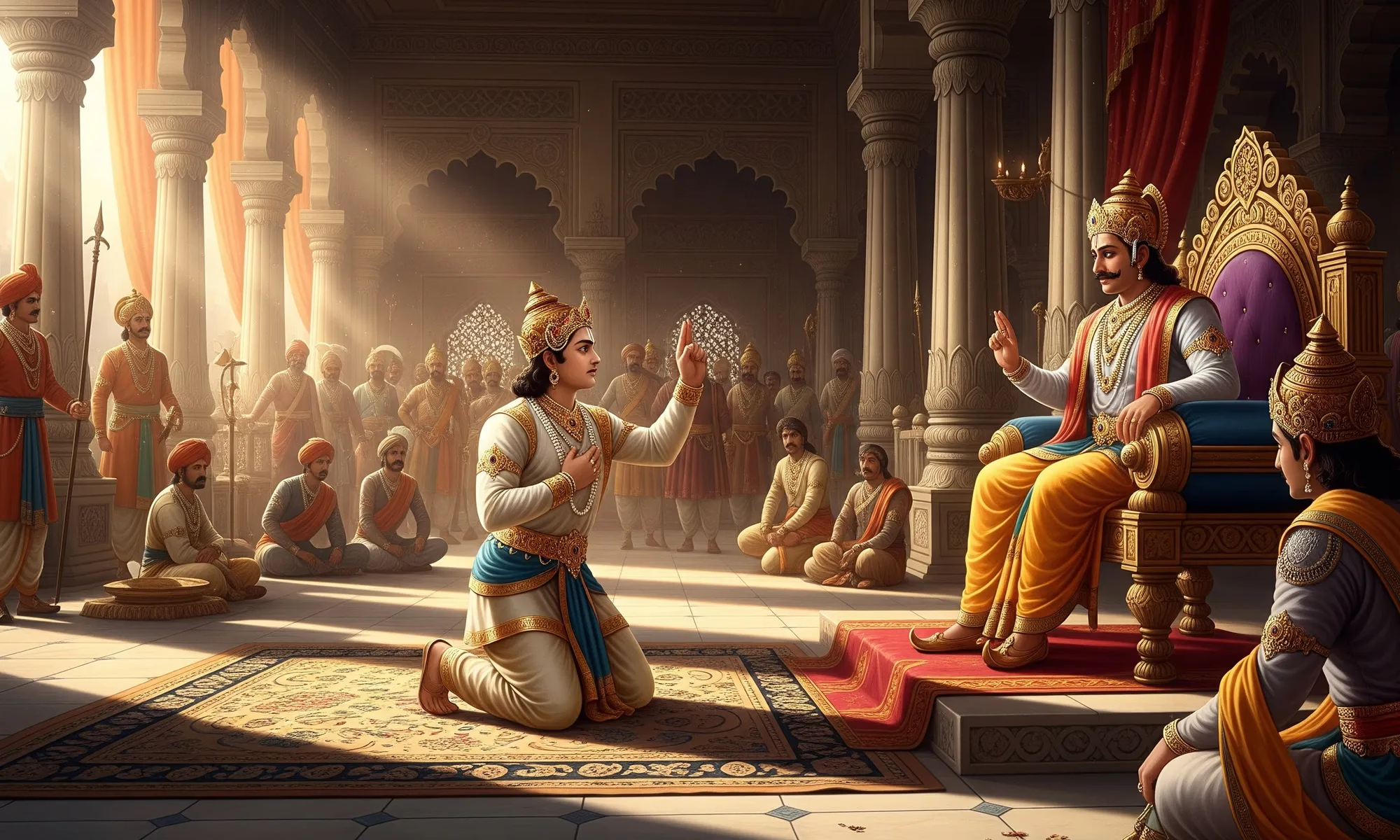
Throughout his life, Rostam remained devoted to Iran, serving its kings faithfully regardless of their personal flaws or moral shortcomings. His unwavering sense of duty often compelled him to act even when it went against his personal feelings or desires. This steadfast loyalty was not without conflict; he frequently found himself at odds with royal figures who failed to uphold justice and righteousness. Despite the risks, Rostam never hesitated to speak truth to power, challenging those in authority whenever necessary.
For instance, when Kaykhusrau ascended to the throne as a young and inexperienced ruler, Rostam became his primary advisor and protector. Despite witnessing Kaykhusrau's initial missteps and poor decisions, Rostam continued to support him, believing in his potential for growth and change. This commitment led to several tense moments when Rostam had to intervene directly to prevent disastrous outcomes.
Rostam’s loyalty extended beyond mere obedience; it was rooted in a deep-seated belief in the importance of maintaining order and upholding moral principles within the kingdom. His actions often showcased his ability to distinguish between personal relationships and national duty, demonstrating that true loyalty is not blind but principled. This nuanced approach allowed Rostam to maintain respect and admiration even among those he challenged, earning him a place as one of Iran’s most revered figures.
Rostam’s Final Battle
In Persian lore, Rostam's death marked a poignant end. Betrayed by his jealous half-brother Shaghad, Rostam died in a pit of spears but managed to exact vengeance before dying. This event, often dated to 508 CE, signaled the end of an era defined by valor and righteousness. Persia mourned its greatest champion, yet admired Rostam’s integrity until his last breath.
A hero's true strength lies not in victory but in honor with which one faces defeat.
Symbolism of Rostam
Rostam is a pivotal figure in Persian literature, embodying the essence of strength and valor. He stands as an invincible protector of Iran, his battles legendary tales passed down through generations. Yet, beneath this imposing facade lies a hero burdened by tragedy, most poignantly illustrated by the tale of Sohrab's death—a story where Rostam’s greatest triumph turns into his deepest sorrow.
Despite being surrounded by flawed rulers and political turmoil, Rostam remains steadfast in his loyalty to Iran. This unwavering commitment to honor, even when faced with moral dilemmas, sets him apart as a paragon of integrity. For instance, during the reign of King Kaykobad, who was known for his erratic decisions, Rostam maintained his allegiance and service, showcasing the depth of his dedication.
What truly elevates Rostam’s character is his humanity in heroism. Unlike divine figures who are immune to suffering, Rostam's mortality makes him relatable; he experiences loss, uncertainty, and betrayal just as ordinary mortals do. This aspect of his portrayal humanizes him significantly more than other mythical heroes like Achilles or Karna, making his story resonate deeply with readers across cultures.
Influence and Legacy
Rostam, the legendary hero from ancient Persia, remains a towering figure in the nation's cultural pantheon. His legacy is not just historical but deeply intertwined with contemporary Persian identity, symbolizing resilience and pride through centuries of change. As the national hero of Persia, Rostam captures the imagination of artists and storytellers alike, inspiring countless works of art, literature, and visual culture.
From intricate miniature paintings to grand epics and modern retellings, Rostam's stories have permeated Persian artistic traditions, shaping narratives that resonate with a broad audience. The archetype of the tragic warrior, marked by valor yet haunted by sorrow, finds echoes in various cultural expressions around the world, highlighting the universal appeal of his character. In Iran today, for instance, Rostam-themed events and exhibitions attract significant crowds, demonstrating how deeply rooted this figure is within the national consciousness.
Interestingly, despite being a mythic hero, Rostam's influence extends into practical realms as well. His portrayal in contemporary media often includes nuanced explorations of leadership, loyalty, and ethical dilemmas, making him a source of moral reflection for modern audiences. Whether through literature, film, or public discourse, Rostam continues to serve as an emblematic figure who embodies the enduring spirit of Persian heritage.
Conclusion
The tale of Rostam, Hero of the Shahnameh, transcends mere adventure to become a profound meditation on strength, destiny, and life's inherent contradictions. From his arduous journey through the Seven Trials to the heart-wrenching tragedy of Sohrab, Rostam embodies the complexities faced by heroes in Persian mythology. Each trial he endures not only showcases his physical prowess but also highlights the wisdom he acquires along his path.
One particularly poignant example is when Rostam unknowingly battles his own son, Sohrab, leading to a tragic outcome that illustrates the futility of attempting to escape one's destiny. This story underscores the idea that even the most valiant heroes are not immune to life’s cruel ironies. In celebrating Rostam, we honor the rich tapestry of Persian mythology, where grandeur and wisdom coexist with inevitable tragedy.
Frequently asked questions
Who was Rostam in Persian mythology?
What are the Seven Trials (Haft Khan) of Rostam?
What is the story of Rostam and Sohrab?
How did Rostam die?
What does Rostam symbolize?
Tezcatlipoca – The Smoking Mirror and Shadow of the Gods
Discover the story of Tezcatlipoca, the Smoking Mirror of Aztec mythology — the god of darkness, fate, and transformatio...
Shakuni’s Revenge: The Mastermind Behind the Fall of the Kuru Dynasty in Mahabharata
Discover the untold story of Shakuni in Mahabharata—his revenge, cunning strategies, and how he orchestrated the downfal...