Ereshkigal: Queen of the Underworld
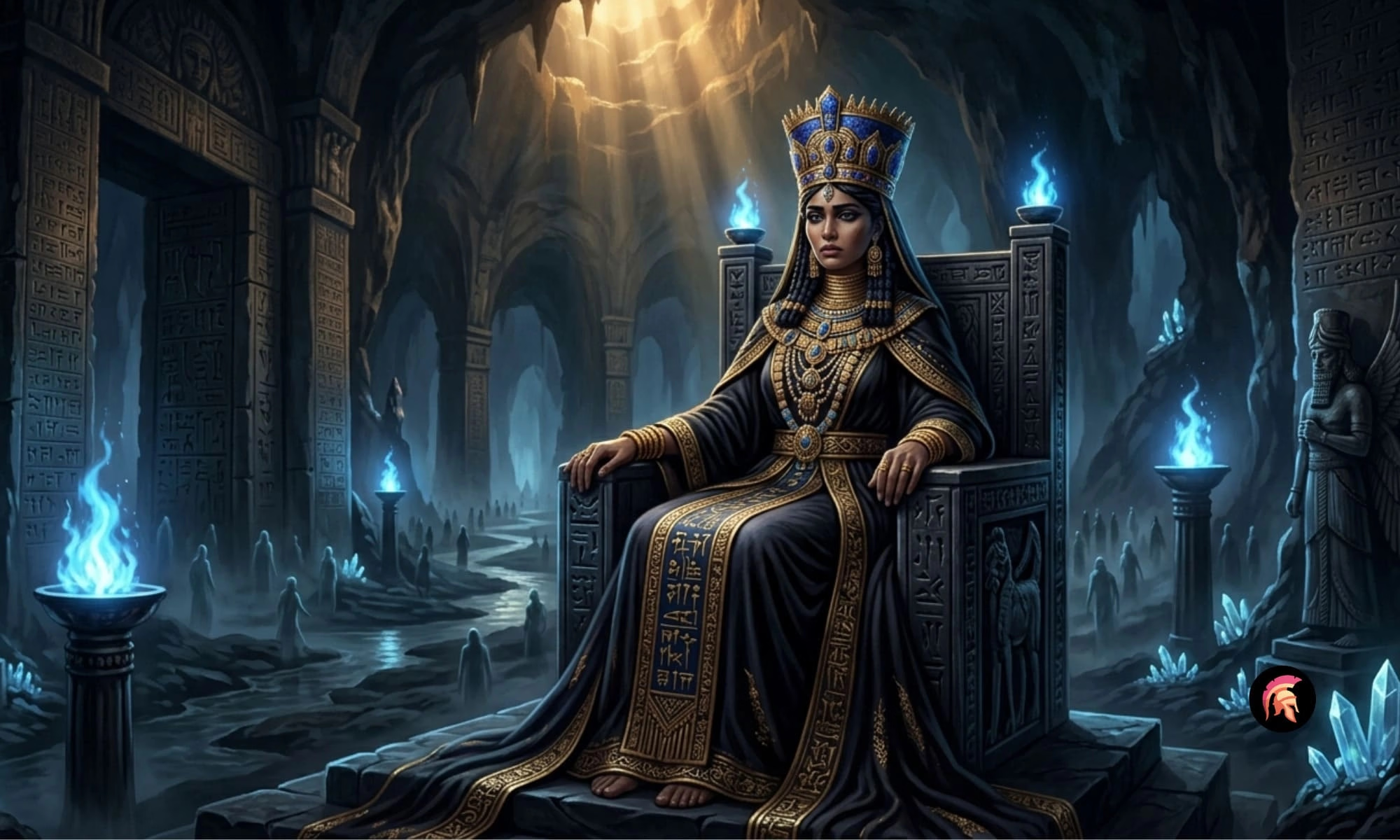
The Queen Who Ruled Where Even Gods Feared to Walk
Long before the Greeks imagined Hades or the Norse spoke of Hel, the people of ancient Mesopotamia envisioned a vast kingdom beneath the earth—a silent realm where every mortal would one day arrive and from which no traveler willingly returned. This mysterious land was known as Kur, the Great Below, and upon its dark throne ruled one of mythology's most powerful yet misunderstood goddesses: Ereshkigal, the Queen of the Underworld.
Unlike many rulers of death who delighted in destruction or punishment, Ereshkigal governed because someone had to. Her kingdom was not built upon cruelty but necessity. Every life eventually crossed her gates, from humble shepherds to mighty kings, and once the seven gates of Kur closed behind them, no earthly power could open them again.
Ancient Mesopotamian civilizations saw death not as a reward or punishment but as an inevitable destination shared by gods, rulers, and common people alike. In that silent kingdom beneath the earth, Ereshkigal maintained the balance between life and death, ensuring that the order of the cosmos remained unbroken. She was feared not because she was evil, but because she represented the one truth from which no living being could escape.
Mistress of Kur, the Land of No Return
The underworld of Mesopotamian mythology was unlike the heavens filled with brilliant gods or the fertile lands watered by the Tigris and Euphrates. Kur was a shadowy realm carved deep beneath the earth, enclosed by seven mighty gates and surrounded by ancient walls that separated the living from the dead.
Within this vast kingdom, every soul lived a quiet existence, surviving on dust and shadow. Kings no longer wore crowns, warriors laid aside their weapons, and wealth carried no value. Before Ereshkigal, every soul became equal.
She ruled this immense kingdom from a magnificent palace known as Ganzir, where divine laws governed the fate of every newcomer. The gatekeeper Neti admitted souls only according to ancient decrees, while scribes recorded the names of the dead. Nothing entered Kur without Ereshkigal's knowledge, and nothing left unless destiny itself permitted it.
To the Mesopotamians, this was not merely a frightening vision of death but a reminder that earthly power was temporary. Every achievement, every empire, and every treasure would eventually pass into the quiet halls ruled by the Queen Below.
Sister of Inanna, Goddess of Heaven
Among all the myths surrounding Ereshkigal, none is more famous than her relationship with her younger sister Inanna, the radiant goddess of love, beauty, fertility, and war. The two sisters represented opposite halves of existence itself.
While Inanna filled the world above with passion, prosperity, and life, Ereshkigal governed silence, endings, and eternity beneath the earth. Together they embodied one of humanity's oldest truths—that life and death cannot exist without one another.
Their opposing realms were not enemies but complements. Every birth eventually led toward death, and every ending created space for a new beginning. Mesopotamian storytellers expressed this profound philosophy through the relationship of these divine sisters, whose destinies were forever intertwined despite ruling separate worlds.
This balance between heaven and the underworld would become the foundation of one of the greatest myths ever recorded.
The Descent of Inanna
When Inanna decided to descend into Kur, her journey was not one of curiosity alone. Different versions of the ancient tale offer different motivations—some say she sought to extend her authority, while others suggest she wished to attend the funeral of Ereshkigal's husband. Whatever her purpose, she approached the seven gates of the underworld fully adorned with symbols of divine power.
At each gate, however, the gatekeeper Neti obeyed Ereshkigal's command. One by one, Inanna surrendered her crown, jewelry, robes, weapons, and sacred insignia. With every gate she passed, another symbol of her authority disappeared until she stood before the Queen of the Underworld stripped of every earthly privilege.
The lesson was unmistakable. Death recognizes neither kings nor gods. Wealth, beauty, power, and status remain outside the gates of Kur.
When Inanna finally stood before her sister, Ereshkigal judged her according to the ancient laws governing the underworld. The Queen Below fixed her gaze upon the goddess of heaven, and Inanna fell lifeless, her body hung upon a hook as a warning that even divine beings could not challenge the eternal order.
The Return from Death
The disappearance of Inanna had devastating consequences for the living world. Crops withered, animals ceased to reproduce, and love vanished from human hearts. Without the goddess of fertility, creation itself began to fade.
Alarmed by the growing imbalance, the gods intervened. Through divine wisdom and sacred magic, messengers descended into Kur carrying the food and water of life. Moved by compassion—or perhaps recognizing that absolute death would destroy the balance of creation—Ereshkigal permitted Inanna's resurrection.
Yet ancient laws demanded that no one leave the underworld without providing another in exchange. This decree eventually led to the sacrifice of Inanna's husband Dumuzi, whose seasonal descent into the underworld became one explanation for the yearly cycle of vegetation, harvest, and renewal.
The myth reveals that Ereshkigal was never portrayed as vindictive. She simply upheld laws older than the gods themselves, preserving the delicate balance between life and death upon which the universe depended.
The Unexpected Marriage of Nergal
Another remarkable Mesopotamian legend tells of how Ereshkigal came to share her lonely throne with Nergal, the god of war, plague, and destructive summer heat.
When Nergal insulted one of Ereshkigal's messengers during a divine banquet, he was ordered to descend into the underworld and seek forgiveness. Armed with powerful advice from the wise god Ea, Nergal entered Kur while resisting the temptations and dangers that awaited him.
The encounter between the two gods unfolded in dramatically different ways depending on the version of the myth. In some traditions, they became fierce enemies before eventually reconciling. In others, mutual admiration blossomed into love, leading Nergal to remain beside Ereshkigal as king of the underworld.
Their union symbolized more than romance. It represented the meeting of destruction and death, demonstrating that even within the darkest realm companionship and balance could emerge.
The Queen Behind the Darkness
Unlike many rulers of the dead in later mythologies, Ereshkigal was not depicted as delighting in human suffering. Ancient hymns and poems often describe her as profoundly lonely. While the gods celebrated feasts in the heavens above, she remained forever confined to the underworld, unable to freely visit the world of the living.
This isolation made her one of Mesopotamian mythology's most deeply human deities. She experienced grief, longing, anger, compassion, and vulnerability despite possessing immense authority.
Modern readers often discover unexpected sympathy for Ereshkigal because she represents responsibilities that cannot be abandoned. Someone must guard the boundary between life and death, no matter how lonely that duty becomes.
Rather than embodying evil, she personifies acceptance—the understanding that endings are as essential to existence as beginnings.
Legacy of the First Queen of the Dead
The mythology of Ereshkigal predates many of the world's better-known underworld rulers. Elements of her stories influenced later traditions throughout the ancient Near East, shaping humanity's understanding of death, judgment, and the afterlife.
Unlike modern portrayals of death as something monstrous, Mesopotamian belief viewed the underworld as a necessary kingdom governed according to immutable laws. Ereshkigal maintained those laws with unwavering fairness, ensuring that cosmic order endured across both the realms of the living and the dead.
Even today, archaeologists continue to uncover clay tablets preserving hymns, prayers, and myths that reveal how deeply Mesopotamians respected the mysterious Queen Below. Her story remains one of mythology's earliest explorations of mortality, grief, responsibility, and acceptance.
Conclusion: The Silent Sovereign Beneath the Earth
Ereshkigal stands among the oldest and most compelling figures in world mythology. She was not merely the ruler of the dead but the guardian of life's inevitable destination, the divine queen whose authority reminded both gods and mortals that every journey has its end.
Her legends teach that death is neither victory nor defeat—it is part of the eternal rhythm that sustains creation itself. Through her judgment, balance was preserved. Through her loneliness, humanity recognized the burden carried by those entrusted with difficult responsibilities.
While brighter gods ruled the heavens and heroes sought everlasting glory, Ereshkigal remained steadfast upon her ancient throne beneath the earth, watching over the kingdom where every road ultimately leads. In her quiet strength, the Mesopotamians found not terror alone, but profound wisdom: that endings are not failures of life, but essential chapters in the story of existence itself.
Frequently asked questions
Who is Ereshkigal in Mesopotamian mythology?
Why did Inanna descend into the underworld?
Who was Nergal?
What was Kur in Mesopotamian mythology?
Supay: The Lord of the Underworld
Discover Supay, the Incan Lord of the Underworld — a god of duality, transformation, and rebirth. Explore his myths, sym...
Parashurama Avatar: The Warrior Sage Who Wielded the Axe of Justice
Discover the epic tale of Parashurama Avatar, Vishnu’s incarnation as the warrior sage with an axe. Learn about his batt...