The Birth of King Jarasandha – Destiny’s Child of the Mahabharata
👑🔥 Among the countless tales woven into the grand epic of the Mahabharata, few are as strange and awe-inspiring as the birth of King Jarasandha. Feared by many, revered by some, and destined to play a pivotal role in shaping the destiny of kingdoms, Jarasandha’s origin story is as miraculous as it is unsettling.
This is not the tale of an ordinary king—it is the saga of a child born in two halves, united by fate, and raised to rule Magadha as one of the most formidable monarchs of his age.
🌌 The Boon and the Problem
The king of Magadha, Brihadratha, was a powerful ruler but bore no children. For a monarch, childlessness was a curse—an end to lineage and a weakness for enemies. Seeking a solution, he approached the great sage Chandakaushika, who blessed him with a divine fruit, said to grant the boon of offspring.
But there was a complication—Brihadratha had two queens, both equally beloved. Unable to decide which queen should receive the fruit, he split it in half and gave one piece to each queen.
Time passed, and both queens became pregnant. But when the children were born, neither was whole. Each queen bore only half a child—one had the upper part of a body, the other the lower.
The court was horrified. The king was heartbroken. Was this a curse disguised as a blessing?
🩸 The Abandoned Halves
The two incomplete infants could not live. With heavy hearts, the queens ordered the halves to be cast away. The attendants carried them into the forest, wrapped in silken cloth, and left them where wild beasts roamed.
But destiny does not abandon those chosen for greatness.
🌿 The Demoness Jara
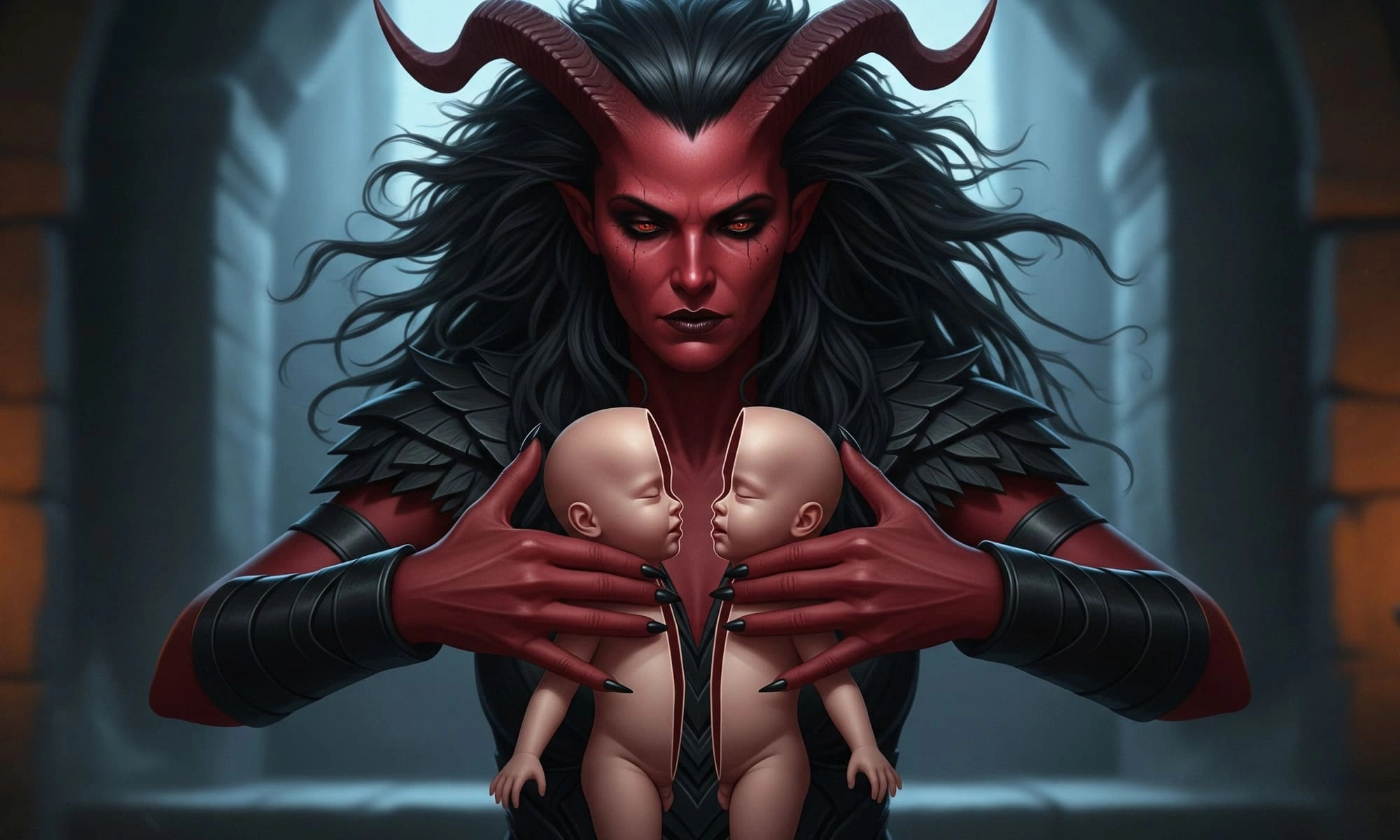
In a dense forest where fear and uncertainty reigned, there lived a rakshasi named Jara. Known to villagers as an embodiment of hunger and terror, she was both feared and avoided. One day, her path crossed with an extraordinary sight: two halves of an infant, each exuding an ethereal glow that defied the natural order.
Driven by curiosity more than fear, Jara approached the fragments and, in a moment of inexplicable intuition, joined them together. As she did so, a miraculous transformation occurred—the separated parts fused seamlessly into a whole, living child who cried out with surprising vigor and vitality. Astonished yet deeply moved, Jara felt an unexpected warmth stir within her as she cradled the infant.
Recognizing that this child was not of ordinary birth but destined for some greater purpose, Jara made the difficult decision to seek out King Brihadratha. She delivered the child into the king's care, knowing it was a momentous act that would change many lives. This event in itself was a rare and mysterious occurrence, suggesting that even beings like Jara, often seen as forces of destruction, can be agents of extraordinary transformation.
👑 The Naming of Jarasandha
The king's transformation from despair to elation upon discovering his son alive was profound. He saw this miraculous event as a divine intervention, one that challenged the natural order and brought him unexpected joy. This living child, born under such extraordinary circumstances, was given the name Jarasandha, meaning “the one joined by Jara.”
Jara in this context refers to the demoness who facilitated his unique birth, while Sandha signifies a union or joining. The significance of Jarasandha’s name lies not only in its literal meaning but also in the profound narrative it encapsulates—the tale of a rejected infant becoming the prince of Magadha through a series of miraculous and divine events.
It is striking how societal perceptions can shift so dramatically, as was evident with Jarasandha's rise from an abandoned child to a future ruler. This story highlights the unpredictable nature of destiny and the immense power of belief in supernatural forces.
⚔️ The Rise of Jarasandha
As Jarasandha grew, it became clear he was no ordinary child:
- His strength was unmatched. 💪
- His willpower was unbreakable. 🛡️
- His presence commanded fear and respect.
But he also carried within him the darkness of his unusual birth—a sense of destiny that made him ruthless. He rose to become King of Magadha, expanding his kingdom’s might, and became one of the most formidable opponents of the Pandavas and Krishna.
🔮 Symbolism of Jarasandha’s Birth
Jarasandha’s story is more than just a strange tale—it is layered with meaning:
- Destiny Cannot Be Denied: Even when abandoned, fate found a way to preserve him.
- Union of Opposites: He was literally formed by joining two halves—symbolizing the paradox of creation and destruction.
- Fear and Power: His unusual origin shaped his life into one of power but also of inevitable doom.
🌍 Jarasandha in the Mahabharata
Jarasandha's later life is rife with legendary tales of his power and resilience. He imprisoned numerous kings, challenged Krishna and Bhima, and fought Arjuna to establish his dominance over the ancient world. His final confrontation with Bhima saw him torn apart in a manner reminiscent of how he was once born—thus bringing full circle this cycle of division.
Jarasandha's birth story is steeped in mystery and intrigue. Legend has it that his mother, after being rejected by her husband for not bearing male children, sought divine intervention from Shiva. The god split the child into two halves, leaving Jarasandha whole only to be defeated when this division would occur again. This tale underscores how adversity can forge strength, turning what seemed like a curse into a destiny of unparalleled might.
Interestingly, despite his formidable reputation and the hundreds of kings he imprisoned, Jarasandha's ultimate fate was sealed by an unexpected weakness: his inability to be defeated from within. This nuance reveals that even the most powerful figures can succumb to their own internal vulnerabilities. For instance, Bhima's victory over Jarasandha was not just a triumph of physical prowess but a strategic insight into exploiting the king's unique vulnerability—his invulnerability to attacks initiated outside himself.
Frequently asked questions
Who was Jarasandha in the Mahabharata?
How was Jarasandha born?
Why is he called Jarasandha?
What role did Jarasandha play in the Mahabharata?
The Creation of the World: Atum, Ra, and the Ennead
Explore the Egyptian creation myth, from the primordial waters of Nun to the birth of Atum, Ra, and the Ennead of gods. ...
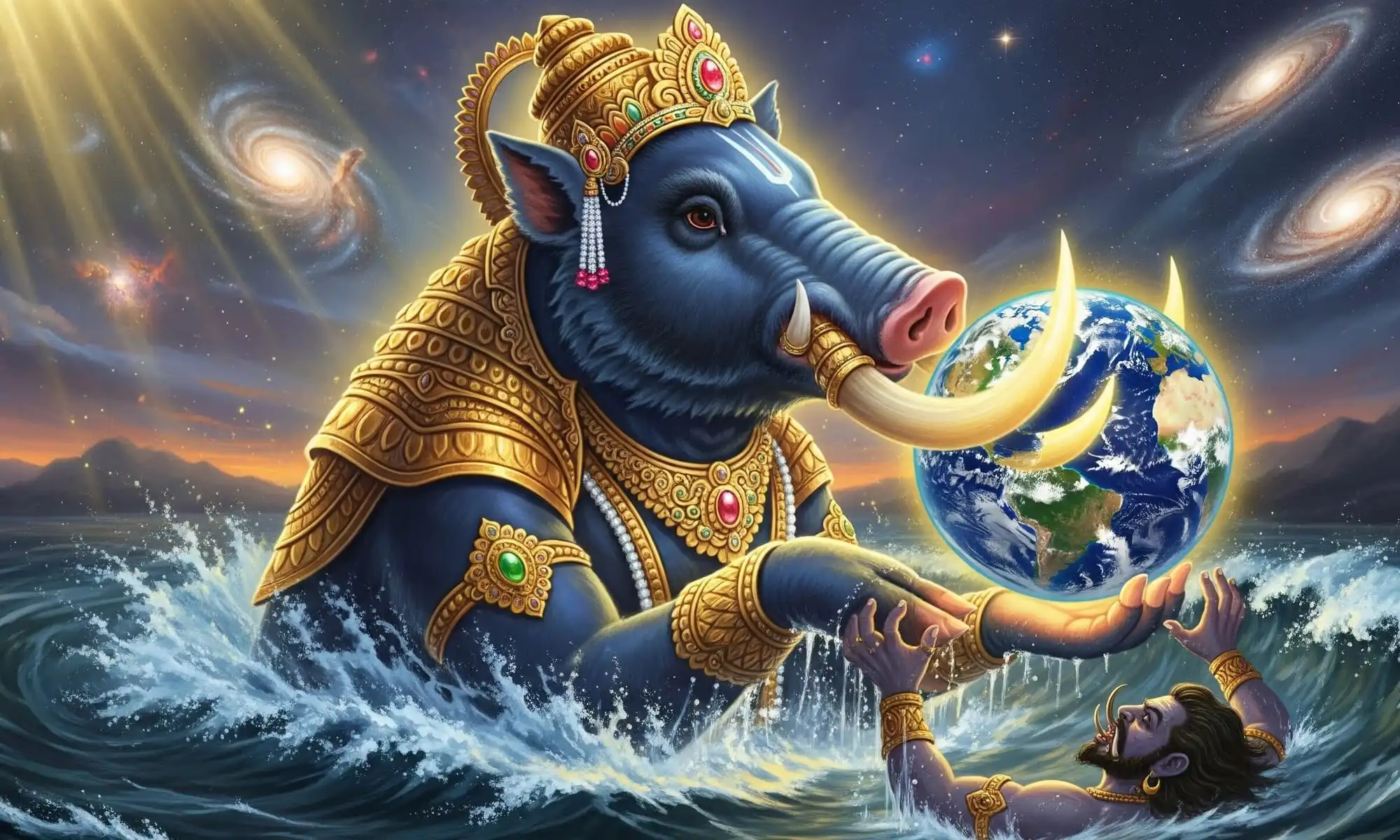
Varaha Avatar: The Cosmic Boar Who Lifted the Earth from the Depths
Read the epic tale of Varaha Avatar, Vishnu’s incarnation as a divine boar who battled the demon Hiranyaksha and lifted ...