Veles: Lord of the Underworld and Rival of Perun
The God Who Ruled Beneath the Roots of the World
Long before Christianity spread across Eastern Europe, the ancient Slavs imagined the world as a great cosmic tree. High among its branches, in the bright heavens above, dwelt Perun, lord of thunder and guardian of order. But deep beneath its roots, hidden in mist and shadow, another power watched patiently.
His name was Veles.
To outsiders, Veles might appear to be the enemy of the gods, a serpent-like trickster who stole cattle and treasures and challenged the authority of heaven itself. Yet to the Slavs, he was far more than a villain. He was the god of the underworld, master of magic, protector of livestock, guardian of hidden wealth, and keeper of ancestral spirits.
Unlike the gods of light who ruled openly, Veles belonged to the mysterious spaces beneath the earth and within the human soul. He governed dreams and secrets, prosperity and death, poetry and sorcery. In many ways, he represented everything that was unpredictable and wild.
His eternal rivalry with Perun became one of the most important myths in Slavic tradition—a struggle that explained not only storms and seasons, but the delicate balance between order and chaos itself.
The Shape-Shifting God of the Underworld
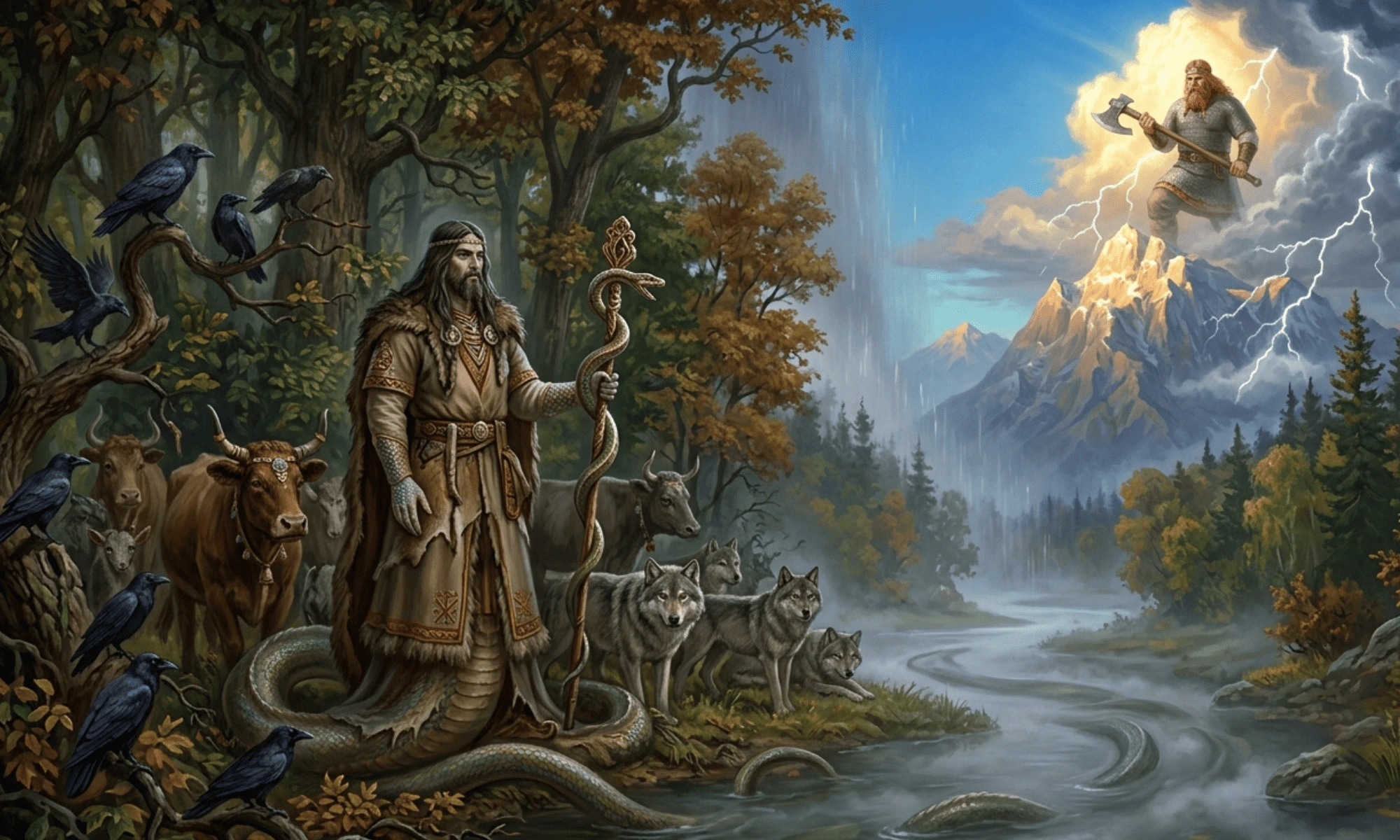
Ancient legends describe Veles as a being of many forms. Sometimes he appeared as a wise old man with long hair and a shepherd's staff. In other stories, he transformed into a dragon, a serpent, a bear, or even a wolf. Unlike the celestial gods who dwelled in lofty realms, Veles moved freely through forests, rivers, caves, and hidden places.
His connection to serpents made him a symbol of transformation and rebirth. Just as snakes shed their skin and emerge renewed, Veles represented the cycles of life and death that governed all creation.
He was also deeply connected to cattle, which were among the greatest sources of wealth in ancient Slavic societies. Herds represented prosperity, and Veles became their divine protector. Farmers and shepherds offered prayers to him, asking for healthy animals and abundant harvests. This connection between divine power, fertility, and the prosperity of everyday life was shared by other figures in the Slavic pantheon, including Mokosh, goddess of fertility and women's work.
But his realm extended beyond earthly riches.
As lord of the underworld, Like Hel, the ruler of the Norse realm of the dead, Veles guided the souls of the dead and watched over the spirits of ancestors. Death, in Slavic thought, was not a place of punishment but another stage in the eternal cycle of existence, and Veles stood at its threshold.
The Eternal Rivalry with Perun
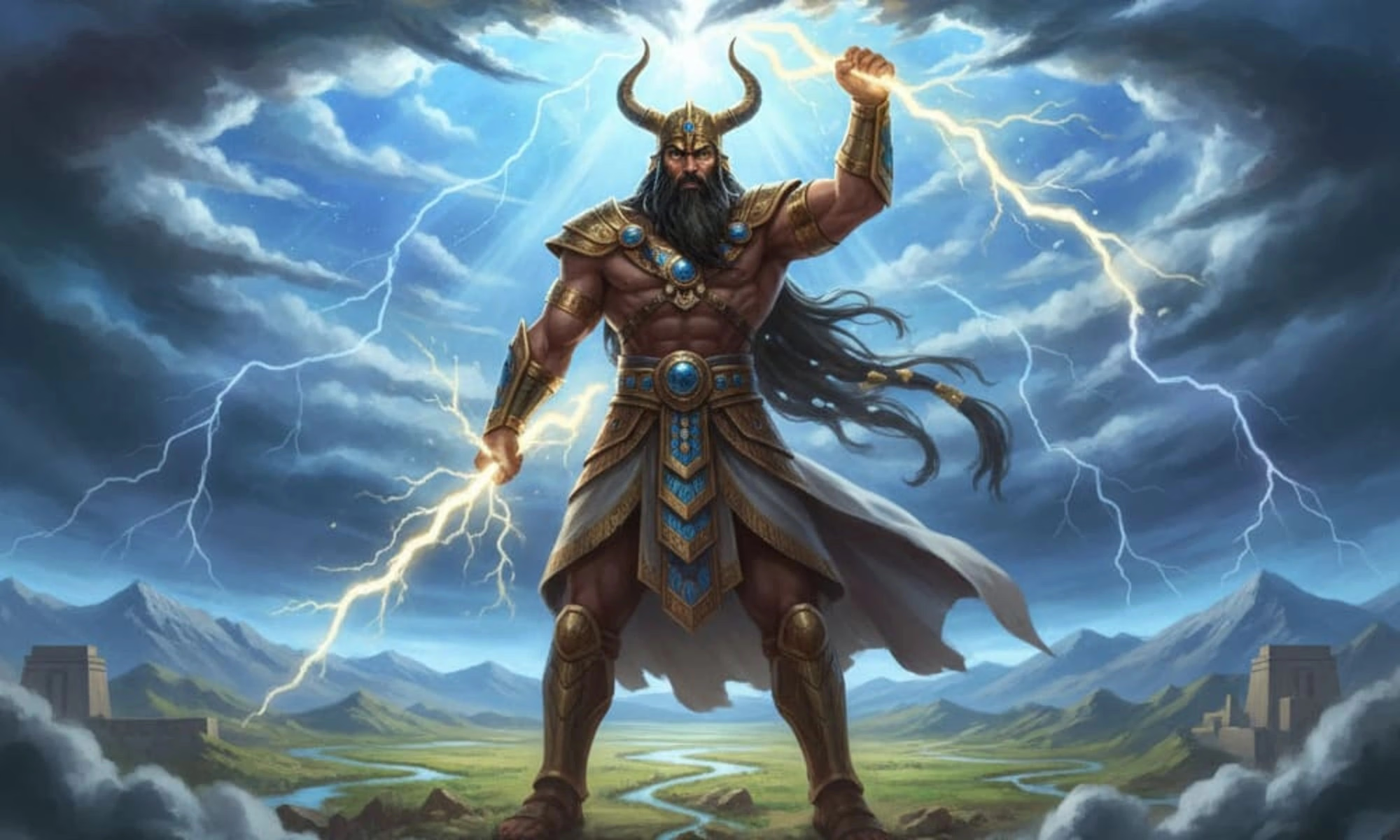
No story defines Veles more than his conflict with Perun, the thunder god.
Perun ruled the heavens from mountain peaks and sacred oak trees. He embodied law, order, kingship, and divine authority. Veles, meanwhile, dwelled below, among rivers, forests, and the underworld. He represented change, mystery, and the untamed forces of nature.
Their rivalry was cosmic.
According to Slavic myths, Veles would climb the World Tree and steal Perun's cattle, treasures, or even members of his family. Enraged, Perun pursued him across the sky, hurling lightning bolts and thunderous axes at the fleeing god. This image of worlds connected through a great vertical cosmic order echoes the idea of Yggdrasil, the World Tree that binds together the Norse realms.
Veles transformed constantly during these chases, taking the forms of animals and serpents as he sought refuge among rivers and beneath the earth. Wherever Perun's lightning struck, trees split and storms raged across the land.
But this conflict was not merely a battle between good and evil.
It was a dance.
For when Perun finally drove Veles back into the underworld, rain fell upon the earth, nourishing crops and bringing life to the fields. Without Veles, there would be no storms. Without Perun, there would be no rain.
Together, they maintained the balance of the world.
Lord of Magic, Music, and Poetry
Unlike many underworld gods, Veles was not feared alone. He was beloved by poets, musicians, and sorcerers.
The Slavs believed that inspiration came from hidden realms beyond ordinary understanding, and Veles governed these mysterious gifts. He was the patron of storytellers and wandering bards, whispering wisdom and songs into the hearts of those who honored him.
Magicians and seers invoked his name during rituals. His knowledge extended beyond life and death, giving him access to secrets unknown even to the gods of heaven. His ability to move between forms and worlds also makes him comparable to Loki, the great shape-shifter of Norse mythology, though Veles held a far deeper connection to the underworld and prosperity.
Because he existed between worlds, Veles possessed powers of transformation and prophecy. He understood the language of animals, the movement of rivers, and the whispers of ancestral spirits. In many traditions, shamans and wise men were seen as followers of Veles, walking paths between the visible and invisible realms.
His connection to creativity made him one of the most fascinating figures in Slavic mythology—a god equally associated with wealth, wisdom, and mystery.
Veles and the Changing Seasons
Modern scholars believe the rivalry between Perun and Veles reflected the changing seasons and agricultural cycles.
During spring and summer, Perun's victory brought rain and fertility to the land. Crops flourished and life prospered.
But with the coming of autumn and winter, Veles reclaimed his influence. Nature withdrew into silence, leaves fell from trees, and the earth entered a season of death and rest.
Neither god truly defeated the other.
Their struggle was eternal.
In this way, ancient Slavs understood that life itself depended upon balance. Chaos and order, growth and decay, life and death—all were necessary parts of existence.
Veles was not evil.
He was change itself.
The Christian Transformation
When Christianity spread across Slavic lands, the old gods gradually faded. Yet memories of Veles proved difficult to erase. In many regions, aspects of his worship became associated with Saint Nicholas, protector of cattle and travelers.
Meanwhile, Perun's thunderous image merged with Saint Elijah.
Though the names changed, the ancient stories remained hidden beneath new traditions. Even today, folk tales throughout Eastern Europe preserve echoes of the old rivalry between the sky god and the lord beneath the earth. The old Slavic worldview did not disappear completely; fragments of its beliefs continued through folklore and household traditions, including spirits such as the Domovoi, guardian of the Slavic home.
Whispers of dragons, shape-shifters, and magical shepherds still carry traces of Veles' ancient presence.
Legacy of the Lord Beneath the Roots
Perhaps what makes Veles so fascinating is that he cannot be easily categorized. He was neither wholly good nor evil. He brought wealth and mischief, inspiration and fear, life and death.
His conflict with Perun was not about destruction but balance. Without the chaos of Veles, order would become stagnant. Without the authority of Perun, chaos would consume everything.
Together, they reflected the rhythms of the natural world and the contradictions within human existence itself.
And somewhere beneath the roots of the great cosmic tree, beyond rivers shrouded in mist and forests untouched by time, the old god still waits.
Not as an enemy of heaven, but as its eternal counterpart.
For just as lightning belongs to the sky, mysteries belong to the shadows.
And Veles, lord of the underworld and keeper of hidden wisdom, remains the silent heartbeat beneath the world.
Frequently asked questions
Who was Veles in Slavic mythology?
Why did Veles fight Perun?
Was Veles evil?
What animals were associated with Veles?
What did Veles symbolize?
Thunderbird and the Power of Storms
Discover the myths of Thunderbird, the powerful Native American sky being. Learn about his role in storms, battles with ...
Coatlicue and the Birth of the Gods: The Mother of Creation
Discover Coatlicue, the Aztec earth goddess who gave birth to gods like Huitzilopochtli. Learn her myth of divine mother...