Terrors of the Ancient Seas: Sea Monsters & Ocean Creatures in Greek Mythology
Exploring legendary beasts, monsters, spirits, and supernatural creatures.
- 1Fenrir and Jörmungandr: Monsters of Prophecy
- 2The Gorgons: Sisters of Terror in Greek Mythology – Origins, Curse, Power & Legacy
- 3Top 10 Deadliest Roman Monsters That Terrified the Ancient Empire
- 4Mayan Monsters & Jungle Spirits: Creatures That Haunted the Ancient Rainforests
- 5Oni, Tengu, and Dark Spirits: Monsters of Japanese Folklore Explained
- 6Terrors of the Ancient Seas: Sea Monsters & Ocean Creatures in Greek Mythology (you are here)
- 7The Rise and Fall of Roman Giants: Monsters Before the Olympians
- 8The Tale of Yamata-no-Orochi: Eight-Headed Serpent
- 9Divs and Demons of Persian Lore – Evil beings, magical wars, and symbolic meanings
- 10Medusa: The Tragic Gorgon of Greek Mythology – Origins, Powers & Legacy
- 11Top 10 Deadliest Yokai in Japanese Mythology Ranked
- 12Huldra: The Enchanting Forest Spirit of Scandinavian Folklore
🌊 When the Sea Was the Greatest Fear
To the ancient Greeks, the sea was not a place of beauty or leisure—it was a realm of terror, mystery, and divine punishment. Beyond the safety of the shore lay a vast, unpredictable world ruled by monsters older than cities and more powerful than kings.
Sailors believed the ocean was alive, watching, waiting. Storms were not weather—they were warnings. Whirlpools were not currents—they were mouths. And when ships vanished, the blame fell not on chance, but on the sea monsters of Greek mythology.
This article explores the most feared sea monsters and ocean creatures of Greek myth—beings that haunted coastlines, devoured sailors, and challenged even the greatest heroes.
Cetus – The Sea Monster Sent by the Gods
Cetus was not merely a monster; it was divine punishment given flesh.
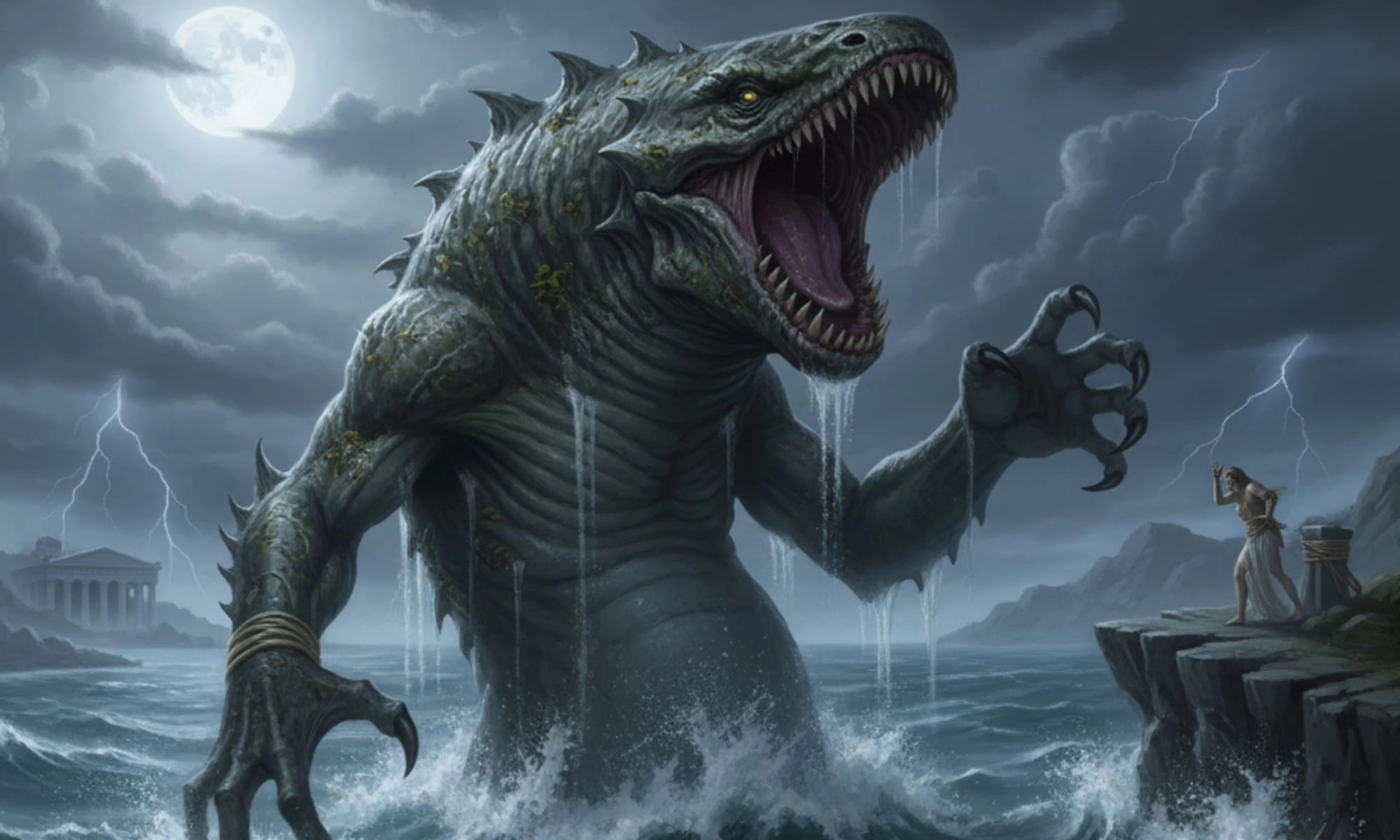
In Greek mythology, Cetus was unleashed by Poseidon when Queen Cassiopeia boasted that her daughter Andromeda was more beautiful than the Nereids, sea nymphs beloved by the god of the ocean. Enraged, Poseidon flooded the land and sent Cetus—a massive sea beast—to ravage the coast.
Descriptions of Cetus vary, but it was often imagined as a colossal serpent-dragon hybrid, its body powerful enough to shatter ships and its jaws capable of swallowing men whole.
The terror of Cetus ended only when Perseus, son of Zeus, arrived. Riding Pegasus through the skies, Perseus confronted the beast as it rose from the waves to claim Andromeda. With divine weapons and Medusa’s head, Perseus turned Cetus to stone, ending the god-sent punishment.
Cetus symbolizes the Greek belief that the sea itself was an instrument of divine justice—merciless and absolute.
Scylla – The Monster Who Was Once a Maiden
Scylla’s story begins not in horror, but in beauty.
She was once a graceful sea nymph who lived along narrow coastal straits. Sailors admired her from afar, unaware of the tragedy that would transform her into one of the deadliest monsters in Greek mythology.
According to myth, Scylla caught the attention of the sea god Glaucus. When the sorceress Circe discovered Glaucus’s love for Scylla, jealousy consumed her. In revenge, Circe poisoned the waters where Scylla bathed.
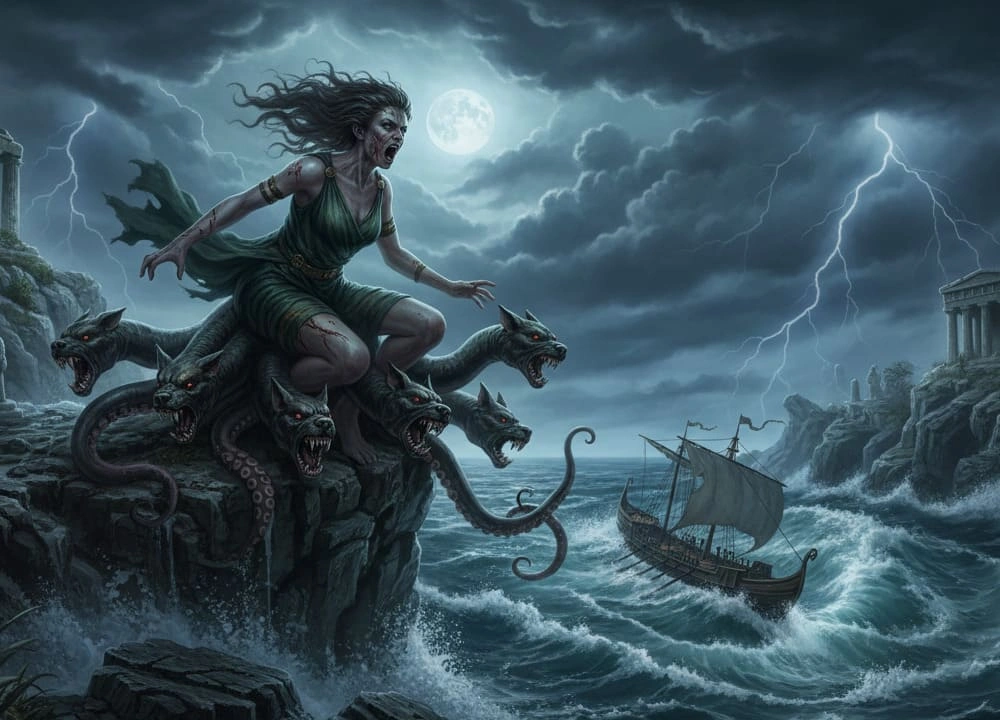
The transformation was cruel and irreversible. From Scylla’s waist grew six monstrous heads, each with snapping jaws filled with razor-sharp teeth. Though her upper body remained human, her lower form became a nightmare of writhing hunger.
Scylla took residence on jagged cliffs overlooking a narrow passage of sea. From there, she plucked sailors from passing ships, devouring them alive. Even Odysseus, famed for his cunning, could not defeat her—only escape her with sacrifice.
Scylla represents a recurring Greek theme: innocence destroyed by divine jealousy, and beauty twisted into terror.
Charybdis – The Living Whirlpool
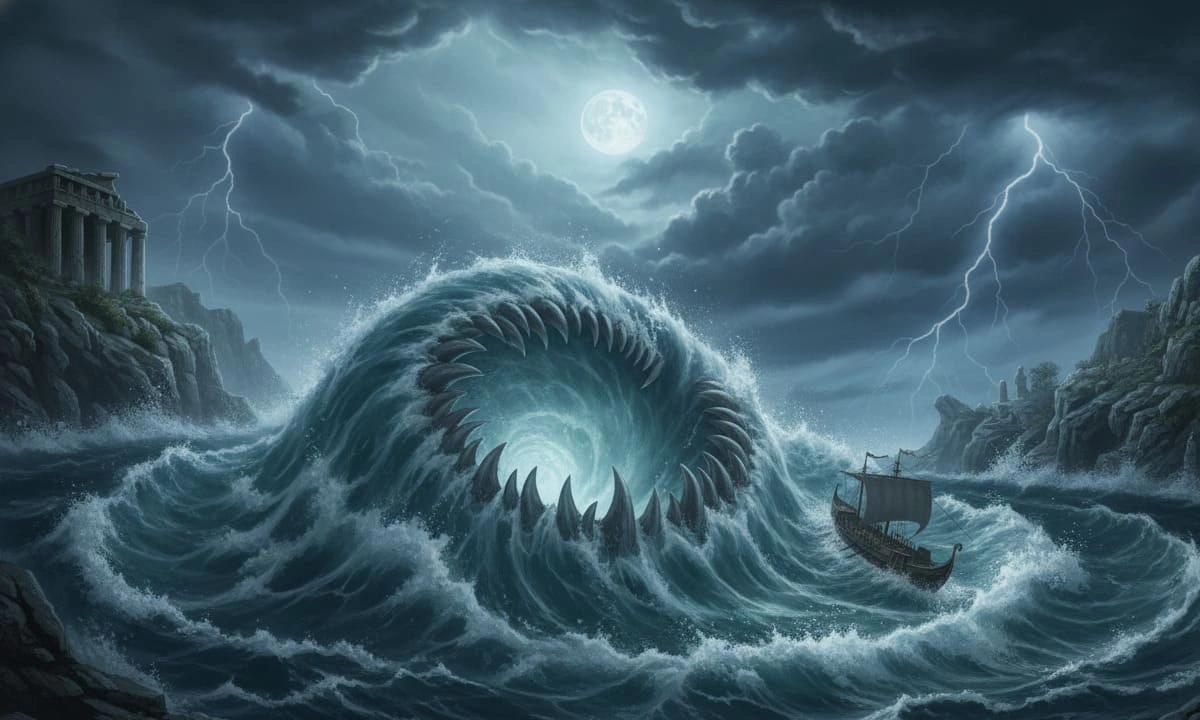
If Scylla was hunger, Charybdis was annihilation.
Charybdis was not a creature with claws or teeth, but a living force of nature. She appeared as a massive whirlpool that swallowed entire ships, crews and all, before spewing their remains back into the sea.
Once a minor sea nymph, Charybdis angered Zeus by aiding Poseidon in flooding the lands of mortals. As punishment, Zeus transformed her into an eternal curse of the ocean, condemned to endlessly consume and release the sea itself.
Three times a day, Charybdis drank in the ocean, creating a vortex so powerful that no vessel could survive its pull.
Charybdis and Scylla were said to dwell opposite each other in a narrow strait. Sailors passing through were forced to choose: lose a few men to Scylla—or risk total destruction by Charybdis.
From this myth came the phrase “between Scylla and Charybdis”, meaning a choice between two equally terrible fates.
Ichthyocentaurs – The Strange Guardians of the Sea
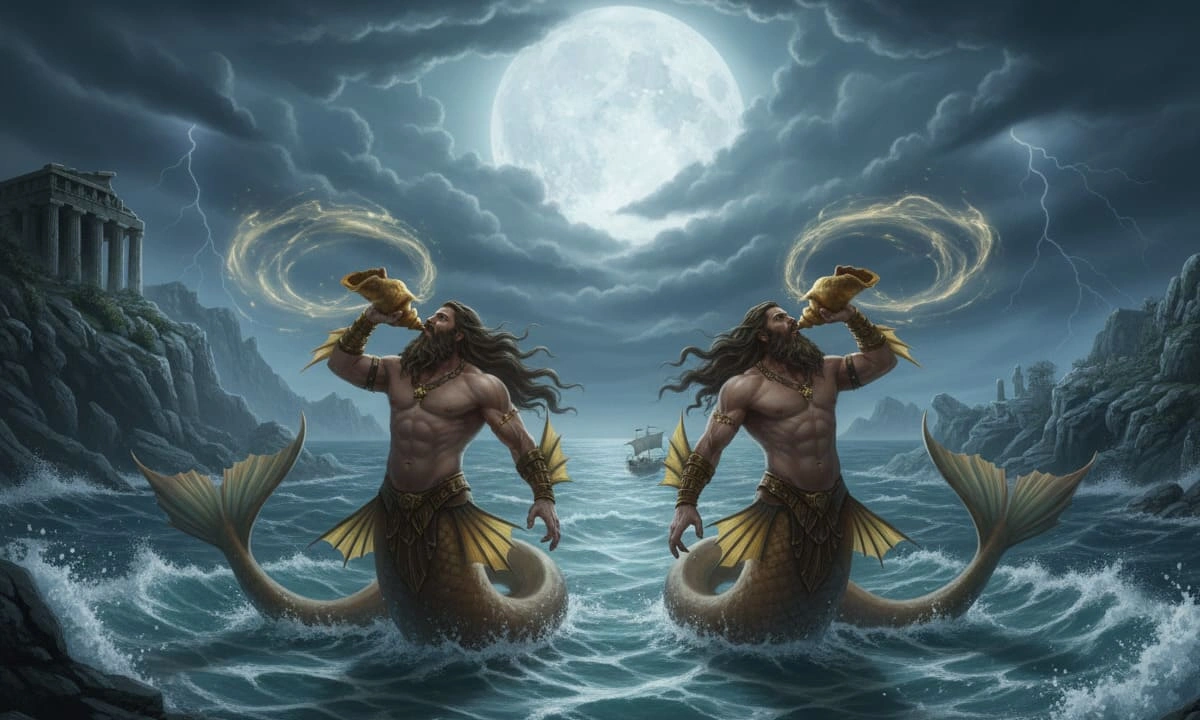
Not all ocean creatures in Greek mythology were purely monstrous. Some, like the Ichthyocentaurs, existed between beauty and strangeness.
Ichthyocentaurs were sea hybrids—half man, half horse, and half fish. Their upper bodies were human, their forequarters equine, and their lower halves ended in powerful fish tails. They were faster than ships and strong enough to battle storms.
Often depicted as attendants of sea gods, Ichthyocentaurs served Poseidon and other marine deities. Unlike Scylla or Cetus, they were not mindless destroyers but guardians of the deep, enforcing divine will upon the seas.
One of the most famous Ichthyocentaurs, Triton, is sometimes portrayed in this form, blurring the line between monster and god.
Ichthyocentaurs reflect the Greek idea that the ocean was not purely evil—it was ruled by beings who could protect or destroy depending on how mortals behaved.
Telchines – The Cursed Sea Demons
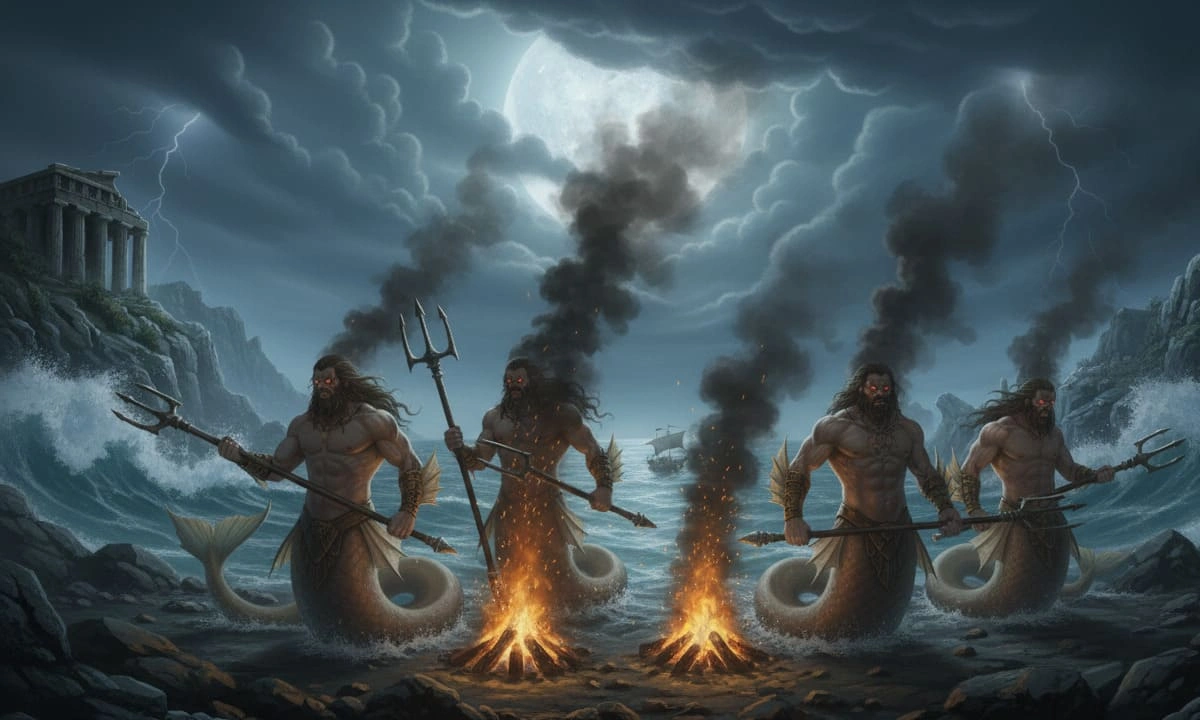
Among the darkest ocean creatures in Greek mythology were the Telchines, ancient sea demons born from the depths before the Olympian gods fully ruled the world.
The Telchines were known as master craftsmen, capable of forging divine weapons. Some myths credit them with creating Poseidon’s trident and Cronus’s sickle. Yet their talents were corrupted by envy and malice.
They were said to control destructive rains, poison crops, and curse entire regions with their evil magic. Their presence alone brought decay.
Fearing their growing power, Zeus destroyed the Telchines with a great flood or thunderbolts, wiping them from the world.
The Telchines symbolize the Greek fear of ancient, uncontrollable forces—beings too dangerous to coexist with civilization.
The Sea as a Living Enemy in Greek Mythology
What unites Cetus, Scylla, Charybdis, Ichthyocentaurs, and Telchines is not just their aquatic nature—but what they represent.
To the Greeks, the sea was:
-
A divine weapon
-
A place of exile and punishment
-
A test of heroism
-
A reminder of human fragility
Heroes could conquer cities, slay warriors, and challenge kings—but the sea answered only to the gods.
Why Sea Monsters Were So Important in Greek Myth
Unlike land monsters, sea monsters were unavoidable. One could flee a battlefield, but not a storm. One could avoid a dragon’s cave, but not a strait controlled by Scylla and Charybdis.
Sea monsters turned travel into fate and survival into sacrifice.
They were not just creatures—they were boundaries, reminding mortals that some realms were never meant to be mastered.
The Enduring Legacy of Greek Sea Monsters
Today, these monsters live on in language, literature, and popular culture. From epic poems to modern fantasy, the terror of the ancient sea still resonates.
They endure because they speak to a universal fear: the fear of the unknown, the uncontrollable, and the depths beneath us.
Frequently asked questions
What are the most famous sea monsters in Greek mythology?
Who defeated the sea monster Cetus?
What is the difference between Scylla and Charybdis?
Were Ichthyocentaurs monsters or gods?
Why were sea monsters important in Greek mythology?
Izanagi and Izanami: Creation, Death, and the Birth of the Japanese Gods
Explore the epic myth of Izanagi and Izanami, the gods who created Japan and introduced death into the world....
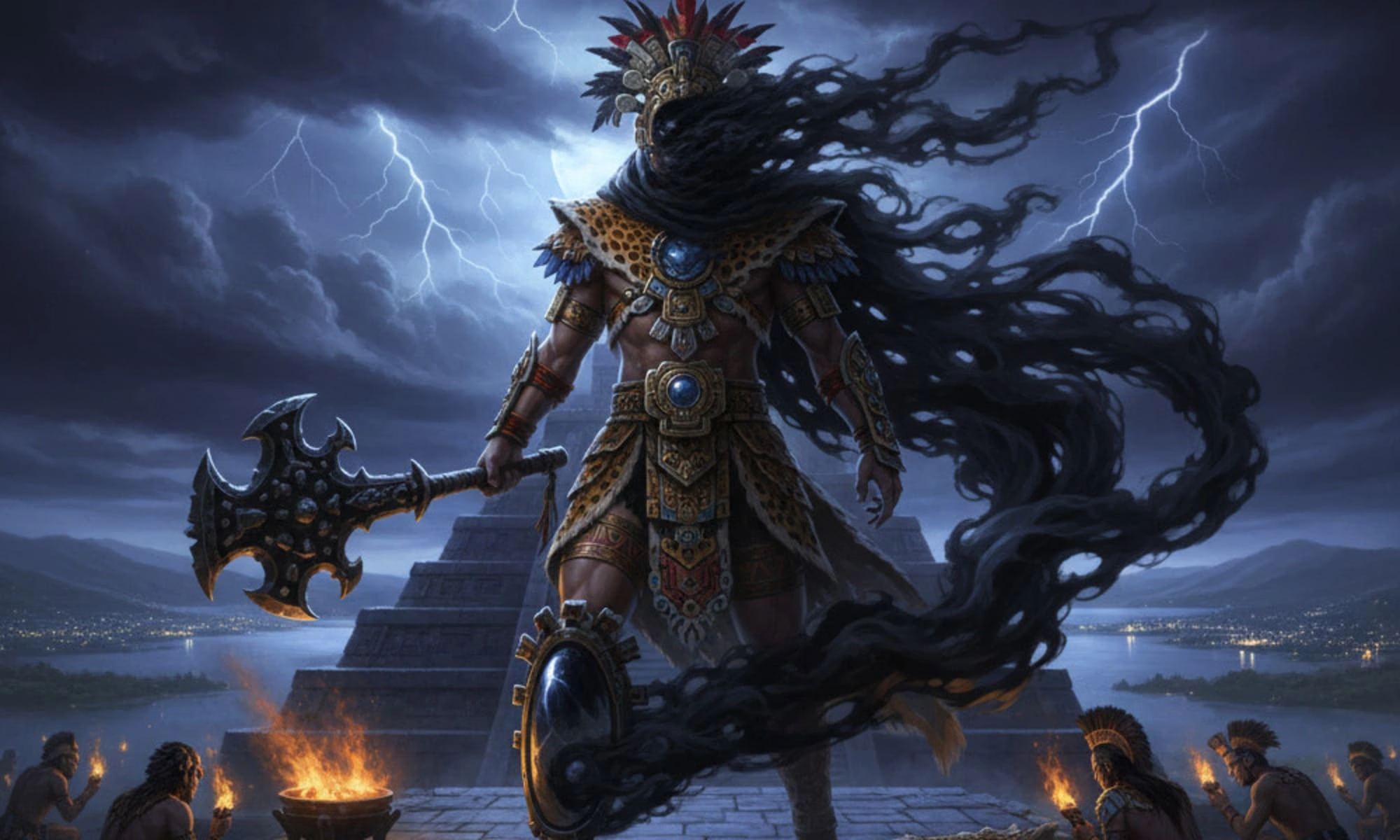
Tezcatlipoca – The Smoking Mirror and Shadow of the Gods
Discover the story of Tezcatlipoca, the Smoking Mirror of Aztec mythology — the god of darkness, fate, and transformatio...