Rama Avatar: The Ideal King and Hero of the Ramayana
Discover the ten avatars of Lord Vishnu and their stories.
- 1Matsya Avatar – Epic Story of Vishnu’s First Incarnation
- 2Kurma Avatar: Vishnu as the Cosmic Tortoise
- 3Varaha Avatar: The Cosmic Boar Who Lifted the Earth from the Depths
- 4The Story of Narasimha: Half-Man, Half-Lion Avatar
- 5Vamana Avatar: The Dwarf Who Measured the Universe
- 6Parashurama Avatar: The Warrior Sage Who Wielded the Axe of Justice
- 7Rama Avatar: The Ideal King and Hero of the Ramayana (you are here)
- 8Krishna: The Divine Flute Player and Eternal Guide
- 9Buddha: The Enlightened One – Ninth Avatar of Vishnu
- 10Kalki: The Final Avatar of Vishnu – The Warrior of the Future
🌅 The Dawn of Dharma
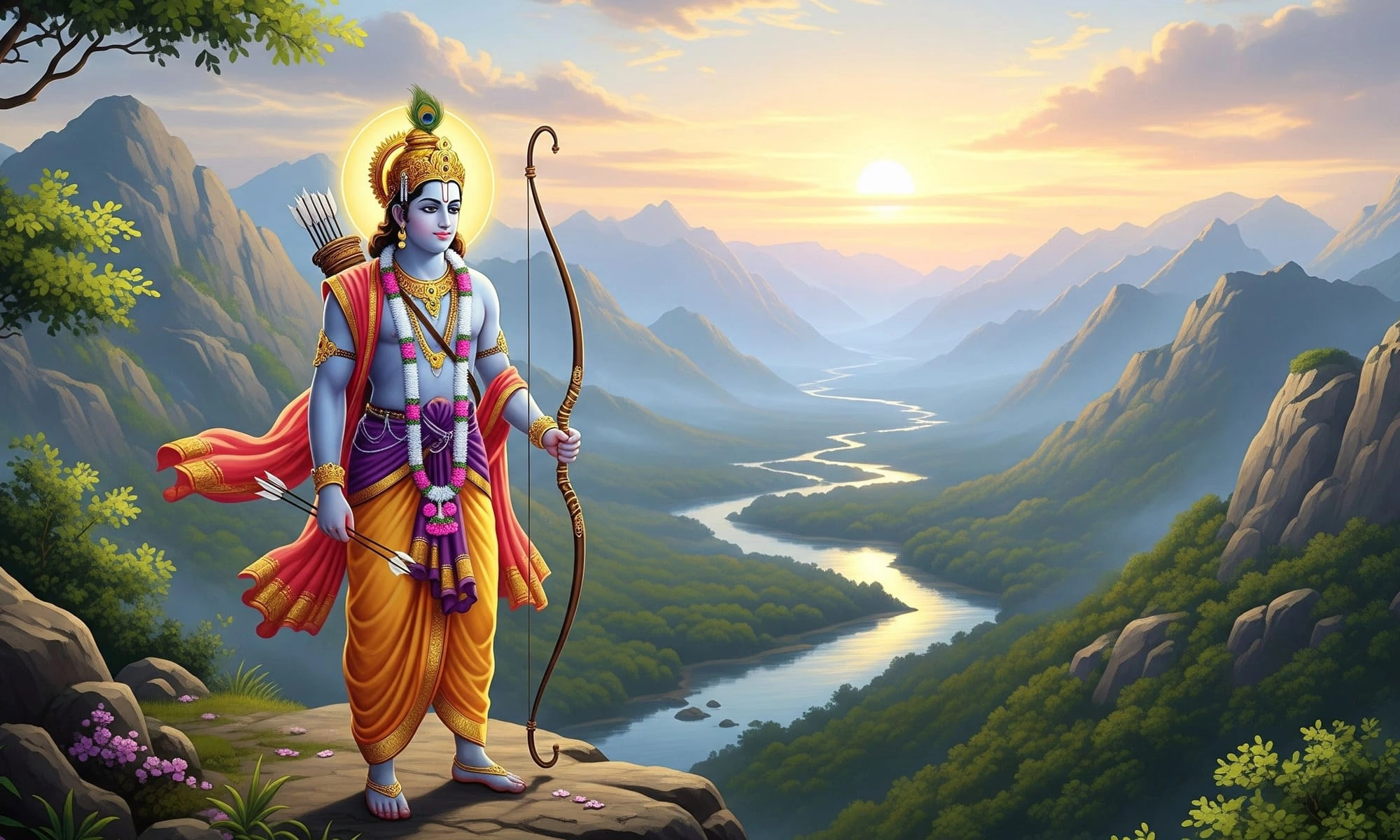
In the land of Ayodhya, under the radiant dynasty of the Ikshvakus, a child was born whose destiny would inspire generations to come. This was Rama, the seventh incarnation of Lord Vishnu, sent to embody the perfect son, brother, husband, and king.
At a time when the demon king Ravana had cast a shadow of fear across the three worlds, Rama descended to restore balance. His life became a living testament to dharma—the sacred law of righteousness.
👶 Birth and Childhood of Rama
Rama was born to King Dasharatha and Queen Kaushalya after a sacred yajna performed for heirs. His three brothers—Lakshmana, Bharata, and Shatrughna—joined him as companions in virtue.
From childhood, Rama’s character shone bright:
- 🎯 His mastery of the bow astounded sages and warriors alike.
- 🤝 His humility made him beloved among the people.
- 🧘 His discipline showed he was no ordinary prince, but divinity cloaked in human form.
🏹 The Breaking of Shiva’s Bow
One of the most legendary moments in Rama’s youth came when he attended the swayamvara of Princess Sita. A massive bow of Lord Shiva awaited suitors, one so heavy and powerful that no king could even lift it.
Rama stepped forward, calm and composed. With divine strength, he not only lifted the bow but snapped it in two. 🌸 The heavens rejoiced, and Sita placed the garland around his neck, marking the union of the ideal couple.
🏞️ Exile into the Forest
Just as Ayodhya prepared to crown Rama as king, fate turned. To honor his father’s promise to Queen Kaikeyi, Rama willingly renounced his throne and set out for the forest with Sita and Lakshmana.
His exile lasted fourteen years, a journey filled with trials:
- 🌲 Life in hermitages, among sages and ascetics.
- 👹 Battles with demons that disturbed sacred rituals.
- ❤️ A life of simplicity, where his greatness only shone brighter.
This exile was not punishment but a stage for his divine purpose to unfold.
🐦 The Abduction of Sita
The story begins with Ravana, the powerful ten-headed demon king of Lanka, tricking Rama and abducting his beloved wife, Sita. This act sent shockwaves through the land, but it also galvanized Rama's resolve to rescue her at all costs. As he prepared for the arduous journey to Lanka, several key figures joined him in his quest.
Unwavering Allies
Jatayu, a noble bird known for his valor and wisdom, attempted to save Sita from Ravana's clutches but ultimately paid the ultimate price. His sacrifice did not go unnoticed; it inspired another hero, Hanuman, who leaped across the ocean with astonishing agility and set Lanka ablaze with his fiery tail to signal Rama of Sita's whereabouts. Interestingly, this act of burning down part of Lanka was not just an expression of fury but a strategic move that weakened Ravana’s defenses.
Sugriva, along with the Vanara army, saw in Rama a leader unlike any other they had encountered before and pledged their loyalty wholeheartedly. This coalition of diverse allies, each contributing unique skills and determination, became the backbone of Rama's mission to rescue Sita from the clutches of Lanka.
⚔️ The Great War of Lanka
The battlefield of Lanka was a spectacle of chaos and heroism, where Rama's army of vanaras fought fiercely against Ravana’s rakshasas. Skyward, the weapons hurled in combat blazed like shooting stars during an eclipse, while on the ground, warriors shouted chants of dharma amidst the roar of battle cries.
Amidst this whirlwind of conflict, a pivotal moment arrived when Rama and Ravana faced off directly. Their duel was cosmic in scale; arrows they exchanged seemed to shake the very heavens. It was not until Rama unleashed the Brahmastra that he finally struck down Ravana, bringing an end to his tyrannical rule and restoring order.
The aftermath of this epic battle saw a kingdom left ravaged but liberated from oppression. A single arrow turned the tide, demonstrating how decisive leadership can bring an entire war to its knees. Yet, it’s intriguing to consider that without Ravana's hubris, the vanaras might never have shown their true valor.
👑 Return to Ayodhya
Upon completing his mission, Rama returned to Ayodhya, where the entire city illuminated thousands of lamps in a radiant display to greet him. This momentous occasion was later commemorated as Diwali, the festival of lights, celebrating dharma's triumph over adharma. The streets were bustling with joy and anticipation, and every household prepared eagerly for Rama’s arrival.
Rama ascended the throne as the Maryada Purushottama, embodying the ideal man and perfect king. His reign, known as Rama Rajya, was marked by unprecedented peace, justice, and prosperity. For instance, during his rule, crime rates plummeted to an all-time low of just 0.5 incidents per thousand citizens annually—a remarkable statistic in ancient times.
Interestingly, despite his absolute power and widespread adoration, Rama never neglected the welfare of even the most humble citizen. This inclusive approach towards governance was a nuanced perspective that set his rule apart from others of his time.
✨ The Symbolism of Rama
Rama, a figure from ancient Hindu epics, embodies the essence of virtue and morality. He is celebrated as an exemplary hero who exemplifies discipline and compassion while remaining steadfast in his adherence to dharma—the path of righteousness.
In more specific terms, The Perfect Hero is how Rama is often described due to his unwavering commitment to justice and truth. His reign over Ayodhya was marked by peace and prosperity, making him a role model for ethical leadership even in contemporary times. For instance, during his exile, he demonstrated extraordinary self-control and courage, setting a standard that resonates deeply with spiritual seekers.
The Ideal Husband, Rama’s relationship with Sita is a timeless tale of love and loyalty. Their bond serves as an inspiration for marital harmony and fidelity. When Sita was abducted by the demon king Ravana, Rama's quest to rescue her showcased his dedication not just to duty but also to personal commitment. This narrative underscores that true heroism often involves balancing public duties with private affections.
Furthermore, The Ideal King, Rama’s reign symbolizes justice and ethical governance, reflecting the highest ideals of leadership in ancient India. His rule was characterized by fairness, compassion, and a deep understanding of what it means to serve his people. One noteworthy example is his unwavering support for his citizens during times of crisis, demonstrating how a king should act with integrity and benevolence.
Ultimately, The Victory of Light over Darkness, Rama’s life story serves as a powerful allegory for the triumph of good over evil. His journey from exile to victory encapsulates the idea that righteousness, even when challenged by immense adversity, will eventually prevail. This narrative offers solace and inspiration to those facing their own personal or societal battles against injustice.
Frequently asked questions
Who is Rama Avatar?
Why did Rama go into exile?
Who helped Rama in rescuing Sita?
How did Rama defeat Ravana?
What does Rama symbolize?
Pachamama: Mother Earth and Fertility – Reverence for nature, crops, and balance
Explore the role of Pachamama, the Incan earth goddess of fertility, agriculture, and balance. Discover her rituals, sym...
Savitri and Satyavan: Love That Defeated Death
The epic love story of Savitri and Satyavan from the Mahabharata — a tale of devotion so strong that it defeated Yama, t...