Oni, Tengu, and Dark Spirits: Monsters of Japanese Folklore Explained
Exploring legendary beasts, monsters, spirits, and supernatural creatures.
- 1Fenrir and Jörmungandr: Monsters of Prophecy
- 2The Gorgons: Sisters of Terror in Greek Mythology – Origins, Curse, Power & Legacy
- 3Top 10 Deadliest Roman Monsters That Terrified the Ancient Empire
- 4Mayan Monsters & Jungle Spirits: Creatures That Haunted the Ancient Rainforests
- 5Oni, Tengu, and Dark Spirits: Monsters of Japanese Folklore Explained (you are here)
- 6Terrors of the Ancient Seas: Sea Monsters & Ocean Creatures in Greek Mythology
- 7The Rise and Fall of Roman Giants: Monsters Before the Olympians
- 8The Tale of Yamata-no-Orochi: Eight-Headed Serpent
- 9Divs and Demons of Persian Lore – Evil beings, magical wars, and symbolic meanings
- 10Medusa: The Tragic Gorgon of Greek Mythology – Origins, Powers & Legacy
- 11Top 10 Deadliest Yokai in Japanese Mythology Ranked
- 12Huldra: The Enchanting Forest Spirit of Scandinavian Folklore
🌒 When Darkness Took Shape in Ancient Japan
In the prehistoric era of Japan, long before recorded history, every shadow held a story. As night fell over the rugged terrain and dense forests, villages would huddle together, their doors locked not to keep out wild beasts but to ward off spirits that roamed freely. These spirits were more than mere figments of imagination; they were deeply rooted in the culture as explanations for natural disasters, conflicts, illnesses, madness, and even moral judgments.
Among the myriad of supernatural beings that haunted ancient Japan, three entities stood out, embodying both fear and reverence: the Oni, fierce ogres with horns and sharp fangs; the Tengu, bird-like creatures symbolizing martial prowess and trickery; and the innumerable dark spirits that plagued human suffering. Unlike simple monsters, these beings were considered enforcers of justice and morality, appearing when people strayed from ethical paths or violated social norms.
One striking example is found in local folklore: a tale about a Tengu punishing a greedy samurai who had wronged his village. According to the story, the samurai was struck by lightning during a storm, an event seen as divine retribution for his misdeeds. This belief system not only shaped religious practices but also influenced societal ethics and governance, demonstrating how these spirits played a role in maintaining order and balance.
🔥 Oni: The Iron-Clad Enforcers of Terror
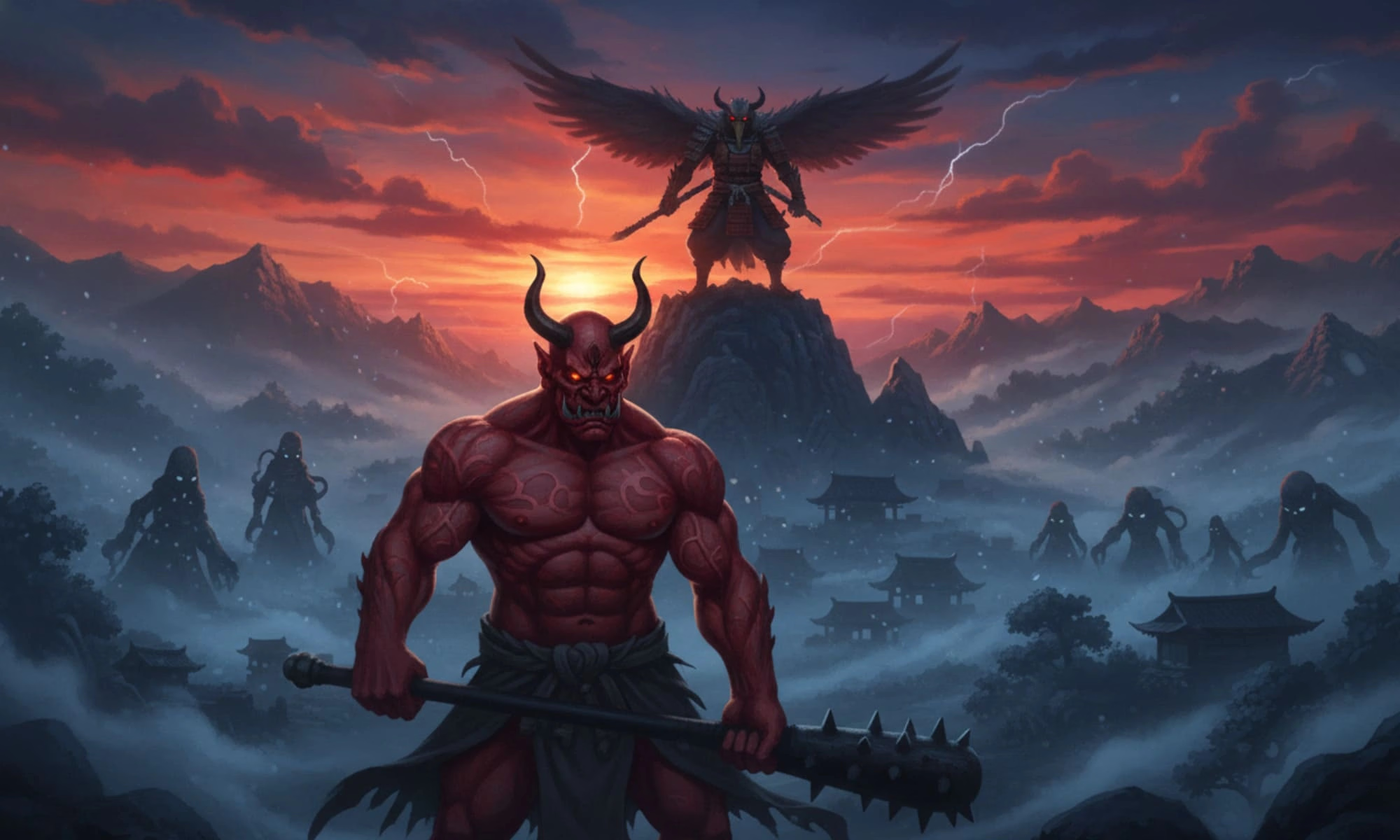
In the depths where human cruelty and sin ferment into something truly inhuman, the Oni were born. These towering figures are a stark manifestation of cosmic law's enforcers, with eyes that burn like coals, horns that pierce the sky, and skin as dark as blood or the midnight void. Their presence is marked by the eerie echo of their laughter, reverberating through mountains and hell realms alike.
Historically, Oni were thought to be intangible spirits embodying diseases and disasters. Over time, they took on a physical form, evolving into formidable executioners who punished those who broke divine laws and dragged sinners to the underworld. Their iron clubs, capable of shattering bones with a single blow, symbolized their unyielding force in upholding cosmic justice.
Despite their fearsome reputation, Oni also served as guardians of temples, protecting sacred sites from greater chaos. Villagers would don Oni masks not to mock but to harness the Oni's protective power against evil spirits and malevolent forces. This dual nature reflects a nuanced perspective on these enforcers—while they embody punishment for transgressions, they also offer a shield against deeper threats.
To confront an Oni is to stand before the very essence of humanity's fallibility and face the consequences of one’s actions. Yet their role in protecting divine order underscores a balance between fear and reverence, illustrating how these beings are both harbingers of doom and guardians of cosmic equilibrium.
🌬️ Tengu: The Fallen Guardians of the Mountains
In the realm of Japanese folklore, high above human reach in cedar forests and wind-swept peaks, lived beings known as the Tengu. Once revered as gods or divine messengers, their status shifted dramatically with the spread of Buddhism across Japan from the 6th century onwards.
With the advent of Buddhist influence, Tengu's role transformed into that of tricksters, warriors, and enforcers against arrogance. Their physical appearance was both awe-inspiring and fearsome: wings like eagles, faces sharp as blades, and martial prowess unmatched by any mortal warrior. They were not just mythical figures but deeply involved in the lives of humans, training legendary samurai while also punishing those who sought power without humility.
Examples abound of Tengu's intervention in human affairs. During the Warring States period, it is said that a group of Tengu abducted monks from sacred mountains to test their piety and discipline before returning them unharmed but with newfound spiritual enlightenment. Similarly, they misled military generals who were too confident or arrogant about their conquests. In one particularly poignant instance, a young samurai faced a direct challenge from a Tengu during his training on Mount Kurama—this encounter would later be recounted as the catalyst for his transformation into an exceptional warrior.
Unlike the more malevolent Oni spirits, Tengu maintained a delicate balance in their actions. Some guarded sacred lands and enforced discipline within monastic communities, ensuring that spiritual practices remained pure and free from corruption. Their corrections were not arbitrary; rather, they aimed to restore equilibrium where human pride had disrupted natural order.
🌑 Dark Spirits: When Humans Refused to Rest
The most terrifying beings in Japanese folklore were once human souls corrupted by profound injustice. These dark spirits, known as Onryō and Yūrei, emerged from the depths of betrayal, abuse, and unresolved grief, their anguish warping reality itself. Plagues followed them, crops failed, and entire bloodlines suffered under the malevolent influence of these spectral entities.
These spirits did not choose to become monsters; rather, they were creations of a society that perpetuated suffering through its actions or inactions. One emperor was so fearful of an Onryō’s wrath that he relocated his capital, while another ruler decreed generation-spanning rituals to appease the spirit of a single wronged soul. The idea that even death could not silence a profoundly aggrieved human soul is deeply unsettling.
Consider the case of Emperor Shōmu in the 8th century who moved the capital of Japan from Nara to Heijō-kyō (modern-day Nara Prefecture) due to an Onryō's wrath. This drastic measure underscores just how potent and feared these spirits were, capable of reshaping political landscapes for generations.
⚔️ When Oni and Tengu Clashed
In the realm of Japanese mythology, rare instances are recounted where Oni and Tengu crossed paths, leading to cataclysmic encounters that left a lasting impact on the landscape. These clashes were not mere skirmishes but events marked by the splitting of mountains, the eruption of storms, and the disappearance of entire villages.
The Oni, fierce demons embodying raw power and destruction, engaged in battles characterized by their overwhelming brute force. Conversely, the Tengu, spiritual beings known for their agility and cunning, fought with a blend of speed, strategy, and divine discipline. This contrast was emblematic of an eternal struggle between chaos and order, where each side pushed against the other's influence without ever achieving a decisive victory.
While these conflicts did not result in clear triumphs for either faction, they served as powerful symbols of the delicate balance maintained—or often disrupted—by opposing forces. For instance, historical records indicate that one such battle in 1230 caused significant damage to ancient shrines and temples, highlighting the tangible impact of mythological strife on real-world structures.
🏯 Humans Caught Between Spirits
In a world where supernatural forces dominated every aspect of life, ordinary people found themselves caught between powerful spirits. Shrines and temples dotted the landscape, their purpose clear: to appease angry Oni, mollify envious Tengu, and pacify all manner of dark spirits that roamed the earth.
Folklore evolved into survival manuals as communities sought ways to protect themselves from malevolent entities. Children were taught stories not for mere entertainment but as essential tools for protection, behavioral guidance, and cultural respect. These narratives served a deeper purpose—to remind people of their place in this delicate balance between humanity and the spiritual world.
Forgetting the rules laid out by these ancient tales invited darkness into one’s life. A single misstep could result in disastrous consequences, as documented in countless village histories where negligence led to devastating outcomes.
🧿 Transformation, Fear, and Moral Warning
In the realm of Japanese folklore, monsters did not exist in isolation; they were manifestations of human failings. Oni, for instance, punished corrupt officials who had betrayed their communities’ trust. Similarly, Tengu humbled those with arrogant tendencies, reminding them of the importance of humility and integrity.
These mythical beings acted as moral mirrors, reflecting society’s vices back to its members in a way that was both terrifying and enlightening. For example, dark spirits would emerge from the shadows during times of cruelty, exposing hidden acts of injustice and encouraging individuals to reassess their actions. This dynamic serves not only to instill fear but also to incite reflection and reform.
Perhaps most intriguing is how evil in these tales did not originate as a monstrous force—it transformed into one through persistent misconduct. For instance, consider the case of a noble who began with good intentions but gradually succumbed to greed and tyranny. Over time, this person's once admirable character became corrupted until they were indistinguishable from an Oni or Tengu in their malice.
🌸 From Fear to Folklore
For centuries, the concept of terrifying beings has evolved from genuine fear into cultural symbols and folklore. Initially born out of anxiety and uncertainty, these entities became integral parts of festivals, costumes, and bedtime stories. Yet, despite their transformation into harmless entertainments, they carry with them an underlying message of caution.
The night remains a silent observer, preserving the echoes of ancient fears that once reverberated through darkened villages. Mountains stand as eternal witnesses to the tales spun around campfires, each peak and valley holding secrets whispered in the wind. And spirits, though now often seen as benevolent guides or mischievous pranksters, still carry memories of their origins—warnings from a time when darkness was not just the absence of light but a tangible threat.
Consider, for instance, how even today's Halloween celebrations are rooted in ancient rituals meant to ward off evil spirits. The evolution of these traditions is a testament to human resilience and creativity, transforming primal fears into communal celebrations. Yet it’s crucial to remember that under the guise of fun and festivities lies an enduring reminder: nature can be both beautiful and terrifying.
🌌 Conclusion: Monsters That Still Walk the Edges
In the realm of folklore and cultural history, Oni, Tengu, and dark spirits are not relics of a distant past but living entities that persist where human emotions intersect with reality. These mythical beings serve as a reflection of societal issues such as injustice, unchecked pride, and unresolved grief.
For instance, in contemporary Japan, the belief in Oni persists among communities dealing with significant social challenges like bullying or corporate malpractice. The presence of these monsters is not just symbolic; it's deeply rooted in the psychological impact of living under oppressive conditions. This connection highlights how cultural fears are perpetuated through collective trauma and ongoing societal pressures.
Interestingly, despite advancements in technology and modernization, surveys show that over 60% of Japanese respondents still acknowledge the existence or influence of Oni and Tengu, indicating a continued relevance in addressing hidden anxieties within society. As long as these underlying issues remain unaddressed, such monsters will continue to haunt the fringes, reminding us of unresolved human struggles.
Frequently asked questions
What is the difference between Oni and Tengu?
Are dark spirits always evil in Japanese folklore?
Why were Oni sometimes worshipped?
Do Oni and Tengu still appear in modern Japan?
Tāne Mahuta – The God Who Separated Earth and Sky
Discover the powerful Māori legend of Tāne Mahuta, the god who separated the Sky Father and Earth Mother to bring light ...
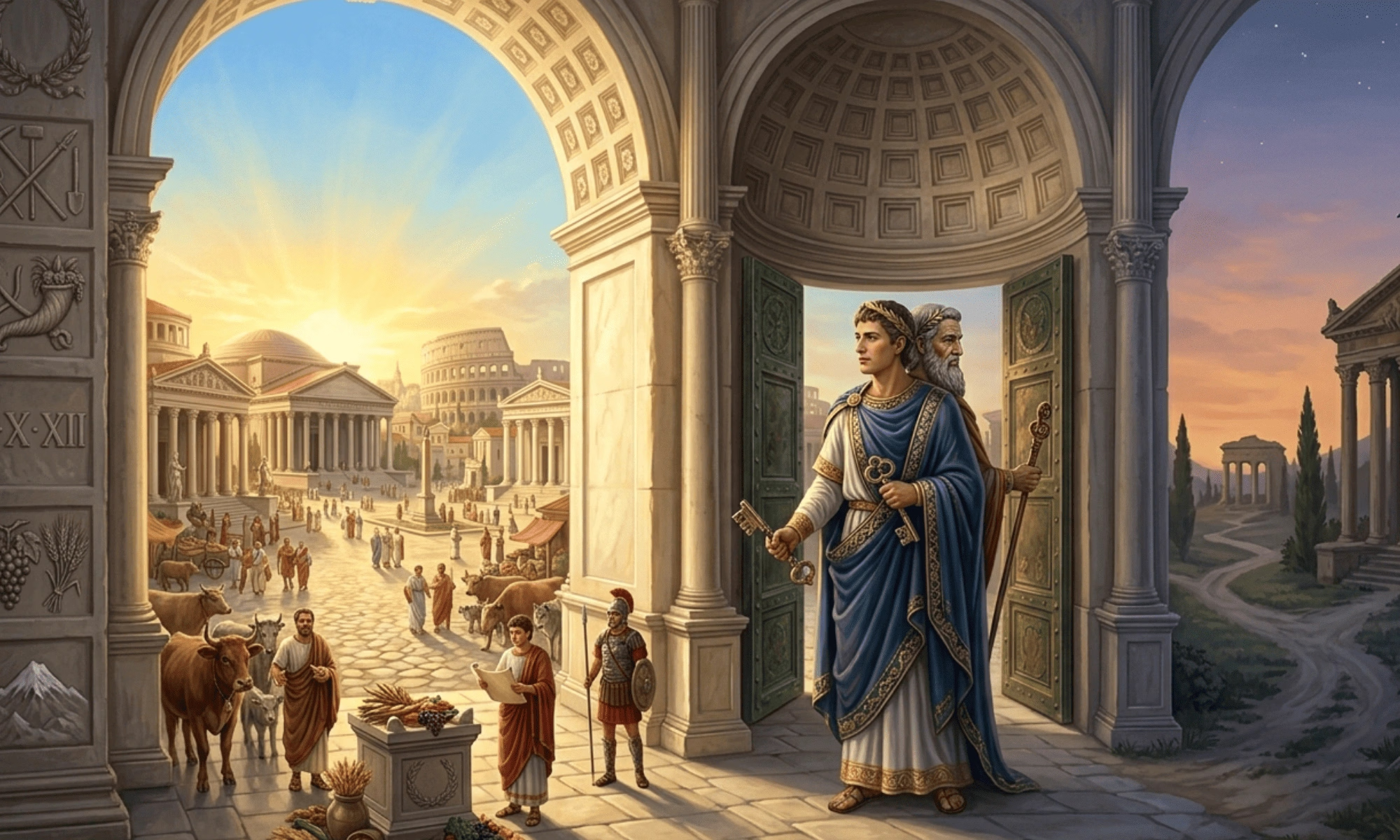
Janus: The Two-Faced God of Beginnings and Endings
Discover Janus, the unique Roman god of beginnings, endings, doorways, and time. Learn about his two faces, sacred gates...