Mars vs Ares: How the Roman God of War Became More Than a Greek Copy
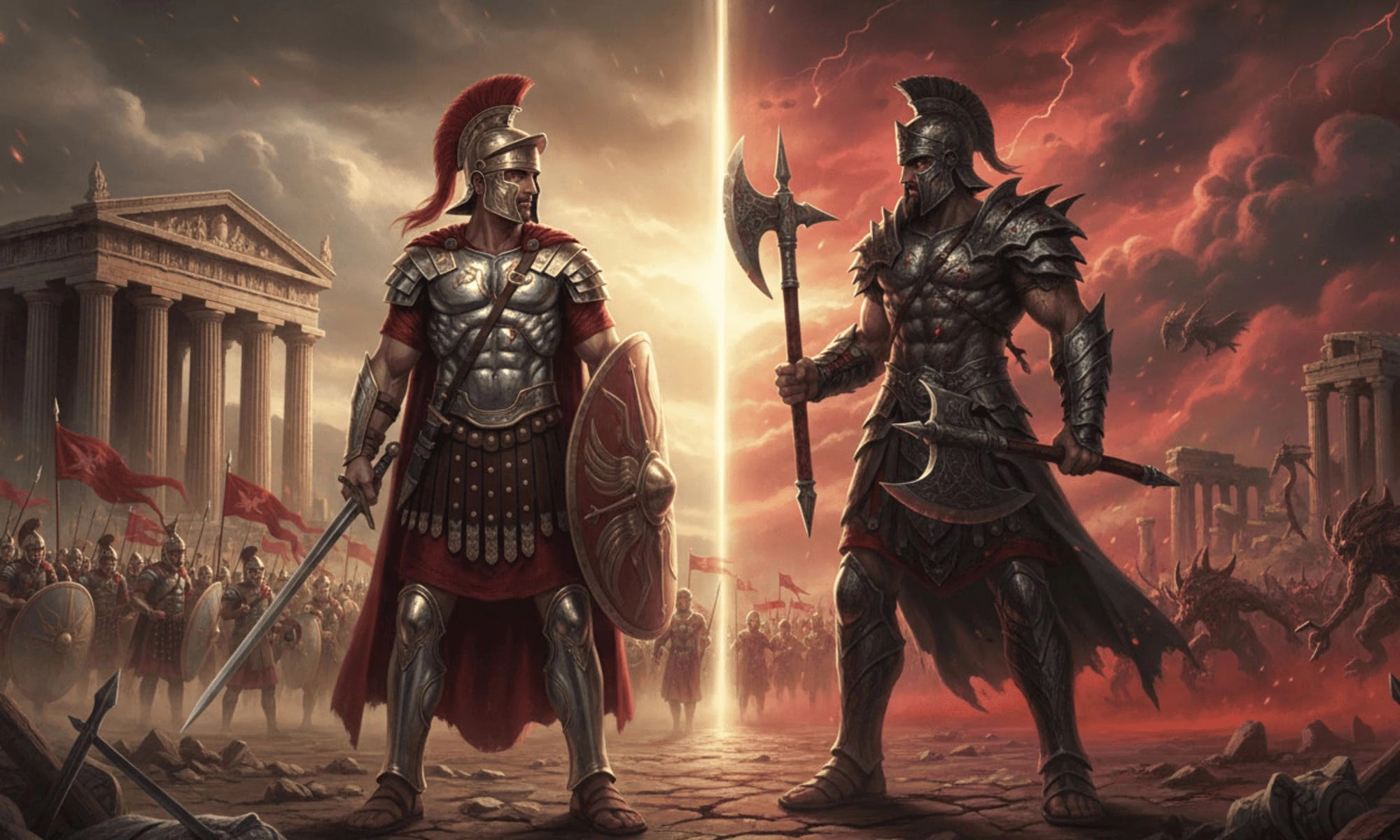
🏛️ One God, Two Very Different Wars
At first glance, Mars and Ares appear identical. Both are gods of war. Both are associated with bloodshed, violence, and battlefields soaked in death. And historically, Mars was inspired by the Greek god Ares.
But to say Mars was merely a Roman copy of Ares would be a grave misunderstanding.
Where Ares embodied chaos and rage, Mars represented discipline, duty, and the survival of civilization. This distinction reveals a profound difference between Greek and Roman values—and explains why Mars became one of Rome’s most revered gods, while Ares remained one of Greece’s most despised.
⚔️ Ares: The Greek God of Brutal Chaos
In Greek mythology, Ares was feared even by the gods. He was impulsive, violent, and driven by bloodlust rather than strategy or honor.
Ares thrived in the heat of battle—not as a general or protector, but as an embodiment of raw destruction. He delighted in screams, clashing steel, and senseless slaughter. Heroes rarely prayed to him, and cities did not honor him with great temples.
Even Zeus himself openly expressed disdain for Ares, calling him reckless and destructive. In Greek stories, Ares is often defeated, humiliated, or outwitted—most notably by Athena, who represented strategic warfare and wisdom.
Ares symbolized war without purpose.
🛡️ Mars: The Roman God Who Built an Empire
Mars was something entirely different.
To the Romans, Mars was not a god of chaos—he was a god of order through strength. War was not something to revel in; it was a necessary tool to defend borders, expand influence, and impose stability.
Mars was honored as:
-
Protector of Rome
-
Guardian of soldiers
-
Father of the Roman people
Roman legions marched under Mars’s blessing, believing discipline and unity mattered more than rage.
Mars represented controlled violence, not savagery.
🧬 Father of Rome: Mars and Romulus
One of the most important reasons Mars surpassed Ares was his role in Rome’s origin story.
According to Roman myth, Mars fathered Romulus and Remus, the twin brothers raised by a she-wolf. Romulus would later found Rome itself.
This made Mars not just a war god—but the ancestor of Rome.
Every Roman victory, conquest, and expansion reinforced Mars’s divine approval. To honor Mars was to honor Rome’s destiny.
Ares, by contrast, fathered no civilization.
Read more on Romulus and Remus: Founders of Rome
🧠 War as Philosophy: Greek vs Roman Worldviews
The contrast between Ares and Mars reflects deeper cultural differences.
Greek society valued:
-
Individual heroism
-
Cleverness and intellect
-
Glory earned through skill
Romans valued:
-
Discipline
-
Loyalty
-
Collective strength
Ares fought because he loved battle.
Mars fought because Rome required it.
🏺 How Romans Rebranded a God
When Rome absorbed Greek culture, it didn’t copy blindly—it redefined.
Ares was stripped of his excesses and reshaped into Mars:
-
Rage became resolve
-
Chaos became command
-
Bloodlust became duty
This transformation mirrored Rome’s approach to conquest itself—absorbing foreign ideas and reforging them into something Roman.
🩸 Worship and Rituals of Mars
Mars had entire months, festivals, and rituals dedicated to him. The month of March (Martius) was named after Mars and marked the beginning of the military campaigning season.
Roman priests known as the Salii performed armed dances to honor him, clashing shields and chanting ancient hymns.
Temples of Mars stood near training grounds, reinforcing his role as both divine protector and military patron.
Ares never enjoyed such widespread devotion.
🧱 Mars as Defender, Not Destroyer
Mars was also linked to agriculture and fertility—an aspect completely absent in Ares.
To Romans, war was not an end but a means to protect land, families, and harvests. Mars ensured peace through strength, making him both destroyer and guardian.
This duality elevated Mars beyond a mere battle god.
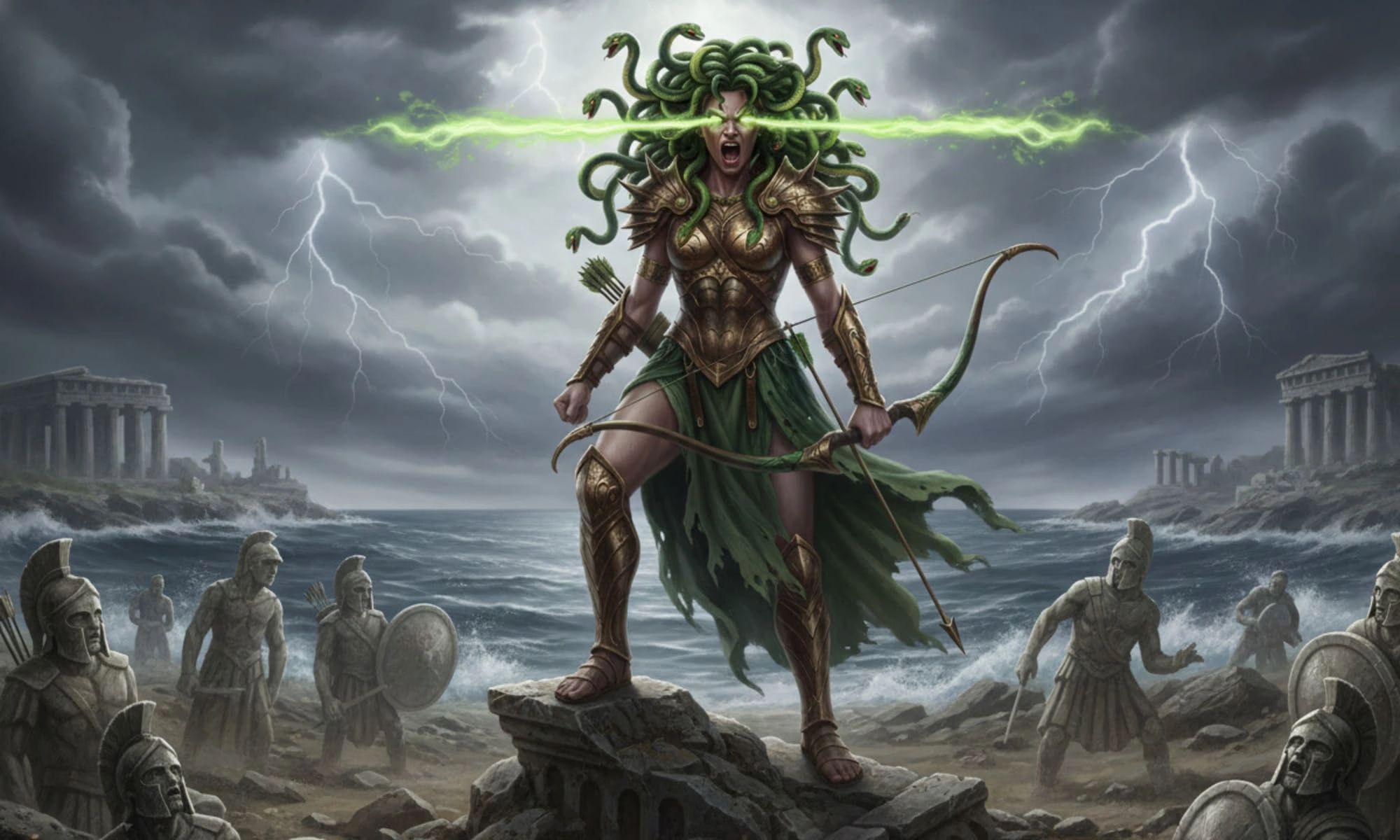
🐍 Monsters and War: Mars vs Ares in Myth
Ares often fled when faced with greater danger. In myths involving monsters or divine conflict, he was wounded, tricked, or overpowered.
Mars, however, was depicted as steadfast. Roman myth emphasized endurance and resilience over spectacle.
Even when borrowing Greek stories, Roman writers adjusted portrayals to maintain Mars’s dignity and authority.
🧠 Why Romans Loved Mars and Greeks Feared Ares
The difference wasn’t power—it was purpose.
Ares:
-
Represented fear
-
Thrived on suffering
-
Brought no stability
Mars:
-
Represented order
-
Protected civilization
-
Justified war
Rome built temples to Mars. Greece built warnings around Ares.
🌍 Legacy in Modern Culture
Today, Mars’s influence is everywhere:
-
The planet Mars
-
Military terminology
-
Western concepts of honorable warfare
Ares appears mainly as a villain or cautionary figure.
History remembered the god who built, not the one who destroyed.
🏛️ Conclusion: More Than a Copy
Mars was never meant to replace Ares—he was meant to correct him.
By transforming a god of chaos into a symbol of discipline and destiny, Rome reshaped mythology to match its empire. Mars wasn’t just a war god—he was the embodiment of Rome’s belief that strength must serve order.
That is why Mars endured, while Ares faded into infamy.
Frequently asked questions
Is Mars just a Roman version of Ares?
Why was Mars more important than Ares?
Why did Greeks dislike Ares?
What does Mars symbolize?

The Morrígan: Goddess of War and Fate
Discover the Morrígan, the Celtic goddess of war, death, and destiny. Explore her role as a shape-shifter, prophetess, a...
Krishna: The Divine Flute Player and Eternal Guide
Explore the epic story of Krishna, the eighth avatar of Vishnu. From his playful childhood in Vrindavan to his role in t...