Krishna: The Divine Flute Player and Eternal Guide
Discover the ten avatars of Lord Vishnu and their stories.
- 1Matsya Avatar – Epic Story of Vishnu’s First Incarnation
- 2Kurma Avatar: Vishnu as the Cosmic Tortoise
- 3Varaha Avatar: The Cosmic Boar Who Lifted the Earth from the Depths
- 4The Story of Narasimha: Half-Man, Half-Lion Avatar
- 5Vamana Avatar: The Dwarf Who Measured the Universe
- 6Parashurama Avatar: The Warrior Sage Who Wielded the Axe of Justice
- 7Rama Avatar: The Ideal King and Hero of the Ramayana
- 8Krishna: The Divine Flute Player and Eternal Guide (you are here)
- 9Buddha: The Enlightened One – Ninth Avatar of Vishnu
- 10Kalki: The Final Avatar of Vishnu – The Warrior of the Future
Krishna: The Eighth Avatar of Vishnu
🎶🌌 Among all the avatars of Vishnu, none shines brighter in the hearts of millions than Krishna—the mischievous cowherd, the eternal lover, and the supreme guide. His life is a symphony of love, wisdom, and divine play that goes beyond mere battles and victories. From his playful pranks in Vrindavan to his profound teachings on Kurukshetra's battlefield, Krishna’s presence dances across cosmic balance.
His childhood is filled with tales of butter thefts and flute melodies that charm even the gods themselves. Yet it is his strategic brilliance at Kurukshetra that cements his legacy as a revered figure in Hindu philosophy. In the Mahabharata, Krishna's guidance to Arjuna during the war exemplifies not just military strategy but also ethical dilemmas faced by leaders today.
Interestingly, despite being an avatar of Vishnu, Krishna’s human-like qualities make him more relatable. His love for Radha and his playful nature with the gopis highlight a softer side rarely seen in other avatars, making his divine teachings feel approachable and personal. This unique blend of divinity and humanity has ensured that Krishna's influence transcends religious boundaries.
🌟 The Prophecy of Krishna’s Birth
In the kingdom of Mathura, darkness loomed large as King Kamsa ruled with iron-fisted tyranny. Devaki and Vasudeva, victims of Kamsa's paranoia and greed, found themselves behind bars after their marriage. A prophecy declared that Devaki’s eighth child would bring about Kamsa’s downfall.
Fearing this destiny, Kamsa acted ruthlessly, slaying each newborn child as they came into the world. However, fate has a way of breaking free from chains. On the night Krishna was born, miraculous events unfolded: prison doors unlocked on their own, guards fell asleep, and Vasudeva seized his chance to carry baby Krishna across the Yamuna River to safety in Gokul.
As Vasudeva made his perilous journey through the floodwaters, nature itself seemed to bend to his will—the river parted ways with each step he took. Serpents emerged from the water, protecting the divine infant as celestial beings celebrated this miraculous event. The world had received its savior amidst a whirlwind of supernatural occurrences.
🐄 Krishna in Gokul: The Playful Cowherd
In the idyllic village of Gokul, Krishna's childhood was shaped by the nurturing love of Yashoda and Nanda. His days were filled with simple joys that have been immortalized through countless tales. One such story is Makhan Chor (Butter Thief), where young Krishna would stealthily enter homes to pilfer butter, his innocent face lighting up with mischief and delight.
- Makhan Chor: With a playful grin, he'd evade everyone's watchful eyes, leaving behind laughter and the unmistakable aroma of fresh butter.
This spirit of mischief continued as Krishna grew older. During the time when villagers faced the wrath of Indra, Krishna demonstrated an extraordinary act of courage and compassion. He lifted the colossal Govardhan Hill, cradling it on his tiny finger to shield the cattle and inhabitants from the furious deity's onslaught.
The Triumph of Innocence
These narratives are not just tales of a child's adventures; they symbolize deeper themes. For instance, when Krishna danced atop the hoods of the venomous serpent Kaliya, he banished the fear that had plagued the Yamuna River and restored peace to its waters. Each story reflects how faith can overcome adversity and how innocence often triumphs over arrogance.
In Gokul, every act of play was imbued with a profound message, showing that even in the face of daunting challenges, small acts of bravery and kindness hold transformative power. This is evident in how Krishna's lifting of Govardhan Hill not only saved lives but also redefined the relationship between humans and nature.
💖 Krishna and Radha: The Eternal Love
Krishna’s flute, soft and enchanting, drew every soul in Vrindavan. None was more captivated than Radha, his eternal beloved. Their love transcended earthly bonds to become a symbol of the soul's yearning for the divine. In the Rasa Lila, Krishna multiplied himself to dance with each gopi, yet Radha remained his heart’s true center.
The beauty of their relationship lies in its timeless nature, inspiring generations of poets, saints, and seekers alike. For instance, the 16th-century saint Mira Bai wrote extensively about her devotion to Krishna, drawing parallels between her own love and Radha's eternal bond with Krishna. This enduring tale not only celebrates divine love but also illustrates the profound impact of spiritual connection on human emotion and creativity.
In many ways, the story of Krishna and Radha challenges our conventional understanding of romantic relationships by highlighting a deeper, more transcendent form of love that goes beyond physical or temporal boundaries. Theirs is a timeless tale that continues to resonate with people seeking meaning in their own lives.
⚔️ Krishna, the Strategist and Kingmaker
Krishna's early life was marked by both playfulness and strategic brilliance. In Mathura, he faced Kamsa, his childhood nemesis who had attempted to eliminate him from birth. With swift action, Krishna leaped onto the stage where Kamsa awaited, seizing control and removing the tyrant from power in a single move.
Following this pivotal moment, Krishna founded Dwarka, a city that stood as a symbol of peace and prosperity for centuries. As a statesman, he navigated complex political landscapes with wisdom and pragmatism. His counsel was sought after by kings and warriors alike who turned to him for guidance in matters ranging from diplomacy to battle strategies.
One notable example is Krishna's intervention during the Mahabharata war, where his diplomatic prowess averted potential conflicts and shaped outcomes that otherwise might have led to catastrophic bloodshed. By blending compassion with resolve, he ensured that stability prevailed over chaos, making him not just a kingmaker but a guardian of peace.
🕉️ The Bhagavad Gita: Krishna’s Eternal Wisdom
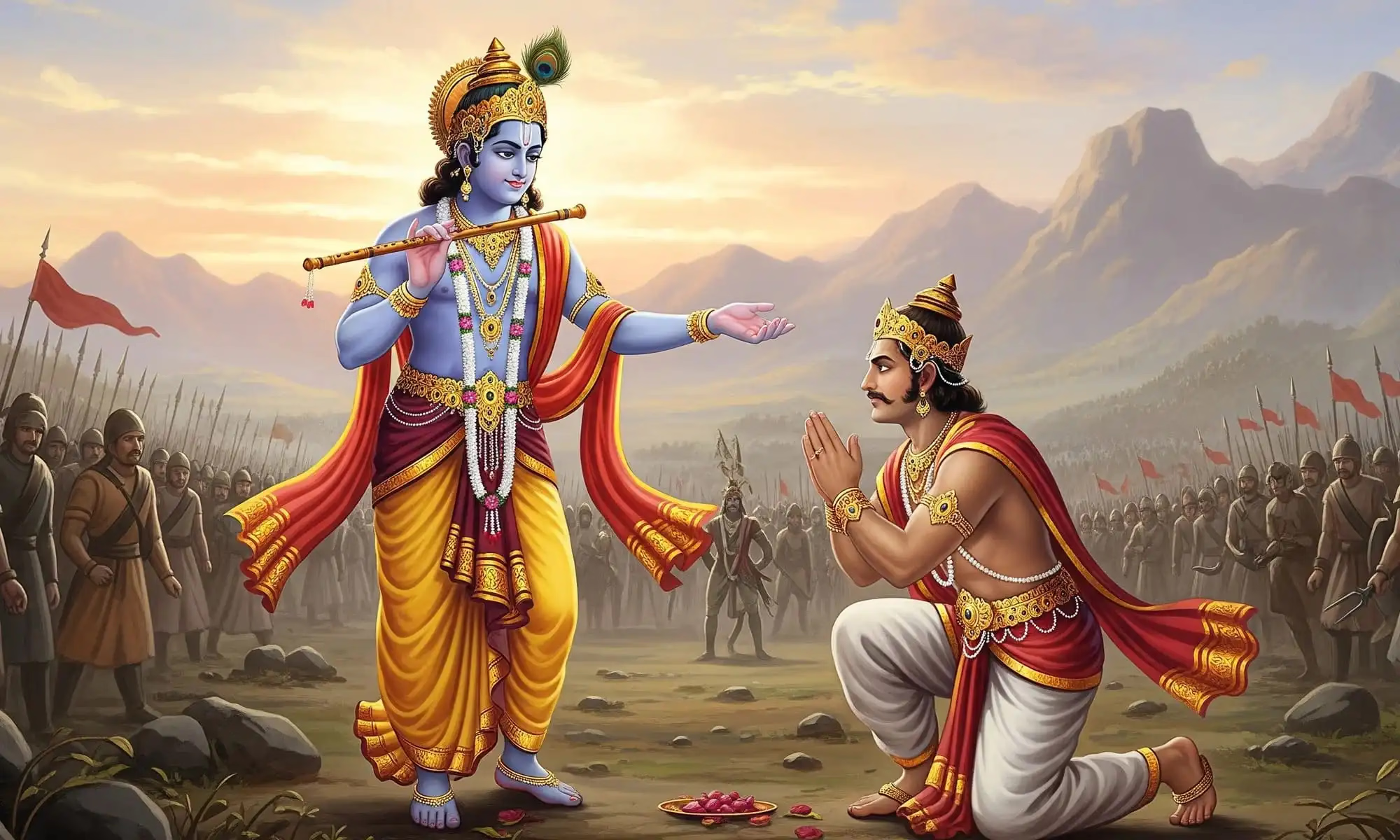
The pivotal moment in the narrative of Krishna's avatar was during the Kurukshetra war, a critical juncture where the Mahabharata reaches its climax. As Arjuna stood indecisive, facing his kin on the battlefield, it was Krishna who stepped forward as charioteer to offer profound guidance. In that moment of existential crisis, Krishna imparted timeless wisdom: life is eternal, the soul persists beyond death, and duty must be performed without selfish desires or fear of consequences.
Among these teachings, one stands out for its enduring relevance—Krishna’s insistence on performing duties selflessly, an ethos that transcends time. This philosophy has been a beacon to countless individuals navigating moral dilemmas in their personal lives and professional careers. For instance, consider a modern-day corporate leader faced with a decision between profit and ethical standards; Krishna's wisdom reminds them of the importance of acting according to higher principles, not just personal gain.
The Bhagavad Gita’s influence extends far beyond Hindu tradition, resonating across cultures as a universal text on ethics and morality. It is estimated that over 100 translations exist in English alone, underscoring its widespread appeal. By emphasizing the importance of divine will and unwavering faith, Krishna not only addresses Arjuna's dilemma but also speaks to our inherent need for purpose and direction.
🌍 Krishna as the Supreme Being
In Hindu tradition, Krishna stands out among avatars for his explicit revelation of divine form. On the battlefield of Kurukshetra, he showed Arjuna the cosmic vision known as the Vishvarupa—an awe-inspiring manifestation that revealed an infinite universe within himself. This moment was not merely a spiritual experience but a profound assertion of Krishna's identity as the absolute truth and source of all existence.
The Vishvarupa is more than just a symbolic representation; it is a concrete demonstration of Krishna’s omnipotence and omniscience, highlighting his role beyond being a mere mortal warrior in the Mahabharata. By revealing this form to Arjuna, Krishna underscored his status as the supreme godhead, embodying the essence of Vishnu's power and wisdom.
One striking example is how Krishna’s cosmic form inspired countless devotees across millennia. In a temple dedicated to him in Mathura, pilgrims are often moved by the intricate carvings depicting the Vishvarupa, each detail telling a story of divine majesty and infinite creation. This visual narrative not only educates but deeply connects worshippers with the spiritual essence of Krishna.
🕊️ Legacy of Krishna
Krishna’s enduring legacy transcends time as he remains a multifaceted figure in Hindu mythology, embodying joy and sorrow, love and war, playfulness and profound wisdom. His life story is not confined to ancient texts; it continues to resonate deeply within the hearts of millions of devotees around the world.
One emblematic symbol of Krishna’s divine presence is his flute, which speaks volumes about his call to the soul. The haunting melody of the flute awakens a sense of spiritual longing and devotion in those who hear it, inviting listeners to transcend worldly concerns and seek deeper connections with the divine. For instance, many devotees recount how hearing traditional bhajans played on the flute during religious ceremonies can evoke an intense emotional response.
The tale of Radha and Krishna showcases a profound human longing that finds eternal fulfillment in divine grace. Their love story is not just romantic but serves as a metaphor for spiritual union with the divine, illustrating that true joy and fulfillment come from aligning personal desires with divine will. This enduring narrative has inspired countless works of art and literature, reflecting its timeless appeal.
Finally, Krishna’s role in the epic battle at Kurukshetra teaches us about duty (dharma) versus personal attachment—a lesson that holds relevance even today. By choosing to fulfill his dharma despite intense familial bonds, Krishna exemplifies moral courage and selflessness. For example, during times of political or ethical dilemmas, individuals often face choices between what is personally comfortable and what aligns with greater righteousness.
Frequently asked questions
Who was Krishna in Hindu mythology?
What is the significance of Krishna's flute?
What is the Bhagavad Gita and Krishna's role in it?
Is Krishna considered a god or an avatar?
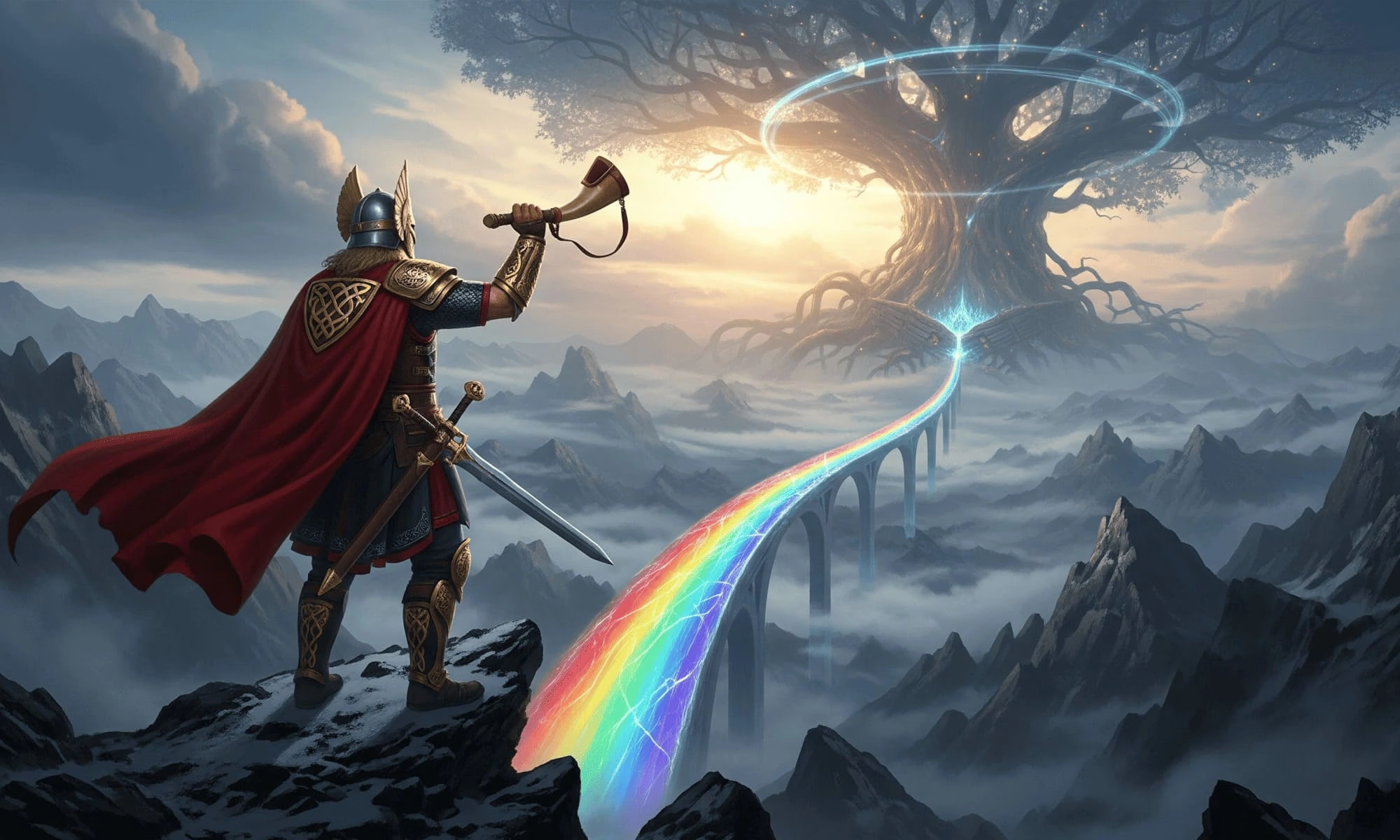
Heimdall: Guardian of the Bifrost – Sentinel of the Gods
Discover Heimdall, the watchful guardian of the Bifrost bridge in Norse mythology. Learn about his role, powers, and des...
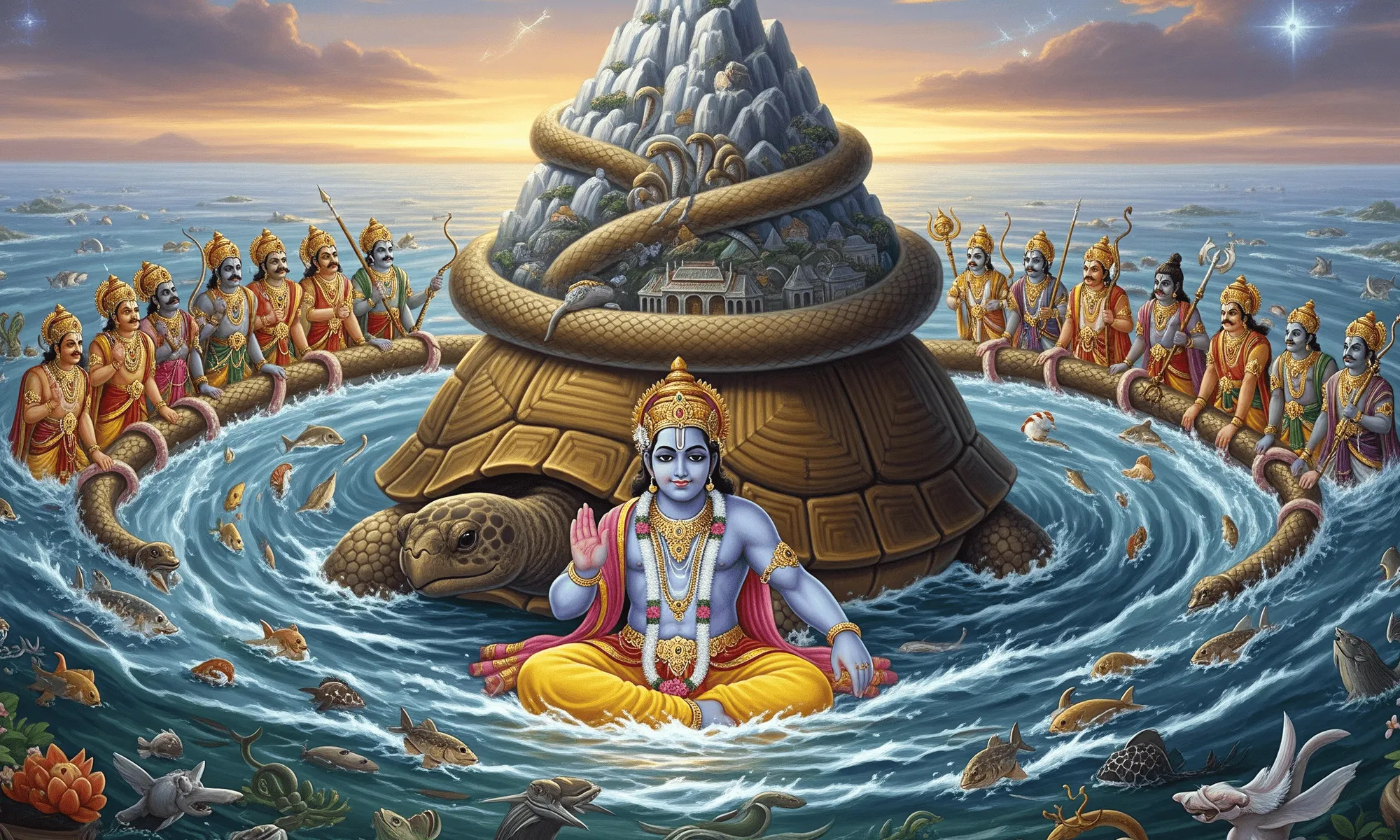
Kurma Avatar: Vishnu as the Cosmic Tortoise
Discover the story of Kurma, the tortoise incarnation of Vishnu, who stabilized the cosmic mountain during the Samudra M...