Itzamna: The Sky God of Knowledge in Maya Mythology
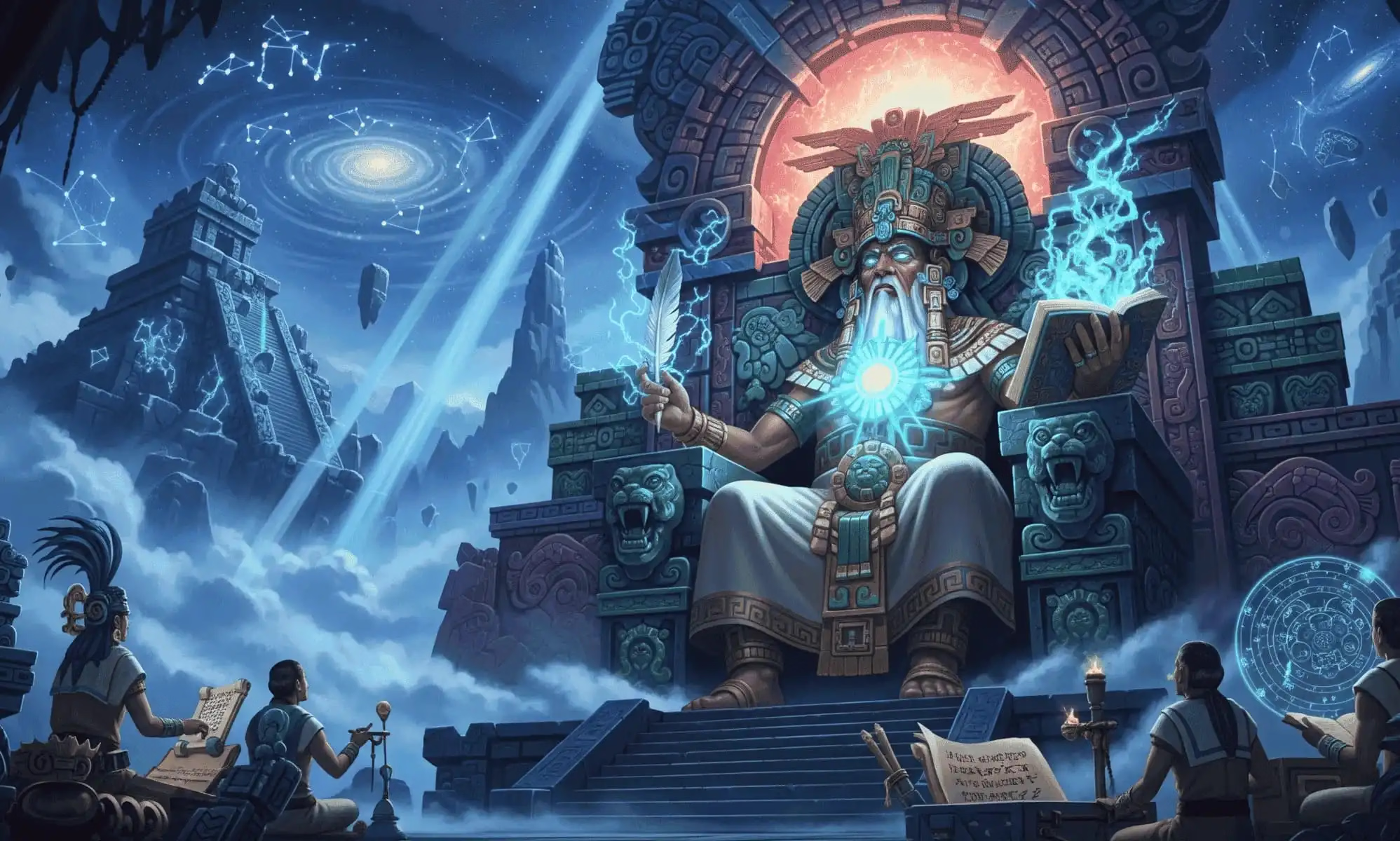
In the intricate tapestry of ancient Maya mythology, Itzamna stands out as an unparalleled deity, revered for his roles as the Sky God and Lord of Knowledge. Renowned for his profound wisdom and civilization-building prowess, Itzamna was not merely a divine figure but also a patron of healing practices, astronomical observations, and agricultural advancements. His influence extended beyond earthly affairs; he was deeply connected to the cosmic order that structured Mayan beliefs.
Itzamna's multifaceted nature made him a central figure in Maya society. As both a creator god and an educator, Itzamna bridged the divine and human realms, providing guidance on how to interpret celestial phenomena and manage daily life. For instance, he taught priests how to read the stars for agricultural timing, illustrating his role as a teacher of critical survival skills.
Interestingly, despite his immense power and authority, Itzamna was often depicted in more approachable terms, showing his benevolent side towards commoners rather than just ruling from afar. This dual aspect—majestic yet accessible—underscores the deep integration of divine wisdom into everyday life among the Maya.
🪐 Origins and Identity of Itzamna
Itzamna, a central figure in Maya mythology, is often depicted as an aged, wise man characterized by his large forehead and toothless smile. This portrayal underscores his role not just as a deity but also as a sage figure who imparts wisdom to the people. As the son of Hunab Ku, the creator god, Itzamna's divine lineage places him at the heart of cosmic creation narratives. His direct connection to the cosmos is further emphasized by his identification with the sun god Kinich Ahau, highlighting his significance in celestial cycles and seasonal changes.
Itzamna’s mythological profile includes a marital bond with Ix Chel, the goddess of fertility, childbirth, and medicine. This union underscores the interconnectedness between divine rulership and life-sustaining forces in Mayan culture. For instance, Itzamna is often invoked during planting seasons due to his influence over agricultural success through his relationship with Ix Chel. Interestingly, despite being a male deity, Itzamna’s association with fertility and agriculture reveals the complexity of gender roles within Maya religious practices.
Among the various aspects of Itzamna’s identity, one particularly intriguing detail is his role as the patron god of writing and learning. This aspect aligns with his wisdom and knowledge but also suggests a broader cultural value placed on literacy and education in ancient Mayan society. In fact, it has been estimated that nearly 10 percent of all known Maya inscriptions reference Itzamna by name, underscoring the deity’s enduring importance across different periods of Mayan history.
📜 Patron of Knowledge and Writing
The Maya revered Itzamna as the bringer of writing, books, and the calendar, pivotal elements in their cultural development. This god's invention of hieroglyphic writing allowed for the preservation of history, rituals, and knowledge, a critical step that transformed oral traditions into enduring written records.
- Itzamna’s teachings extended beyond writing to include astronomy. His expertise enabled the Maya to track time with remarkable accuracy, mapping celestial events crucial for agriculture and religious observances. For instance, the precise calculation of Venus's cycles was instrumental in setting festival dates and guiding ceremonial practices.
- In addition to astronomical skills, Itzamna oversaw the creation of codices—sacred books filled with rituals, prophecies, and wisdom that were central to Maya culture. These texts served as repositories for both religious doctrines and practical knowledge, ensuring a cohesive cultural narrative across generations.
Through Itzamna’s divine influence, sacred knowledge was not merely preserved but imbued with divine authority, reinforcing the role of the elite in maintaining societal structures through religious and scholarly endeavors. This integration of cosmic understanding with spiritual leadership underscores how deeply intertwined religious beliefs were with daily life and governance.
🌾 Agriculture and Healing
The Maya civilization revered Itzamna as a figure of profound wisdom, guiding the practical aspects of daily life that sustained their communities. He was intimately involved in the planting of maize, a crop so vital to Mayan society that it symbolized sustenance and prosperity.
Itzamna’s influence extended beyond agriculture into medicine and healing rituals. Alongside his consort Ix Chel, he blessed these practices, ensuring that healers could effectively treat ailments and maintain the health of their people. This divine partnership underscored the interconnectedness of nature's cycles with human welfare.
Maize cultivation and medicinal practices were just two facets of Itzamna’s patronage. He was also honored by scribes who recorded the sacred texts, prophecies, and historical accounts that shaped Mayan culture. For instance, during a particularly harsh drought, farmers turned to Itzamna for guidance on planting cycles and seed selection, illustrating how deeply he was integrated into their daily lives.
Interestingly, despite his role in agriculture and healing, Itzamna's wisdom also encompassed the arts of writing and divination. This holistic approach reflects a nuanced understanding that health and prosperity are not merely biological but also spiritual and cultural phenomena.
🌌 Itzamna as a Cosmic Deity
In the vast expanse of the Maya cosmos, Itzamna transcended earthly concerns to become a deity of celestial significance. His dominion over the sky and heavens was not merely symbolic but deeply rooted in the natural rhythms observed by ancient Maya astronomers.
- Itzamna's connection to the zenith of the sun underscored his role as a guardian of celestial order, ensuring that the sun's path across the sky maintained balance and harmony. This alignment with solar cycles was crucial for agricultural planning and ritual timing in Mayan society.
- In addition to regulating celestial phenomena, Itzamna served as a bridge between earthly beings and divine entities. This intermediary role allowed him to mediate communications and convey important cosmic knowledge to humans, fostering a deep spiritual connection with the heavens.
- Perhaps most fascinatingly, certain myths depict Itzamna as an architect of the universe itself, setting celestial laws in motion that continue to govern the cosmos. For instance, he is believed to have positioned constellations and established the pathways for planets, demonstrating his profound influence over celestial mechanics.
Through these attributes, Itzamna encapsulates a nuanced understanding of cosmic governance and spiritual guidance within Mayan cosmology, illustrating how ancient cultures intertwined natural phenomena with divine mythologies to explain their world.
🏛️ Worship and Legacy
Itzamna was a pivotal figure in Maya religion and culture, embodying both spiritual leadership and civilizational advancement. He was especially revered in major temples across the Maya world, but his patronage of Izamal stands out as particularly significant. At this city, Itzamna’s influence was so profound that he became synonymous with the community's identity and destiny.
Devotees celebrated Itzamna through various rituals designed to honor him and seek his favor. Offerings of food, incense, and prayers filled these ceremonies, each element aimed at fostering wisdom and prosperity among worshippers. These practices were not merely religious but deeply intertwined with the daily lives and aspirations of Maya communities.
Interestingly, Itzamna’s role as a civilizing deity was not unique to the Maya civilization; similar figures existed in other ancient cultures. For instance, Thoth from Egyptian mythology and Odin from Norse traditions share comparable functions, reflecting universal human themes of cultural development and spiritual guidance. Even as the Maya empire faded into history, the legacy of Itzamna endured through myths, archaeological sites, and ongoing sacred practices that continue to inspire reverence today.
🌟 Symbolism of Itzamna
The Maya deity Itzamna embodies profound wisdom and knowledge as his primary attribute, acting as a patron to scribes, priests, and scholars. This role underscores the importance of education and intellectual pursuits within Mayan society, reflecting the belief that knowledge is a sacred gift from the divine realm.
Creator and Guide
In addition to his role as a keeper of wisdom, Itzamna plays an essential part in creation myths, responsible for shaping the universe and guiding human civilization. His influence extends beyond mere creation; he also maintains cosmic order, ensuring that celestial bodies align correctly and natural cycles proceed smoothly.
During a particularly severe drought, Mayan priests invoked Itzamna's blessings to restore balance to the environment, emphasizing his control over nature’s rhythms and agricultural fertility.
Moreover, Itzamna is revered for his healing powers and ability to nurture life. He oversees aspects such as fertility, medicinal practices, and the cycle of maize, symbolizing sustenance and renewal. For instance, Mayan healers often invoke him during rituals designed to cure illnesses or ensure a bountiful harvest.
Interestingly, despite his multifaceted nature, Itzamna's role as a divine guide remains paramount. This overarching function ties together knowledge, spirituality, and cosmic harmony, illustrating how the Maya viewed these elements as interconnected and essential for societal well-being.
Frequently asked questions
Who is Itzamna in Maya mythology?
What was Itzamna’s role in Maya civilization?
Where was Itzamna worshiped?
Amazing unknown secrets about Meghnath from Ramayan
In the epic of Ramayana by Valmiki, he himself mentions Meghnath as one of the most powerful character. Meghnath is rega...

The Raven and the Creation of Light
Explore the legend of Raven in Native American mythology. Discover how the clever trickster brought light to the world, ...