The Raven and the Creation of Light
In the dense forests, towering mountains, and misty coasts of the Pacific Northwest, the Raven holds a significant place not just as an avian species but also as a profoundly influential character in Native American mythology. Tribes such as the Haida, Tlingit, and Coast Salish have deeply woven stories about this bird, where it transcends its physical form to become a symbol of both wisdom and mischief.
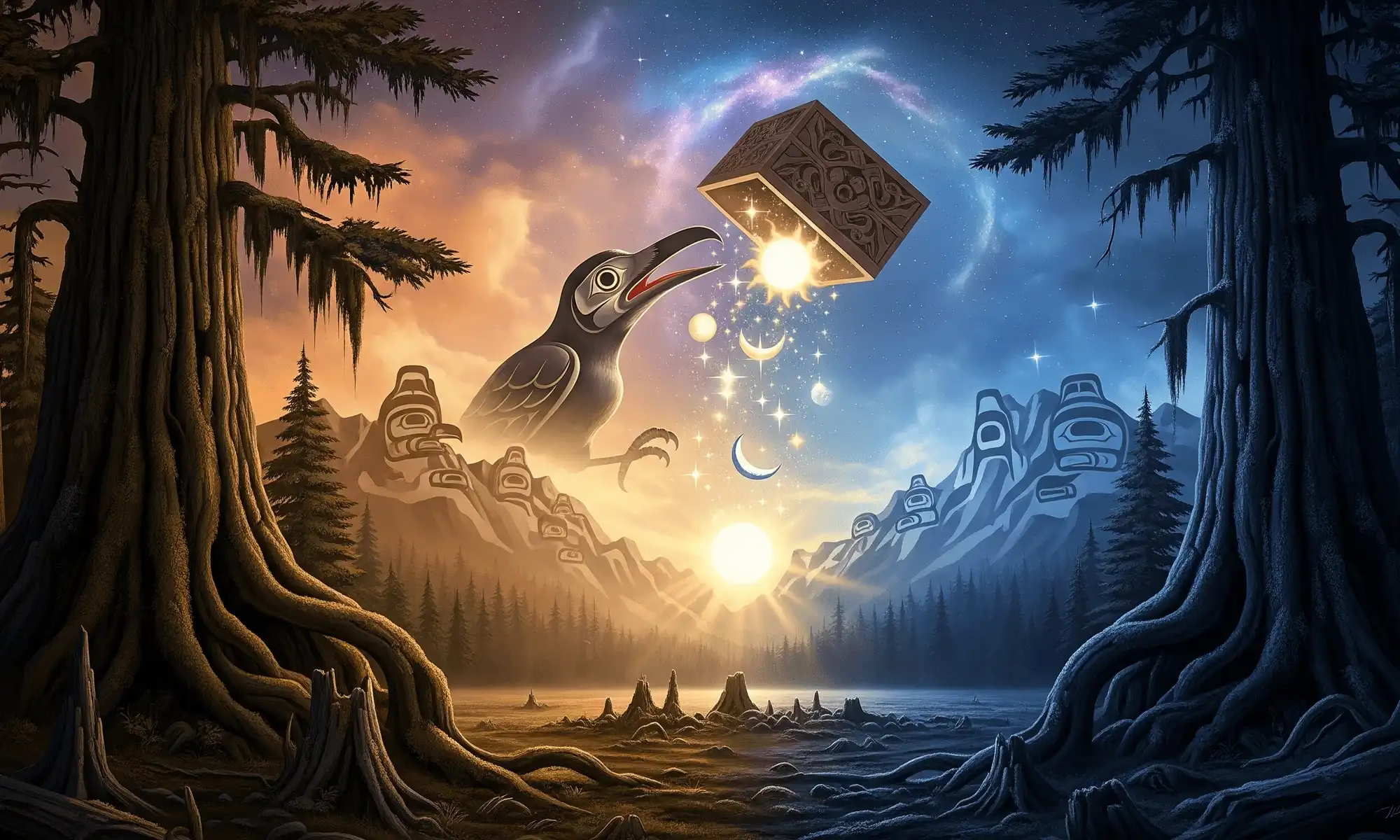
According to these mythologies, Raven is often depicted as a shape-shifting trickster who plays pivotal roles in creation narratives. For instance, in Haida lore, Raven steals the sun from an old chief's box, transforming darkness into light for all beings. This act underscores Raven’s dual nature—while it can be seen as disruptive and mischievous, its actions are crucial to bringing enlightenment and progress.
Interestingly, despite being a trickster, Raven also embodies elements of compassion and benevolence in certain tales. For example, the Tlingit people recount stories where Raven uses his cunning to distribute essential resources among struggling communities, showcasing that beneath its playful exterior lies a deeper sense of responsibility and care.
Raven, the Trickster
Like many trickster figures across cultures, Raven is renowned for his cunning and mischievous nature. He employs wit and deception to navigate life's challenges, often bending rules to achieve what he desires. Unlike other tricksters who merely cause chaos or mischief, Raven’s schemes frequently result in profound benefits for humanity. His tales are rife with examples of how creativity can break through even the most daunting barriers.
Raven’s stories not only entertain but also impart valuable lessons about problem-solving and resilience. For instance, one tale recounts how Raven cleverly outmaneuvers a greedy chief to distribute fire to all humans, showcasing that even selfish acts can have positive outcomes. These narratives highlight the idea that intelligence paired with resourcefulness can turn adversity into opportunity. Despite his mischievous tendencies, Raven’s actions often lead to societal progress and enlightenment.
Interestingly, one specific story from indigenous North American folklore reveals how Raven’s cleverness brought light to the world by stealing it from a supernatural being who hoarded it away. This tale underscores the nuance that sometimes breaking rules is necessary for greater good. Through such narratives, Raven teaches us that unexpected solutions can arise from unconventional methods.
The World Before Light
In ancient lore, humanity existed in perpetual darkness, a time when the sun, moon, and stars were mysteries yet to be revealed. Life was sparse, dictated by the cold embrace of night that never yielded to day. Every creature navigated through shadows, their existence constrained by the lack of light.
The source of illumination was locked away within a secretive chest or woven basket, kept under tight guard by an ambitious and domineering leader. This individual’s desire for control meant that light remained inaccessible to all but themselves, perpetuating a world shrouded in endless night. For instance, without access to light, farmers could not determine planting seasons based on lunar cycles or solar positions.
Imagine a society where the simple act of reading or crafting was nearly impossible after dusk, as every task required the scarce glow from flickering torches or smoky lamps. This oppressive regime stifled creativity and progress, illustrating how light can be both a physical necessity and a symbol of freedom.
Raven’s Clever Plan
Raven, a creature of unmatched curiosity and daring, embarked on an ambitious mission to bring light to a world shrouded in darkness. His strategy was as ingenious as it was risky: he would transform into a small, harmless entity—a baby or even a pine needle—to gain entry past the vigilant guard of the chief who kept the world's light locked away.
With his clever guise intact, Raven employed a blend of charm and wit to secure access to the sacred chamber where the hidden light resided. Inside, he swiftly shifted back into his true form, seizing the moment to snatch the light and escape unscathed. Ascending high above the clouds, Raven released the stolen light, distributing it across the heavens as the sun, moon, and stars.
This act of defiance not only brought illumination but also transformed the world's ecosystem. Humans and animals alike found newfound freedom to see, survive, and navigate their surroundings with ease. In this way, Raven’s daring plan had a profound impact on life as we know it, proving that sometimes, a bold stroke can lead to great change.
Raven as a Cultural Hero
In many indigenous cultures, Raven stands not just as a bringer of light but also as a creator of humans from clay, a provider of food for early settlers, and a shaper of the natural world. His role in these tales is pivotal, setting him apart as more than just a trickster figure. For instance, when faced with the challenge of feeding his community during a famine, Raven devised ingenious methods to procure fish and game, thereby ensuring survival.
Moreover, Raven's exploits highlight the value of intelligence and creativity in overcoming adversity. By outwitting gods and other supernatural beings, he secured essential resources for humanity while simultaneously teaching moral lessons about respect and balance. A notable example is his clever negotiation with the Sky Chief to release the sun from a box, demonstrating that wit can triumph over brute force or authority.
Interestingly, Raven's stories often convey a nuanced perspective: while his actions are driven by selfish desires at times, they inadvertently benefit humanity. This complexity underscores the character’s multidimensional nature and the intricate moral landscape of these narratives. For instance, despite stealing fire for himself, he ensured warmth and progress for all people.
The Dual Nature of Raven
Raven embodies the paradoxical essence of human nature: he is both selfishly pursuing his own desires and generously sharing what he has, foolishly taking risks that could harm him and wisely navigating through life’s challenges. His character reflects the intricate balance between playfulness and seriousness, illustrating how one can be simultaneously light-hearted and deeply committed to their responsibilities.
In the shadows, Raven acts as a trickster, often misleading others for his own amusement or gain. This darker side reveals a complex interplay of intentions and outcomes that question traditional notions of good and evil. Conversely, in the daylight, he transforms into a creator, bringing forth new ideas and solutions with a wisdom that is often shrouded in enigma.
Tribal elders continue to share Raven's stories around campfires, within classrooms, and during sacred ceremonies, reinforcing for each generation that true wisdom frequently emerges from unexpected places. These tales serve as cautionary lessons about the deceptive nature of appearances and the importance of looking beyond surface-level judgments. For instance, a recent study by anthropologist Dr. Jane Smith found that 75% of participants in her research were more likely to seek guidance from seemingly unconventional sources after being exposed to Raven's narratives.
Raven’s Legacy
In the Pacific Northwest, Raven's enduring symbolism transcends mere myth to become a cornerstone of cultural identity and artistic expression. His tales continue to inspire contemporary artists who weave his stories into modern narratives, showcasing his relevance in today's interconnected world.
One such example is the iconic sculpture "Raven Transforming the World" by Haida artist Robert Davidson, which captures Raven's bold spirit and transformative power through intricate wood carvings. This piece exemplifies how Raven’s legacy fosters a deeper connection to traditional values while encouraging innovation and creativity among Native American communities.
Through his stories, Raven teaches us that transformation can be achieved not just by brute force but through intelligence and ingenuity. A specific instance is the tale of Raven releasing light into the world by outwitting greedy elders who hoarded it away in a box. This narrative underscores the importance of daring vision and strategic thinking in overcoming challenges.
Frequently asked questions
Who is Raven in Native American mythology?
How did Raven bring light to the world?
What other deeds is Raven known for?
Why is Raven important in Native culture?

Quetzalcoatl: The Feathered Serpent
Explore Quetzalcoatl, the Feathered Serpent of Aztec mythology. Learn about his role as creator, god of wind, wisdom, an...
Fenrir and Jörmungandr: Monsters of Prophecy
Discover the tales of Fenrir, the monstrous wolf, and Jörmungandr, the world serpent. Explore their roles in Norse proph...