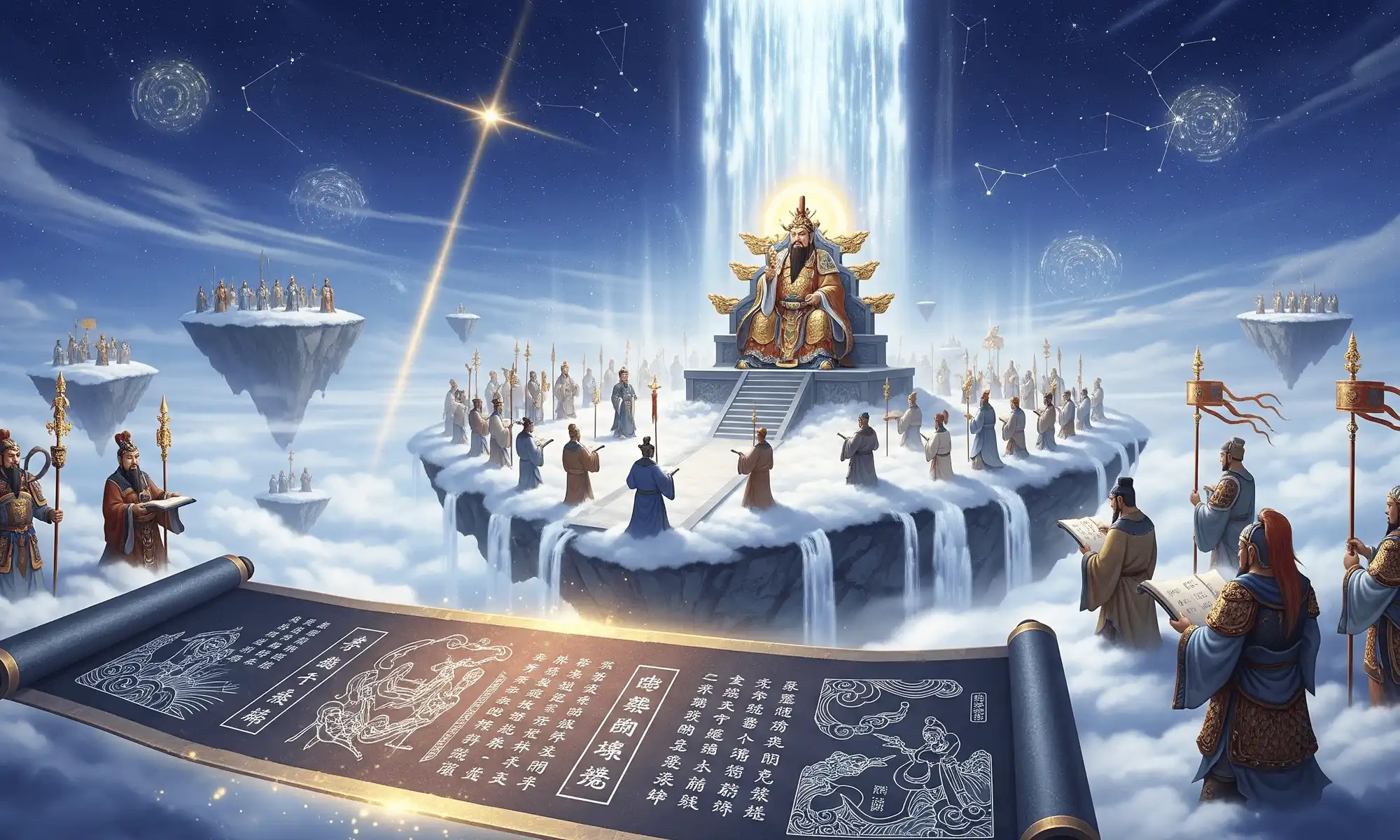
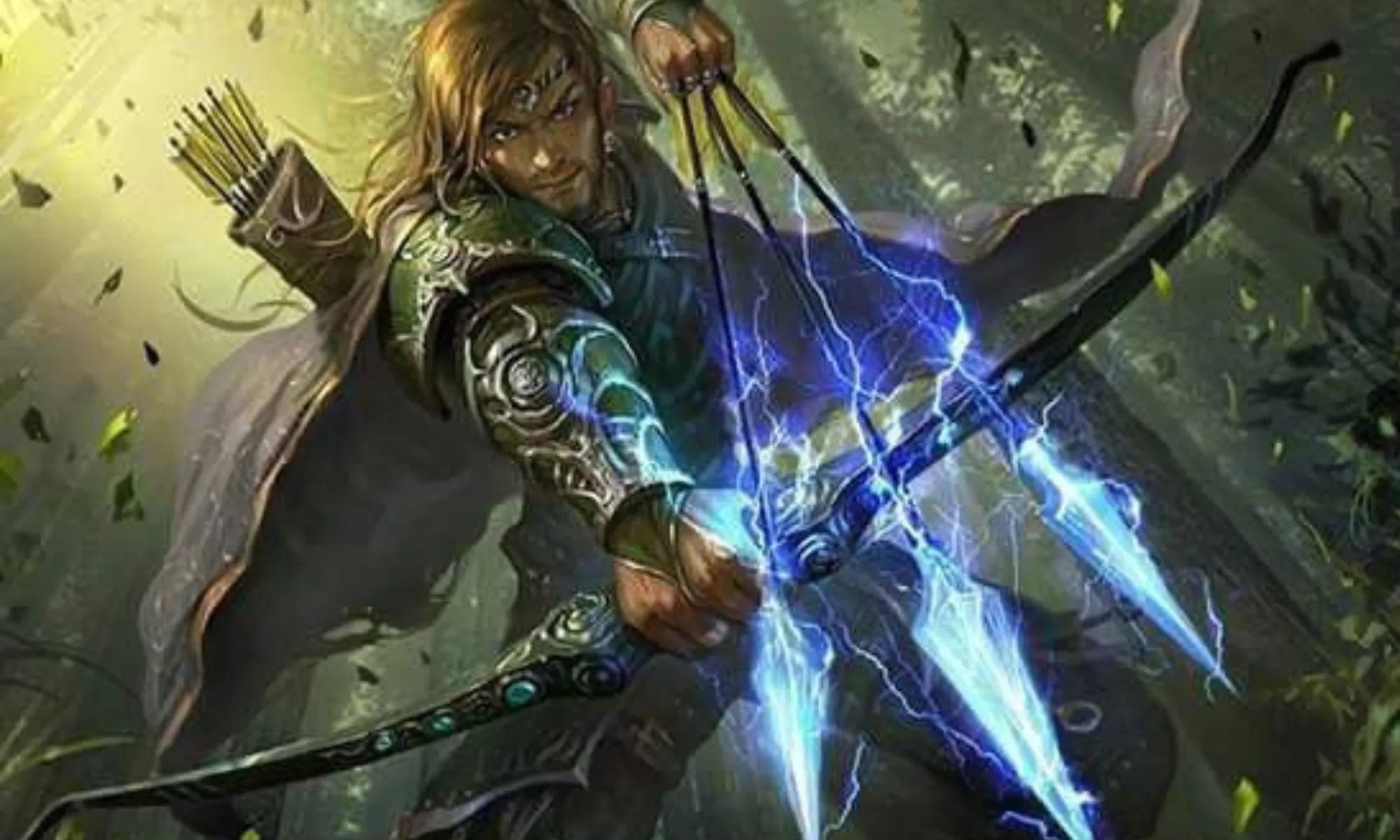
The Popol Vuh: Creation and the Hero Twins

How different cultures explained the origins of the world, gods, and humanity.
- 1Pangu and the Creation of the World: Chinese Myth of Beginnings
- 2Enki and the Creation Myths: Wisdom, Water, and Life
- 3The Popol Vuh: Creation and the Hero Twins (you are here)
- 4Nuwa: Creator of Humanity and Restorer of Balance
- 5The Creation of the World: Atum, Ra, and the Ennead
- 6The Great Spirit and the Creation of Man – Narratives of harmony and balance
- 7The Zulu Creation Story – Unkulunkulu and the birth of the first people
- 8Viracocha – The Great Creator
The Popol Vuh stands out among world mythology's sacred texts as a mesmerizing epic of the Maya people, known colloquially as the "Book of the People." This text intricately intertwines narratives that delve into creation myths and divine challenges, while highlighting heroic deeds and cosmic order. Central to these tales is the story of Hunahpu and Xbalanque, twin heroes who dared to enter the underworld of Xibalba, where they faced off against cunning gods, ultimately altering humanity's fate.
The Popol Vuh isn't just a collection of myths; it serves as a profound philosophical guide and ritualistic text for the ancient Maya. By studying its pages, scholars uncover not only religious practices but also the cultural identity and societal norms that shaped Mayan civilization. For instance, the narrative's emphasis on duality and balance reflects the intricate worldview prevalent in Mayan society.
Interestingly, one specific passage describes the Hero Twins' mastery of games as a symbolic representation of their control over life and death—a concept that reveals how the Maya viewed human existence as an ongoing cycle rather than a linear progression. This nuanced perspective underscores the Popol Vuh's enduring relevance beyond its mythical content.
🌍 The Creation of the World
The Popol Vuh opens in a state of primordial calm, where darkness envelops an unformed sky and sea. In this void, gods convene to embark on the monumental task of creating humanity. Their first attempts are marked by failure and imperfection.
- Three unsuccessful trials: The gods' initial efforts yield unsatisfactory results.
- Their first attempt involves molding humans from mud; these beings prove frail and dissolve easily under the slightest pressure, their existence fleeting.
- A second iteration sees them fashioning figures out of wood—though physically durable, these wooden people are devoid of spirit or reverence, leading to their tragic demise in natural disasters.
It is only with the creation from maize that humanity finds its true form. Maize, central to Maya culture and diet, becomes the material for humans who possess both strength and soul. This divine transformation underscores a deep connection between human survival and agricultural cycles, highlighting how the very essence of life depends on the nurturing relationship between people and their staple food. Corn is not merely sustenance but also a symbol of continuity and resilience.
⚔️ The Hero Twins: Hunahpu and Xbalanque
In the heart of the Popol Vuh, a Maya creation narrative, emerges the compelling saga of the Hero Twins, Hunahpu and Xbalanque. Their lineage is marked by tragedy; their father, Hun Hunahpu, and his brother Vucub Hunahpu, ventured into the treacherous realm of Xibalba to challenge its lords but met a grim fate as sacrifices.
The twins' birth story is woven with mythic elements: Hun Hunahpu’s severed head, placed in a calabash tree, impregnated their mother and thus sired the Hero Twins. Raised in the shadow of this loss, Hunahpu and Xbalanque developed extraordinary abilities—strength, wisdom, and cunning—that would shape their destiny.
Driven by the desire to restore honor to their family name, the twins embarked on a journey not only to avenge their father's death but also to demonstrate that life can triumph over death’s dominion. This quest was more than just personal; it carried profound cultural significance for the Maya people. For instance, during the 16th-century Spanish conquest, such narratives helped preserve indigenous beliefs by embedding them within accessible tales like those of the Hero Twins.
Through their adventures in Xibalba and beyond, Hunahpu and Xbalanque embodied resilience and ingenuity, proving that even in the face of overwhelming odds, human spirit and creativity can defy death's finality. Their legacy serves as a powerful reminder of life’s enduring force against all adversities.
🏟️ The Ballgame of the Underworld
The Maya ritual ballgame was far more than a simple sport; it served as a profound cosmic drama, embodying the essence of life's eternal struggle against death. This game was not just about physical prowess but also about mental agility and spiritual endurance.
Summoned to Xibalba by its dark lords, the Hero Twins faced an array of challenges that tested both their courage and ingenuity. They navigated through trials filled with fire, darkness, sharp blades, and cunning tricks designed to break even the strongest wills. Yet, they relied on wit rather than brute force to overcome these obstacles.
- Their victory was a testament to their strategic brilliance. By outwitting death itself, they transformed into dancers and magicians, showcasing the fluidity of their minds in the face of adversity. Even when faced with the ultimate sacrifice, they did not waver; instead, they willingly offered themselves up, only to rise again stronger than before.
- In defeating the underworld's lords, the Hero Twins restored balance to the cosmos, demonstrating that life, despite its inherent fragility, has an inexorable drive towards renewal. This victory underscored a deep truth about resilience and transformation in Maya cosmology.
🌌 Symbolism of the Hero Twins
The Hero Twins are deeply embedded in Maya mythology, embodying profound concepts that resonate beyond their tales. They represent the cyclical nature of life and death, a theme central to Mesoamerican culture. Their triumph over adversaries ensures the continuity of human existence, reflecting a cosmic order where renewal follows destruction.
Contrasting Forces
The duality inherent in the Hero Twins is perhaps their most striking feature. They personify light and darkness, creation and destruction—two opposing yet interconnected forces that shape reality. This dual nature mirrors the intricate balance observed in Maya cosmology, where every action has an equal reaction.
"The Hero Twins are not just warriors but also wise strategists who use their intellect to overcome powerful enemies." — Dr. Maria Lopez, Mesoamerican Studies
Illustrating this point, a significant artifact from the Classic Period depicts the Hero Twins engaging in ballgame rituals at an ancient temple. The scene underscores their role as divine figures whose actions influence both spiritual and temporal worlds.
Cunning Triumphs Over Force
In many narratives, the Hero Twins demonstrate that courage alone is insufficient to achieve victory; cleverness and strategic thinking are equally essential. Their ability to outsmart formidable foes highlights a pragmatic truth: wisdom often prevails where brute strength fails. This principle is vividly illustrated in tales of their encounters with monstrous adversaries like the Death God.
These stories, etched into pottery and temple walls, remind us that the Hero Twins were more than mythic figures—they were cultural icons whose narratives shaped societal values and moral lessons for generations.
📜 Legacy of the Popol Vuh
The survival of the Popol Vuh in a 16th-century transcription by a Quiché nobleman is remarkable given the widespread destruction of Maya writing during colonial times. This ancient text stands as a cultural treasure, offering profound insights into the philosophical, astronomical, and spiritual dimensions of Maya society. Its enduring influence extends far beyond its original context, captivating audiences around the world with its tales of the Hero Twins and the wisdom associated with maize.
Today, the Popol Vuh continues to inspire a plethora of creative works in literature, theater, and art. For instance, the renowned Guatemalan playwright Miguel Angel Asturias drew extensively from the text for his Nobel Prize-winning novels. Such adaptations not only preserve the legacy of the Maya but also introduce it to new generations who might otherwise be unaware of its profound significance. Despite its ancient origins, the Popol Vuh remains a vibrant source of inspiration and cultural identity, demonstrating that historical narratives can still resonate deeply with contemporary audiences.
Frequently asked questions
What is the Popol Vuh?
Who are the Hero Twins in the Popol Vuh?
Why is maize important in Maya mythology?
Coatlicue and the Birth of the Gods: The Mother of Creation
Discover Coatlicue, the Aztec earth goddess who gave birth to gods like Huitzilopochtli. Learn her myth of divine mother...
Terrors of the Ancient Seas: Sea Monsters & Ocean Creatures in Greek Mythology
Explore sea monsters and ocean creatures in Greek mythology including Cetus, Scylla, Charybdis, Ichthyocentaurs, and Tel...