Parashurama Avatar: The Warrior Sage Who Wielded the Axe of Justice
Discover the ten avatars of Lord Vishnu and their stories.
- 1Matsya Avatar – Epic Story of Vishnu’s First Incarnation
- 2Kurma Avatar: Vishnu as the Cosmic Tortoise
- 3Varaha Avatar: The Cosmic Boar Who Lifted the Earth from the Depths
- 4The Story of Narasimha: Half-Man, Half-Lion Avatar
- 5Vamana Avatar: The Dwarf Who Measured the Universe
- 6Parashurama Avatar: The Warrior Sage Who Wielded the Axe of Justice (you are here)
- 7Rama Avatar: The Ideal King and Hero of the Ramayana
- 8Krishna: The Divine Flute Player and Eternal Guide
- 9Buddha: The Enlightened One – Ninth Avatar of Vishnu
- 10Kalki: The Final Avatar of Vishnu – The Warrior of the Future
⚡ The Age of Tyranny
There was a time when the Earth groaned under the oppressive weight of corruption and cruelty. Kshatriya kings, who were once meant to be protectors of dharma or righteousness, had become corrupt and tyrannical rulers. Their swords no longer served to defend the people; instead, they spilled blood in pursuit of greed and conquest.
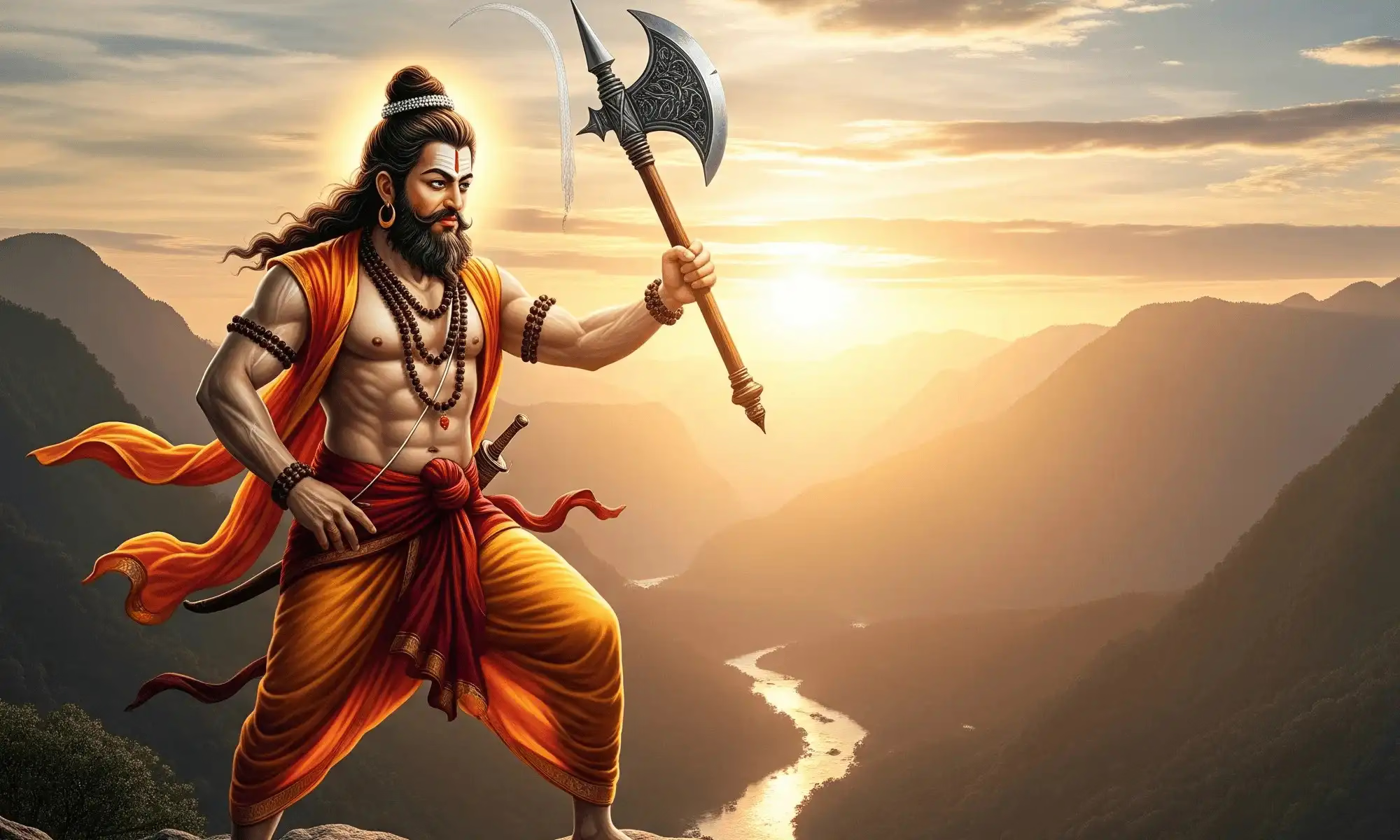
The cries of the oppressed reached the heavens, prompting sages burdened by injustice to turn towards Lord Vishnu for salvation. In response to their prayers, Vishnu descended once more—this time as Parashurama, a warrior sage with a divine purpose. Born to the wise Brahmin sage Jamadagni and his devout wife Renuka, Parashurama combined the spiritual discipline of a priest with the valorous might of a warrior.
In his hands lay Parashu, the mighty axe given by Lord Shiva himself. This divine weapon was not just an instrument but a symbol of destiny and liberation. With it, Parashurama embarked on a mission to cleanse the Earth of tyranny, sparing none who dared to oppress the innocent.
🪓 Childhood of Fire and Resolve
Parashurama's early years were marked by a fierce internal conflict between his scholarly pursuits and his deep sense of justice. As a young boy, he was immersed in the world of scriptures and meditation under his father Jamadagni’s guidance, but his heart yearned for action when faced with the injustices plaguing society.
Renuka, Parashurama's mother, instilled in him qualities like compassion and patience, which were essential as he navigated this tumultuous time. However, witnessing the suffering of innocents at the hands of oppressive rulers fueled his resolve to fight for justice. One pivotal moment came when a tyrannical king attempted to steal Kamadhenu from their ashram, an act that deeply enraged Parashurama and defined his life’s mission.
From then on, it was clear that Parashurama would dedicate himself to destroying the wicked and restoring dharma. This commitment to justice led him down a path of rigorous training in martial arts and weaponry. For instance, he mastered the axe technique under Shiva's guidance, symbolizing his readiness to take up arms against injustice.
⚔️ The Twenty-One Campaigns
With his axe in hand, Parashurama marched across the earth to right wrongs. The scriptures recount how he eradicated the Kshatriya class twenty-one times, not out of malice but from a profound sense of dharma—the sacred duty to restore balance and justice. His campaigns were driven by an unwavering commitment to uphold righteousness over tyranny.
The fear his reputation instilled in kings was mirrored by the reverence he earned among common people who saw him as their protector against oppression. Parashurama embodied a paradox of wrath and righteousness, striking down injustice while upholding divine law. This duality made him both an enigma and a symbol of hope for those suffering under tyrannical rule.
Historians have noted that during one particularly tumultuous period, the Kshatriya king Jarasandha challenged Parashurama's authority directly. Despite this direct confrontation, Parashurama’s influence grew stronger, exemplifying how his campaigns were not solely about military might but also about moral leadership.
🌲 The Forest Sage
Parashurama, renowned for his martial skills and deep spiritual connection to nature, established hermitages amidst the lush forests of India. These retreats served as sanctuaries where disciples could practice rigorous discipline and meditation to attain enlightenment. Unlike other avatars whose missions were limited in scope, Parashurama's influence persists eternally through these natural havens.
Living a life of simplicity, Parashurama roamed the lands he had liberated, wearing only bark garments and walking barefoot, symbolizing his detachment from material possessions. His existence was a testament to living in harmony with nature, far removed from the complexities of civilization. Astonishingly, it is believed that Parashurama amassed over 21 crores (210 million) disciples, each captivated by his profound wisdom and serene lifestyle.
Devotees continue to visit remote sites where ancient trees and rugged peaks serve as living classrooms for Parashurama's teachings. These pilgrims seek a glimpse of the legendary sage who remains a silent guardian, patiently awaiting another era when he might guide future generations towards enlightenment. In an intriguing twist, many contemporary spiritual seekers find that embracing Parashurama’s philosophy of simplicity provides a counterintuitive yet effective path to profound insights in today's intricate world.
🏹 Encounters with Rama and Karna
In the grand tapestry of ancient Indian epics, Parashurama's encounters with Lord Rama and Karna stand out as pivotal moments that shaped Hindu lore. In the Ramayana, Parashurama, a warrior sage, challenged Rama to break Shiva’s divine bow. This test was more than a physical challenge; it was a spiritual revelation, for when Rama revealed himself as Vishnu's supreme incarnation, even Parashurama bowed in reverence.
Contrastingly, in the Mahabharata, Parashurama played the role of Karna’s teacher. He imparted vast knowledge of weaponry to this humble warrior. Yet, when Karna deceived him about his low caste origin, Parashurama's curse had dire consequences. This curse would haunt Karna in Kurukshetra, where he would forget all martial arts taught by Parashurama during the climactic battle with Arjuna.
These encounters highlight the moral dimensions of power and knowledge. While Rama’s authenticity won Parashurama's respect and surrender, Karna’s deceit led to his downfall in a crucial moment. The irony is profound: Karna’s valor did not protect him from the harsh reality imposed by societal hierarchies and personal integrity.
✨ The Symbolism of Parashurama
Parashurama is a complex figure in Hindu mythology, embodying both spiritual wisdom and physical strength. His story illustrates the harmony between enlightenment and activism against societal injustices, offering a unique perspective on how one can remain spiritually grounded while engaging actively with the world.
- The Axe of Justice: Parashurama’s iconic axe serves more than just a symbolic purpose; it is a powerful tool for cutting through arrogance and oppression. This weapon represents the necessity for swift, decisive action to uphold justice and righteousness in society.
- The Sage-Warrior: Contrary to the notion that spiritual enlightenment requires isolation from worldly affairs, Parashurama demonstrates how one can remain deeply rooted in their beliefs while actively combating injustice. This duality is as pertinent today as it was millennia ago, highlighting the ongoing relevance of his teachings.
Parashurama’s eternal vigilance underscores the continuous battle between dharma and adharma. His immortality signifies a perpetual commitment to upholding justice across generations, symbolizing the enduring need for vigilant moral leadership. For instance, in contemporary society, individuals who advocate for human rights while maintaining a spiritual outlook echo Parashurama's dualistic approach.
Frequently asked questions
Who is Parashurama Avatar?
Why did Parashurama incarnate?
What is Parashurama known for?
Is Parashurama immortal?
What does Parashurama symbolize?
Hercules and Bhima: Heroes of Strength Compared
Discover the parallels between Hercules of Greek mythology and Bhima of the Mahabharata. A comparative deep-dive into st...

Tawhiri – The God of Storms and Revenge
Discover the epic tale of Tāwhiri, the Māori god of storms and revenge, whose fury shaped the world and whose love for h...