Mami Wata: Water Spirits and Mysticism
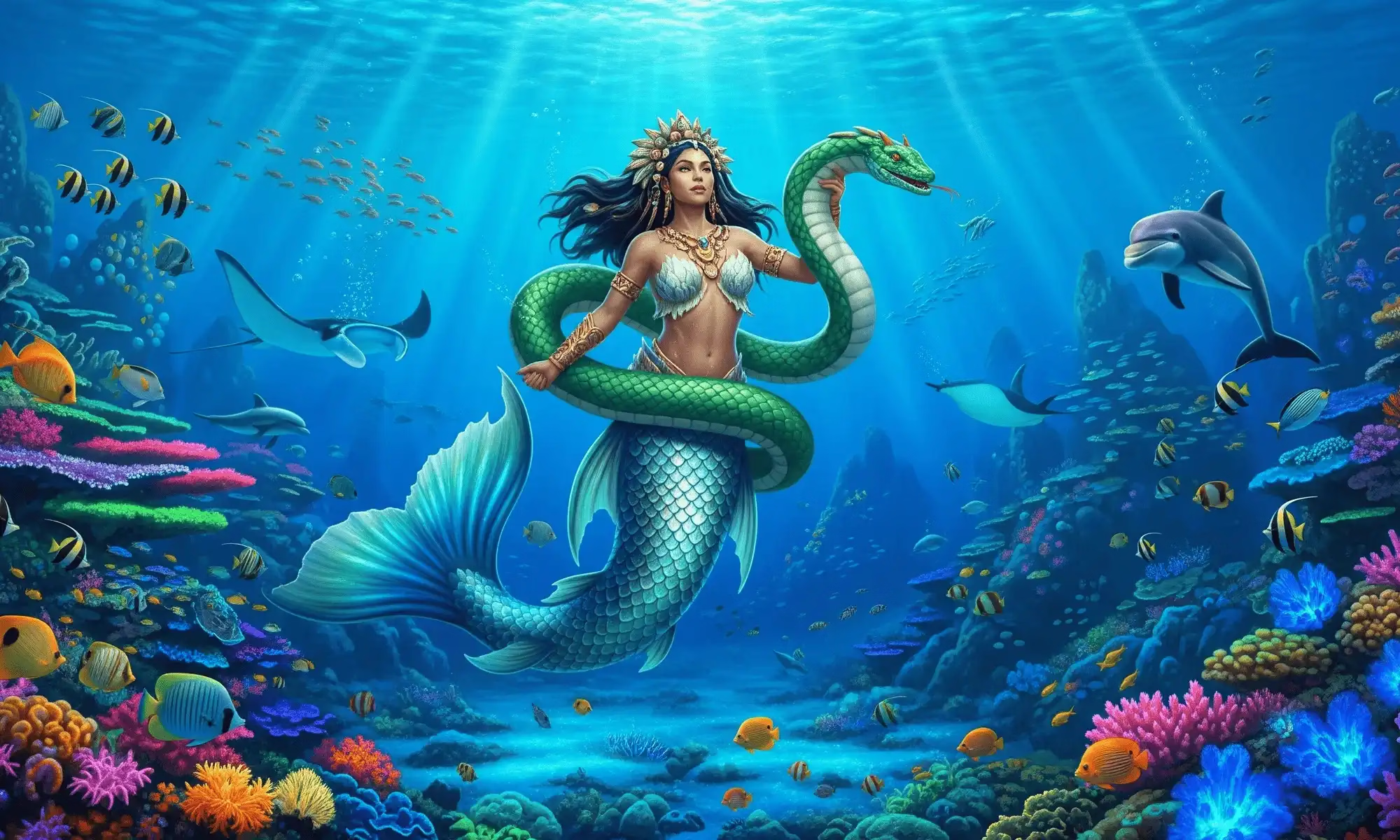
Mami Wata, an enigmatic figure in African culture, is revered as a powerful water spirit across the continent's diverse landscapes. Her influence permeates mythology and folklore, captivating people’s imaginations and inspiring both awe and fear. In Nigeria alone, over 50% of coastal villages have shrines dedicated to her, reflecting her profound impact on local traditions. Mami Wata is often depicted as a mermaid or snake charmer, embodying the duality of life by offering healing and wealth while also warning against the dangers lurking beneath serene waters.
Her story unfolds through countless tales, each revealing another layer of mystery and allure. For instance, fishermen tell stories of Mami Wata appearing during storms to guide lost souls back to safety. This not only illustrates her nurturing side but also underscores her role as a protector against the perils of the sea. Interestingly, despite her often depicted Western influence, many scholars argue that Mami Wata’s origins are deeply rooted in indigenous African beliefs and practices.
Who Is Mami Wata?
Mami Wata, derived from the pidgin English term “Mother Water,” is a revered figure deeply embedded in African and diasporic cultures. Often depicted as a mermaid with long hair adorned with jewelry and serpents coiled around her form, she embodies both beauty and power. This multifaceted representation allows Mami Wata to manifest in various guises, sometimes appearing radiant and alluring, other times fierce and intimidating.
As both a goddess and a spirit, Mami Wata’s influence permeates numerous aspects of life, particularly those connected with water. Her dual nature reflects the inherent contradictions found in natural forces: she can heal wounds and grant prosperity but also bring about destruction or illness. For instance, her presence is often invoked during rituals to cleanse communities from evil spirits, yet she is equally feared for her capacity to cause harm.
One of Mami Wata’s most compelling aspects is her ability to bridge the realms of spirituality and materialism. In numerous regions across Africa, devotees seek her blessings through offerings and ceremonies held near rivers or coastal waters. This practice not only underscores her role as a protector but also highlights how she acts as a conduit for wealth and good fortune. Despite her formidable reputation, Mami Wata’s influence is seen in the everyday lives of those who believe in her power, illustrating a nuanced perspective on divine intervention.
Origins and Spread
Mami Wata's worship originated in West and Central Africa but has transcended cultural boundaries to become a significant figure across the continent. Her tales have evolved over time, blending with local customs and traditions wherever her influence reaches. As enslaved Africans transported their spiritual beliefs across the Atlantic, Mami Wata’s mythology found a new home in the Caribbean, South America, and even parts of North America.
In contemporary times, Mami Wata remains an integral deity within African traditional religions and has become deeply embedded in syncretic Afro-Caribbean faiths like Vodou, Santería, and Candomblé. For instance, in Brazil’s vibrant Candomblé community, she is revered as a mermaid-like figure who grants prosperity and protection to her followers. This widespread reverence indicates the deep emotional connection people have with Mami Wata's promise of wealth and healing.
Interestingly, despite her marine imagery, many believe that Mami Wata’s influence extends beyond mere spiritual devotion; she often serves as a symbol for complex socio-economic issues faced by communities in Africa and its diaspora. Her stories provide a unique lens into the struggles and aspirations of those who worship her, reflecting both personal desires for betterment and broader societal challenges.
The Powers of Mami Wata
Mami Wata's influence spans across numerous aspects of life, each reflecting the enigmatic nature of water. Her connection to wealth is profound; many seek her favor for financial success and material abundance.
- Wealth and Prosperity: Individuals who gain significant fortunes often attribute their good fortune to Mami Wata's benevolence. She is believed to bestow wealth upon those who worship her sincerely.
- Healing and Fertility: In many communities, healers receive their curative powers from Mami Wata. Her role in promoting fertility also highlights the generative potential of water.
Mami Wata’s influence extends beyond material wealth to include deep spiritual and emotional connections. Her ability to heal is not just physical but often seen as a restoration of one's soul or spirit, emphasizing her holistic approach to well-being.
- Seduction and Desire: As a mermaid-like figure, Mami Wata symbolizes the allure and danger of water. She enchants humans with promises of pleasure and knowledge, often leading them into unforeseen spiritual journeys or challenges.
- Punishment and Destruction: Like nature’s wrath, Mami Wata can unleash her fury on those who disrespect her. This aspect underscores her dual-natured approach to life and death, reflecting the unpredictable forces of water.
The balance between blessing and cursing is a testament to Mami Wata's complexity. Those who fear her often do so because they recognize the potential for both great reward and severe consequence, highlighting her role as a deity with immense power over human fate.
Symbolism and Depictions
Mami Wata’s imagery is strikingly rich, often featuring her as a mermaid with flowing hair, gracefully holding a mirror or comb. This depiction not only highlights her physical beauty but also symbolizes deeper meanings of wealth and allure. Her presence in art is typically accompanied by snakes, which serve as both cautionary symbols of danger and messengers of spiritual wisdom.
Water, mirrors, and jewelry play crucial roles in Mami Wata’s symbolism. Water embodies cleansing and renewal, while the mirror represents introspection and self-reflection—a powerful tool for personal growth and transformation. For instance, during traditional ceremonies in Nigeria, devotees often bring small mirrors to catch the reflection of Mami Wata's image on water surfaces, believing it aids in seeking her guidance and blessings.
Jewelry is another essential element, symbolizing status and material success. In many stories, Mami Wata is said to have the power to grant wealth and prosperity to those who earn her favor. However, this comes with a nuanced perspective: true wealth, as represented by Mami Wata’s jewels, extends beyond mere material possessions; it also includes spiritual richness and inner peace.
Worship and Rituals
Devotees honor Mami Wata through offerings that symbolize wealth and beauty, such as perfume, alcohol, coins, and jewelry. These rituals typically occur near bodies of water like rivers, lakes, or oceans, where her spiritual presence is believed to be most potent. Drumming, ecstatic dancing, and trance states are integral parts of these ceremonies, creating an atmosphere charged with energy and anticipation.
In some traditions, worshippers enter a trance state during which they believe Mami Wata speaks through them, delivering messages that provide guidance or warnings to the community. This direct communication adds a layer of mystery and reverence to her worship, making each ritual a deeply personal and transformative experience for those involved. For example, in Nigeria, it is not uncommon for someone possessed by Mami Wata to suddenly speak in an unfamiliar language, believed to be the voice of the deity herself.
Mami Wata's worship reflects the rich diversity of African spiritual traditions, yet at its core lies a profound respect for water's ever-changing nature. This reverence connects worshippers with both the practical and mystical aspects of aquatic environments, highlighting how Mami Wata serves as a bridge between the physical world and the spiritual realm.
Mami Wata in the African Diaspora
When enslaved Africans were forcibly transported to the Americas, they did not abandon their spiritual traditions. Instead, figures like Mami Wata accompanied them across vast oceans and into new worlds. In Haiti's Vodou tradition, she transformed into Erzulie Dantor; in Brazil's Candomblé, she became Yemanjá; and in Cuba’s Santería, she took on the guise of Olokun or Yemaya. Despite these changes in name and form, Mami Wata retained her essence as a deity of water, wealth, and power.
Through this syncretic process, African spiritual practices like Vodou, Candomblé, and Santería not only survived but also flourished, adapting to local contexts while maintaining deep connections to their African roots. For instance, Yemanjá in Brazil is celebrated on New Year's Eve with offerings of flowers and candles placed into the sea, a practice that echoes the reverence paid to Mami Wata along the shores of West Africa. This continuity underscores how spiritual beliefs can persist and evolve even under conditions of extreme adversity.
One notable example is the annual Festival of Yemanjá in Salvador, Brazil, where tens of thousands gather each year to honor her. Such events highlight the resilience and vitality of these adapted religious traditions, which continue to shape contemporary cultural identities. These adaptations demonstrate that African spiritual practices did not merely survive but actively participated in shaping new cultural landscapes across the Americas.
The Lessons of Mami Wata
Mami Wata embodies the duality of existence by teaching us that beauty is a powerful force capable of both liberation and enslavement. Her presence reminds worshippers to maintain balance in their lives, acknowledging the immense power held within natural elements such as water, which can heal and also bring destruction. The worship of Mami Wata emphasizes respect for uncontrollable forces, encouraging individuals to find harmony with nature.
In many cultures, encountering Mami Wata is seen as a transformative experience that heralds change, whether it be in the form of newfound wealth or profound personal growth. This belief underscores the fluidity and unpredictability of life’s circumstances, much like the movement of water itself. For instance, in Nigeria, devotees report significant changes after interacting with Mami Wata shrines, highlighting how this spiritual figure influences their lives profoundly.
However, it is crucial to recognize that while Mami Wata's influence can be immensely positive, her power also carries risks. A nuanced perspective reveals that seeking too much from Mami Wata without personal effort or dedication can lead to disappointment and disillusionment. This insight underscores the importance of balance in one’s approach to spiritual figures like Mami Wata.
Legacy of Mami Wata
In modern times, Mami Wata's influence permeates art, literature, and music across Africa and beyond, reflecting a profound connection to African spirituality. She embodies resilience and cultural identity, her tales weaving together mystery with the essence of human existence alongside water bodies that are both life-giving and perilous.
Mami Wata’s presence is felt from the Congo River to the Caribbean Sea, where her stories continue to captivate hearts and minds. As a figure who represents beauty and danger in equal measure, she embodies the dual nature of life's waters — soothing yet treacherous. This duality underscores Mami Wata’s role as both healer and destroyer, reminding us that transformation often requires navigating through tumultuous environments.
Her stories are not just myths but reflections of real-life experiences, such as the annual Festival of Water Spirits in Nigeria, which celebrates Mami Wata’s enduring legacy. During this festival, devotees pay homage to her with offerings and songs, illustrating how deeply she is ingrained in contemporary African culture.
Mami Wata’s fluidity extends beyond physical waterways; she encapsulates the ever-changing nature of human connection to the divine. She challenges us to see life's complexities through a lens that acknowledges both beauty and peril, encouraging an embrace of change rather than resistance against it.
Frequently asked questions
Who is Mami Wata?
What does Mami Wata represent?
How is Mami Wata worshiped?
Is Mami Wata a goddess or spirit?
Where is Mami Wata worshiped today?
Nuwa: Creator of Humanity and Restorer of Balance
Discover the story of Nuwa, the goddess who created humanity and restored the balance of heaven after catastrophe. Explo...