Kon: The Creator Who Walked Without Bones
The Wind That Created a World
Long before the mighty Inca Empire raised stone cities among the clouds, before Machu Picchu crowned the Andes and before the Sun God Inti became the supreme deity of the mountains, the peoples of Peru told stories of an older creator. They spoke of a mysterious being unlike any other god—a deity who possessed immense power yet carried no weapons, a creator who walked without bones, and whose footsteps shaped the world itself. His name was Kon, one of the oldest creator gods remembered along Peru's Pacific coast.
Unlike many mythological creators who forged the universe through great wars or cosmic battles, Kon created through movement, command, and divine presence. Wherever he walked, deserts blossomed, rivers carved their paths, and life awakened. Yet the same god who generously blessed humanity could also withdraw his gifts when people forgot gratitude and respect. His myths reveal an ancient understanding that nature's abundance was never guaranteed—it was a sacred trust between humanity and the divine.
A Creator Born Before the Sun
The oldest traditions describe Kon as a god who existed before human civilization flourished along the Andes. Some legends portray him as the son of the Sun, while others present him as an eternal creator who simply appeared from the heavens, untouched by birth or death. What made him truly extraordinary was his unusual appearance.
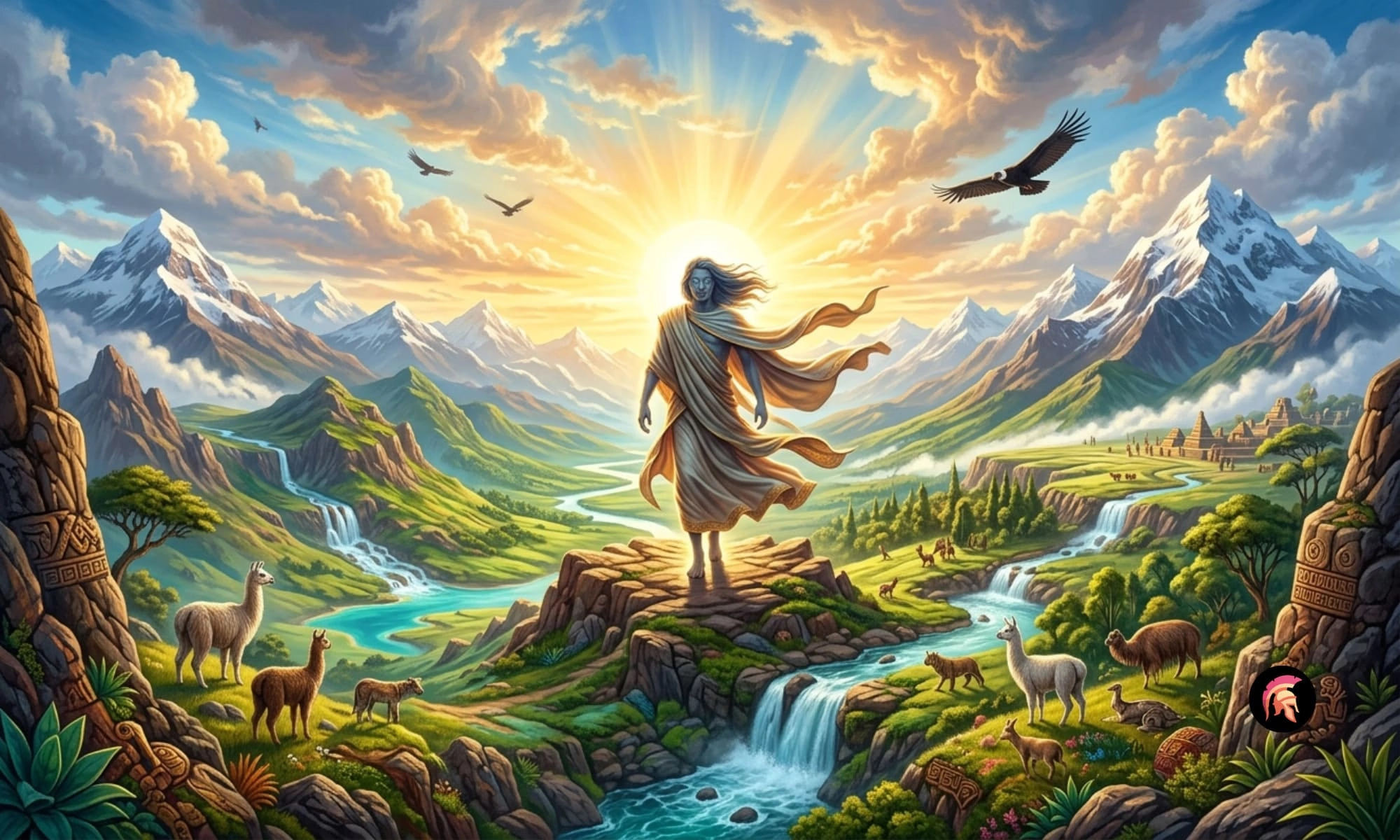
Kon was said to possess no bones. His body moved effortlessly like wind sweeping across mountains and oceans. He needed no wings to fly, no muscles to climb impossible cliffs, and no earthly limitations could restrain him. To ancient storytellers, this boneless form symbolized a force beyond ordinary existence. Kon was not bound by the physical laws governing mortals because he represented nature itself—ever-changing, invisible, and unstoppable.
As he journeyed across the empty landscape, he spoke commands into the silence. Mountains rose from the earth, rivers burst from hidden springs, and fertile valleys appeared where barren plains had existed moments before. Unlike craftsmen who shaped creation with tools, Kon required only his divine will.
Bringing Life to the Desert Coast
The western coast of Peru is one of the driest deserts on Earth, interrupted only by rivers flowing down from the Andes. To the people living there thousands of years ago, these rivers were nothing short of miracles. It was therefore natural that they believed a creator god had personally blessed the land with water.
According to legend, Kon crossed the vast desert carrying the gifts of life. Wherever he paused, freshwater emerged from beneath the sands. Seeds sprouted into forests, birds filled the skies with song, and animals wandered across newly formed plains. Fish appeared in the rivers while fertile soil welcomed the first crops. Humanity was given everything needed to flourish—food, water, fertile land, and favorable seasons.
Unlike later myths that portrayed creation as complete in a single moment, Kon's journey was gradual. The world unfolded step by step beneath his wandering feet. Every valley, coastline, and mountain became a reminder that creation itself was a living process rather than a finished event.
For the coastal civilizations that depended entirely upon seasonal rivers and careful agriculture, Kon represented the fragile miracle of survival. His blessings explained why life could thrive in one of the harshest landscapes on Earth.
Humanity's Forgotten Gratitude
Prosperity, however, often leads to complacency. As generations passed, people gradually forgot the divine source of their abundance. They harvested crops without giving thanks, celebrated prosperity without honoring the creator, and assumed the gifts of nature would continue forever.
The myths tell that Kon watched humanity with growing disappointment. Unlike gods driven by rage alone, his response reflected the balance between generosity and responsibility. Blessings carried obligations, and those who ignored them risked losing everything.
Instead of destroying humanity outright, Kon simply withdrew his favor.
The rivers shrank. Rain became scarce. Fertile valleys slowly returned to dry wilderness. Crops withered beneath relentless sunlight, and hunger spread across the land. The same creator who had transformed deserts into gardens now allowed nature to reclaim its harshness.
This dramatic reversal served as a profound lesson for ancient Andean cultures. Prosperity depended not merely upon hard work but upon maintaining harmony with the sacred forces governing the world.
The Arrival of Pachacamac
As centuries passed, another powerful creator entered Andean mythology—Pachacamac, whose influence eventually spread across much of coastal Peru. Some traditions describe him as a rival of Kon, while others portray him as the deity who inherited responsibility for creation after Kon withdrew from humanity.
Unlike Kon's swift and effortless acts of creation, Pachacamac was associated with earthquakes, transformation, prophecy, and ongoing renewal. Rather than replacing the earlier creator entirely, he expanded the spiritual understanding of the universe.
Some myths even describe a cosmic struggle between these divine beings. Kon represented the first creation and humanity's original blessings, while Pachacamac embodied renewal after failure and the rebuilding of civilization. Their relationship reflected the changing religious traditions of ancient Peru, where older beliefs gradually blended with newer ones instead of disappearing completely.
This transition also mirrors how mythology evolves across generations. New gods emerge, older stories adapt, and civilizations reinterpret ancient beliefs to match changing cultures.
The Symbolism of the Boneless God
Perhaps the most fascinating aspect of Kon's mythology is his unusual description as a god without bones. Ancient storytellers were unlikely to include such a striking detail without deeper meaning.
Bones symbolize permanence, structure, and limitation. A being without bones could flow like air, pass effortlessly across impossible terrain, and remain untouched by the physical constraints governing ordinary life. Kon therefore became the embodiment of invisible natural forces—wind, spirit, breath, and creative energy.
His boneless form also suggested that creation itself cannot be confined within rigid boundaries. Nature constantly changes. Rivers shift their courses. Mountains erode. Forests grow and disappear. The world remains alive precisely because it is never fixed.
Kon reminds us that true creative power is flexible rather than rigid, dynamic rather than static.
Lessons Hidden Within the Myth
Although Kon is less famous internationally than Zeus, Odin, or Ra, his story contains timeless lessons that remain remarkably relevant.
The myth teaches that abundance should never be taken for granted. Every harvest depends upon delicate natural systems that deserve respect. Humanity flourishes only when living in harmony with the world rather than exploiting it carelessly.
Kon also represents responsible leadership. A creator's duty is not simply to give endlessly but to teach stewardship. His withdrawal was not an act of cruelty but a reminder that every blessing carries responsibility.
Perhaps most importantly, Kon's story celebrates humility. Civilization itself rests upon gifts that existed long before humanity arrived—sunlight, rivers, fertile soil, and the rhythms of nature. Forgetting this truth leads inevitably to decline.
Kon's Legacy in Andean Culture
Although the Inca later elevated Inti, Viracocha, and other deities within their imperial religion, Kon survived in oral traditions preserved along Peru's coast. Archaeologists studying ancient civilizations such as the Nazca and Paracas have found evidence that creator figures resembling Kon were worshipped centuries before the rise of the Inca Empire.
Today, Kon remains an important figure in studies of pre-Incan mythology because he represents one of South America's earliest known creator gods. His legends provide valuable insight into how ancient Andean peoples understood climate, agriculture, and humanity's relationship with nature.
Unlike warrior gods remembered for conquest, Kon is remembered for creation itself—a quieter but ultimately greater form of power.
Conclusion
Kon's story is one of creation, generosity, responsibility, and renewal. Walking effortlessly across deserts without bones, he transformed lifeless landscapes into thriving civilizations and demonstrated that nature's abundance is both miraculous and fragile. His myths remind us that the greatest creators do not simply build worlds—they teach those who inhabit them how to preserve what has been given.
Though thousands of years have passed since ancient storytellers first spoke his name, Kon still stands among mythology's most fascinating creator deities. His footsteps echo across the Andes, through fertile valleys born from barren sands, reminding us that every civilization ultimately depends upon respecting the natural world that sustains it.
Frequently asked questions
Who is Kon in Inca mythology?
Why was Kon described as having no bones?
What happened after people forgot Kon?
Is Kon the same as Pachacamac?
Fenrir and Jörmungandr: Monsters of Prophecy
Discover the tales of Fenrir, the monstrous wolf, and Jörmungandr, the world serpent. Explore their roles in Norse proph...
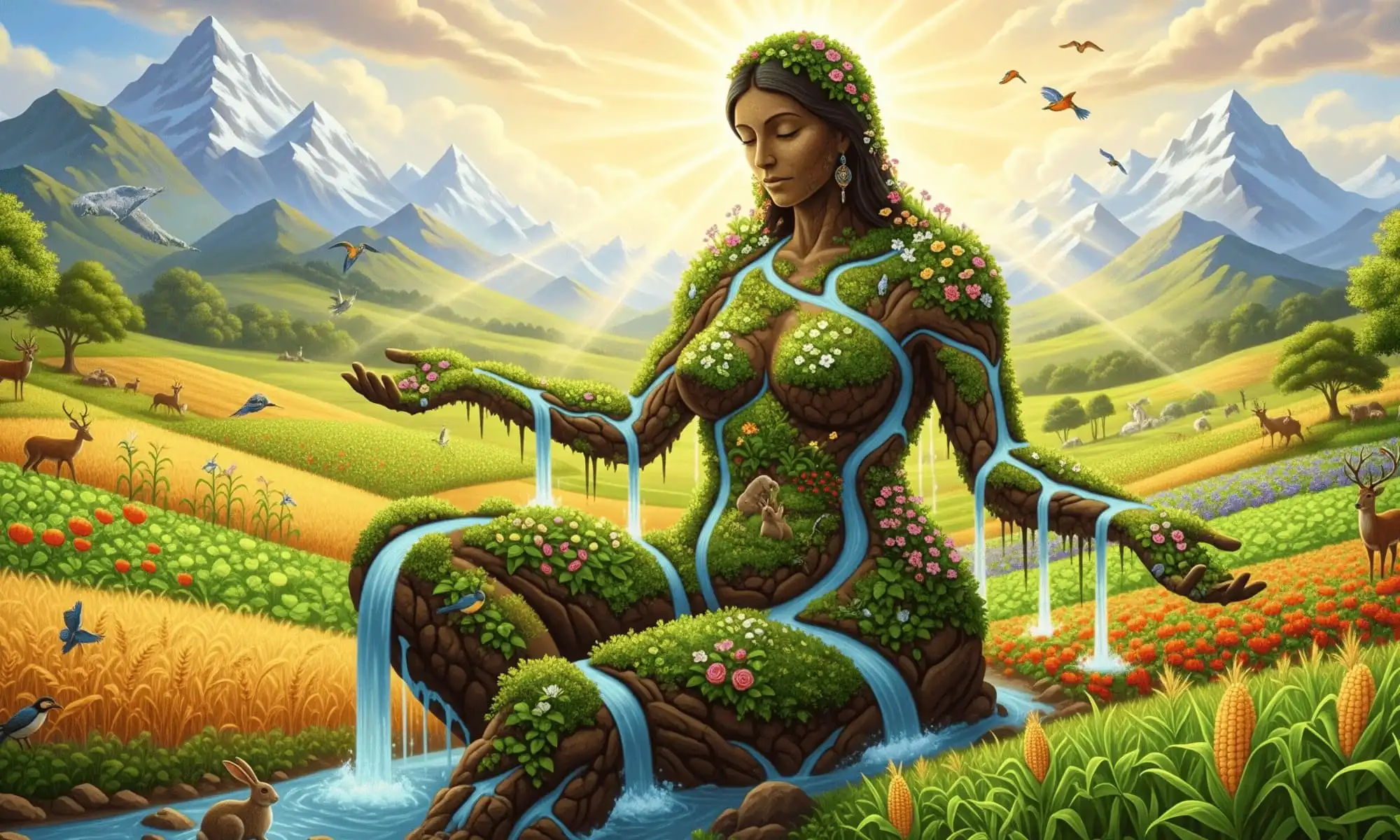
Pachamama: Mother Earth and Fertility – Reverence for nature, crops, and balance
Explore the role of Pachamama, the Incan earth goddess of fertility, agriculture, and balance. Discover her rituals, sym...