Hun Hunahpu and the Ballgame of the Underworld
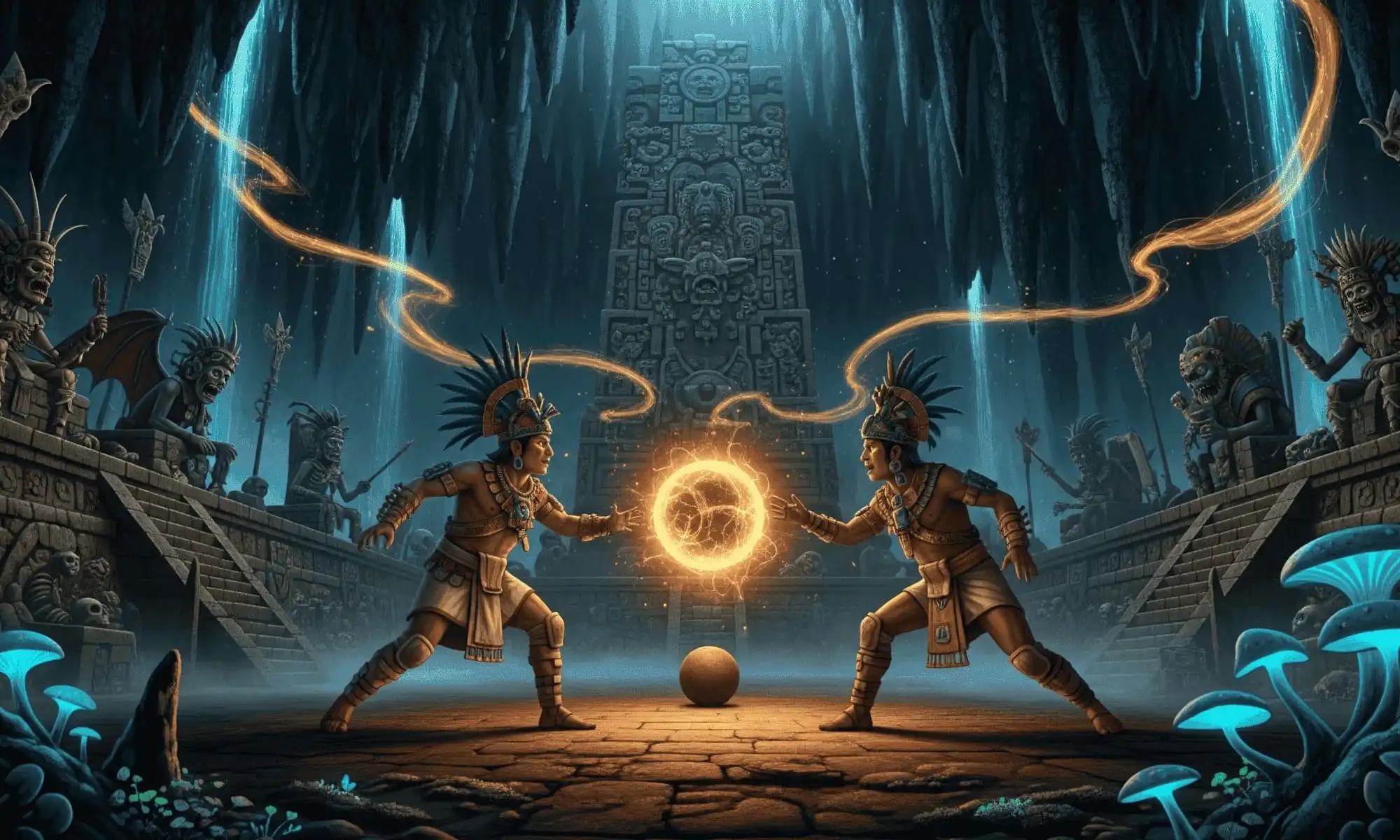
The Popol Vuh, a sacred text of the Maya people, is replete with tales that encapsulate profound spiritual and cultural insights. Among these, the narrative of Hun Hunahpu stands out as particularly poignant. As the father of the Hero Twins, his story revolves around themes of loss, rebirth, and cosmic balance. His journey to the underworld known as Xibalba, where he meets a tragic end in a deadly ballgame, marks the beginning of a transformative process that sets the stage for his sons' heroic deeds.
The spiritual significance of this narrative extends beyond its mythological framework. The Maya ballgame, which mirrors the eternal struggle between darkness and light, is a central element in Hun Hunahpu's tale. It symbolizes the cyclical nature of life, death, and resurrection that are integral to Mayan cosmology. For instance, the game's rules and rituals often involve sacred objects such as jade and rubber balls, underscoring its importance as more than just a sport but a profound ritual practice.
Interestingly, archaeological evidence from sites like Chichen Itza reveals ballcourts that were not merely sports arenas but also ceremonial centers. This highlights the deep-rooted spiritual significance of these games in Mayan society, emphasizing how they played a crucial role in maintaining cosmic balance and order.
⚽ The Sacred Maya Ballgame
The Maya ballgame, known as pok-ta-pok, was far more than a sport; it was an integral ritual that mirrored the cosmic forces governing life and death. Each match was imbued with deep spiritual significance, reflecting broader myths central to Mayan culture.
Symbolic Representation of Cosmic Forces
The game's movements echoed the sun's journey across the sky, its daily rise and fall a microcosm of the players' struggle on the court. This celestial dance was not just symbolic but also tied to the very essence of existence for the Maya, who saw the ballgame as a metaphor for life’s constant renewal.
Moreover, the game's rules mandated that one team represented the forces of life, while the other symbolized death. The clash on the field thus embodied the eternal battle between these opposing yet interconnected realms, underscoring the cyclical nature of existence according to Mayan belief.
For instance, a match might see players adorned with ritualistic garments and sacred emblems, transforming their physical contest into a spiritual reenactment. This blend of sport and ceremony was not merely a cultural tradition but a vital link between earthly events and divine realities.
The eternal cycle of sacrifice and renewal played out on the ballcourt was a poignant reminder that every end is also a beginning.
👑 Hun Hunahpu’s Invitation to Xibalba
Hun Hunahpu, alongside his brother Vucub Hunahpu, was celebrated across the lands for their unparalleled prowess in the ancient ballgame. Their spirited matches resonated through villages and forests alike, drawing crowds eager to witness the brothers' deft moves and strategic plays. However, this fame did not sit well with the lords of Xibalba, a realm shrouded in darkness where rulers wielded power with cold-hearted cunning and deceitful schemes.
The lords of Xibalba, fueled by their resentment towards Hun Hunahpu's acclaim, devised a sinister plot to lure the brothers into their domain. They sent a message inviting the ballplayers to come play in their court but embedded within this invitation was a series of deadly challenges designed to test not just physical prowess but also mental acuity and resilience. Hun Hunahpu, known for his bravery and unwavering spirit, accepted the call without hesitation. Upon entering Xibalba's eerie chambers, he found himself face-to-face with trials that pushed him beyond the limits of human endurance.
"The lords of Xibalba are not to be underestimated; their intentions are as deep as the caverns beneath our feet." This warning from an elder who had narrowly escaped a similar fate was ignored by Hun Hunahpu, driven by his conviction and the allure of proving himself against the underworld's rulers.
⚔️ The Trials of Xibalba
The journey through Xibalba was a perilous one for Hun Hunahpu and Vucub Hunahpu, as they encountered numerous deadly traps designed to test their wit and courage. Each trial was more challenging than the last, pushing them to their limits.
- The House of Darkness – where no light could survive. This first challenge forced the brothers to navigate pitch-black corridors filled with hidden dangers, relying solely on their senses and intuition to avoid fatal traps.
- The House of Cold – where freezing winds stripped strength away. Enduring this arctic environment required immense endurance and resourcefulness as they sought ways to generate warmth amidst the relentless chill.
- The House of Jaguars – where beasts circled, waiting to devour. In this deadly arena, the brothers had to outsmart a pack of vicious jaguars that relentlessly pursued them through twisted paths and dense undergrowth.
- The House of Blades – where sharp weapons lurked at every turn. The final trial was perhaps the most harrowing as they were constantly threatened by hidden blades and swinging axes, needing flawless coordination to survive.
Despite their ingenuity and bravery, Hun Hunahpu and Vucub Hunahpu found that the cunning of Xibalba’s gods ultimately proved too much for them. This tale underscores the ancient Maya belief in the unpredictable nature of the underworld, where even the most skilled warriors could be defeated by forces beyond comprehension.
💀 The Death of Hun Hunahpu
Hun Hunahpu's tragic end was marked by a sacrificial death that left an indelible mark on the mythological landscape. After his capture and sacrifice, his head was placed in a calabash tree, which bore fruits of both wonder and sorrow. The miraculous nature of these fruits attracted Xquic, a maiden from the underworld, who was intrigued by their origins.
As she approached the tree, Hun Hunahpu's spirit communicated with her, setting into motion a chain of events that would secure his legacy. This divine intervention led to the conception of the Hero Twins, reinforcing the cycle of life and death in a profound way. The myth highlights how even in the face of sacrifice, continuity is preserved through the birth of new generations.
The story of Hun Hunahpu thus transcends mere tragedy; it becomes a symbol of fertility and resilience. Despite his demise, his spirit endures, influencing future events and ensuring that his legacy continues to inspire generations. The tale underscores how sacrificial acts are often intertwined with the promise of renewal and rebirth.
"The birth of the Hero Twins is a testament to how life can emerge from the darkest moments, much like spring after winter."
🌌 Symbolism of Hun Hunahpu
In the intricate tapestry of Mayan mythology, Hun Hunahpu serves as a profound symbol of sacrifice and renewal. His death sets the stage for the heroic journey of his sons, who inherit both his legacy and the responsibility to restore cosmic balance. This cycle encapsulates the very essence of life and regeneration in ancient Mesoamerican culture.
The calabash tree, a central element in Hun Hunahpu’s story, embodies fertility and transformation. It stands as a poignant symbol connecting life with death and rebirth. Just as the calabash fruit is both nourishing and a vessel for new beginnings, so too does Hun Hunahpu's narrative illustrate how endings pave the way for fresh starts. This tree isn't merely a backdrop; it actively participates in the drama of creation and destruction.
Central to Hun Hunahpu’s legacy is the ballgame, which goes beyond mere sport—it becomes a sacred ritual that determines the cosmic order. Played on divine courts, these games symbolize more than just athletic prowess or social status; they represent the delicate balance of fate and sacrifice essential for maintaining harmony in the universe. For instance, one historical account describes a pivotal game where Hun Hunahpu’s loss directly resulted in the creation of humanity through his sons’ heroic deeds.
Contrary to surface interpretations, Hun Hunahpu's fall was not a tragic end but rather the catalyst for a greater victory that would unfold through the actions and challenges faced by his progeny. This nuanced perspective highlights how ancient myths often carry layers of meaning beyond their literal narratives.
🏹 Legacy in Maya Mythology
Hun Hunahpu's story is central to Maya mythology, setting the stage for the Hero Twins' legendary journey. His sacrifice not only paved the way for their heroic endeavors but also underscored the cyclical nature of life and death within Mayan cosmology. This narrative emphasizes the profound connection between divine figures and human experience, illustrating how cosmic events shape earthly rituals.
Across Mesoamerica, ancient ballcourts still stand as silent witnesses to this sacred drama. These structures were not merely places for sport; they embodied a ritual dialogue with the gods, where each game was seen as a reenactment of creation myths and cosmological battles. For instance, in Chichén Itzá's Great Ball Court, intricate carvings depict scenes from Hunahpu and Xbalanque's adventures, highlighting the intertwining of sport and myth.
Every ballgame played in these courts was a reminder that life's struggles mirror celestial conflicts. The players, often seen as living representations of the Hero Twins or other divine beings, engaged not just for victory but to uphold cosmic order. This practice underscores the Maya belief in the interconnectedness of all things, from the stars above to the earth below.
Frequently asked questions
Who was Hun Hunahpu in Maya mythology?
What is the significance of the Maya ballgame?
How did Hun Hunahpu father the Hero Twins?
The Descent of Ganga: A River from the Heavens
Explore the epic story of Ganga’s descent to Earth, guided by Bhagiratha’s devotion and Lord Shiva’s protection. Learn t...
Anansi the Spider: Trickster and Teacher
Discover Anansi the Spider, the legendary trickster of African mythology. Explore his witty tales, moral lessons, and en...