Coatlicue and the Birth of the Gods: The Mother of Creation
🌍 The Mother at the Heart of Aztec Creation
In the rich tapestry of Aztec mythology, Coatlicue stands out as a figure both revered and feared. As "She of the Serpent Skirt," she embodies the earth itself, giving birth not just to life but also to deities who govern various aspects of the cosmos. Yet her myth transcends mere creation; it delves into the harsh realities of sacrifice and cosmic conflict that underpin Aztec beliefs.
The most compelling tale surrounding Coatlicue is undoubtedly her role in birthing Huitzilopochtli, the Sun God. This narrative isn't just a story about divine birth but serves as an allegory for the daily struggle between light and darkness, encapsulating the Aztecs' understanding of cosmic balance. For instance, every morning, Huitzilopochtli must fight off the forces of night led by his sister Coyolxauhqui, symbolizing the eternal conflict inherent in nature.
Coatlicue's influence extends beyond her immediate mythological role. She embodies a nuanced perspective on creation and destruction, challenging the notion that these concepts are mutually exclusive. Instead, she illustrates how new life emerges from destruction, reflecting a cyclical view of existence deeply rooted in Aztec cosmology. This idea is further reinforced by specific rituals, such as the sacrifice of captives during religious festivals, which were believed to fuel the sun's daily victory over darkness.
🐍 Who is Coatlicue? The Terrifying Mother of the Gods
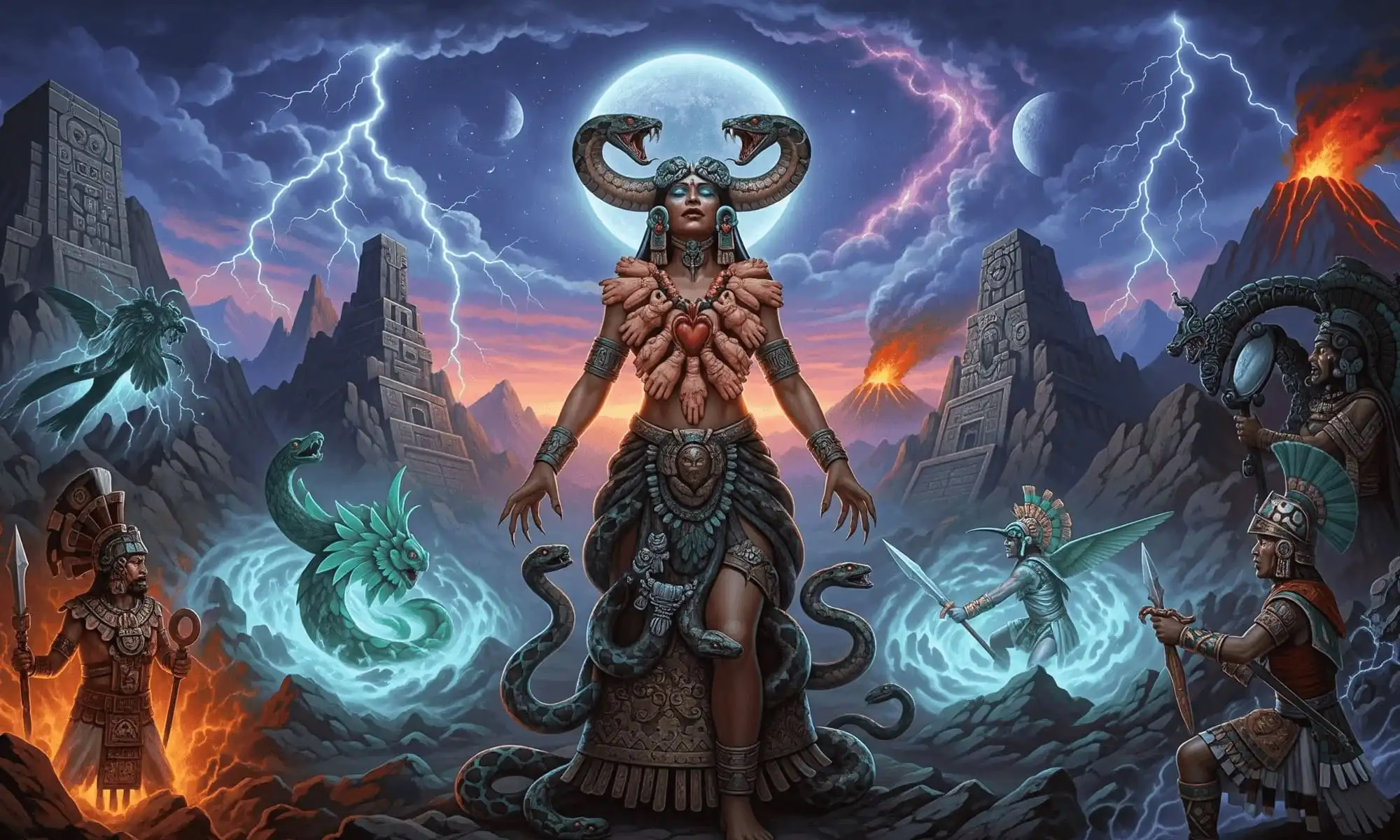
The name Coatlicue holds significant meaning in Aztec mythology, translating to “She of the Serpent Skirt,” a title that encapsulates her fierce and ancient persona. As an earth goddess, she embodies the dual aspects of creation and destruction, being both the mother of gods such as Huitzilopochtli and mortals while also representing the raw power of nature in its most terrifying forms.
Coatlicue's physical representations are equally striking and intimidating. She is depicted with a skirt made entirely of writhing snakes, symbolizing her connection to all life that emerges from or returns to the earth. Her necklace features human hands, hearts, and skulls, underscoring her role in both nurturing life and claiming it back through various forms of death and destruction. Additionally, she bears clawed feet and a monstrous face that further emphasize her terrifying presence and authority over natural forces.
Contrary to the nurturing images often associated with mother goddesses, Coatlicue does not embody gentleness or protection. Instead, she is revered as an embodiment of nature's raw power. To the Aztecs, she was both a source of life through fertile land and abundant harvests but also a relentless force capable of causing earthquakes that could destroy entire cities, bringing famine, and claiming lives in sudden and brutal ways. This duality highlights the complex relationship between humans and their environment, where survival often depends on appeasing such powerful and unpredictable deities.
🌟 The Cosmic Drama: Birth of Huitzilopochtli
In the realm of ancient Aztec mythology, a pivotal moment occurred when Coatlicue, while performing her sacred duty in sweeping the temple, found herself unexpectedly impregnated by a mysterious ball of hummingbird feathers. This divine intervention sparked outrage among her children—Coyolxauhqui and their 400 brothers known as the Centzon Huitznahua—who saw this miraculous event as a dishonor to their lineage.
As Coatlicue's pregnancy progressed, tensions escalated into a dire confrontation. With a deadly resolve, Coyolxauhqui led her siblings in a plot to kill their mother, driven by a fervent desire for vengeance and honor. However, fate had other plans. As they prepared to strike, Huitzilopochtli emerged fully grown from his mother's womb, brandishing the divine xiuhcoatl, a fiery serpent-sword.
In an act of raw power and divine retribution, Huitzilopochtli swiftly decapitated Coyolxauhqui, dismembering her body and throwing it down the mountain. This momentous event was seen as a cosmic upheaval; Coyolxauhqui’s severed head became the moon, while her brothers were scattered across the sky as stars. Huitzilopochtli, having vanquished his siblings, ascended to become the sun, symbolizing the relentless struggle between light and dark in the celestial realm.
🔥 Symbolism of Coatlicue’s Story
The Aztec myth of Coatlicue and the birth of Huitzilopochtli, the god of war, is rich in symbolic meaning. It illustrates the concept that creation often requires sacrifice, much like how fertile soil needs nutrients from decomposed matter to yield crops. The earth goddess’s transformation into a mother after receiving feathers on her temple symbolizes the Aztec belief that life emerges from death.
The myth also elucidates the cosmic order of day and night in the Aztec worldview. Each sunrise represents a new victory for the sun over darkness, echoing the daily battles Huitzilopochtli wages against his sister Coyolxauhqui and her allies, who symbolize chaos and destruction. This cyclical struggle reinforces the Aztec understanding of order being maintained through constant vigilance.
Coatlicue’s duality is a profound element of this narrative. She embodies both life-giving fertility and destructive power, as seen in her serpent skirts adorned with skulls. This dual nature reflects an intricate view of balance—where creation and destruction are complementary forces that sustain the universe. For instance, Coatlicue’s role as mother to multiple gods underscores her nurturing aspect while her terrifying appearance reminds worshippers of life's precariousness.
🕊️ Coatlicue’s Place in Aztec Worship
The statue of Coatlicue, discovered in the ancient city of Tenochtitlan, is one of the most awe-inspiring relics from the Aztec civilization. It stands as a testament to her terrifying power and her pivotal role within Aztec religious practices. The imposing nature of this statue reflects not only her physical presence but also her metaphorical influence over life and death.
In the context of Aztec rituals, Coatlicue played a crucial role in maintaining cosmic balance through blood sacrifices dedicated specifically to her. These offerings were essential for ensuring fertility and the continuation of life itself. One practical example of such rituals involved priests performing sacrifices during the month-long celebration of Toxcatl, where captives were sacrificed to appease Coatlicue’s dual nature as both a nurturing mother and a fearsome destroyer.
Culturally, Coatlicue symbolizes the raw, untamed earth—a stark reminder that while she represents fertility and birth, she also embodies destruction. This duality is evident in her imagery, with snakes for hair and skull motifs on her necklace and belt, signifying both creation and death. Interestingly, despite her terrifying appearance, her worship was widespread among the Aztecs, indicating a profound respect for her ability to maintain balance between these opposing forces.
🌌 Conclusion: The Eternal Mother of Gods and Chaos
The myth of Coatlicue is a profound cosmic allegory that encapsulates the essence of Aztec philosophy, where creation and destruction are seen as intertwined forces. As the mother of gods and stars, Coatlicue symbolizes the endless cycles of time, birthing new realities from chaos.
Coatlicue's story resonates deeply with contemporary discussions on feminine power, highlighting the strength and ferocity inherent in motherhood. This enduring figure serves as a reminder that life and death are not opposing forces but complementary aspects of existence. For instance, the Aztec calendar, with its intricate cycles reflecting Coatlicue’s influence, underscores the cyclical nature of reality where birth is inevitably followed by dissolution.
In this context, Coatlicue represents not just a deity but a complex symbol of balance and renewal. Her myth challenges simplistic views of divine figures, offering instead a nuanced perspective on the interplay between creation and destruction.
Frequently asked questions
Who is Coatlicue in Aztec mythology?
What is the story of Coatlicue and Huitzilopochtli?
What does Coatlicue symbolize?
How is Coatlicue depicted in Aztec art?
Why was Coatlicue important to the Aztecs?
Ganesha’s Birth: The Elephant-Headed God and His Symbolism
Discover the fascinating birth story of Lord Ganesha, the elephant-headed remover of obstacles, and explore the deep sym...

Hel: Queen of the Underworld – Ruler of the Realm of the Dead
Discover Hel, the Norse goddess of the underworld. Learn about her origins as Loki’s daughter, her rule over the dead, a...